


The Washington Mystics are a professional women's basketball team based in Washington, D.C., competing in the Eastern Conference of the WNBA. Established in 1998 as one of the league's original franchises, the team plays its home games at the Entertainment and Sports Arena. Throughout their history, the Mystics have developed a dedicated fanbase and achieved significant milestones, most notably winning their first WNBA Championship in 2019 under the leadership of star player Elena Delle Donne. Known for their competitive spirit and community involvement, the organization has been home to several league MVPs and All-Stars. The Mystics continue to be a prominent fixture in professional women's sports, consistently striving for excellence while championing the growth of basketball in the nation's capital.
October 1, 1997: Washington D.C. Selected as Potential WNBA Expansion Site
On October 1, 1997, Washington, D.C. was officially named as a potential candidate to host a new expansion team for the WNBA.


December 16, 1997: Washington Mystics Name Announcement
On December 16, 1997, Abe Pollin, the chairman of Washington Sports and Entertainment, officially announced that the new team would be named the Washington Mystics, choosing the moniker to match the 'magic' theme of the Washington Wizards.
February 18, 1998: WNBA Expansion Draft
On February 18, 1998, the WNBA held its inaugural expansion draft to build the rosters for the newly formed Washington Mystics and the Detroit Shock.
1998: 1998 WNBA Season Finish
In 1998, the Washington Mystics concluded their inaugural season with a league-worst record of 3–27, despite the presence of star player Nikki McCray.
1998: Founding of the Washington Mystics
In 1998, the Washington Mystics were officially established as a professional basketball team, becoming a member of the Women's National Basketball Association (WNBA).
1999: Drafting Chamique Holdsclaw and 1999 Season
During the 1999 season, the team added University of Tennessee star Chamique Holdsclaw to their roster, but they ultimately failed to qualify for the playoffs after finishing with a 12–20 record.
2000: 2000 Playoff Appearance
Led by Chamique Holdsclaw, the Mystics reached the playoffs in 2000 with a 14–18 record, though they were ultimately eliminated in a first-round sweep by the New York Liberty.
2001: Mystics Coaching and Management Overhaul
In 2001, the Washington Mystics finished with a 10–22 record, tying for the worst in the WNBA, which led to the resignations of head coach Tom Maher and General Manager Melissa McFerrin.
2002: 2002 WNBA Semifinal Appearance
During the 2002 season, the Washington Mystics competed in the WNBA semifinals but were ultimately defeated by the New York Liberty.
2002: Mystics Playoff Success Under Marianne Stanley
In 2002, led by new head coach Marianne Stanley and players Chamique Holdsclaw and Stacey Dales-Schuman, the Mystics finished 17–15, swept the Charlotte Sting in the first round of the playoffs, and advanced to the Eastern Conference Finals.
2003: Washington Mystics 2003 Season Record
During the 2003 season, the Washington Mystics struggled significantly, finishing with a 9–25 record, which marked the second-worst performance in the history of the franchise and placed them at the bottom of the Eastern Conference.
2004: 2004 Washington Mystics Season and Playoff Appearance
During the 2004 season, Washington Mystics star Chamique Holdsclaw dealt with personal health challenges, leading rookie Alana Beard to take charge and guide the team to a 17-17 record and their third playoff appearance in franchise history, though they were ultimately eliminated in the first round by the Connecticut Sun.
2004: Drafting of Alana Beard
In 2004, the Washington Mystics selected Alana Beard in the WNBA draft, who later became a star guard for the team during their 2006 season.
2005: Washington Mystics 2005 Organizational and Seasonal Changes
During the 2005 season, the Washington Mystics underwent significant shifts, including the departure of star player Chamique Holdsclaw to the Los Angeles Sparks and the sale of the team from Washington Sports and Entertainment to Ted Leonsis. The team concluded their 2005 regular season with a 16–18 record, ultimately failing to qualify for the playoffs.
2006: Washington Mystics 2006 Season Performance
In 2006, the Washington Mystics achieved a record of 18–16, led by star guard Alana Beard. The team entered the WNBA playoffs as the 4th seed but was subsequently swept in the first round by the top-seeded Connecticut Sun.
2007: Washington Mystics 2007 Season Conclusion
During the 2007 season, the Washington Mystics finished with a 16–18 record. Despite their near-.500 performance, the team was eliminated from playoff contention at the end of 2007 after losing a tiebreaker to the New York Liberty, who held the advantage based on their regular-season series record.
2008: Front Office and Coaching Staff Overhaul
During the 2008 WNBA off-season, the Washington Mystics underwent significant leadership changes, terminating general manager Linda Hargrove, who was replaced by Angela Taylor, and letting go of interim coach Jessie Kenlaw in favor of Julie Plank.
2008: 2008 WNBA Draft and Coaching Turnover
During the 2008 season, the Washington Mystics drafted Crystal Langhorne as the 6th overall pick, but the team struggled throughout the year. Due to persistent coaching issues and instability—marking 10 coaching changes in just 11 years—the team finished at the bottom of the Eastern Conference. This failure prompted the front office to plan a complete overhaul of the management and coaching staff in 2008.
2009: Alana Beard Injury
In 2009, Mystics player Alana Beard suffered a season-ending injury, marking the beginning of a difficult period that would eventually lead to the conclusion of her tenure with the Washington Mystics.
2009: 2009 Roster Rebuilding and Draft Selections
In 2009, the Washington Mystics focused on roster consistency by waiving underperforming players and selecting Matee Ajavon with the second pick in the Houston dispersal draft, followed by the selection of Marissa Coleman in the 2009 WNBA draft.
2010: Washington Mystics 2010 Season Performance
During the 2010 season, the Washington Mystics achieved their best record in franchise history by finishing first in the Eastern Conference with a 22–12 record. Led by players Lindsey Harding, Katie Smith, and Crystal Langhorne, the team showed promise, but ultimately suffered a first-round playoff sweep at the hands of the Atlanta Dream, including a decisive 24-point loss in the final elimination game of 2010.
2010: Final Season for Alana Beard
Following another season-ending injury in 2010, Alana Beard played her final game for the Washington Mystics, ending her career with the franchise.
2011: Washington Mystics Organizational and Roster Changes
During the 2011 season, the Washington Mystics underwent significant organizational instability, including the appointment of Trudi Lacey as both head coach and general manager. Following these changes, key players Harding and Smith demanded trades, and Monique Currie suffered an ACL injury while playing in Europe, leading to a decline in the team's performance to a 6–28 record in 2011.
September 26, 2012: WNBA Draft Lottery
On September 26, 2012, the Washington Mystics participated in the WNBA draft lottery; despite holding the best odds to secure a top pick, the team ultimately received the 4th overall pick for the 2013 draft.
2012: 2012 WNBA Draft Lottery
At the 2012 WNBA draft lottery, Mystics owner Sheila Johnson declined to comment on the management changes and departures of the previous year, citing ongoing human resource issues.
2013: 2013 WNBA Draft and Coaching Change
During 2013, the Washington Mystics added young talent to their roster by selecting Tayler Hill and Emma Meesseman in the 2013 WNBA draft. Additionally, following the departure of Trudi Lacey, the organization appointed Mike Thibault to serve as both the new head coach and general manager in 2013.
2013: 2013 WNBA Draft
During the 2013 WNBA draft, the Washington Mystics held the 4th pick, which resulted in the team missing the opportunity to select elite prospects Brittney Griner, Elena Delle Donne, or Skylar Diggins.
2013: Washington Mystics 2013 WNBA Season
During the 2013 WNBA season, the Washington Mystics finished with a 17-17 record, successfully qualifying for the playoffs before ultimately losing in the first round of the postseason.
2014: 2014 Washington Mystics Season Developments
During the 2014 season, the Washington Mystics drafted Bria Hartley and Stefanie Dolson, saw Emma Meesseman transition into the starting center role, and concluded the year with a 16-18 record, ultimately exiting the playoffs in the first round.
2015: Mystics 2015 Season Highlights and Playoff Appearance
During the 2015 WNBA season, the Washington Mystics implemented a successful lineup adjustment featuring Stefanie Dolson at center and Emma Meesseman at power forward. Both players earned selections to the 2015 WNBA All-Star Game due to their breakout performances. The team concluded the 2015 regular season with an 18-16 record and secured a playoff berth, though they were ultimately eliminated in the first round.
2015: Elena Delle Donne MVP Recognition
In 2015, Elena Delle Donne was honored as the WNBA league MVP, a title that preceded her high-profile trade to the Washington Mystics in early 2017.
September 7, 2016: Washington Mystics Franchise Scoring Record
On September 7, 2016, the Washington Mystics achieved a historic offensive performance, scoring a franchise-record 118 points and hitting 16 three-pointers in a decisive 118–81 victory against the Chicago Sky.
September 28, 2016: Washington Mystics secure the second overall pick
On September 28, 2016, the Washington Mystics were awarded the second overall selection in the upcoming 2017 WNBA draft following the conclusion of their previous season's standings.
2016: Off-season Roster Strategy
Throughout the 2016 off-season, the Washington Mystics focused on aggressive trade market activity and free agency signings to transform their roster into a championship contender.
2017: Roster Transformation and Playoff Run
During 2017, the Mystics executed major trades for Elena Delle Donne and signed Kristi Toliver, eventually reaching the WNBA semi-finals after defeating the Dallas Wings and New York Liberty.
2017: 2017 WNBA Semifinal Appearance
In 2017, the Washington Mystics advanced to the WNBA semifinals, where they were eliminated by the Minnesota Lynx, the team that went on to win the championship that year.
2017: End of Playoff Series Drought
The year 2017 marked the first time since the 2002 postseason that the Washington Mystics succeeded in winning a playoff series.
2018: First WNBA Finals Appearance
In 2018, the Washington Mystics reached the WNBA Finals for the first time in the franchise's history, marking a significant milestone as they were previously the only remaining original franchise to have never reached that stage.
2019: First WNBA Championship Win
The Washington Mystics secured their first WNBA championship title in 2019, following their debut appearance in the finals the previous year.
Mentioned in this timeline
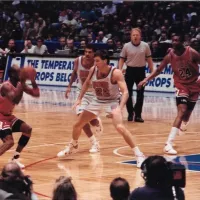
Basketball is a team sport played on a rectangular court...

Instagram is a globally prominent social media platform centered on...
Seattle is the most populous city in Washington and the...

Verizon Communications is a leading American telecommunications company headquartered in...
Washington D C the capital of the United States is...
Los Angeles California's most populous city and Southern California's hub...
Trending
4 hours ago Liudmila Samsonova Faces Lilli Tagger in WTA Osaka Round of 32 Match
4 hours ago Charlie Cox Discusses Daredevil Ending and Marvel Future After Series Cancellation
4 hours ago Shaquille O'Neal Pursues Fifth College Degree While Emphasizing Value of Real-World Experience
4 hours ago Von Miller Addresses Disappointing Start and Awaits More Playing Opportunities with Dallas Cowboys

4 hours ago Sunil Malhotra Debuts as New Voice of Apu on The Simpsons Replacing Hank Azaria
4 hours ago Speculation Grows Regarding Mike Tomlin’s Potential Move to an NFC Team
Popular

Ilhan Omar is a prominent American politician currently serving as...
Ken Paxton is an American politician and lawyer serving as...
Michael Joseph Jackson the King of Pop was a highly...

Elon Musk is a visionary entrepreneur and engineer known for...

Cristiano Ronaldo widely considered one of the greatest footballers captains...

Greta Thunberg is a Swedish climate activist who gained international...