History of Whale in Timeline


Whales are a diverse group of aquatic placental mammals within the infraorder Cetacea, generally referring to the larger members excluding dolphins and porpoises. They are part of the order Cetartiodactyla, closely related to hippopotamuses, with a divergence history dating back approximately 54 million years. The two main parvorders of whales are baleen whales (Mysticeti) and toothed whales (Odontoceti), diverging around 34 million years ago. Mysticetes comprise four families (Balaenopteridae, Balaenidae, Cetotheriidae, and Eschrichtiidae), while Odontocetes include several families including Monodontidae, Physeteridae, Kogiidae, Ziphiidae, and also encompass dolphins and porpoises, which are sometimes excluded from the informal definition of whales.
3 hours ago : AI Whale Spotting Tech Aids Gray Whales Amid California Deaths Spike.
AI technology is being deployed to protect gray whales in San Francisco Bay, as California grapples with an increase in whale deaths potentially linked to climate change and other factors.


1946: IWC moratorium limiting annual whale catch
In 1946, the International Whaling Commission (IWC) placed a moratorium, limiting the annual whale catch, resulting in yearly profits of close to US$31m for "subsistence" hunters.
1946: International Whaling Commission moratorium
Whaling decreased substantially after 1946 when the International Whaling Commission placed a moratorium which set a catch limit for each country
1960: Navy studies marine mammal abilities
Between 1960 and 1992, the Navy studied marine mammals' abilities with sonar, using dolphins and then belugas, to improve the detection of underwater objects.
1970: Whale song recordings and orchestral composition
In 1970, a recording of Song with a Humpback Whale by a team of marine scientists became popular. Also in 1970, Alan Hovhaness's orchestral composition And God Created Great Whales includes the recorded sounds of humpback and bowhead whales.
1982: International Whaling Commission moratorium
In 1982, the International Whaling Commission (IWC) placed a moratorium setting catch limits for each country, excluding aboriginal groups, due to the scale of whale harvesting.
1992: Navy studies marine mammal abilities
Between 1960 and 1992, the Navy studied marine mammals' abilities with sonar, using dolphins and then belugas, to improve the detection of underwater objects.
2003: The Snail and the Whale children's book
In 2003, The Snail and the Whale, a children's book by Julia Donaldson and Axel Scheffler featuring a whale, was published.
2004: End of the IWC moratorium exclusion for aboriginal groups
In 2004, the exclusion of aboriginal groups from the International Whaling Commission (IWC) moratorium ended, thereby setting catch limits for them as well.
2004: Aboriginal groups catch limit set by the IWC moratorium
Up until 2004, the International Whaling Commission moratorium excluded aboriginal groups. As of 2015, aboriginal communities are allowed to take 280 bowhead whales off Alaska and two from the western coast of Greenland, 620 grey whales off Washington state, three common minke whales off the eastern coast of Greenland and 178 on their western coast, 10 fin whales from the west coast of Greenland, nine humpback whales from the west coast of Greenland and 20 off St. Vincent and the Grenadines each year.
2006: Belugas in captivity
As of 2006, 30 belugas were in Canada and 28 in the United States, and 42 deaths in captivity had been reported up to that time.
2008: Sperm whales sleep in vertical postures
In 2008, a study found that sperm whales sleep in vertical postures just under the surface in passive shallow "drift-dives", generally during the day. During these dives, whales do not respond to passing vessels unless they are in contact, suggesting they possibly sleep during such dives.
2008: Global Whale Watching
In 2008, an estimated 13 million people went whale watching globally, generating US$2.1 billion in tourism revenue and employing around 13,000 workers.
2010: Whale pump theory
In 2010, a study introduced the "whale pump" theory, considering whales a positive influence on ocean fisheries. Whales transport nutrients like nitrogen from the depths to the surface, reversing the idea that whales accelerate nutrient loss to the bottom. In the Gulf of Maine, this nitrogen input surpasses all rivers combined.
2013: Chile has the most fatal whale-ship collisions
From 2013 up to at least 2023, Chile has been the country with the most registered fatal whale-ship collisions.
2015: Aboriginal whale catch allowances
As of 2015, aboriginal communities are allowed to take 280 bowhead whales off Alaska and two from the western coast of Greenland, 620 grey whales off Washington state, three common minke whales off the eastern coast of Greenland and 178 on their western coast, 10 fin whales from the west coast of Greenland, nine humpback whales from the west coast of Greenland and 20 off St. Vincent and the Grenadines each year.
2020: Whale species at risk
As of 2020, six cetacean species are considered at risk. These species are ranked "Critically Endangered" (North Atlantic right whale), "Endangered" (blue whale, North Pacific right whale, and sei whale,) and "Vulnerable" (fin whale and sperm whale).
2023: Chile has the most fatal whale-ship collisions
From 2013 up to at least 2023, Chile has been the country with the most registered fatal whale-ship collisions.
Mentioned in this timeline
The United States of America is a federal republic of...

Japan is an East Asian island country located in the...
Canada is a North American country spanning from the Atlantic...

Books are a means of storing information as text or...
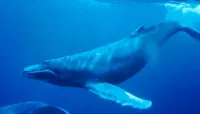
Humpback whales are baleen whales specifically rorquals belonging to the...
Greenland is an autonomous territory within the Kingdom of Denmark...
Trending

7 minutes ago Frances Tiafoe's girlfriend reveals despicable treatment by tournament staff; Hamburg Open highlights.
8 minutes ago Record Numbers of Americans Emigrating and Renouncing Citizenship: A Growing Trend

1 hour ago Prince William's FIFA World Cup US Visit: George possibility and Harry meeting?
1 hour ago Barney Frank, liberal stalwart and LGBTQ trailblazer, dies at 86: A Legacy

2 hours ago Florida Georgia Line Reunion: Duo Planning Tour After 5-Year Break, Sources Say

2 hours ago Colin Jost's SNL Joke Swap with Michael Che Ends in Near Haircut
Popular

Thomas Massie is a Republican politician and engineer representing Kentucky's...
Michael Joseph Jackson the King of Pop was a highly...

Ken Paxton is an American politician and lawyer serving as...

William Franklin Graham III known as Franklin Graham is an...

Sir David Attenborough is a highly acclaimed English broadcaster natural...

Paula White-Cain is a prominent American televangelist and key figure...