Career Timeline of Wifredo Lam: Major Achievements and Milestones


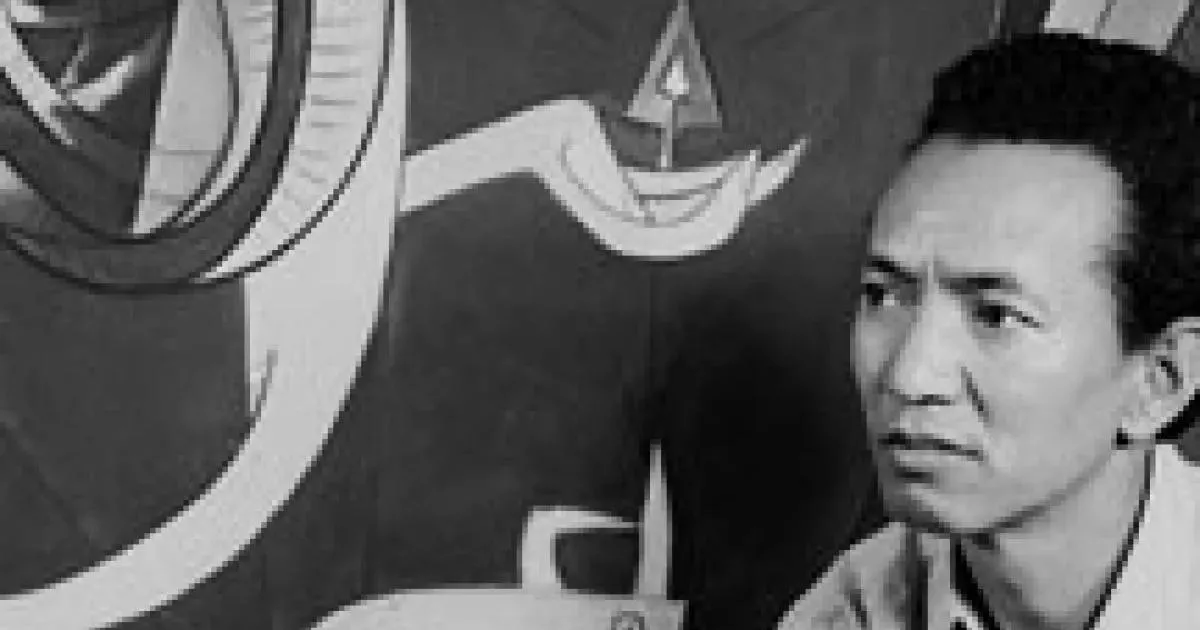
How Wifredo Lam built a successful career. Explore key moments that defined the journey.
Wifredo Lam was a Cuban artist who aimed to represent and revitalize Afro-Cuban culture. He developed a unique style characterized by hybrid figures, influenced by artists like Picasso and Matisse. While primarily a painter, Lam also explored sculpture, ceramics, and printmaking later in his career. His distinctive visual style significantly influenced other artists.
1923: Studying in Madrid
In 1923, Lam began studying in Madrid under Fernando Álvarez de Sotomayor y Zaragoza, curator of the Museo del Prado, and spent his evenings working alongside young, nonconformist painters. He also discovered the work of Hieronymus Bosch and Pieter Bruegel I at the Prado.


1936: Siding with the Republicans
In 1936, at the outbreak of the Spanish Civil War, Lam sided with the Republicans and used his talent to fashion Republican posters and propaganda.
1938: Moved to Paris and trip to Mexico
In 1938, Lam moved to Paris and gained the support of Picasso, who introduced him to leading artists. In the same year, he traveled to Mexico and stayed with Frida Kahlo and Diego Rivera.
1938: Emotional intensity in work
In 1938, Lam produced works with emotional intensity and a stronger African influence, seen in the figures' angular outlines and synthesis of bodies. The subject matter ranged from interacting couples to women in despair.
1939: First exhibition at the Galerie Pierre Loeb and exhibit with Picasso
In 1939, Pierre Loeb gave Lam his first exhibition at the Galerie Pierre Loeb, which received an enthusiastic response from critics. Lam and Picasso also exhibited their work together at the Perls Galleries in New York in the same year.
1943: Began The Jungle
In 1943, Lam began his best-known work, The Jungle. It reflected his mature style, depicting four figures with mask-like heads, half-emerging from dense tropical vegetation.
1950: Worked with René Portocarrero and others on ceramics
In 1950, Lam worked with René Portocarrero and others on ceramic in the village of Santiago de Las Vegas.
1955: Paintings at Havana University
In 1955, Lam exhibited a series of paintings at Havana University to demonstrate his support for the students' protests against Batista's dictatorship.
1960: Established a studio in Albissola Marina
In 1960, Lam established a studio in Albissola Marina on Italy's northwest coast and settled there with his wife Lou Laurin and their three sons.
1962: A Trois Centimetres de la Terre was painted
In 1962, Lam's A Trois Centimetres de la Terre was painted. It was later sold for a record price.
1965: Painted 'El Tercer Mundo'
In 1965, six years after the revolution, Lam showed his loyalty to Castro and his goals of social and economic equality by painting El Tercer Mundo (The Third World) for the presidential palace.
1966: Retrospectives of work throughout Europe
Between 1966 and 1967, there were many retrospectives of Lam's work throughout Europe.
1967: Retrospectives of work throughout Europe
Between 1966 and 1967, there were many retrospectives of Lam's work throughout Europe.
1975: First ceramic exhibition
In 1975, at the encouragement of Asger Jorn and after being intrigued by the local pottery-making, Lam had his first ceramic exhibition.
Mentioned in this timeline
The United States of America is a federal republic primarily...
Las Vegas Nevada is the state's most populous city and...
World War II - was a global conflict between the...
Miami is a major coastal city in Florida and the...
France officially the French Republic is primarily in Western Europe...
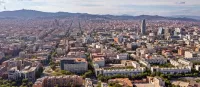
Barcelona the vibrant capital of Catalonia Spain is globally renowned...
Trending
3 hours ago Carlos Alcaraz Joins Spain Squad for 2026 Davis Cup Final 8 in Bologna
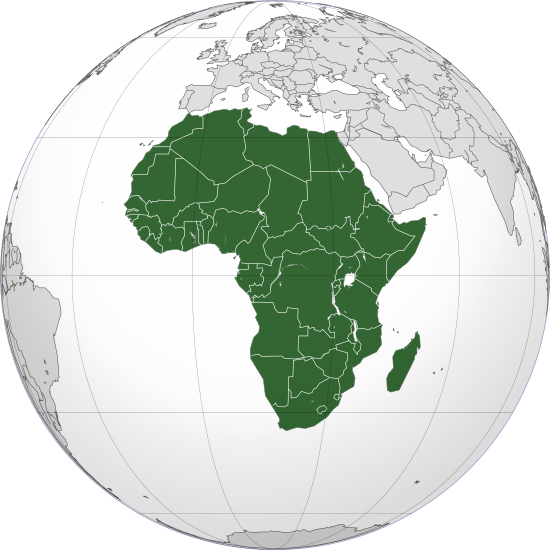
3 hours ago Morocco Emerges as Africa's Top Investment Hub Surpassing Previous Leaders

3 hours ago Kyle Larson Secures First NASCAR Cup Series Victory at Talladega Amidst Controversy
3 hours ago FBI Conducts Raid on Beverly Hills Mansion Linked to Eric Swalwell Investigation
4 hours ago Tim Daly and Tea Leoni Star in New NBC Sitcom Newlyweds

4 hours ago Jennifer Lawrence Launches Her New Haircare Brand Named MES
Popular

Ilhan Omar is a prominent American politician currently serving as...
Ken Paxton is an American politician and lawyer serving as...

Elon Musk is a visionary entrepreneur and engineer known for...
William Franklin Graham III known as Franklin Graham is an...
Barack Obama the th U S President - was the...
Greg Abbott is the current and th Governor of Texas...