History of Xfinity in Timeline



Xfinity, a brand of Comcast Corporation, provides cable television, internet, telephone, and wireless services to consumers. Launched in 2010, it replaced the Comcast brand for marketing these services. Xfinity is a major telecommunications provider in the United States, offering a range of connectivity and entertainment options.
1996: Start of Internet Services
In 1996, Comcast began offering internet services by helping found the @Home Network, which sold internet service through Comcast's cable lines.


2002: Customer Network Transition
In 2002, after Excite@Home filed for bankruptcy, Comcast moved approximately 950,000 internet customers to its own network.
2003: Average Cost Increase
From 2003 to 2012, the average cost of Comcast's Digital Basic cable subscription had increased 72%.
2005: Launch of Xfinity Voice in Some Markets
In 2005, Xfinity Voice, formerly Comcast Digital Voice, was launched in some markets as a Voice Over IP cable telephony service.
2006: Xfinity Voice Expansion
In 2006, Xfinity Voice expanded to all of Comcast's markets.
September 2007: Definition of excessive use by Comcast
In September 2007, Comcast defined excessive use as the equivalent of 30,000 songs, 250,000 pictures or 13 million emails in a month.
September 2007: Rumors of BitTorrent Throttling
In September 2007, rumors emerged that Comcast was throttling or blocking internet traffic transmitted via the BitTorrent protocol, which Comcast initially denied.
2007: Shutdown of Comcast Digital Phone
Around late 2007, Comcast shut down its older service, Comcast Digital Phone.
2007: Peak of Cable Television Customers
Comcast's cable television customers peaked in 2007 with about 24.8 million customers, after which they began to decline.
September 2008: Lawsuit over network management
After an official investigation by the FCC and Comcast ended traffic discrimination, Comcast filed a lawsuit in September 2008, over the illegality of its network management.
October 1, 2008: Introduction of Monthly Bandwidth Cap
On October 1, 2008, Comcast introduced a 250 GB monthly bandwidth cap to its broadband service, combining both upload and download towards the monthly limit.
2009: Comcast Business Class Offers 100 Mbit/s Internet
In 2009, Minneapolis–Saint Paul became the first city in which Comcast Business Class offered 100 Mbit/s Internet service, including Microsoft Communication Services.
2009: Voice Customers
In 2009, after completing the transition from their old service, Comcast had 7.6 million voice customers.
2009: FCC questioning of data traffic separation
In 2009, the FCC questioned Comcast's practice of prioritizing voice data using a private network for Xfinity Voice, which critics argued violated net neutrality.
February 3, 2010: Re-branding of consumer triple play service
On February 3, 2010, Comcast rebranded its consumer triple play service offerings under the name Xfinity, renaming Comcast Digital Cable to "Xfinity TV", Comcast Digital Voice to "Xfinity Voice", and Comcast High-Speed Internet to "Xfinity Internet".
2010: Xfinity Brand Introduction
In 2010, Comcast introduced the Xfinity brand to market its consumer cable television, internet, telephone, and wireless services, which were previously marketed primarily under the Comcast name.
2010: Overturning of FCC illegality ruling
In 2010, Comcast overturned the illegality of its network management as the court ruled that the FCC lacked the authority to enforce net neutrality under the FCC's then current regulatory policy.
2010: Netflix-Level 3 Agreement
In 2010, Netflix signed an agreement with Level 3 Communications to carry its data, leading to a dispute over peering agreements with Comcast.
January 2011: Internet Essentials Program Launch
In January 2011, Comcast launched its "Internet Essentials" program, offering low-cost internet service to families with children eligible for free or reduced-price school lunches. This program was required by the FCC as a condition for allowing Comcast's acquisition of NBCUniversal.
February 20, 2011: Xfinity 3D Channel Launch
On February 20, 2011, Comcast launched a 3DTV channel known as Xfinity 3D on Xfinity cable systems.
March 2011: Comcast Launches Solution Provider Program
In March 2011, Comcast created an indirect sales channel called the Solution Provider Program. This program enables telecommunications consultants and system integrators to sell Comcast's Business Class Internet, Voice, and high-capacity Ethernet services to small and mid-market businesses.
2011: Overcharging for Service Protection Plan
From 2011 to 2015, customers unknowingly paid $71 million for the plan. The lawsuit against Comcast and Xfinity cited overcharging for call service fees, knowingly using improper credit screening practices, and lying about the costs of its Service Protection Plan to 49,660 customers on support calls.
2011: Largest Provider of cable internet access in the United States
In 2011, Comcast became the largest provider of cable internet access in the United States, servicing 40% of the market.
May 2012: X1 Platform Soft Launch
In May 2012, Comcast soft-launched X1, a new hardware and software platform for its television services, in Boston. It features wider support for internet content, video streaming apps, and a voice-recognition remote control.
2012: Residential Line Provider Ranking
At the start of 2012, Comcast was the United States' third-largest residential line provider, supplying 9.34 million residential lines.
2012: Average Cost Increase
From 2003 to 2012, the average cost of Comcast's Digital Basic cable subscription had increased 72%.
2012: Modification of Bandwidth Policy
In 2012, Comcast modified its bandwidth policy, replacing the cap with a data threshold and increasing it to 300GB in some markets. Customers exceeding this threshold were charged $10 for every 50 GB above the limit and could purchase an "unlimited" data add-on for $30.
June 2013: Internet Essentials Participation
As of June 2013, approximately 220,000 households out of an estimated 2.60 million eligible households were participating in Comcast's "Internet Essentials" program.
2013: End of the year
As of the end of 2013, Comcast had a total of 21.7 million cable customers.
2013: Xfinity Voice Subscribers
As of the end of 2013, Xfinity Digital Voice had reached 10.7 million subscribers.
January 2014: Introduction of Broadcast TV Fee
Since January 2014, Comcast has charged a Broadcast TV Fee to "defray the rising costs of retransmitting broadcast television signals".
February 2014: New FCC Justification
As of February 2014, the FCC announced a new justification to avoid extensive regulation for net neutrality.
February 2014: Netflix-Comcast Agreement
In February 2014, Netflix and Comcast confirmed that Netflix was paying Comcast to connect to its network.
March 2014: Internet Essentials Program Extended Indefinitely
In March 2014, Comcast announced that the "Internet Essentials" program would be extended indefinitely.
June 25, 2014: American Broadcasting Cos. v. Aereo, Inc. Decision
On June 25, 2014, the American Broadcasting Cos. v. Aereo, Inc. case was decided in favor of the broadcasters in a 6–3 decision, determining that Aereo was a retransmitter and thus required to pay retransmission fees. Comcast's subsidiary, NBCUniversal, was one of the broadcasters involved.
December 16, 2014: Xfinity 3D Channel Closure
On December 16, 2014, the Xfinity 3D channel on Xfinity cable systems was shut down.
2014: Class Action Lawsuit Filed
In 2014, Comcast faced a proposed class action lawsuit in California citing violations of the Computer Fraud and Abuse Act due to concerns over its public Wi-Fi hotspots and their impact on customer resources, security, and liability.
2015: Overcharging for Service Protection Plan
From 2011 to 2015, customers unknowingly paid $71 million for the plan. The lawsuit against Comcast and Xfinity cited overcharging for call service fees, knowingly using improper credit screening practices, and lying about the costs of its Service Protection Plan to 49,660 customers on support calls.
2015: Comcast Becomes NASCAR Sponsor
In 2015, Comcast became a sponsor of NASCAR, with Xfinity named one of the "Premier Partners" of the NASCAR Cup Series, and title sponsor of NASCAR's second-tier national series, which became known as the NASCAR Xfinity Series.
2015: Video Subscriber Increase
In the fourth quarter of 2015, Comcast gained 89,000 new video subscribers, marking their highest gain since 2007.
April 27, 2016: Announcement of Increased Data Threshold
On April 27, 2016, Comcast announced that it would raise its data threshold in trial markets to 1 TB by June 2016.
June 2016: Data Threshold Increase
By June 2016, Comcast raised its data threshold in trial markets to 1 TB.
August 2016: Washington State Sues Comcast and Xfinity
In August 2016, Washington State sued Xfinity and its parent company, Comcast, for $100 million over claims that Comcast violated the state's Consumer Protection Act.
October 2016: Bandwidth Thresholds
In October 2016, Comcast announced that bandwidth thresholds would be implemented in the majority of its markets (outside of New York and the northeast) beginning November 1, 2016.
November 1, 2016: Bandwidth Threshold Implementation
On November 1, 2016, Comcast announced that bandwidth thresholds would be implemented in the majority of its markets (outside of New York and the northeast).
April 6, 2017: Xfinity Mobile Launched
On April 6, 2017, Comcast launched Xfinity Mobile, a mobile virtual network operator (MVNO) on the Verizon mobile network.
May 2017: xFi Platform Launch
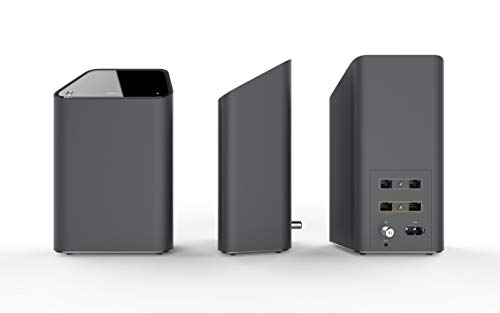
In May 2017, Comcast launched the xFi platform, a new software platform for its Arris 1682G and Cisco 3941T/3939 modems. Comcast also unveiled the xFi Advanced Gateway, a new router designed to facilitate faster Wi-Fi speeds.
June 19, 2018: Class Action Lawsuit Filed Against Comcast and Xfinity
On June 19, 2018, Elizabeth O'Neill, an Illinois customer, filed a putative class action lawsuit against Xfinity and its parent company Comcast, alleging unauthorized opening of Xfinity Mobile accounts and purchases of new cell phones using customer information from existing internet and cable accounts.
July 26, 2018: High-Speed Internet Customers
As of July 26, 2018, Comcast had 26.5 million high-speed internet customers.
2018: Xfinity Mobile Surpasses 1 Million Subscribers
In 2018, Xfinity Mobile surpassed 1 million subscribers.
June 2019: Ruling Against Comcast in Washington State Lawsuit
In June 2019, a King County court judge ruled in favor of Washington State and against Comcast, ordering Comcast to pay $9.1 million in penalties in addition to providing restitution to customers within 60 days.
2019: Xfinity Flex Launched
In 2019, Comcast launched Xfinity Flex, an add-on for Xfinity Internet that offers subscribers a digital media player based on the X1 platform with access to over-the-top media services.
May 18, 2020: Xfinity Mobile Announces Plans with 5G Data
On May 18, 2020, Xfinity Mobile announced plans with 5G data.
November 23, 2020: Announcement of 1.2TB Data Cap
On November 23, 2020, Comcast announced a new 1.2TB data cap to be implemented for all of the remaining areas in the northeast by March 2021.
2020: Xfinity Sponsors Xfinity 500
Since 2020, Xfinity has sponsored the penultimate race in the Cup Series, the Xfinity 500 at Martinsville Speedway.
March 2021: Postponement of 1.2TB Data Cap Implementation
In March 2021, the planned implementation of the 1.2TB data cap in the northeast was postponed due to pressure from the Pennsylvanian attorney general.
October 2021: XClass TV Launched
In October 2021, Comcast launched XClass TV, a line of Hisense-manufactured smart TVs based on X1, and sold exclusively through Walmart.
December 2022: DOCSIS 4.0 Trial
In December 2022, Comcast announced that it had trialed symmetric, 10-gigabit service using DOCSIS 4.0.
2022: Xfinity Flex and XClass TV Rebranded Under Xumo
In 2022, Xfinity Flex and XClass TV were brought under Comcast's Xumo joint venture with Charter Communications, and rebranded as Xumo Stream Box and Xumo TV respectively.
June 2023: DOCSIS 4.0 Service Deployment
In June 2023, Comcast deployed symmetric, 10-gigabit service using DOCSIS 4.0 for selected Gigabit Pro fiber business customers.
December 20, 2023: Xfinity Data Breach Exposes Millions of Records
On December 20, 2023, it was revealed that an Xfinity data breach had exposed the personal data of 35.8 million people, including usernames, passwords, and answers to security questions, due to a vulnerability in the Citrix software used.
2023: CEO Update
As of 2023, Dave Watson is the CEO of Xfinity, Brian L. Roberts is the chairman, and Catherine Avgiris is the CFO.
2023: Xfinity Markets Broadband Services as "Xfinity 10G Network"
In 2023, Comcast began to market all Xfinity broadband services as the "Xfinity 10G Network", related to its introduction of 10-gigabit fiber service for business customers.
January 2024: Comcast Agrees to Stop Using "Xfinity 10G Network" Branding
In January 2024, Comcast agreed to stop using the "Xfinity 10G Network" branding in a misleading manner after the National Advertising Division of the Better Business Bureau (BBB) ruled that the marketing was misleading.
April 2024: Rogers Rebrands as Rogers Xfinity
In April 2024, Rogers announced a deeper technology partnership with Comcast and began rebranding its cable TV and internet products as "Rogers Xfinity".
February 2025: Comcast Renews NASCAR Cup Series Sponsorship
In February 2025, Comcast and NASCAR announced that it would renew its sponsorship of the Cup Series, and that Xfinity would begin sponsoring NASCAR's fastest lap award across its three national series.
May 2025: Xfinity Mobile Arena Naming Rights
In May 2025, Xfinity Mobile became the new naming rights sponsor of Philadelphia's Wells Fargo Center, renaming it Xfinity Mobile Arena.
2025: Xfinity Named Official Television Provider of NBA and WNBA
In 2025, as part of NBCUniversal's rights to the league, Xfinity was named the official television provider of the NBA and WNBA.
2026: Xfinity Series Sponsorship Ends
In 2026, Comcast did not renew its sponsorships of the Xfinity Series after the 2025 season, with O'Reilly Auto Parts later announced as its new title sponsor.
Mentioned in this timeline

Microsoft an American multinational technology corporation headquartered in Redmond Washington...

Verizon Communications is a leading American telecommunications company headquartered in...
The National Broadcasting Company NBC is a major American commercial...

Bubba Wallace Jr is a prominent American professional stock car...
Kyle Busch a prominent American stock car racing driver and...
Illinois is a Midwestern state in the United States bordered...
Trending

4 months ago Cardi B Addresses Tour Commitment, Phoenix Concert Details, and Expresses Gratitude.

1 year ago Carli Lloyd's emotional Hall of Fame speech: An apology to USWNT teammates.

1 month ago Knicks fans dominate 76ers series: Hart's jab, Maxey's admission, ticket donations.

3 months ago Fox Sports' tweet on Israel baseball triggers meme, Anti-Semitic backlash on X.

Mikel Oyarzabal is a Spanish professional footballer who plays as a left winger or forward He is the captain of...
1 month ago NuScale Power's Stock Potential: A Look at Future Growth and Nuclear Market Trends
Popular

Elon Musk is a businessman and public official primarily known...

Michael Joseph Jackson the King of Pop was a highly...

Cristiano Ronaldo widely considered one of the greatest footballers captains...
Ron Harper is a retired American professional basketball player who...

Jalen Brunson is an American professional basketball player currently playing...
Graham Cunningham Platner is an American oyster farmer and Marine...