


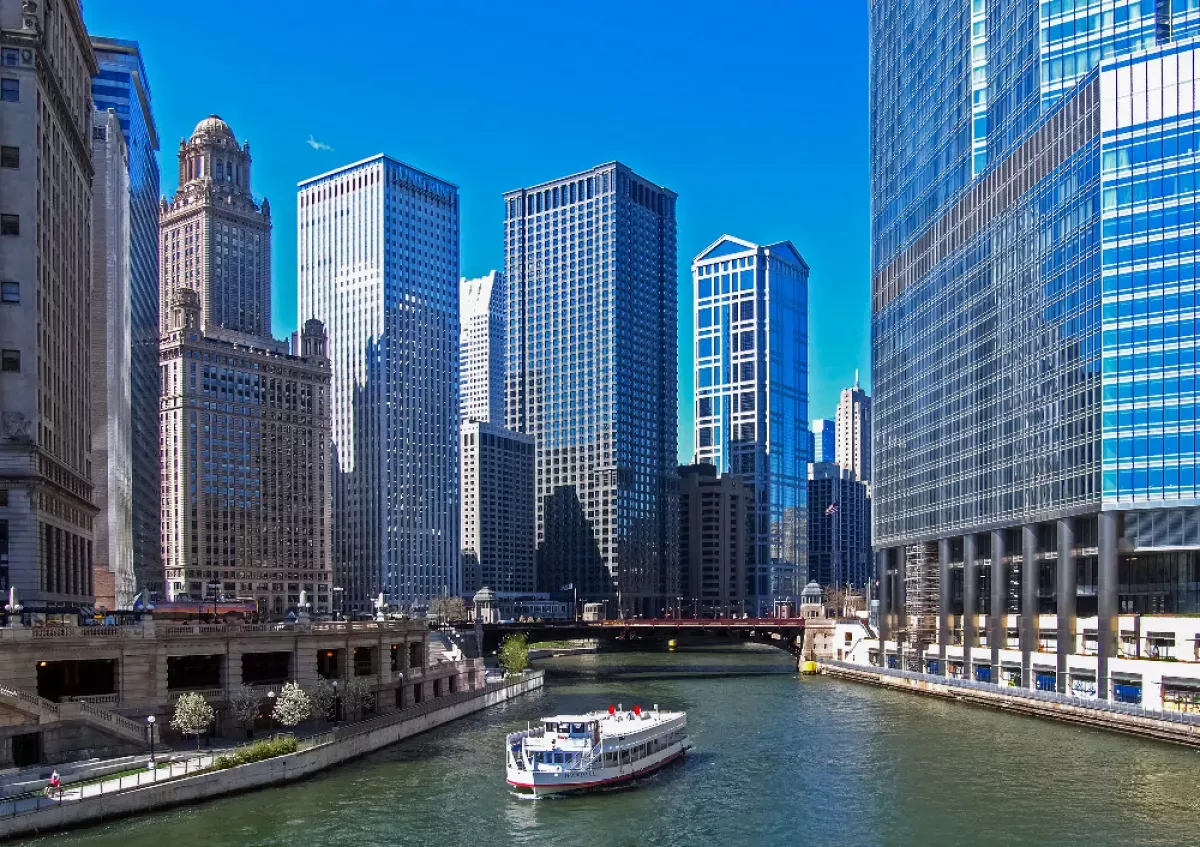
Chicago, situated on Lake Michigan's western shore, is the most populous city in Illinois and the Midwest. As the third-largest city in the United States with a population of 2.74 million (2020), it anchors a metropolitan area of 9.41 million residents, also the nation's third-largest. Chicago serves as the county seat of Cook County, the second-most populous county in the U.S.
7 hours ago : Nine-Year-Old Boy Shoots and Critically Injures Thirteen-Year-Old in Chicago
A 13-year-old boy is in critical condition after being shot by a 9-year-old boy inside a home on Chicago's South Side. Police are investigating the circumstances of the incident, which has left the community in shock due to the young ages of those involved.


1900: End of the Chicago Literary Renaissance
Around 1900 marked the end of the period from the Great Chicago Fire that would become known as the Chicago Literary Renaissance, which had a lasting influence on American literature.
1900: Chicago became the fifth largest city in the world
By 1900, Chicago was the fifth largest city in the world behind Berlin, Paris, New York, and London.
1900: Reversal of the Chicago River in 1900
In 1900, Chicago resolved the problem of sewage contamination by completing a major engineering project that reversed the flow of the Chicago River, directing it away from Lake Michigan.
1900: Immigration Boom in 1900
In 1900, Chicago's flourishing economy attracted large numbers of new immigrants from Europe and migrants from the Eastern United States. More than 77% of the population was either foreign-born or born in the United States of foreign parentage.
1901: Establishment of Joliet Junior College
In 1901, William Rainey Harper was instrumental in the creation of the junior college concept, establishing nearby Joliet Junior College as the first in the nation.
1901: White Sox Play on South Side and Win Pennant
Since 1901, The Chicago White Sox have played on the South Side continuously since 1901. They also won the American League pennant.
1905: Benjamin Ferguson's trust
In 1905, Benjamin Ferguson established a trust, funding outdoor public art in Chicago.
1906: Cubs and White Sox Face Each Other in World Series
In 1906, the Chicago Cubs and the Chicago White Sox faced each other in a World Series.
1906: White Sox Win World Series
In 1906, the Chicago White Sox won the World Series.
1907: Bugmobile Founded in Chicago
In 1907, Chicago hosted the Brass Era car builder Bugmobile, which was founded in the city.
1908: Cubs Last World Series Win Until 2016
In 1908, the Chicago Cubs last won a World Series until 2016.
1910: Chicago's black population doubled
Between 1910 and 1920, Chicago's black population doubled as part of the Great Migration.
1910: Increased African American Population by 1910
Between 1910 and 1930, the African American population of Chicago increased dramatically.
1910: Railroad Passenger Service in 1910
By 1910, over 20 railroads operated passenger service out of six different downtown terminals in Chicago, which had become the nation's railroad hub in the 1800s.
1912: Poetry Magazine Founded
In 1912, Harriet Monroe founded Poetry magazine, which discovered poets such as Gwendolyn Brooks and published T. S. Eliot's "The Love Song of J. Alfred Prufrock".
1917: White Sox Win World Series
In 1917, the Chicago White Sox won the World Series.
1919: Chicago Race Riot of 1919
In 1919, Chicago experienced racial tensions and violence, including the Chicago race riot.
1919: Gangster Era Beginning in 1919
In 1919, the ratification of the 18th amendment ushered in the beginning of the gangster era, with the production and sale of alcoholic beverages becoming illegal.
1920: Chicago's black population doubled again
Between 1920 and 1930, Chicago's black population doubled again, continuing the trend of the Great Migration.
1920: Annexation of Neighboring Townships Concluded in 1920
Chicago significantly grew in size and population by incorporating many neighboring townships between 1851 and 1920.
1920: Tenant Rent Strikes in 1920
From 1920 to 1921, Chicago was affected by a series of tenant rent strikes, which led to the formation of the Chicago Tenants Protective association.
1921: Tenant Rent Strikes in 1921
From 1920 to 1921, Chicago was affected by a series of tenant rent strikes, which led to the passage of the Kessenger tenant laws.
1924: Formation of Society for Human Rights in 1924
In 1924, Chicago was the first American city to have a homosexual-rights organization, called the Society for Human Rights.
1926: Blackhawks Begin Play
In 1926, the Chicago Blackhawks of the National Hockey League (NHL) began play.
1927: William Thompson Elected Mayor
In 1927, William Thompson was voted into office, the last time the citizens of Chicago elected a Republican mayor.
1928: Chicago Tax Revolt in 1928
In 1928, the city of Chicago witnessed a tax revolt.
1929: St. Valentine's Day Massacre in 1929
In 1929, Chicago was the location of the infamous St. Valentine's Day Massacre, where Al Capone sent men to kill members of a rival gang.
1930: Increased African American Population by 1930
Between 1910 and 1930, the African American population of Chicago increased dramatically.
1930: Chicago's black population
By 1930, two-thirds of Chicago's black population lived in areas that were 90% black in racial composition.
1930: Black Belt emerged
By 1930, two-thirds of Chicago's black population lived in sections of the city which were 90% black in racial composition.
1931: Mayoral election in 1931
The Republican political machine in Chicago was utterly destroyed by the economic crisis, and every mayor since 1931 has been a Democrat.
1933: Industrial job losses in 1933
By 1933 over 50% of industrial jobs in Chicago had been lost, and unemployment rates amongst blacks and Latinos in the city were over 40% due to the Great Depression.
1933: Resolution of fiscal crisis in 1933
The fiscal crisis in Chicago was resolved by 1933, and at the same time, federal relief funding began to flow into the city.
1933: End of Prohibition in 1933
The gangster era, which began in 1919, roughly spans until 1933 when Prohibition was repealed.
July 24, 1934: Chicago's highest temperature reading
On July 24, 1934, Chicago recorded its highest official temperature reading of 105 °F (41 °C).
1934: Century of Progress International Exposition in 1934
In 1934, the city of Chicago celebrated its centennial by hosting the Century of Progress International Exposition World's Fair.
1935: Workers Alliance of America Organization in 1935
By 1935, the Workers Alliance of America began organizing the poor, workers, and the unemployed in Chicago.
1937: Memorial Day Massacre in 1937
In the spring of 1937, Republic Steel Works witnessed the Memorial Day massacre of 1937 in the neighborhood of East Side in Chicago.
1939: Steel Production During World War II starting in 1939
Starting in 1939, during World War II, Chicago produced more steel than the United Kingdom every year until 1945.
December 2, 1942: First Controlled Nuclear Reaction in 1942
On December 2, 1942, physicist Enrico Fermi conducted the world's first controlled nuclear reaction at the University of Chicago as part of the Manhattan Project.
1942: Boulevard System Building Continued
The building of the Chicago boulevard system continued intermittently until 1942.
1950: Chicago population reached its peak
By the 1950 census, Chicago's population reached its highest recorded level of 3.6 million.
1950: Chicago's population peaked
In 1950, Chicago's population peaked at over 3.6 million.
1953: Moore's Large Interior Form
In 1953, Moore created Large Interior Form, which became part of Chicago's public art collection.
1955: Election of Mayor Richard J. Daley in 1955
Richard J. Daley, a Democrat, was elected mayor of Chicago in 1955.
1956: O'Hare Community Area established in 1956
In 1956, sociologists at the University of Chicago established O'Hare as one of the 75 distinct community areas.
1956: Lithuanian Opera Company Founded
In 1956, the Lithuanian Opera Company of Chicago was founded by Lithuanian Chicagoans to present operas in Lithuanian.
1956: Annexation of O'Hare Airport Land in 1956
In 1956, the city of Chicago conducted its last major expansion when it annexed the land under O'Hare airport.
1966: Chicago Freedom Movement in 1966
In 1966, Martin Luther King Jr. and Albert Raby led the Chicago Freedom Movement, which resulted in agreements with Mayor Richard J. Daley.
April 21, 1967: F4 Oak Lawn tornado
On April 21, 1967, an F4 Oak Lawn tornado moved through Chicago's South Side, continuing as a waterspout over Lake Michigan.
1968: 1968 Democratic National Convention
In 1968, Chicago hosted the tumultuous Democratic National Convention, marked by physical confrontations between police, anti-war protesters, journalists and bystanders.
1968: Chicago Imagists Produce Paintings
In 1968, members of the Chicago Imagists, such as Roger Brown, Leon Golub, Robert Lostutter, Jim Nutt, and Barbara Rossi produced bizarre representational paintings.
1968: Joseph Jefferson Awards Established
Since 1968, the Joseph Jefferson Awards have been given annually to acknowledge excellence in theater in the Chicago area.
1969: Chicago Imagists Produce Paintings
In 1969, members of the Chicago Imagists, such as Roger Brown, Leon Golub, Robert Lostutter, Jim Nutt, and Barbara Rossi produced bizarre representational paintings.
1973: Robert P. Hanrahan Represents Chicago
From 1973, Robert P. Hanrahan represented a significant portion of Chicago in the United States House of Representatives for one term.
1974: Willis Tower Becomes World's Tallest Building in 1974
In 1974, the Sears Tower (now known as the Willis Tower) became the world's tallest building.
1975: Robert P. Hanrahan No Longer Represents Chicago
Until 1975, Robert P. Hanrahan represented a significant portion of Chicago in the United States House of Representatives.
1977: Chicago Marathon Held
Since 1977, the Chicago Marathon has been held each year except for 1987.
1979: Election of Jane Byrne in 1979
In 1979, Jane Byrne was elected as the city's first female mayor of Chicago.
1979: Pope John Paul II visited Chicago
Pope John Paul II visited Chicago in 1979.
1980: Edgewater Community Area established in 1980
In 1980, sociologists at the University of Chicago established Edgewater as one of the 75 distinct community areas.
1983: Election of Harold Washington in 1983
In 1983, Harold Washington became the first black mayor of Chicago.
1983: Harold Washington Elected
In 1983, the independents gained control of city government with the election of Harold Washington.
January 20, 1985: Record cold temperature
On January 20, 1985, Chicago experienced its lowest official temperature, recorded at −27 °F (−33 °C).
1985: Bears Win Super Bowl XX
In 1985, the Chicago Bears won Super Bowl XX.
1987: Harold Washington in Office
Harold Washington was in office in 1987.
1987: Re-election and Death of Harold Washington in 1987
In 1987, Harold Washington was re-elected as mayor of Chicago but died of a heart attack soon after.
1987: Half Marathon Run in Place of Chicago Marathon
In 1987, a half marathon was run in place of the Chicago Marathon.
1987: Chicago Teachers Union Strike
In September 2012, the Chicago Teachers Union went on strike for the first time since 1987, citing issues related to pay, resources, and other concerns.
1989: Richard M. Daley Becomes Mayor
From 1989, Chicago was under the leadership of its longest-serving mayor, Richard M. Daley.
1989: Election of Richard M. Daley in 1989
In 1989, Richard M. Daley, son of Richard J. Daley, was elected mayor of Chicago.
1990: Los Angeles overtakes Chicago
By the time of the official census count in 1990, Los Angeles overtook Chicago as the United States' second largest city.
1990: South Side emerged
In 1990, Chicago's South Side and its suburbs constituted the largest black majority region in the United States.
1991: Lollapalooza Originated
Lollapalooza originated in 1991 as a touring festival.
1992: Chicago River Flood in 1992
In 1992, a construction accident near the Kinzie Street Bridge caused a breach connecting the Chicago River to an abandoned freight tunnel system, leading to a flood and significant damages.
1992: Illinois "Solid Blue" in Presidential Elections
Since 1992, with Chicago's Democratic vote the state of Illinois has been "solid blue" in presidential elections.
1993: Second Parliament of the World's Religions
The second Parliament of the World's Religions was held in Chicago in 1993.
1994: FIFA World Cup Games Played at Soldier Field
In 1994, the United States hosted a successful FIFA World Cup, with games played at Soldier Field.
1995: Chicago Heatwave
During the 1995 heatwave, Midway Airport reached 109 °F (43 °C) and recorded a heat index of 125 °F (52 °C).
1995: Blue Bag Recycling Program
From 1995 to 2008, the city had a blue bag program to divert recyclable refuse from landfills.
1995: Michael Patrick Flanagan Represents Chicago
From 1995, Michael Patrick Flanagan represented a significant portion of Chicago in the United States House of Representatives for one term.
1997: Chicago Fire FC Founded
Since their founding in 1997, the Chicago Fire FC has won one league title and four U.S. Open Cups.
1997: Michael Patrick Flanagan No Longer Represents Chicago
Until 1997, Michael Patrick Flanagan represented a significant portion of Chicago in the United States House of Representatives.
1999: Judge Mathis Films in Chicago
Since 1999, Judge Mathis has filmed his syndicated arbitration-based reality court show at the NBC Tower.
2000: Population rise
Chicago experienced a population rise for the 2000 census.
2002: Freight Train Congestion
As of 2002, severe freight train congestion caused trains to take as long to get through the Chicago region as it took to get there from the West Coast of the country.
2003: Chicago Named "Most Exceptional Dining Destination"
In 2003, Robb Report named Chicago the country's "most exceptional dining destination".
2005: Lollapalooza Finds Home in Chicago
As of 2005, Lollapalooza's home has been Chicago.
2005: O'Hare International Airport Busiest Airport
In 2005, O'Hare was the world's busiest airport by aircraft movements and the second-busiest by total passenger traffic.
2005: White Sox Win World Series
In 2005, the Chicago White Sox won the World Series.
2006: Chicago Sky Founded
Before the 2006 WNBA season began, the Chicago Sky was founded as a professional basketball team.
2007: Chicago Music Industry Ranked Third
A 2007 report by the University of Chicago Cultural Policy Center ranked Chicago third among metropolitan U.S. areas in "size of music industry" and fourth among all U.S. cities in "number of concerts and performances".
2008: End of Blue Bag Recycling Program
From 1995 to 2008, the city had a blue bag program to divert recyclable refuse from landfills.
2008: Parking Meter Lease Deal
In 2008, Chicago agreed to a 75-year, $1.16 billion deal to lease its parking meter system to Chicago Parking Meters LLC.
2008: Merchandise Mart loses its own zip code
In 2008, the Merchandise Mart, once the largest building in the world, no longer had its own zip code.
2009: Chicago Relinquishes Rights to Public Street Parking
Since 2009, Chicago has relinquished rights to its public street parking.
2010: Forecasted Increase in Rail Transport
According to U.S. Department of Transportation, the volume of imported and exported goods transported via rail to, from, or through Chicago is forecast to increase nearly 150 percent between 2010 and 2040.
2010: Population Decline
By 2010, Chicago's population decreased to under 2.7 million.
2010: Blackhawks Win Stanley Cup
In 2010, the Chicago Blackhawks won the Stanley Cup.
February 23, 2011: Rahm Emanuel Wins Mayoral Election on February 23, 2011
On February 23, 2011, Rahm Emanuel won the mayoral election in Chicago.
May 16, 2011: Rahm Emanuel Sworn in as Mayor on May 16, 2011
On May 16, 2011, Rahm Emanuel was sworn in as mayor of Chicago.
2011: Winter Blizzard
In the winter of 2011, Chicago experienced a notable blizzard.
September 2012: Chicago Teachers Union Strike
In September 2012, the Chicago Teachers Union went on strike for the first time since 1987, citing issues related to pay, resources, and other concerns.
2012: Sanctuary city
Chicago officially became a "de jure" sanctuary city in 2012 with the passage of the Welcoming City Ordinance.
2012: Corruption Convictions of Chicago Alderpersons
From 2012 to 2019, approximately one third, or 33 Chicago alderpersons, were convicted on corruption charges.
July 2013: Divvy Bicycle-Sharing System Launched
In July 2013, the bicycle-sharing system Divvy was launched with 750 bikes and 75 docking stations.
2013: Chicago Ranked Top Metro for Corporate Relocations
From 2013, Chicago was ranked the nation's top metropolitan area for corporate relocations, a status it maintained for six consecutive years.
2013: Chicago Public School Enrollment
In 2013, Chicago Public Schools had an enrollment exceeding 400,545 students, making it the third-largest district in the U.S.
2013: Violent Crime Rate Disparities
In 2013, Chicago experienced significant variations in violent crime rates across different areas of the city, with more economically developed areas exhibiting lower rates and other sections facing much higher rates of crime. The overall violent crime rate was 910 per 100,000 people, and the murder rate was 10.4 per 100,000, however high crime districts had 38.9 murders while low crime districts had 2.5 murders per 100,000.
2013: Illegal Campaign Contributions by Alderpersons
In 2013, a report from the Office of the Legislative Inspector General indicated that over half of Chicago's elected alderpersons accepted illegal campaign contributions.
2013: Gang Violence and Drug Territories
In 2013, reports indicated that most of Chicago's violent crime stemmed from gangs vying for control of drug-selling territories, specifically tied to the activities of the Sinaloa Cartel.
2013: Blackhawks Win Stanley Cup
In 2013, the Chicago Blackhawks won the Stanley Cup.
2013: Chicago Stars FC Join NWSL
In 2013, the Chicago Stars FC joined the National Women's Soccer League (NWSL).
2013: Same-sex marriage legalization
Since the 2013 legalization of same-sex marriage in Illinois, over 10,000 same-sex couples have wed in Cook County, a majority of them in Chicago.
2014: Chicago's Choice System Data
According to 2014 data, Chicago's "choice system" sorts students of different achievement levels into different schools, be they high, middle, or low performing.
2014: Most prevalently practiced religion
According to a 2014 study by the Pew Research Center, Christianity is the most prevalently practiced religion in Chicago (71%).
2014: Catholic Church
In 2014 the Catholic Church was the largest individual Christian denomination (34%), with the Roman Catholic Archdiocese of Chicago being the largest Catholic jurisdiction.
2014: Chicago Attracts Millions of Visitors
In 2014, Chicago attracted 50.17 million domestic leisure travelers, 11.09 million domestic business travelers, and 1.308 million overseas visitors, contributing over US$13.7 billion to Chicago's economy.
2014: Rankings of Rush University Medical Center
In 2014, U.S. News & World Report ranked Rush University Medical Center as the second best hospital in the Chicago metropolitan area.
2014: Non-Christian faiths
Non-Christian faiths accounted for 7% of the religious population in 2014. Judaism had at least 261,000 adherents, which is 3% of the population.
2015: Percentage of Households without a Car
In 2015, 26.5 percent of Chicago households were without a car.
2015: Rahm Emanuel Re-elected in 2015
In 2015, Rahm Emanuel won re-election as mayor of Chicago.
2015: LGBT population
In 2015, roughly 4% of Chicago's population identified as LGBT.
2015: Blackhawks Win Stanley Cup
In 2015, the Chicago Blackhawks won the Stanley Cup.
2015: Steel Industry Employment in 2015
In 2015, the steel industry in Chicago employed just 28,000 workers, a significant decrease from its peak of 250,000 during the 1960s.
2016: Cubs Win World Series
In 2016, the Chicago Cubs won a World Series, ending the longest championship drought in American professional sports since 1908.
2016: Percentage of Households without a Car Increases
In 2016, the percentage of Chicago households without a car increased slightly to 27.5 percent.
September 2017: Gross metropolitan product
As of September 2017 estimates, Chicago has the third-largest gross metropolitan product in the United States, totaling about $670.5 billion.
2017: Chicago Ranked Sixth-Most Walkable City
A 2017 study by Walk Score ranked Chicago the sixth-most walkable of the fifty largest cities in the United States.
2017: Northwestern Memorial Hospital Ranking
For 2017-18, U.S. News & World Report ranked Northwestern Memorial Hospital as the best hospital in the Chicago metropolitan area.
2017: Derivatives traded
In 2017, Chicago exchanges traded 4.7 billion in derivatives.
2017: WYCC Removes PBS Affiliation
In 2017, WYCC 20, Chicago's second PBS member station, ended its affiliation with PBS.
2018: Windy City Live as Chicago's Only Daytime Talk Show
As of 2018, Windy City Live is Chicago's only daytime talk show.
2018: Ultra-high-net-worth residents
In 2018, Chicago ranked seventh globally for the highest number of ultra-high-net-worth residents, with roughly 3,300 residents worth more than $30 million.
2018: LGBT population
In 2018, the Chicago Department of Health estimated that 7.5% of the adult population, approximately 146,000 Chicagoans, were LGBTQ.
2018: Chicago Park Boulevard System Listed on National Register
In 2018, the Chicago Park Boulevard System Historic District was listed on the National Register of Historic Places.
2018: Chicago Ranked Top Metro for Corporate Relocations
Through 2018, Chicago was ranked the nation's top metropolitan area for corporate relocations for six consecutive years, starting in 2013.
January 2019: Newsy Expands Live News Production in Chicago
Beginning in January 2019, Newsy began producing 12 of its 14 hours of live news programming per day from its new facility in Chicago.
January 2019: Polar vortex in Chicago
In January 2019, a polar vortex event occurred in Chicago, nearly breaking the city's cold record.
May 2019: Chicago's Electric Shared Scooter Pilot Program Announcement
In May 2019, The City of Chicago announced its Chicago's Electric Shared Scooter Pilot Program, scheduled to run from June 15 to October 15.
July 2019: Divvy Expansion
As of July 2019, Divvy operated 5800 bicycles at 608 stations.
July 2019: Heat wave
During July 2019, Chicago experienced a heat wave, with dew point temperatures reaching nearly 80 °F (27 °C).
July 2019: Racial and ethnic demographics
According to U.S. census estimates as of July 2019, Chicago's largest racial or ethnic group is non-Hispanic White at 32.8% of the population, followed by Blacks at 30.1% and the Hispanic population at 29.0%.
2019: Corruption Convictions of Chicago Alderpersons
From 2012 to 2019, approximately one third, or 33 Chicago alderpersons, were convicted on corruption charges.
2019: Election of Lori Lightfoot in 2019
In 2019, Lori Lightfoot was elected to succeed Emanuel as mayor, becoming the city's first African American woman and openly LGBTQ mayor.
2019: Nexstar Media Group Acquisition of Tribune Broadcasting
In 2019, Nexstar Media Group acquired Tribune Broadcasting, obtaining a majority stake in The CW network, which owns WGN.
2020: Jewish population study
A 2020 study estimated the total Jewish population of the Chicago metropolitan area, both religious and irreligious, at 319,500.
2020: Population increase
Chicago experienced a population increase again for the 2020 census.
2020: Chicago's Crime Rate
In 2020, Chicago's crime rate was 3,926 per 100,000 people.
2020: Chicago Population in 2020
In 2020, the city of Chicago had a population of 2.74 million, making it the third-most populous city in the United States.
2021: Chicago ranked fourth-most walkable large city
In 2021, Chicago was recognized as the fourth-most walkable large city in the United States. Many residential streets feature wide patches of grass or trees between the street and sidewalk, enhancing pedestrian safety.
2021: Chicago Minimum Wage Reaches $15
In 2021, Chicago's minimum wage for non-tipped employees reached $15, making it one of the highest in the nation.
2022: Ancestral groups in Chicago
According to the 2022 American Community Survey, the specific ancestral groups having 10,000 or more persons in Chicago were recorded.
2022: Median income and per capita income
According to the U.S. Census Bureau's American Community Survey data estimates for 2022, the median income for a household in the city was $70,386, and the per capita income was $45,449.
2022: Fortune 500 Companies Leave Chicago
In 2022, three Fortune 500 companies left Chicago, reducing the city's total to 35, but still second to New York City.
2022: Parking Ticket Lease Revenue Recouped
The rights of the parking ticket lease end in 2081, and since 2022 have already recouped over $1.5 billion in revenue for Chicago Parking Meters LLC investors.
May 15, 2023: Brandon Johnson Assumes Office in 2023
On May 15, 2023, Brandon Johnson assumed office as the 57th mayor of Chicago.
2024: Chicago Tourism in 2024
In 2024, Chicago was a major destination for tourism, attracting 55 million people to its various cultural institutions, Lake Michigan beaches, restaurants, and other tourist sites.
June 2026: RTA to be Replaced by NITA
Beginning in June 2026, the RTA will be replaced by the Northern Illinois Transit Authority (NITA).
2040: Forecasted Increase in Rail Transport
According to U.S. Department of Transportation, the volume of imported and exported goods transported via rail to, from, or through Chicago is forecast to increase nearly 150 percent between 2010 and 2040.
2081: End of Parking Ticket Lease
The rights of the parking ticket lease end in 2081, and since 2022 have already recouped over $1.5 billion in revenue for Chicago Parking Meters LLC investors.
Mentioned in this timeline
Martin Luther King Jr was a pivotal leader in the...
Lollapalooza is a major four-day American music festival held annually...
Alphonse Scarface Capone was a notorious American gangster and businessman...
Seattle is the most populous city in Washington and the...
Lyft Inc is a US-based transportation company providing a range...
The Boeing Company is a multinational corporation and one of...
Trending
6 months ago Alabama Water faced protests after firing over 130 employees from the water utility.
4 hours ago FuboTV Shares Surge as Investors React Positively to Disney Hulu Partnership and EBITDA Strategy
6 hours ago Georgia Bulldogs Face Tennessee State in High-Heat Season Opener
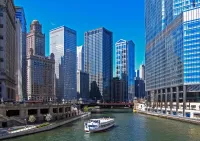
7 hours ago Nine-Year-Old Boy Shoots and Critically Injures Thirteen-Year-Old in Chicago
1 month ago Florence Pugh Reprises Her Role As Yelena Belova In Spider-Man Brand New Day

9 hours ago New Freddie Mercury Mural Unveiled at Wembley Park by Artist Frank Styles
Popular
Michael Joseph Jackson the King of Pop was a highly...
Bernie Sanders is a prominent American politician and the senior...
Dolly Parton is a celebrated American singer-songwriter actress philanthropist and...
John F Kennedy JFK was the th U S President...
Joe Biden served as the th President of the United...
Mark Zuckerberg is an American businessman and programmer best known...