Challenges in the Life of Chip Roy in a Detailed Timeline


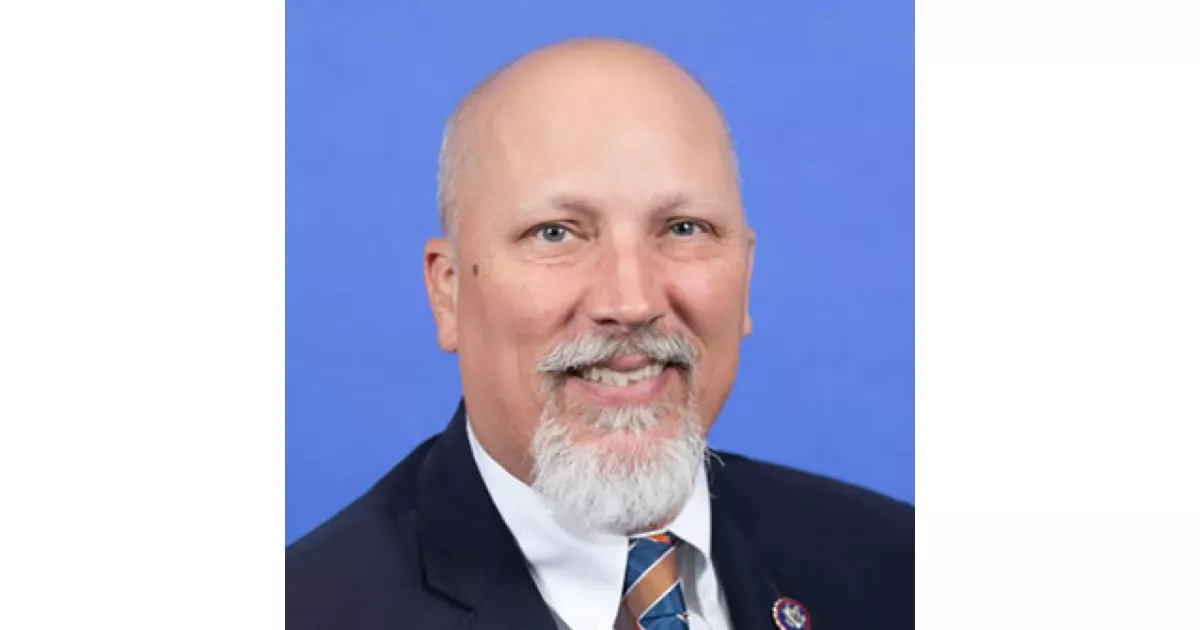
A closer look at the defining struggles that shaped Chip Roy's life and career.
Chip Roy is an American attorney and politician, currently serving as the U.S. Representative for Texas's 21st congressional district since 2019. A Republican, he previously served as chief of staff to Senator Ted Cruz and as first assistant attorney general of Texas. As a member and policy chair of the House Freedom Caucus, Roy is considered a prominent conservative voice within the House Republican Conference.
1978: GOP first took the seat
In 1978, was the first time since then that a Democrat won as much as 40 percent of the vote.


August 2011: Diagnosed with Hodgkin lymphoma
In August 2011, around the time of his 39th birthday, Chip Roy was diagnosed with Stage 3 Hodgkin lymphoma.
2016: Roy criticizes Trump
In 2016, during the presidential primary, Chip Roy supported Cruz and criticized Trump, leading some to label him as committed to the "Never Trump" movement.
2018: Roy praises Trump's job performance
By 2018, Roy's position had changed, and he praised Trump's job performance as president, citing his decisions on the Paris climate accords, regulatory and tax relief, judges, the embassy in Jerusalem, and attacks on the "swamp" in Washington, D.C. He also echoed Trump's position on a "deep state."
May 24, 2019: Roy halts House disaster relief funding bill
On May 24, 2019, Roy singlehandedly halted a House disaster relief funding bill that gave $19 billion in relief for communities hit by disasters, including $900 million for hurricane-damaged Puerto Rico, and fast-tracked $4 billion in grants to Texans suffering due to the effects of Hurricane Harvey.
June 12, 2019: Roy derails House procedural process for appropriation bills
On June 12, 2019, Roy disrupted the House procedural process for appropriation bills by making a motion to adjourn in protest of Democratic inaction on Trump's $4.5 billion supplemental funding request for the Department of Homeland Security, which was defeated.
March 13, 2020: COVID-19 Pandemic Declared and Roy Votes Against Relief Bill
On March 13, 2020, Trump declared the COVID-19 pandemic a national emergency, and Roy voted against a $2.2 billion COVID-19 relief bill, calling it "welfare".
November 7, 2020: Roy texts Meadows about election fraud
On November 7, 2020, Roy texted Meadows requesting "ammo" and "fraud examples" related to the election. He also urged Trump to tone down his rhetoric and approach the legal challenge intelligently. Before traveling to Georgia to help fight the election results there, Roy texted Meadows: "Dude, we need ammo. We need fraud examples. We need it this weekend": two days earlier, he had texted Meadows: "We have no tools / data / information to go out and fight RE: election / fraud. If you need / want it, we all need to know what's going on."
November 19, 2020: Roy expresses concern for lack of evidence
On November 19, 2020, Roy texted Meadows to express his concern for the lack of evidence, writing: "Hey brother - we need substance or people are going to break."
December 23, 2020: Roy Opposes COVID-19 Relief Package
On December 23, 2020, Roy opposed a $900 billion COVID-19 relief package, calling it an irresponsible swamp bill. He agreed with Trump's criticism of the bill, stating that it was filled with wasteful spending and not focused enough on relief.
2020: Democrats seek to associate Roy with Cruz
As the 2020 electoral season approached, Democrats sought to associate Roy with Cruz, whose popularity was seen as in decline.
2020: Four-bill spending package
The chamber scheduled for working through amendments through most of the day, with roll call votes not expected until around 5:30 p.m.,
January 5, 2021: Preparing Remarks and Concerns About Political Climate
On January 5, 2021, Chip Roy spent the day working on his remarks for the House floor. In the evening, he visited a sports bar filled with Trump supporters and became concerned about the heightened political tensions, prompting him to ask the Hays County Sheriff to watch over his family.
January 12, 2021: House Implements Mask Rule
On January 12, 2021, the House implemented a rule mandating masks on the floor, with fines for violations deducted from salaries.
February 10, 2021: Roy criticized Biden's immigration treatment
On February 10, 2021, Chip Roy coauthored a letter with 50 other members of Congress criticizing President Joe Biden for refocusing treatment of immigrants under Title 42 health regulations, rather than Title 8.
March 8, 2021: House Vote Disruption
On March 8, 2021, Roy and Marjorie Taylor Greene planned to demand recorded roll call votes on 13 suspension bills, including one to award the U.S. Capitol Police a Congressional Gold Medal, leading to the rescheduling of the votes due to the time that would be required.
March 2021: Roy voiced opposition to earmarks in internal rules
In March 2021, Chip Roy voiced strong opposition to a House Republican secret ballot to return earmarks to internal rules, calling it the currency of corruption. He also signed a letter along with 17 other members promising never to request earmarks for their districts.
May 19, 2021: House Vote on January 6 Commission
On May 19, 2021, Chip Roy did not support the House measure to create the January 6 commission, arguing it was not a responsible way to investigate the issue and that existing law enforcement and congressional committees already had the necessary powers.
June 2021: Robert Lowry files to face Roy in the primary
By June 2021, physician Robert Lowry had filed with the Federal Election Commission to face Roy in the primary, with the possibility of more candidates entering the race by the December 13 deadline.
2021: Roy's statement about chaos surfaces
In 2021, a recording of Roy surfaced in which he said he wanted "18 more months of chaos and the inability to get stuff done" during a Democratic-controlled Congress and presidency. Roy's conservative positions have frequently put him in conflict with House GOP leadership.
January 3, 2023: Nomination of Byron Donalds for Speaker
On January 3, 2023, at the beginning of the 118th Congress, Roy nominated and voted for Byron Donalds for Speaker of the House, rebuking Kevin McCarthy. He became a leader in negotiations, seeking to lower the threshold for a no-confidence vote, allow more time to read bills, increase the House Freedom Caucus's role, restrict Republican leadership involvement in primaries, and end U.S. aid to Ukraine.
December 2024: Opposition to Debt Ceiling and Criticism from Trump
In December 2024, Roy opposed raising the United States debt ceiling, leading to criticism from Donald Trump, who encouraged Texas Republicans to consider a primary challenge against him.
January 2025: Reintroduction of the SAVE Act
In January 2025, Rep. Chip Roy reintroduced the Safeguard American Voter Eligibility (SAVE) Act to prevent non-citizens from voting in U.S. elections. The bill, previously passed in the House of Representatives in 2024 but not in the Senate, has been criticized for provisions that may prevent married women from registering to vote.
Mentioned in this timeline

Ken Paxton is an American politician and lawyer serving as...

Donald John Trump is an American politician media personality and...
Joe Biden served as the th President of the United...

Alexandria Ocasio-Cortez AOC is a prominent American politician and activist...

Ukraine is a country in Eastern Europe the second-largest on...
Marjorie Taylor Greene MTG is an American politician and businesswoman...
Trending
3 hours ago Jay Clayton and White House Launch Super Intelligence and AI Risk Task Force

3 hours ago Brandon Aiyuk Faces Uncertainty Following 49ers Contract and Injury Struggles
3 hours ago Top 2026 Advent Calendars to Buy Now Before They Sell Out Fast
3 hours ago Sherrod Brown Faces Crucial Ohio Senate Election Battle Amidst Intense Campaigning
3 hours ago Fans Suggest New Today Show Hosting Role For Carson Daly Following The Voice Exit
4 hours ago New Study Examines Ultra-Processed Foods and Colorectal Cancer Risk
Popular

Ilhan Omar is a prominent American politician currently serving as...
Ken Paxton is an American politician and lawyer serving as...

Michael Joseph Jackson the King of Pop was a highly...

Elon Musk is a visionary entrepreneur and engineer known for...

Jameis Winston is an American football quarterback currently playing for...

Cristiano Ronaldo widely considered one of the greatest footballers captains...