Lasting Legacy of Clarence Thomas: A Look at the Influence on History


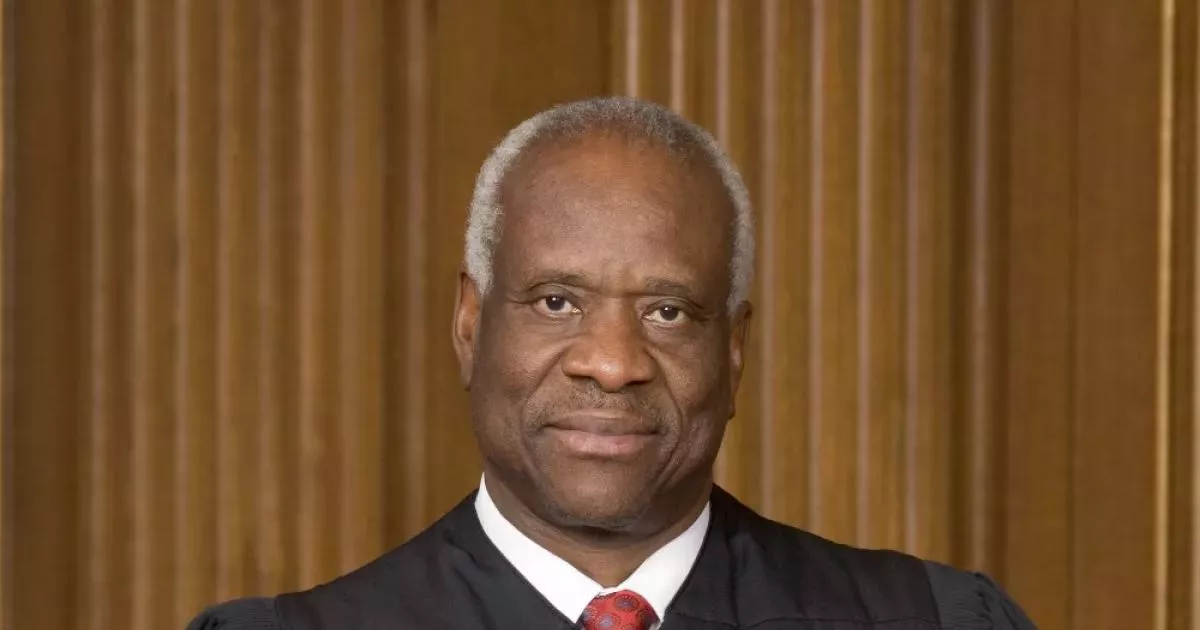
A closer look at the lasting mark left by Clarence Thomas—a timeline of influence.
Clarence Thomas is an American lawyer and jurist serving as an associate justice of the Supreme Court of the United States since 1991. Nominated by President George H.W. Bush, he succeeded Thurgood Marshall. Thomas is the second African American to serve on the U.S. Supreme Court, after Marshall, and became its longest-serving justice after Anthony Kennedy's retirement in 2018.
1963: Criticism of Gideon v. Wainwright
Justice Thomas has criticized Gideon v. Wainwright decision from 1963 and has expressed his desire to reconsider it.


1964: Criticism of New York Times Co. v. Sullivan
Justice Thomas has expressed his desire to reconsider New York Times Co. v. Sullivan decision from 1964.
1973: Criticism of Roe v. Wade
Justice Thomas has criticized Roe v. Wade decision from 1973 and has expressed his desire to reconsider it.
1979: Nevada v. Hall
In 1979, the decision in Nevada v. Hall stated that states could be sued in courts of other states, a decision that was later overruled by Justice Thomas in 2019 in Franchise Tax Board of California v. Hyatt.
2004: Hamdi v. Rumsfeld Dissent
In 2004, Justice Thomas dissented in Hamdi v. Rumsfeld, arguing that courts should defer to the executive's decision to determine if Yaser Esam Hamdi was an enemy combatant.
2006: Hamdan v. Rumsfeld Dissent
In 2006, Justice Thomas was one of three justices to dissent in Hamdan v. Rumsfeld, which concerned the President's authority to establish military tribunals for detained enemy combatants. He referenced The Federalist Papers to support his view of the President's responsibility for national security.
October 1, 2012: Opinions Authored by Thomas
By October 1, 2012, Justice Clarence Thomas had written 475 opinions, including 171 majority opinions, 138 concurrences, and 166 dissenting opinions, which was about 10 percent of the 1,772 cases decided by the Court since he joined.
2013: Remarks on Stare Decisis
At a 2013 Federalist Society dinner, Justice Thomas indicated that "stare decisis" does not hold enough force to keep him from going to the Constitution when interpreting the law.
2013: Thomas's Philosophy on Questioning
In 2013, Thomas said it was "unnecessary in deciding cases to ask that many questions ... we should listen to lawyers who are arguing their cases, and I think we should allow the advocates to advocate."
2015: Zivotofsky v. Kerry Opinion
In 2015, Justice Thomas relied on the Articles of Confederation in his opinion in Zivotofsky v. Kerry, asserting that the President is not confined to powers expressly identified in the Constitution and that residual foreign affairs powers are vested in the President, not Congress.
2017: Analysis of Thomas's Questioning Style
In 2017, RonNell Andersen Jones and Aaron L. Nielson wrote in Northwestern University Law Review that while asking few questions, "in many ways, [Thomas] is a model questioner."
2019: Gamble v. United States
In 2019, Justice Thomas joined the majority opinion in Gamble v. United States, which revisited an exception to the Double Jeopardy Clause. He wrote separately to state his position against the Court's prevailing view of multi-factor analysis regarding whether to follow precedent.
2019: Franchise Tax Board of California v. Hyatt
In 2019, Justice Thomas wrote the 5–4 decision in Franchise Tax Board of California v. Hyatt, overruling Nevada v. Hall from 1979, which had stated that states could be sued in courts of other states. In his majority opinion, he noted that stare decisis "is not an inexorable command".
2019: Questioning Precedents
In 2019, The New York Times reported that Justice Thomas had written over 250 concurring or dissenting opinions that seriously questioned precedents, calling for their reconsideration or suggesting they be overruled.
2022: Increased Influence on the Supreme Court
By 2022, Justice Clarence Thomas's influence on the Supreme Court had increased, with him authoring an opinion expanding Second Amendment rights and contributing to the Court's overruling of Roe v. Wade. He also became the most senior associate justice.
2024: Most Recent Justice Confirmed by Opposing Senate
As of 2024, Clarence Thomas remains the most recent Supreme Court justice to be confirmed by a Senate controlled by the opposing party of the appointing president.
Mentioned in this timeline
Martin Luther King Jr was a pivotal leader in the...
California is a U S state on the Pacific Coast...

Ruth Bader Ginsburg was an American lawyer and Supreme Court...

The Affordable Care Act ACA also known as Obamacare is...
Texas is the second-largest U S state by area and...

San Francisco is the fourth-most populous city in California and...
Trending

3 hours ago Todd Blanche Discusses Potential DOJ Actions Ahead of High-Stakes Midterm Elections

3 hours ago Jalen Ramsey Named AFC Defensive Player of the Week Following Elite Performance

3 hours ago Tank Dell Activated to Texans Roster Ahead of Return Against Giants

4 hours ago Taylor Fritz Reaches Final of Open Parc Auvergne-Rhone-Alpes Lyon Tournament

4 hours ago Angelina Jolie's Travel Style and Shiloh Jolie's Rare Los Angeles Outing

4 hours ago Barcelona and Real Madrid Face Off in High-Stakes LaLiga Clásico Clash
Popular

Ilhan Omar is a prominent American politician currently serving as...

Ken Paxton is an American politician and lawyer serving as...

Elon Musk is a visionary entrepreneur and engineer known for...

Michael Joseph Jackson the King of Pop was a highly...
Barack Obama the th U S President - was the...

Elizabeth Holmes is an American entrepreneur and the founder of...