Rise to Success: Career Highlights of Clarence Thomas


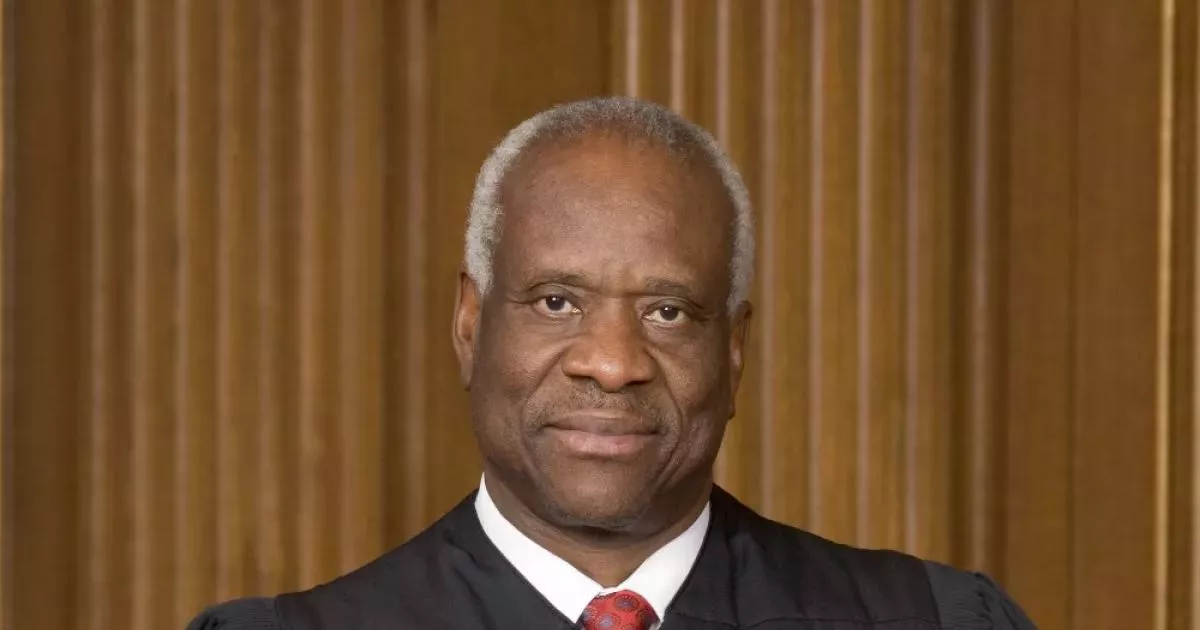
From career breakthroughs to professional milestones, explore how Clarence Thomas made an impact.
Clarence Thomas is an American lawyer and jurist serving as an associate justice of the Supreme Court of the United States since 1991. Nominated by President George H.W. Bush, he succeeded Thurgood Marshall. Thomas is the second African American to serve on the U.S. Supreme Court, after Marshall, and became its longest-serving justice after Anthony Kennedy's retirement in 2018.


1935: Federal law prohibiting beer labels from disclosing alcohol content
In 1995 with the announcement of McIntyre, the Court also decided Rubin v. Coors Brewing Company, in which Justice Thomas wrote his first majority opinion concerning free speech. In Rubin, Thomas was joined unanimously in ruling unconstitutional a 1935 federal law that prohibited beer labels from disclosing alcohol content.
1952: Immigration and Nationality Act of 1952
In 2018, the Ninth Circuit case East Bay Sanctuary Covenant v. Trump, ruled that the Trump administration's asylum policy violated the Immigration and Nationality Act of 1952.
1960: Racial Unrest in Savannah
From 1960 to 1963, Myers Anderson bailed out demonstrators and took Clarence Thomas to meetings promoted by the NAACP during racial unrest in Savannah.
1963: Racial Unrest in Savannah
From 1960 to 1963, Myers Anderson bailed out demonstrators and took Clarence Thomas to meetings promoted by the NAACP during racial unrest in Savannah.
1963: Gideon v. Wainwright Decided
In 1963, the Supreme Court decided Gideon v. Wainwright, requiring indigent criminal defendants to be provided counsel. In Garza v. Idaho, Thomas and Gorsuch suggested Gideon v. Wainwright was wrongly decided and should be overruled.
1964: Enforcing the Civil Rights Act
In 1964, The Civil Rights Act was enacted and Clarence Thomas, as chairman of the EEOC, was tasked with enforcing it.
1964: Civil Rights Act
In 2020, Thomas joined Alito and Kavanaugh in dissenting from the Supreme Court's decision in Bostock v. Clayton County, Georgia, which held that Title VII of the Civil Rights Act of 1964 protects employees against discrimination based on sexual orientation or gender identity.
1965: Griswold v. Connecticut
In 2022, in a concurring opinion in Dobbs v. Jackson Women's Health Organization, Justice Thomas argued that the Supreme Court should reconsider substantive due process precedents, including Griswold v. Connecticut from 1965.
1965: Voting Rights Act
In Northwest Austin Municipal Utility District No. 1 v. Holder, Justice Thomas dissented, voting to throw out Section Five of the 1965 Voting Rights Act. Section Five requires states with a history of racial voter discrimination to gain Justice Department clearance when revising election procedures.
1972: Ban on death sentences
In 1972, the Supreme Court initially imposed a ban on death sentences. Later, in Kansas v. Marsh, Justice Thomas indicated a belief that the Constitution affords states broad procedural latitude in imposing the death penalty, provided they remain within the limits of Furman v. Georgia and Gregg v. Georgia, the 1976 case in which the Court reversed its 1972 ban on death sentences if states followed procedural guidelines.
September 13, 1974: Admittance to Missouri Bar
On September 13, 1974, Clarence Thomas was admitted to the Missouri bar after moving to Saint Louis to study for it.
1974: Assistant Attorney General of Missouri
From 1974 to 1977, Clarence Thomas served as an assistant attorney general of Missouri, becoming the only African-American member of John Danforth's staff.
1976: Attorney in Monsanto's Legal Department
In 1976, after John Danforth was elected to the U.S. Senate, Clarence Thomas left his position and became an attorney in Monsanto's legal department in Saint Louis.
1976: Gregg v. Georgia
In 1976, the Supreme Court decided Gregg v. Georgia, reversing its 1972 ban on death sentences if states followed procedural guidelines. Thomas's majority opinion in Kansas v. Marsh indicated a belief that the Constitution affords states broad procedural latitude in imposing the death penalty, provided they remain within the limits of Furman v. Georgia and Gregg v. Georgia.
1976: Buckley v Valeo
In 1996, in Colorado Republican Federal Campaign Committee v. FEC, Justice Thomas joined Justice Stephen Breyer's majority opinion, but wrote separately to call against the framework established in the previous campaign finance case of Buckley v Valeo from 1976.
1977: End of Tenure as Assistant Attorney General
From 1974 to 1977, Clarence Thomas served as an assistant attorney general of Missouri, becoming the only African-American member of John Danforth's staff.
1979: Rejoined Danforth as Legislative Assistant
From 1979 to 1981, Clarence Thomas rejoined John Danforth in Washington, D.C., as a legislative assistant and handled energy issues for the Senate Commerce Committee.
1979: Legislative Assistant
In 1979, Clarence Thomas became a legislative assistant to U.S. Senator John Danforth.
1980: Doggett v. United States Indictment
In 1980, the defendant in Doggett v. United States was indicted, technically becoming a fugitive. The case later involved issues of speedy trial rights.
May 1, 1981: Nomination as Assistant Secretary of Education
On May 1, 1981, President Ronald Reagan nominated Clarence Thomas as assistant secretary of education for the Office for Civil Rights (OCR).
1981: Assistant Secretary for Civil Rights Nomination
From 1979 to 1981, Clarence Thomas drew the attention of officials in the newly elected Reagan Administration. He was then offered the position of assistant secretary for civil rights at the U.S. Department of Education.
1982: Chaired EEOC
In 1982, Clarence Thomas became the chairman of the Equal Employment Opportunity Commission (EEOC).
October 30, 1989: Nominated to U.S. Court of Appeals
On October 30, 1989, President George H.W. Bush nominated Clarence Thomas to the United States Court of Appeals for the District of Columbia Circuit, filling the seat vacated by Robert Bork. Thomas received support from African American officials.
1989: Consideration for federal judgeship
In early 1989, President George H.W. Bush considered nominating Clarence Thomas to a federal judgeship, but Thomas initially declined. Later, with encouragement from White House officials and Judge Laurence Silberman, he considered accepting an appointment. A liberal coalition emerged to oppose his candidacy.
February 1990: Recommended by the Senate Judiciary Committee
In February 1990, Clarence Thomas was recommended by the Senate Judiciary Committee by a vote of 12 to 1.
March 6, 1990: Confirmed to the Court of Appeals
On March 6, 1990, Clarence Thomas was confirmed to the Court of Appeals by the Senate with a vote of 98 to 2. He was the D.C. Circuit's youngest judge at age 42.
July 1990: Considered for Supreme Court
In July 1990, after Justice William Brennan retired from the Supreme Court, Clarence Thomas was considered by President Bush as a potential nominee, but David Souter was chosen instead.
1990: End of EEOC chairmanship
In 1990, Clarence Thomas's tenure as the chairman of the EEOC concluded after serving since 1982.
1990: Nomination to U.S. Court of Appeals
In 1990, President George H.W. Bush nominated Clarence Thomas to the United States Court of Appeals for the District of Columbia Circuit.
1990: Gun-Free School Zones Act of 1990
In 1995, Justice Thomas concurred in United States v. Lopez, which invalidated the Gun-Free School Zones Act of 1990 for exceeding the Commerce Clause.
June 27, 1991: Marshall Announces Retirement
On June 27, 1991, Justice Thurgood Marshall announced his retirement from the Supreme Court, creating a vacancy.
July 31, 1991: NAACP Opposes Thomas's Confirmation
On July 31, 1991, the board of directors of the NAACP voted against endorsing Clarence Thomas, announcing their opposition to his Supreme Court confirmation the same day.
September 10, 1991: Confirmation Hearings Begin
On September 10, 1991, formal confirmation hearings for Clarence Thomas began before the Senate Judiciary Committee. Thomas testified for 25 hours.
September 27, 1991: Motion Fails in Judiciary Committee
On September 27, 1991, a motion to give Clarence Thomas's nomination a favorable recommendation failed in the Senate Judiciary Committee by a vote of 7-7. The committee then voted 13-1 to send the nomination to the full Senate without recommendation.
October 11, 1991: Thomas Denies Allegations
On October 11, 1991, during the reopened hearings, Clarence Thomas denied the sexual harassment allegations made by Anita Hill. He stated he wouldn't answer questions about his private life to avoid providing "the rope for my own lynching".
October 15, 1991: Thomas Confirmed as Associate Justice
On October 15, 1991, the Senate voted 52-48 to confirm Clarence Thomas as an associate justice of the Supreme Court.
1991: Thomas's Speaking Record Since 1991
By May 2020, Thomas had asked questions in two oral arguments since 2006 and had spoken during 32 of the roughly 2,400 arguments since 1991.
1991: Nomination to Supreme Court
In 1991, Clarence Thomas was nominated by President George H. W. Bush to succeed Thurgood Marshall as an associate justice of the Supreme Court of the United States.
1992: Planned Parenthood v. Casey
In 1992, the Supreme Court reaffirmed Roe v. Wade in Planned Parenthood v. Casey. Thomas joined the dissenting opinions of Rehnquist and Scalia. The dissent argued Roe was wrongly decided and should be overruled, stating the Constitution says nothing about abortion and American traditions have permitted it to be legally proscribed.
1992: R.A.V. v. City of St. Paul
Justice Thomas ruled against laws regulating hate speech, as in R.A.V. v. City of St. Paul in 1992.
1994: Voting record on overturning federal laws
A New York Times editorial reported that from 1994 to 2005, Justice Thomas voted to overturn federal laws in 34 cases.
1995: Concurrence in United States v. Lopez
In 1995, Justice Thomas concurred in United States v. Lopez, which invalidated the Gun-Free School Zones Act of 1990. He argued that the Court had deviated from the Commerce Clause's original understanding.
1995: Dissenting in U.S. Term Limits, Inc. v. Thornton
In 1995, Justice Thomas dissented in the case of U.S. Term Limits, Inc. v. Thornton, where the Supreme Court addressed the constitutionality of state-imposed term limits on members of Congress.
1995: U.S. Term Limits, Inc. v. Thornton
In 1995, the Supreme Court ruled in U.S. Term Limits, Inc. v. Thornton that an amendment to the Arkansas Constitution, which added age, citizenship, and residency requirements for congressional service, was unconstitutional. Justice Thomas, joined by Justices Rehnquist, O'Connor, and Scalia, dissented, arguing that states should be able to impose term limits on members of Congress.
1996: Romer v. Evans Dissent
In 1996, Thomas joined Scalia's dissenting opinion in Romer v. Evans, arguing that Amendment Two to the Colorado State Constitution did not violate the Equal Protection Clause.
1996: Colorado Republican Federal Campaign Committee v. FEC
In 1996, in Colorado Republican Federal Campaign Committee v. FEC, Justice Thomas joined Justice Stephen Breyer's majority opinion, but wrote separately to call against the framework established in the previous campaign finance case of Buckley v Valeo (1976).
September 24, 1999: Dwight D. Opperman Lecture at Drake University Law School
On September 24, 1999, Justice Thomas delivered the Dwight D. Opperman Lecture at Drake University Law School, titled "Why Federalism Matters". In his lecture, Thomas argued that federalism is essential for protecting individual liberty, enhancing self-government, separating political power, and checking federal authority.
2000: Stenberg v. Carhart
In 2000, the Supreme Court struck down a state ban on partial-birth abortion in Stenberg v. Carhart. Thomas dissented, arguing that the Constitution does not require states to permit abortion and criticized the majority's reasoning as hostile to any abortion regulation by the states.
2002: Eugene Volokh Study
In 2002, a study by Eugene Volokh found Justice Thomas to be the justice second-most likely to uphold free speech claims, tied with Souter.
2003: Lawrence v. Texas Dissent
In 2003, Thomas issued a one-page dissent in Lawrence v. Texas, calling the Texas statute prohibiting sodomy "uncommonly silly". He stated that he would vote to repeal the law if he were a member of the Texas legislature, but he did not vote to strike it down because he believes the Constitution does not contain a right to privacy.
2004: Hamdi v. Rumsfeld Dissent
In 2004, Justice Thomas dissented in Hamdi v. Rumsfeld, arguing that courts should defer to the executive's decision to determine if Yaser Esam Hamdi was an enemy combatant.
2005: Voting record on overturning federal laws
A New York Times editorial reported that from 1994 to 2005, Justice Thomas voted to overturn federal laws in 34 cases.
2005: Dissent in Gonzales v. Raich
In 2005, Justice Thomas dissented in Gonzales v. Raich, which held that the Controlled Substances Act applies to homegrown marijuana, citing original meaning. Thomas argued that Congress's power would become unlimited if it could regulate homegrown marijuana.
February 2006: Silent Period on the Bench Begins
From February 2006 to February 2016, Thomas read his opinions from the bench but asked no questions during oral arguments.
2006: Hamdan v. Rumsfeld Dissent
In 2006, Justice Thomas was one of three justices to dissent in Hamdan v. Rumsfeld, which concerned the President's authority to establish military tribunals for detained enemy combatants. He referenced The Federalist Papers to support his view of the President's responsibility for national security.
2006: Reauthorization of Section Five of the Voting Rights Act
In Northwest Austin Municipal Utility District No. 1 v. Holder, Justice Thomas dissented, voting to throw out Section Five of the 1965 Voting Rights Act. Congress had reauthorized Section Five in 2006 for another 25 years, but Thomas said the law was no longer necessary.
2007: Judicial Review of Federal Statutes
As of 2007, Justice Thomas was noted as the justice most willing to exercise judicial review of federal statutes but among the least likely to overturn state statutes.
2007: Morse v. Frederick
In 2007, Justice Thomas endorsed Black's dissent in Tinker v. Des Moines Independent Community School District in Morse v. Frederick, concurring with narrowing the rationale of Tinker and arguing that Tinker be overruled as it was a constitutionally unsupported “sea change in students’ speech rights”.
2007: Gonzales v. Carhart
In 2007, the Supreme Court rejected a facial challenge to a federal ban on partial-birth abortion in Gonzales v. Carhart. Thomas concurred, asserting that the court's abortion jurisprudence had no basis in the Constitution but that the court had accurately applied that jurisprudence in rejecting the challenge.
2010: McDonald v. Chicago
In 2010, Justice Thomas agreed with the judgment in McDonald v. Chicago that the right to keep and bear arms is applicable to state and local governments, but he wrote a separate concurrence finding that an individual's right to bear arms is fundamental as a privilege of American citizenship under the Privileges or Immunities Clause rather than as a fundamental right under the due process clause.
2010: Dissent in United States v. Comstock
In 2010, Justice Thomas dissented in United States v. Comstock, arguing that the Necessary and Proper Clause only allows Congress to execute enumerated powers. The Supreme Court held that the Necessary and Proper Clause allows Congress to enact a law that authorized the U.S. Department of Justice (DOJ) to detain a mentally ill and dangerous federal prisoner beyond the DOJ's original lawful date.
2010: Citizens United v. FEC
In 2010, Justice Thomas joined the majority in Citizens United v. FEC but dissented in part, arguing that the Bipartisan Campaign Reform Act's disclaimer and disclosure requirements were unconstitutional. Also in 2010, he reinforced his defense of anonymous speech in Doe v. Reed, writing that the First Amendment protects "political association" by means of signing a petition.
2010: United States v. Stevens
Justice Thomas ruled against laws regulating hate speech, as in United States v. Stevens in 2010.
2010: Dissent from Denial of Certiorari in Second Amendment Cases
Since 2010, Justice Thomas has dissented from denial of certiorari in several Second Amendment cases.
2011: Snyder v. Phelps
Justice Thomas ruled against laws regulating hate speech, as in Snyder v. Phelps in 2011.
October 1, 2012: Opinions Authored by Thomas
By October 1, 2012, Justice Clarence Thomas had written 475 opinions, including 171 majority opinions, 138 concurrences, and 166 dissenting opinions, which was about 10 percent of the 1,772 cases decided by the Court since he joined.
2012: Dissent in National Federation of Independent Business v. Sebelius
In 2012, Justice Thomas authored a short dissent and joined the joint dissent in National Federation of Independent Business v. Sebelius, finding the Affordable Care Act completely unconstitutional after the Court upheld it.
2013: Thomas's Philosophy on Questioning
In 2013, Thomas said it was "unnecessary in deciding cases to ask that many questions ... we should listen to lawyers who are arguing their cases, and I think we should allow the advocates to advocate."
2014: Jackson v. San Francisco
Justice Thomas voted to grant certiorari in Jackson v. San Francisco (2014), which upheld trigger lock ordinances similar to those struck down in Heller; he was joined by Scalia.
2015: Zivotofsky v. Kerry Opinion
In 2015, Justice Thomas relied on the Articles of Confederation in his opinion in Zivotofsky v. Kerry, asserting that the President is not confined to powers expressly identified in the Constitution and that residual foreign affairs powers are vested in the President, not Congress.
2015: Obergefell v. Hodges
In 2022, in a concurring opinion in Dobbs v. Jackson Women's Health Organization, Justice Thomas argued that the Supreme Court should reconsider substantive due process precedents, including Obergefell v. Hodges from 2015.
2015: Friedman v. City of Highland Park
Justice Thomas voted to grant certiorari in Friedman v. City of Highland Park (2015), which upheld bans on certain semi-automatic rifles; he was joined by Scalia.
February 2016: Silent Period on the Bench Ends
From February 2006 to February 2016, Thomas read his opinions from the bench but asked no questions during oral arguments.
2016: Peruta v. San Diego County
Justice Thomas voted to grant certiorari in Peruta v. San Diego County (2016), which upheld restrictive concealed carry licensing in California; he was joined by Gorsuch.
2017: Analysis of Thomas's Questioning Style
In 2017, RonNell Andersen Jones and Aaron L. Nielson wrote in Northwestern University Law Review that while asking few questions, "in many ways, [Thomas] is a model questioner."
2017: Silvester v. Becerra
Justice Thomas voted to grant certiorari in Silvester v. Becerra (2017), which upheld waiting periods for firearm purchasers who have already passed background checks and already own firearms.
2018: Longest-Serving Justice
In 2018, Clarence Thomas became the longest-serving justice on the U.S. Supreme Court following the retirement of Anthony Kennedy.
2018: East Bay Sanctuary Covenant v. Trump
In 2018, Justice Thomas dissented from a denial of stay application in the Ninth Circuit case East Bay Sanctuary Covenant v. Trump, regarding an injunction on the Trump administration's asylum policy. The policy granted asylum only to refugees entering from a designated port of entry, but the court ruled that it violated the Immigration and Nationality Act of 1952.
February 2019: Vote to Block Louisiana Abortion Restriction
In February 2019, Thomas joined three other conservative justices in voting to reject a stay to temporarily block a Louisiana law restricting abortion, which would have required doctors performing abortions to have admitting privileges in a hospital.
2019: Franchise Tax Board of California v. Hyatt
In 2019, Justice Thomas wrote the 5–4 decision in Franchise Tax Board of California v. Hyatt, overruling Nevada v. Hall from 1979, which had stated that states could be sued in courts of other states. In his majority opinion, he noted that stare decisis "is not an inexorable command".
2019: Box v. Planned Parenthood of Indiana and Kentucky, Inc.
In 2019, in Box v. Planned Parenthood of Indiana and Kentucky, Inc., Thomas wrote a concurring opinion comparing abortion and birth control to eugenics. He referenced Margaret Sanger's support for contraception as superior to "the horrors of abortion and infanticide".
May 2020: Occasional Questioning Resumes
By May 2020, Thomas had asked questions in two oral arguments since 2006 and had spoken during 32 of the roughly 2,400 arguments since 1991. Thomas has given many reasons for his silence, including self-consciousness, a preference for listening, and difficulty getting in a word.
May 2020: More Active Questioning During Teleconferenced Arguments
In May 2020, Thomas took a more active role in questioning when the Supreme Court shifted to holding teleconferenced arguments during the COVID-19 pandemic, in which the justices took turns asking questions in order of seniority.
October 2020: Denial of Appeal from Kim Davis
In October 2020, Thomas joined the other justices in denying an appeal from Kim Davis, a county clerk who refused to give marriage licenses to same-sex couples, but wrote a separate opinion reiterating his dissent from Obergefell v. Hodges and expressing his belief that it was wrongly decided.
2020: Dissent in Bostock v. Clayton County, Georgia
In 2020, Thomas joined Alito and Kavanaugh in dissenting from the Supreme Court's decision in Bostock v. Clayton County, Georgia, which held that Title VII of the Civil Rights Act of 1964 protects employees against discrimination based on sexual orientation or gender identity.
2020: Calls for Recusal Based on Ginni Thomas's Activities
In April 2022, Democratic members of Congress demanded that Justice Thomas recuse himself from cases related to efforts to overturn the results of the 2020 presidential election because of Ginni Thomas's involvement.
2020: Increased Questioning During Oral Arguments
Until 2020, Clarence Thomas was known for his silence during most oral arguments, but since 2020, he has begun asking more questions to counsel.
July 2021: Vote to Hear Appeal from Washington Florist
In July 2021, Thomas was one of three justices, with Gorsuch and Alito, who voted to hear an appeal from a Washington florist who had refused service to a same-sex couple based on her religious beliefs against same-sex marriage.
November 2021: Dissent from Rejection of Appeal from Mercy San Juan Medical Center
In November 2021, Thomas dissented from the majority of justices in a vote to reject an appeal from Mercy San Juan Medical Center, which had sought to deny a hysterectomy to a transgender patient on religious grounds.
2021: Resumption of In-Person Arguments
Since the court resumed in-person oral arguments at the beginning of the 2021 term, the justices agreed to allow Thomas to ask the first question of each lawyer following their opening statements.
April 2022: Calls for Thomas to Recuse Himself
In April 2022, a Quinnipiac poll found that 52% of Americans agreed that, in light of Ginni Thomas's texts about overturning the results of the 2020 presidential election, Thomas should have recused himself from related cases. In response, Democratic members of Congress demanded that Thomas recuse himself from cases related to efforts to overturn the results of the 2020 presidential election.
2022: Increased Influence on the Supreme Court
By 2022, Justice Clarence Thomas's influence on the Supreme Court had increased, with him authoring an opinion expanding Second Amendment rights and contributing to the Court's overruling of Roe v. Wade. He also became the most senior associate justice.
2022: New York State Rifle & Pistol Association, Inc. v. Bruen
In 2022, Justice Thomas authored the majority opinion in New York State Rifle & Pistol Association, Inc. v. Bruen, guaranteeing the right of law-abiding citizens to carry firearms in public.
2022: Dobbs v. Jackson Women's Health Organization Concurring Opinion
In 2022, in a concurring opinion in Dobbs v. Jackson Women's Health Organization, Thomas argued that the Supreme Court should reconsider substantive due process precedents, including those established in Griswold v. Connecticut (1965), Lawrence v. Texas (2003), and Obergefell v. Hodges (2015).
2024: Most Recent Justice Confirmed by Opposing Senate
As of 2024, Clarence Thomas remains the most recent Supreme Court justice to be confirmed by a Senate controlled by the opposing party of the appointing president.
2024: United States v. Rahimi
In 2024, Justice Thomas was the sole dissenter in United States v. Rahimi, a case deciding the constitutionality of 18 U.S.C. § 922(g)(8), which prohibits people subject to a domestic restraining order from possessing guns.
2025: United States v. Skrmetti
In 2025, Thomas and five of the Court's other conservative justices voted to uphold Tennessee's law prohibiting puberty blockers and hormone therapy for the treatment of gender dysphoria in minors, saying it did not violate the Equal Protection Clause of the Fourteenth Amendment to the United States Constitution, in United States v. Skrmetti.
Mentioned in this timeline
Martin Luther King Jr was a pivotal leader in the...
California is a U S state on the Pacific Coast...
Ruth Bader Ginsburg was an American lawyer and Supreme Court...

The Affordable Care Act ACA also known as Obamacare is...
Texas is the second-largest U S state by area and...

San Francisco is the fourth-most populous city in California and...
Trending
3 hours ago Taylor Fritz Reaches Final of Open Parc Auvergne-Rhone-Alpes Lyon Tournament

3 hours ago Angelina Jolie's Travel Style and Shiloh Jolie's Rare Los Angeles Outing

3 hours ago Barcelona and Real Madrid Face Off in High-Stakes LaLiga Clásico Clash

3 hours ago Travis Etienne Jr. Injury Update and Return Status for Week 7 NFL Game
3 hours ago NFL Fines Chase Young and Christen Miller for Violent Gestures During Game
3 hours ago Kellen Moore Faces Former Mentor Mike McCarthy in High-Stakes NFL Paris Showdown
Popular

Ilhan Omar is a prominent American politician currently serving as...

Ken Paxton is an American politician and lawyer serving as...

Elon Musk is a visionary entrepreneur and engineer known for...

Michael Joseph Jackson the King of Pop was a highly...
Barack Obama the th U S President - was the...

Elizabeth Holmes is an American entrepreneur and the founder of...