Major Controversies Surrounding Clarence Thomas: A Detailed Timeline


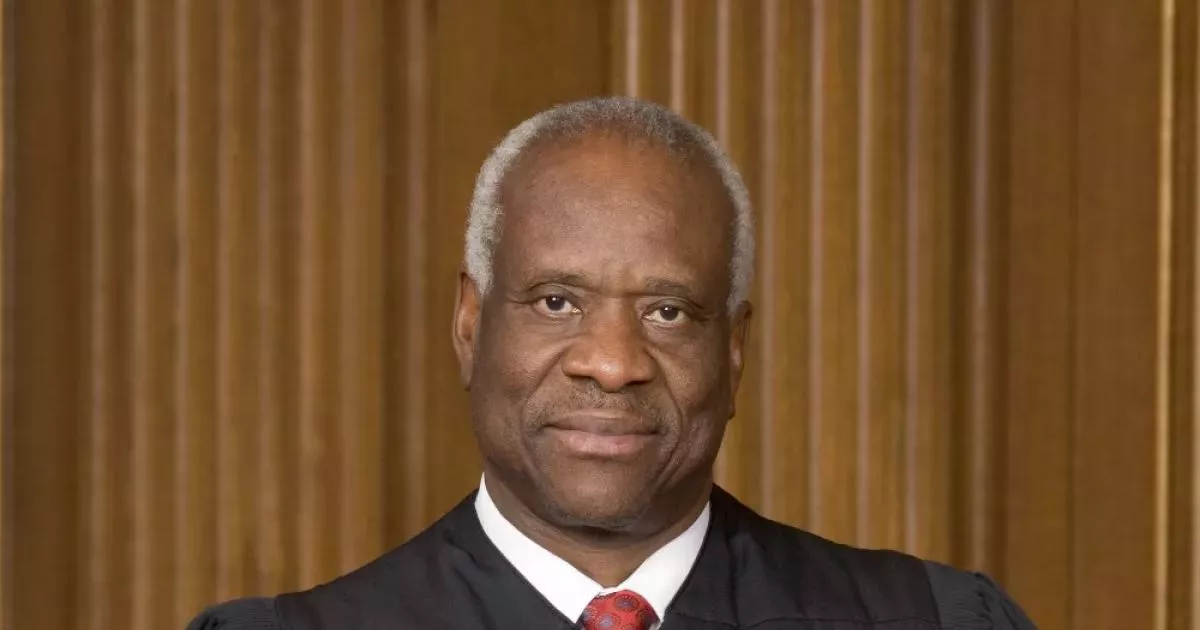
A closer look at the most debated and controversial moments involving Clarence Thomas.
Clarence Thomas is an American lawyer and jurist serving as an associate justice of the Supreme Court of the United States since 1991. Nominated by President George H.W. Bush, he succeeded Thurgood Marshall. Thomas is the second African American to serve on the U.S. Supreme Court, after Marshall, and became its longest-serving justice after Anthony Kennedy's retirement in 2018.


1952: Immigration and Nationality Act of 1952
In 2018, the Ninth Circuit case East Bay Sanctuary Covenant v. Trump, ruled that the Trump administration's asylum policy violated the Immigration and Nationality Act of 1952.
1963: Criticism of Gideon v. Wainwright
Justice Thomas has criticized Gideon v. Wainwright decision from 1963 and has expressed his desire to reconsider it.
1964: Civil Rights Act
In 2020, Thomas joined Alito and Kavanaugh in dissenting from the Supreme Court's decision in Bostock v. Clayton County, Georgia, which held that Title VII of the Civil Rights Act of 1964 protects employees against discrimination based on sexual orientation or gender identity.
1964: Criticism of New York Times Co. v. Sullivan
Justice Thomas has expressed his desire to reconsider New York Times Co. v. Sullivan decision from 1964.
1965: Griswold v. Connecticut
In 2022, in a concurring opinion in Dobbs v. Jackson Women's Health Organization, Justice Thomas argued that the Supreme Court should reconsider substantive due process precedents, including Griswold v. Connecticut from 1965.
1965: Voting Rights Act
In Northwest Austin Municipal Utility District No. 1 v. Holder, Justice Thomas dissented, voting to throw out Section Five of the 1965 Voting Rights Act. Section Five requires states with a history of racial voter discrimination to gain Justice Department clearance when revising election procedures.
April 1970: Participation in Harvard Square Riots
In April 1970, Clarence Thomas participated in the violent 1970 Harvard Square riots.
1973: Criticism of Roe v. Wade
Justice Thomas has criticized Roe v. Wade decision from 1973 and has expressed his desire to reconsider it.
1989: Amended Reports Going Back to 1989
In 2011, Clarence Thomas amended financial reports going back to 1989 after admitting that the disclosure of his wife's income had been "inadvertently omitted due to a misunderstanding of the filing instructions".
1990: Gun-Free School Zones Act of 1990
In 1995, Justice Thomas concurred in United States v. Lopez, which invalidated the Gun-Free School Zones Act of 1990 for exceeding the Commerce Clause.
July 31, 1991: NAACP Opposes Thomas's Confirmation
On July 31, 1991, the board of directors of the NAACP voted against endorsing Clarence Thomas, announcing their opposition to his Supreme Court confirmation the same day.
October 11, 1991: Thomas Denies Allegations
On October 11, 1991, during the reopened hearings, Clarence Thomas denied the sexual harassment allegations made by Anita Hill. He stated he wouldn't answer questions about his private life to avoid providing "the rope for my own lynching".
1992: Planned Parenthood v. Casey
In 1992, the Supreme Court reaffirmed Roe v. Wade in Planned Parenthood v. Casey. Thomas joined the dissenting opinions of Rehnquist and Scalia. The dissent argued Roe was wrongly decided and should be overruled, stating the Constitution says nothing about abortion and American traditions have permitted it to be legally proscribed.
1995: Concurrence in United States v. Lopez
In 1995, Justice Thomas concurred in United States v. Lopez, which invalidated the Gun-Free School Zones Act of 1990. He argued that the Court had deviated from the Commerce Clause's original understanding.
1995: Dissenting in U.S. Term Limits, Inc. v. Thornton
In 1995, Justice Thomas dissented in the case of U.S. Term Limits, Inc. v. Thornton, where the Supreme Court addressed the constitutionality of state-imposed term limits on members of Congress.
1995: U.S. Term Limits, Inc. v. Thornton
In 1995, the Supreme Court ruled in U.S. Term Limits, Inc. v. Thornton that an amendment to the Arkansas Constitution, which added age, citizenship, and residency requirements for congressional service, was unconstitutional. Justice Thomas, joined by Justices Rehnquist, O'Connor, and Scalia, dissented, arguing that states should be able to impose term limits on members of Congress.
1996: Romer v. Evans Dissent
In 1996, Thomas joined Scalia's dissenting opinion in Romer v. Evans, arguing that Amendment Two to the Colorado State Constitution did not violate the Equal Protection Clause.
1999: Alleged Groping Incident at Dinner Party
In 1999, Clarence Thomas allegedly groped Moira Smith's buttocks at a dinner party, according to Smith's later account.
1999: Purchase of Prevost Le Mirage XL Marathon RV
In 1999, Clarence Thomas purchased a Prevost Le Mirage XL Marathon RV for $267,230, with financial assistance from a friend.
2000: Stenberg v. Carhart
In 2000, the Supreme Court struck down a state ban on partial-birth abortion in Stenberg v. Carhart. Thomas dissented, arguing that the Constitution does not require states to permit abortion and criticized the majority's reasoning as hostile to any abortion regulation by the states.
2003: Failure to Disclose Wife's Income Begins
From 2003, Clarence Thomas failed to disclose his wife's income from The Heritage Foundation on his Supreme Court financial disclosure forms.
2003: Lawrence v. Texas Dissent
In 2003, Thomas issued a one-page dissent in Lawrence v. Texas, calling the Texas statute prohibiting sodomy "uncommonly silly". He stated that he would vote to repeal the law if he were a member of the Texas legislature, but he did not vote to strike it down because he believes the Constitution does not contain a right to privacy.
2004: Analysis of Gifts Accepted by Thomas Begins
An analysis released by Fix the Court showed that, over the 20 years beginning in 2004, Clarence Thomas had accepted gifts worth $4.2 million.
2004: Hamdi v. Rumsfeld Dissent
In 2004, Justice Thomas dissented in Hamdi v. Rumsfeld, arguing that courts should defer to the executive's decision to determine if Yaser Esam Hamdi was an enemy combatant.
2004: Report of Gifts from Harlan Crow
In 2004, it was reported that Clarence Thomas had accepted gifts from Harlan Crow, including a Bible that belonged to Frederick Douglass and a bust of Abraham Lincoln.
2005: Dissent in Gonzales v. Raich
In 2005, Justice Thomas dissented in Gonzales v. Raich, which held that the Controlled Substances Act applies to homegrown marijuana, citing original meaning. Thomas argued that Congress's power would become unlimited if it could regulate homegrown marijuana.
2006: Hamdan v. Rumsfeld Dissent
In 2006, Justice Thomas was one of three justices to dissent in Hamdan v. Rumsfeld, which concerned the President's authority to establish military tribunals for detained enemy combatants. He referenced The Federalist Papers to support his view of the President's responsibility for national security.
2006: Reauthorization of Section Five of the Voting Rights Act
In Northwest Austin Municipal Utility District No. 1 v. Holder, Justice Thomas dissented, voting to throw out Section Five of the 1965 Voting Rights Act. Congress had reauthorized Section Five in 2006 for another 25 years, but Thomas said the law was no longer necessary.
2007: Failure to Disclose Wife's Income Continues
In 2007, Clarence Thomas continued to fail to disclose his wife's income from The Heritage Foundation on his Supreme Court financial disclosure forms.
2007: Gonzales v. Carhart
In 2007, the Supreme Court rejected a facial challenge to a federal ban on partial-birth abortion in Gonzales v. Carhart. Thomas concurred, asserting that the court's abortion jurisprudence had no basis in the Constitution but that the court had accurately applied that jurisprudence in rejecting the challenge.
2008: Loan for RV Discharged
In 2008, the loan from Anthony Welters to Clarence Thomas, used to purchase the Prevost Le Mirage XL Marathon RV, was discharged, forgiving much of the original balance.
2010: Dissent in United States v. Comstock
In 2010, Justice Thomas dissented in United States v. Comstock, arguing that the Necessary and Proper Clause only allows Congress to execute enumerated powers. The Supreme Court held that the Necessary and Proper Clause allows Congress to enact a law that authorized the U.S. Department of Justice (DOJ) to detain a mentally ill and dangerous federal prisoner beyond the DOJ's original lawful date.
2010: Undisclosed International Trips in 2010
In 2023, Senate investigations revealed additional undisclosed international trips Clarence Thomas took in 2010 on Crow's private jet and superyacht.
June 2011: Payments to Ginni Thomas's Firm Begin
In June 2011, payments to Ginni Thomas's firm, Liberty Consulting, began through Kellyanne Conway's polling firm billing the Judicial Education Project.
2011: Politico Reports Crow's Donation and Non-Disclosure
In 2011, Politico reported that Harlan Crow donated $500,000 to a Tea Party group founded by Clarence Thomas's wife and that Thomas had failed to report her income on his disclosure for over a decade.
2011: Ginni Thomas's Activities and Conflict of Interest Concerns
In 2011, Virginia "Ginni" Thomas stepped down from Liberty Central to open a conservative lobbying firm. 74 Democratic members of the House of Representatives wrote that Justice Thomas should recuse himself on cases regarding the Affordable Care Act because of "appearance of a conflict of interest" based on his wife's work.
January 2012: Leonard Leo Funnels Money to Ginni Thomas's Firm
In January 2012, Leonard Leo had Kellyanne Conway's polling firm bill the Judicial Education Project $25,000, which her firm then paid to Ginni Thomas's firm, Liberty Consulting. The documents did not indicate the nature of the work Thomas did for the Judicial Education Project or Conway's company.
June 2012: Payments to Ginni Thomas's Firm Continue
In June 2012, payments to Ginni Thomas's firm, Liberty Consulting, continued through Kellyanne Conway's polling firm billing the Judicial Education Project, totaling $80,000 between June 2011 and June 2012.
2012: Dissent in National Federation of Independent Business v. Sebelius
In 2012, Justice Thomas authored a short dissent and joined the joint dissent in National Federation of Independent Business v. Sebelius, finding the Affordable Care Act completely unconstitutional after the Court upheld it.
2013: Remarks on Stare Decisis
At a 2013 Federalist Society dinner, Justice Thomas indicated that "stare decisis" does not hold enough force to keep him from going to the Constitution when interpreting the law.
2015: Zivotofsky v. Kerry Opinion
In 2015, Justice Thomas relied on the Articles of Confederation in his opinion in Zivotofsky v. Kerry, asserting that the President is not confined to powers expressly identified in the Constitution and that residual foreign affairs powers are vested in the President, not Congress.
2015: Obergefell v. Hodges
In 2022, in a concurring opinion in Dobbs v. Jackson Women's Health Organization, Justice Thomas argued that the Supreme Court should reconsider substantive due process precedents, including Obergefell v. Hodges from 2015.
2016: Moira Smith Alleges Groping Incident
In 2016, Moira Smith alleged that Clarence Thomas groped her buttocks at a dinner party in 1999, an allegation Thomas denied.
2017: Undisclosed Domestic Trips in 2017
In 2023, Senate investigations revealed additional undisclosed domestic trips Clarence Thomas took in 2017 on Crow's private jet and superyacht.
2018: East Bay Sanctuary Covenant v. Trump
In 2018, Justice Thomas dissented from a denial of stay application in the Ninth Circuit case East Bay Sanctuary Covenant v. Trump, regarding an injunction on the Trump administration's asylum policy. The policy granted asylum only to refugees entering from a designated port of entry, but the court ruled that it violated the Immigration and Nationality Act of 1952.
February 2019: Vote to Block Louisiana Abortion Restriction
In February 2019, Thomas joined three other conservative justices in voting to reject a stay to temporarily block a Louisiana law restricting abortion, which would have required doctors performing abortions to have admitting privileges in a hospital.
July 2019: Thomas Received Food and Lodging from Harlan Crow
In July 2019, Clarence Thomas received food and lodging at a hotel in Bali and a private club in California from Harlan Crow, which he disclosed in June 2024.
2019: Gamble v. United States
In 2019, Justice Thomas joined the majority opinion in Gamble v. United States, which revisited an exception to the Double Jeopardy Clause. He wrote separately to state his position against the Court's prevailing view of multi-factor analysis regarding whether to follow precedent.
2019: Franchise Tax Board of California v. Hyatt
In 2019, Justice Thomas wrote the 5–4 decision in Franchise Tax Board of California v. Hyatt, overruling Nevada v. Hall from 1979, which had stated that states could be sued in courts of other states. In his majority opinion, he noted that stare decisis "is not an inexorable command".
2019: Questioning Precedents
In 2019, The New York Times reported that Justice Thomas had written over 250 concurring or dissenting opinions that seriously questioned precedents, calling for their reconsideration or suggesting they be overruled.
2019: Box v. Planned Parenthood of Indiana and Kentucky, Inc.
In 2019, in Box v. Planned Parenthood of Indiana and Kentucky, Inc., Thomas wrote a concurring opinion comparing abortion and birth control to eugenics. He referenced Margaret Sanger's support for contraception as superior to "the horrors of abortion and infanticide".
2019: Undisclosed Domestic Trips in 2019
In 2023, Senate investigations revealed additional undisclosed domestic trips Clarence Thomas took in 2019 on Crow's private jet and superyacht.
October 2020: Denial of Appeal from Kim Davis
In October 2020, Thomas joined the other justices in denying an appeal from Kim Davis, a county clerk who refused to give marriage licenses to same-sex couples, but wrote a separate opinion reiterating his dissent from Obergefell v. Hodges and expressing his belief that it was wrongly decided.
2020: Dissent in Bostock v. Clayton County, Georgia
In 2020, Thomas joined Alito and Kavanaugh in dissenting from the Supreme Court's decision in Bostock v. Clayton County, Georgia, which held that Title VII of the Civil Rights Act of 1964 protects employees against discrimination based on sexual orientation or gender identity.
2020: Calls for Recusal Based on Ginni Thomas's Activities
In April 2022, Democratic members of Congress demanded that Justice Thomas recuse himself from cases related to efforts to overturn the results of the 2020 presidential election because of Ginni Thomas's involvement.
2020: Texts Between Ginni Thomas and Mark Meadows Revealed
Texts between Ginni Thomas and Mark Meadows from 2020 were turned over to the Select Committee on the January 6 Attack, showing Ginni Thomas urging Meadows to overturn the election results.
February 2021: Ginni Thomas Apologizes to Former Clerks
In February 2021, Ginni Thomas apologized to a group of Thomas's former clerks for her role in contributing to a rift relating to "pro-Trump postings and former Thomas clerk John Eastman".
July 2021: Vote to Hear Appeal from Washington Florist
In July 2021, Thomas was one of three justices, with Gorsuch and Alito, who voted to hear an appeal from a Washington florist who had refused service to a same-sex couple based on her religious beliefs against same-sex marriage.
November 2021: Dissent from Rejection of Appeal from Mercy San Juan Medical Center
In November 2021, Thomas dissented from the majority of justices in a vote to reject an appeal from Mercy San Juan Medical Center, which had sought to deny a hysterectomy to a transgender patient on religious grounds.
2021: Undisclosed Domestic Trips in 2021
In 2023, Senate investigations revealed additional undisclosed domestic trips Clarence Thomas took in 2021 on Crow's private jet and superyacht.
March 2022: Texts Between Ginni Thomas and Mark Meadows Revealed
In March 2022, texts between Ginni Thomas and Trump's chief of staff Mark Meadows from 2020 were turned over to the Select Committee on the January 6 Attack, showing Ginni Thomas urging Meadows to overturn the election results.
April 2022: Calls for Thomas to Recuse Himself
In April 2022, a Quinnipiac poll found that 52% of Americans agreed that, in light of Ginni Thomas's texts about overturning the results of the 2020 presidential election, Thomas should have recused himself from related cases. In response, Democratic members of Congress demanded that Thomas recuse himself from cases related to efforts to overturn the results of the 2020 presidential election.
2022: Dobbs v. Jackson Women's Health Organization Concurring Opinion
In 2022, in a concurring opinion in Dobbs v. Jackson Women's Health Organization, Thomas argued that the Supreme Court should reconsider substantive due process precedents, including those established in Griswold v. Connecticut (1965), Lawrence v. Texas (2003), and Obergefell v. Hodges (2015).
April 2023: Report of Luxury Trips Accepted from Crow
In April 2023, ProPublica reported that Clarence Thomas had accepted luxury trips virtually every year for two decades from Harlan Crow and failed to report them.
May 2023: Report of Crow Paying Grandnephew's Tuition
In May 2023, ProPublica reported that Harlan Crow had paid for private school tuition for Clarence Thomas's grandnephew, Mark Martin, which Thomas did not report on his financial disclosure forms.
2023: Report on Friend Paying for Thomas's RV
In 2023, The New York Times reported that a friend had paid for Clarence Thomas's Prevost Le Mirage XL Marathon RV, purchased for $267,230 in 1999.
2023: Senate Committees Open Investigations into Undisclosed Gifts
In 2023, both the Senate Judiciary Committee and the Senate Finance Committee opened investigations into Clarence Thomas's undisclosed gifts.
June 2024: Thomas Files Amendment to Financial Disclosure Report
In June 2024, Clarence Thomas filed an amendment to his financial disclosure report for 2019 to include information he had "inadvertently omitted".
December 21, 2024: Report Reveals Additional Trips Paid by Crow
On December 21, 2024, a report by Senate Judiciary Committee Democrats revealed that Clarence Thomas had taken an additional two trips in 2021 paid for by Crow.
2024: United States v. Rahimi
In 2024, Justice Thomas was the sole dissenter in United States v. Rahimi, a case deciding the constitutionality of 18 U.S.C. § 922(g)(8), which prohibits people subject to a domestic restraining order from possessing guns.
January 3, 2025: Judicial Conference Declines to Refer Thomas to Justice Department
On January 3, 2025, the U.S. Judicial Conference announced it would not refer Clarence Thomas to the Justice Department over ethics allegations.
2025: United States v. Skrmetti
In 2025, Thomas and five of the Court's other conservative justices voted to uphold Tennessee's law prohibiting puberty blockers and hormone therapy for the treatment of gender dysphoria in minors, saying it did not violate the Equal Protection Clause of the Fourteenth Amendment to the United States Constitution, in United States v. Skrmetti.
Mentioned in this timeline
Martin Luther King Jr was a pivotal leader in the...
California is a U S state on the Pacific Coast...
Ruth Bader Ginsburg was an American lawyer and Supreme Court...

The Affordable Care Act ACA also known as Obamacare is...
Texas is the second-largest U S state by area and...

San Francisco is the fourth-most populous city in California and...
Trending
3 hours ago Todd Blanche Discusses Potential DOJ Actions Ahead of High-Stakes Midterm Elections

3 hours ago Jalen Ramsey Named AFC Defensive Player of the Week Following Elite Performance

3 hours ago Tank Dell Activated to Texans Roster Ahead of Return Against Giants
4 hours ago Taylor Fritz Reaches Final of Open Parc Auvergne-Rhone-Alpes Lyon Tournament

4 hours ago Angelina Jolie's Travel Style and Shiloh Jolie's Rare Los Angeles Outing

4 hours ago Barcelona and Real Madrid Face Off in High-Stakes LaLiga Clásico Clash
Popular

Ilhan Omar is a prominent American politician currently serving as...

Ken Paxton is an American politician and lawyer serving as...

Elon Musk is a visionary entrepreneur and engineer known for...

Michael Joseph Jackson the King of Pop was a highly...
Barack Obama the th U S President - was the...

Elizabeth Holmes is an American entrepreneur and the founder of...