


Cyberpunk is a subgenre of science fiction defined by the juxtaposition of 'high tech and low life.' It typically features dystopian futures dominated by powerful megacorporations, advanced artificial intelligence, and pervasive cybernetic enhancements. Set in urban environments characterized by neon lights, constant rainfall, and social decay, the genre explores themes of human alienation, the blurring lines between humanity and machinery, and the erosion of privacy in a hyper-connected digital world. Protagonists are frequently social outcasts, such as hackers, mercenaries, or disillusioned drifters, who navigate a landscape where social stratification is extreme and morality is ambiguous. By blending noir sensibilities with futuristic speculation, cyberpunk serves as a critical lens through which to examine the sociopolitical impacts of rapid technological advancement and corporate dominance on individual autonomy.
1939: Publication of The Big Sleep
In 1939, Raymond Chandler published his novel The Big Sleep, which later became significant in cyberpunk discourse as it provided a narrative style and voice that influenced authors like William Gibson.


1956: Publication of Tetsujin 28-go begins
In 1956, Mitsuteru Yokoyama began the publication of the manga series Tetsujin 28-go, which would later serve as a distinct inspiration for Katsuhiro Otomo's work.
1966: Conclusion of Tetsujin 28-go
The influential manga series Tetsujin 28-go concluded its run in 1966, having left a lasting creative mark on artists like Otomo.
1968: Publication of Creatures of Light and Darkness
In 1968, Roger Zelazny published the book Creatures of Light and Darkness, which featured early thematic explorations of transhumanism and technologically augmented human characters that would later become staples of the cyberpunk genre.
1968: Foundational Literary Works in Cyberpunk History
In 1968, two seminal novels were published that would influence the cyberpunk genre: Samuel R. Delany's 'Nova', which introduced the concept of neural implants as a human-computer interface, and Philip K. Dick's 'Do Androids Dream of Electric Sheep?', which established dystopian themes and explored the ethics of artificial intelligence.

1973: Publication of Gravity's Rainbow
The novel Gravity's Rainbow was published in 1973, later becoming identified as a work that anticipated the development of cyberspace.

1975: Publication of The Shockwave Rider
John Brunner released his novel The Shockwave Rider in 1975. The work is widely regarded as the first cyberpunk novel, as it established many of the genre's characteristic tropes five years prior to the term's popularization.
1977: Debut of Judge Dredd
In 1977, the character Judge Dredd made his first appearance within the British comics anthology 2000 AD, marking an early exploration of cyberpunk themes in the medium.
1978: Release of Panic High School
In 1978, filmmaker Sogo Ishii introduced the Japanese punk subculture to the cinematic world with the release of the punk film Panic High School, which explored themes of rebellion and anarchy.
1980: Release of Crazy Thunder Road
In 1980, Sogo Ishii directed the punk biker film Crazy Thunder Road, which showcased the punk biker gang aesthetic and further solidified the connection between underground punk culture and Japanese cinema.
1980: Creation of the short story Cyberpunk
In 1980, author Bruce Bethke wrote the short story titled "Cyberpunk," which served as the origin for the genre's name.
1981: Publication of The Gernsback Continuum
In 1981, author William Gibson published the short story 'The Gernsback Continuum', a work that served to critique and condemn the utopian science fiction visions that were popular during the 1940s and 1950s, establishing a core thematic antipathy for the emerging cyberpunk genre.
1982: Release of Blade Runner
In 1982, Ridley Scott released the film Blade Runner, which was adapted from Philip K. Dick’s novel Do Androids Dream of Electric Sheep? and stands as a foundational entry in the cyberpunk genre.
1982: Birth of Japanese Cyberpunk
In 1982, the Japanese cyberpunk subgenre emerged with the release of Katsuhiro Otomo's manga series Akira and the feature film Burst City.
1982: Original Tron and Blade Runner releases
In 1982, the original Tron film and the original Blade Runner film were released, establishing key foundations for the cyberpunk genre.
1982: Debut of Akira Manga
The Japanese cyberpunk subgenre emerged in 1982 with the initial release of the Akira manga series, created by Katsuhiro Otomo.
1983: Coining of the Term Cyberpunk
In 1983, Minnesota author Bruce Bethke coined the term "Cyberpunk" for his short story of the same name, which appeared in the publication Amazing Science Fiction Stories. This term subsequently became a defining label for the literary contributions of authors such as William Gibson, Bruce Sterling, and Pat Cadigan.
1983: Publication of Cyberpunk
The short story "Cyberpunk" by Bruce Bethke was officially published in the magazine Amazing Stories in 1983.
1984: Publication of Neuromancer
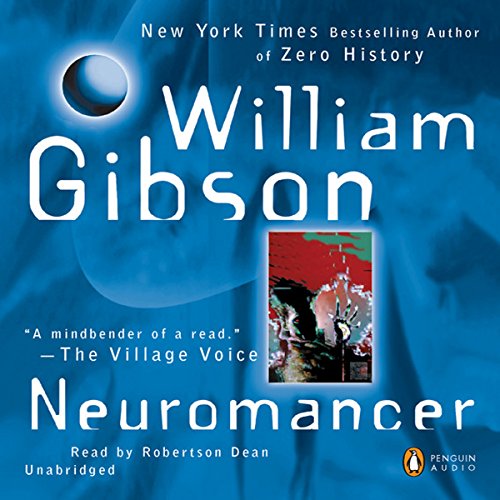
In 1984, William Gibson published his debut novel, Neuromancer, which became widely regarded as the archetypal cyberpunk work. The novel won the Hugo, Nebula, and Philip K. Dick Awards for its innovative focus on style and atmosphere.
1984: Gardner Dozois Labels the Cyberpunk Movement
In a 1984 Washington Post article, editor Gardner Dozois formally identified a emerging group of science fiction writers—including Bruce Sterling, William Gibson, Lewis Shiner, Pat Cadigan, and Greg Bear—as "cyberpunks," characterizing their work as high-tech and hard-edged.
1986: Publication of Count Zero
Building on the success of his debut, William Gibson released his second novel, Count Zero, in 1986.
1986: Release of Mirrorshades: The Cyberpunk Anthology
In 1986, Bruce Sterling edited and released 'Mirrorshades: The Cyberpunk Anthology,' a collection of stories intended to formally define the parameters and core identity of the cyberpunk genre from his unique perspective.
1987: Premiere of Max Headroom
In 1987, the iconic cyberpunk television series Max Headroom premiered, depicting a dystopian future dominated by television networks where computer hacking was a core narrative element.
1987: Release of RoboCop
The cyberpunk film RoboCop was released in 1987, contributing to the genre's cinematic history.
1987: Robocop and Max Headroom Debuts
The year 1987 saw the release of the successful cyberpunk film Robocop and the premiere of Max Headroom, which is recognized as the first cyberpunk television series set in a dystopian future.
1988: Release of Akira Anime Film
In 1988, Katsuhiro Otomo directed the anime film adaptation of Akira, which played a crucial role in popularizing the Japanese cyberpunk subgenre globally.
1988: Release of Cyberpunk tabletop game
R. Talsorian Games released their tabletop role-playing game titled Cyberpunk in 1988.
1988: Akira Anime Adaptation
The 1988 anime film adaptation of Akira, directed by Katsuhiro Otomo, was released and served as a catalyst for popularizing the Japanese cyberpunk subgenre worldwide.
1988: Publication of Mona Lisa Overdrive
William Gibson continued his literary output in 1988 with the release of the novel Mona Lisa Overdrive.
1989: Release of Tetsuo: The Iron Man
The film Tetsuo: The Iron Man was released in 1989, contributing to the growing collection of early Japanese cyberpunk cinema.
1990: Release of 1990 Cyberpunk Films
The films Total Recall and Hardware, both representative of the cyberpunk genre, were released in 1990.
1990: Release of Total Recall
Total Recall was released in 1990, contributing to the growing popularity of cyberpunk-themed cinema during that era.
1992: Release of Snow Crash
In 1992, Neal Stephenson published the novel Snow Crash, a work that utilized the established tropes of the cyberpunk genre, originally popularized by William Gibson's Neuromancer, to reach satirical and formulaic extremes.
1992: Release of The Lawnmower Man
The Lawnmower Man was released in 1992 as part of the growing catalog of cyberpunk films.
1994: Academic Analysis of Cyberspace Precursors
In 1994, scholar Brian Stonehill proposed that the 1973 novel Gravity's Rainbow by Thomas Pynchon functioned as a precursor to the modern concept of cyberspace.
1995: Publication and Award Recognition of Headcrash
In 1995, author Bruce Bethke published his novel 'Headcrash', a satirical critique of the cyberpunk genre's excesses. The book's thematic approach led it to win the prestigious Philip K. Dick Award in 1995, cementing its place in the history of the movement.
1995: Release of 1995 Cyberpunk Films
In 1995, several notable films within the cyberpunk genre were released, including Johnny Mnemonic, 12 Monkeys, Hackers, and Strange Days, with Johnny Mnemonic facing poor commercial and critical reception.
1995: Release of Judge Dredd
The film Judge Dredd, a successful entry within the cyberpunk genre, was released in 1995.
1998: Release of New Rose Hotel
The film New Rose Hotel, based on a short story by William Gibson, was released in 1998 but failed to achieve success with critics or at the box office.
1999: Beginning of The Matrix Trilogy
In 1999, the release of The Matrix began a film trilogy that utilized various cyberpunk elements influenced by the tone established in earlier genre films.
1999: Launch of Batman Beyond
The animated series Batman Beyond began its run in 1999, contributing significantly to the cyberpunk genre with its futuristic setting.
2001: Conclusion of Batman Beyond
The animated cyberpunk series Batman Beyond concluded its run in 2001 after becoming a noteworthy example of the genre.
2002: Publication of Altered Carbon
The novel Altered Carbon by Richard K. Morgan was published in 2002.
2003: Conclusion of The Matrix Trilogy
By 2003, the release of the final installments in The Matrix trilogy solidified the influence of cyberpunk themes in mainstream cinema.
2010: Release of Tron: Legacy
The film Tron: Legacy was released in 2010, serving as a sequel to the 1982 original.
2012: Release of Dredd
The film Dredd was released in 2012 as a standalone entry in the genre, not connected to the original movie.
2017: Release of Blade Runner Sequel
A direct sequel to the 1982 cult classic Blade Runner was officially released to audiences in 2017.
2017: Releases of Blade Runner 2049 and Ghost in the Shell
In 2017, the sequel film Blade Runner 2049 and the live-action adaptation Ghost in the Shell were released.
2018: Release of Altered Carbon
In 2018, Netflix launched the TV series Altered Carbon, which was adapted from a 2002 novel.
2019: Release of Alita: Battle Angel
The film Alita: Battle Angel, based on a 1990s manga, was released in 2019.
2019: Setting of Blade Runner
The year 2019 serves as the fictional setting for the events of the film Blade Runner, where manufactured beings known as replicants are utilized for labor on space colonies.
2020: Release of Cyberpunk 2077
The video game Cyberpunk 2077, based on a 1988 tabletop game, was released in 2020.
2022: Release of Cyberpunk: Edgerunners
The ONA miniseries Cyberpunk: Edgerunners was released in 2022.
2025: Release of Tron: Ares
In 2025, the film Tron: Ares is released as a sequel to the original Tron franchise.
2049: Release of Blade Runner 2049
The sequel film Blade Runner 2049 was released in 2049 (contextually referring to the 2017 film title).
2077: Contextual release of Cyberpunk 2077
The video game Cyberpunk 2077, released in 2020, takes its name from the 2077 title year.
Mentioned in this timeline

Lady Gaga born Stefani Joanne Angelina Germanotta is a highly...
The United States of America is a federal republic primarily...

David Bowie David Robert Jones was a highly influential English...
Cyberpunk is an open-world action-adventure RPG set in Night City...

Hong Kong is a densely populated special administrative region of...

Music involves arranging sounds to create form harmony melody rhythm...
Trending
5 hours ago Yunus Akgün Makes History During Galatasaray UEFA Champions League Match Against Lille
6 hours ago Federal Prosecutors Dismantle Massive Alleged Marriage Fraud Ring in Massachusetts
6 hours ago Nico Paz reveals inspiration for his headers

6 hours ago Kelly Ripa and Mark Consuelos Finally Welcome Home Their New Puppy After Health Scare
7 hours ago Maryland Terrapins Fire Head Football Coach Mike Locksley

7 hours ago Stefanos Tsitsipas Targets Grand Slam Glory Amidst Renaissance
Popular

Ilhan Omar is a prominent American politician currently serving as...

Ken Paxton is an American politician and lawyer serving as...

Elon Musk is a visionary entrepreneur and engineer known for...

Michael Joseph Jackson the King of Pop was a highly...

Cristiano Ronaldo widely considered one of the greatest footballers captains...

Linda Ronstadt is a versatile American singer renowned for her...