


Diego Garcia is the largest island in the Chagos Archipelago, a British overseas territory. Since the 1970s, it has hosted a joint UK-U.S. military base, established after the controversial expulsion of the native Chagossians. While the UK signed a treaty on 22 May 2025 to transfer sovereignty to Mauritius, the military base is slated to remain under British control for at least 99 years, with potential extensions. This agreement has drawn criticism, including "deep concern" from the UN Committee on the Elimination of Racial Discrimination regarding the terms of the deal.
1901: Storm blew over coconut trees
In 1901, a low-intensity storm hit Diego Garcia, which blew over 1,500 coconut trees


1905: Botanical studies and collections during the plantation era
In 1905, botanical studies and collections were made during the plantation era, contributing to the understanding of the island's vegetation.
1914: Visit by SMS Emden in 1914
In 1914, the German light cruiser SMS Emden visited Diego Garcia during its commerce-raiding cruise in World War I.
1939: Botanical studies and collections during the plantation era
In 1939, botanical studies and collections were made during the plantation era, contributing to the understanding of the island's vegetation.
February 1942: British Open RAF Station Diego Garcia
In February 1942, the British opened RAF Station Diego Garcia and installed naval guns to protect the base during World War II.
September 1944: Storm caused the wreck of a Royal Air Force PBY Catalina
On 16 September 1944, a storm caused the wreck of a Royal Air Force PBY Catalina on Diego Garcia.
April 1946: RAF Station Diego Garcia Closed
On 30 April 1946, RAF Station Diego Garcia was closed following the conclusion of World War II.
1953: Peak population recorded on Chagos Archipelago
In 1953, a peak population of 1,142 was recorded on all islands in the Chagos Archipelago.
1962: Chagos Agalega Company Purchased Société Huilière de Diego et Peros
In 1962, the Chagos Agalega Company purchased the Société Huilière de Diego et Peros and moved its headquarters to the Seychelles.
November 1965: UK Purchases Chagos Archipelago in November 1965
In November 1965, the UK purchased the Chagos Archipelago, including Diego Garcia, from Mauritius for £3 million to create the British Indian Ocean Territory (BIOT).
1965: Diego Garcia Administered from Mauritius until 1965
From 1814 to 1965, Diego Garcia was administered from Mauritius, before becoming part of the British Indian Ocean Territory.
1965: Diego Garcia Becomes Part of BIOT
In 1965, Diego Garcia became part of the newly formed British Indian Ocean Territory, having previously been part of Mauritius.
1965: UK purchased Chagos Archipelago from Mauritius
In 1965, the UK purchased Diego Garcia and the rest of the Chagos Archipelago from the self-governing colony of Mauritius for £3 million and declared them to be a separate British Overseas Territory.
1965: ICJ Rules UK Must Transfer Islands
In February 2019, the ICJ ruled that the United Kingdom must transfer the Chagos Islands to Mauritius, as they were not legally separated from Mauritius in 1965.
April 1966: British Government Buys Assets of Chagos Agalega Company
In April 1966, the British government bought the assets of the Chagos Agalega Company for £600,000 and leased the plantations back to the company.
December 1966: US and UK execute agreement regarding use of the BIOT
On 30 December 1966, the United States and the UK executed an agreement which permitted the United States to use the BIOT for defence purposes for 50 years until December 2016, followed by a 20-year extension (to 2036) .
1966: Diego Garcia Population in 1966
In 1966, Diego Garcia's population was 924, primarily contract workers on coconut plantations.
1966: UK/United States Exchange of Notes signed
In 1966, the UK and the United States signed an Exchange of Notes agreement to depopulate Diego Garcia for the construction of a United States base.
1967: Chagos Agalega Company Terminates Lease in 1967
At the end of 1967, the Chagos Agalega Company terminated its lease due to consistent losses, due to new oils and lubricants, and new coconut plantations.
1967: Stoddart's Description of Diego Garcia's Land Area
In 1967, Stoddart described the land area of Diego Garcia as having a littoral hedge of Scaevola taccada, with Cocos nucifera (coconut) as the dominant tree inland.
1967: Botanical studies and collections during the plantation era
In 1967, botanical studies and collections were made during the plantation era, contributing to the understanding of the island's vegetation.
1967: Smithsonian Survey Published
In 1967, the Smithsonian published a survey that is used as the most authoritative baseline for more recent research on the vegetation of Diego Garcia.
1968: Forcible Removal of Chagossians Begins in 1968
Beginning in 1968, the Chagossian inhabitants of Diego Garcia were forcibly removed to make way for a military base.
1968: British Indian Ocean Territory administration moved to Seychelles
In 1968, following the independence of Mauritius, the British Indian Ocean Territory administration was moved to Seychelles.
1968: Tactics Implemented to Decrease Population
In 1968, the first tactics were implemented to decrease the population of Diego Garcia. Those who left the island were not allowed to return, and food and medical supplies were restricted. All Chagossian dogs were ordered to be killed.
March 1971: Arrival of US Naval Construction Battalions
In March 1971, United States Naval construction battalions arrived on Diego Garcia to begin construction of the communications station and an airfield.
October 1971: Closure of plantations and forced relocation of inhabitants
In October 1971, the plantations on Diego Garcia were closed, leading to the forced relocation of the inhabitants.
1971: Diego Garcia inhabited by British and American military personnel
Between 1971 and 2001, the only residents on Diego Garcia were British and American military personnel and civilian employees of those countries. These included contract employees from the Philippines and Mauritius, including some Îlois.
1971: Forcible resettlement of Diego Garcia inhabitants
By 1971, all inhabitants of Diego Garcia were forcibly resettled to other islands in the Chagos Archipelago, Mauritius, or Seychelles. This was done to fulfill the requirements of a UK/United States Exchange of Notes signed in 1966 to depopulate the island for the construction of a United States base.
1971: United States Navy LSTs provide services
From 1971 to 1973, United States Navy LSTs provided consumable food and equipment to Diego Garcia by sea or air, and shipped off all non-biodegradable waste.
1971: Extermination of Feral Dogs Ordered
In 1971, the BIOT Commissioner ordered the extermination of feral dogs on Diego Garcia following the departure of the last plantation workers.
1971: Dredging of channel and anchorage areas
Prior to 1971, the channel and anchorage areas in the northern half of the lagoon were dredged, along with the ship turning basin.
1971: Inhabitants of Diego Garcia consisted of plantation workers and employees
Throughout the period 1793-1971, the inhabitants of Diego Garcia consisted of plantation workers, Franco-Mauritian managers, Indo-Mauritian administrators, Mauritian and Seychellois contract employees, and, in the late 19th century, Chinese and Somali employees.
1972: Agreement on compensation payments for exiled Îlois
In 1972, the UK and Mauritian governments agreed that 426 families, numbering 1,151 individuals, were due compensation payments as exiled Îlois.
1972: Donkey Population Count
In 1972, the donkey population numbered over 400 on Diego Garcia.
1973: Civilian ships provide services
Beginning in 1973, civilian ships were contracted to provide consumable food and equipment to Diego Garcia by sea or air, and shipped off all non-biodegradable waste.
1973: Forcible Removal of Remaining Chagossians
Between 1971 and 1973, those who still remained on the island of Diego Garcia were forced onto cargo ships heading to Mauritius and the Seychelles.
1973: Naval Communications Station Complete in 1973
In 1973, the Naval Communications Station on Diego Garcia was completed.
1973: Forcible Removal of Chagossians Ends in 1973
In 1973, the forcible removal of Chagossian inhabitants of Diego Garcia was completed to make way for a military base.
1974: UK Provides Funds to Mauritius for Resettlement
In 1974, the UK gave the Mauritian government £650,000 to resettle the islanders who were displaced from Diego Garcia.
1975: Last Feral Dog Observed and Shot
In 1975, the last feral dog was observed and shot on Diego Garcia, marking the end of the feral dog extermination program.
1976: British Indian Ocean Territory administration moved to London
In 1976, following the independence of Seychelles, the British Indian Ocean Territory administration was moved to a desk in the Foreign and Commonwealth Office in London.
1976: RAF Gan Closure
In the early 1960s, the UK withdrew its military presence from the Indian Ocean, not including the airfield at RAF Gan to the north of Diego Garcia in the Maldives, which remained open until 1976.
1979: Start of Iran Hostage Crisis
Following the fall of the Shah of Iran and the Iran Hostage Crisis in 1979–1980, the West became concerned with ensuring the flow of oil from the Persian Gulf through the Strait of Hormuz.
1980: End of Iran Hostage Crisis
Following the fall of the Shah of Iran and the Iran Hostage Crisis in 1979–1980, the West became concerned with ensuring the flow of oil from the Persian Gulf through the Strait of Hormuz.
1982: Total number of people certified as Îlois by the Mauritian Government
In 1982, The total number of people certified as Îlois by the Mauritian Government's Îlois Trust Fund Board was 1,579.
November 1983: Earthquake hit Diego Garcia
On 30 November 1983, an earthquake measuring 7.6 on the Richter Scale hit Diego Garcia at 11:46 pm local time and lasted 72 seconds, resulting in minor damage including wave damage to a 50-metre (160 ft) stretch of the southern end of the island.
September 1990: Storm demolished tent city
In September 1990, a storm demolished the tent city then being constructed for United States Air Force bomber crews during Operation Desert Storm on Diego Garcia.
1993: J. M. W. Topp Vegetation Data Collection Begins
In 1993, J. M. W. Topp began collecting data annually on the vegetation of Diego Garcia, finding that on average, three new plant species arrived each year.
1995: Last Horse Observed
In 1995, the last horse was observed on Diego Garcia.
1995: New Plant Species Recorded
Since 1995, 32 new plant species have been recorded on Diego Garcia, classifying 134 species of plants as "weedy" or "naturalised alien species", indicating a rapid rate of introduction.
1996: Scientific expeditions describe lagoon as "exceptionally unpolluted"
In 1996, Scientific expeditions described the lagoon and surrounding waters of Diego Garcia, along with the rest of the Chagos Archipelago, as "exceptionally unpolluted".
1997: United States Navy Vegetation Survey
In 1997, the United States Navy contracted a vegetation survey that identified approximately 280 species of terrestrial vascular plants on Diego Garcia, none of which were endemic.
2001: Combat operations against Afghanistan commenced from Diego Garcia
From 2001 to 2006, combat operations were launched from Diego Garcia against Afghanistan. Allied militaries, including Australian, Japanese, and Republic of Korea forces, were based on the island.
2001: Naval Exercises Between US and Indian Navies
In 2001, naval exercises between the United States and Indian navies were held at Diego Garcia.
2001: COMPSRON 2 Composition
Prior to 2001, COMPSRON 2 consisted of up to 20 ships, including four Combat Force Ships which provided rapid-response delivery of equipment to ground troops in the United States Army.
December 2002: Earthquake struck Diego Garcia
On 2 December 2002, an earthquake measuring 4.6 on the Richter scale struck Diego Garcia at 12:21 am.
2002: Allegation that United States had imprisoned and interrogated suspect on Diego Garcia
An unnamed former White House official alleged that the United States had imprisoned and interrogated at least one suspect on Diego Garcia during 2002 and possibly 2003.
2002: Extraordinary rendition flights refueled on Diego Garcia
British Foreign Secretary David Miliband admitted that two United States extraordinary rendition flights refueled on Diego Garcia in 2002.
2003: Allegation that United States had imprisoned and interrogated suspect on Diego Garcia
An unnamed former White House official alleged that the United States had imprisoned and interrogated at least one suspect on Diego Garcia during 2003 and possibly 2002.
2003: J. M. W. Topp Vegetation Data Collection Ends
In 2003, J. M. W. Topp's annual data collection on the vegetation of Diego Garcia ended, after having discovered that on average, three new plant species arrived each year.
June 2004: Assurances that no detainees passed in transit through Diego Garcia
In June 2004, the British Foreign Secretary Jack Straw stated that United States authorities had repeatedly assured him that no detainees had passed in transit through Diego Garcia or were disembarked there.
December 2004: Tsunami causes minor shoreline erosion
In December 2004, a tsunami generated near Indonesia caused minor shoreline erosion on Barton Point on Diego Garcia.
2004: Plant Communities Recognized on Atoll Rim
In 2004, 10 plant communities were recognized on the atoll rim of Diego Garcia.
2004: Indian Ocean Earthquake Tsunami
In 2004, Diego Garcia was somewhat affected by the tsunami caused by the Indian Ocean earthquake, with service personnel reporting only a minor increase in wave activity on the western arm of the island due to favorable ocean topography.
2004: TransAtlantic Lines Wins Transport Contract
In 2004, TransAtlantic Lines outbid Sealift Incorporated for the transport contract between Singapore and Diego Garcia.
2004: Naval Exercises Between US and Indian Navies
In 2004, naval exercises between the United States and Indian navies were held at Diego Garcia.
2004: UK applied to obtain Ramsar site wetlands conservation status
In 2004, the UK applied to obtain Ramsar site wetlands conservation status for much of the lagoon and other waters of Diego Garcia. Large parts of the island are nature preserves.
January 2005: Baffin Straits Charter Begins
The Baffin Straits charter with TransAtlantic Lines ran from 10 January 2005 to 30 September 2008, at a daily rate of $12,550 for transport between Singapore and Diego Garcia.
September 2005: Naval Security Group Detachment Disestablished
On 30 September 2005, the Naval Security Group detachment on Diego Garcia was disestablished, with remaining essential operations transferred to a contractor.
2005: Donkey and Cat Population Count
By 2005, the donkey population was down to just 20 individuals, and only two cats were thought to have survived an island-wide eradication program on Diego Garcia.
2005: Rumors of CIA black sites on Diego Garcia
In 2005, Diego Garcia was first rumored to have been one of the locations of the CIA's black sites. It was suspected that Khalid Sheikh Mohammed was held in Diego Garcia.
2005: Vegetation Survey Identifies Native Species
In 2005, a vegetation survey identified just 36 species as "native" on Diego Garcia, meaning they arrived without human assistance and are found elsewhere in the world. No terrestrial plant species are of any conservation-related concern at present.
2005: Biological Survey After Tsunami
In early 2005, a biological survey indicated erosional effects of the tsunami wave on Diego Garcia and other islands of the Chagos Archipelago, including a breach in the shoreline and the washing away of shoreline shrubs and coconut palms.
July 2006: Camp Justice Renamed Camp Thunder Cove
In July 2006, the United States military facilities on Diego Garcia, informally known as Camp Justice, were renamed Camp Thunder Cove.
2006: Scientific expeditions describe lagoon as "pristine"
In 2006, Scientific expeditions described the lagoon and surrounding waters of Diego Garcia, along with the rest of the Chagos Archipelago, as "pristine".
2006: American Gunships Participate in Ethiopia's Invasion of Somalia
In late 2006, American gunships based off Diego Garcia participated in Ethiopia's invasion of Somalia.
June 2007: Allegation reported to Council of Europe that military base used for prisoner transport
In June 2007, it was formally reported to the Council of Europe that the military base on Diego Garcia had been used by the United States government for transport of prisoners involved in the controversial extraordinary rendition program.
July 2007: Storm hit Diego Garcia
On 22 July 2007, a low-intensity storm hit Diego Garcia. Winds exceeded 60 knots (69 mph; 110 km/h) and over 250 mm (10 in) of rain fell in 24 hours.
October 2007: Investigation of allegations of a prison camp on Diego Garcia
In October 2007, the Foreign Affairs Select Committee of the British Parliament announced that it would launch an investigation of continued allegations of a prison camp on Diego Garcia, which it claimed were twice confirmed by comments made by retired U.S. Army general Barry McCaffrey.
February 2008: Admission of extraordinary rendition flights refueling on Diego Garcia
On 21 February 2008, British Foreign Secretary David Miliband admitted that two United States extraordinary rendition flights refuelled on Diego Garcia in 2002, and was "very sorry" that earlier denials were having to be corrected.
July 2008: Allegation that the United States had imprisoned and interrogated suspect on Diego Garcia
On July 31, 2008, an unnamed former White House official alleged that the United States had imprisoned and interrogated at least one suspect on Diego Garcia during 2002 and possibly 2003.
September 2008: Baffin Straits Charter Ends
The Baffin Straits charter with TransAtlantic Lines ran from 10 January 2005 to 30 September 2008, at a daily rate of $12,550 for transport between Singapore and Diego Garcia.
2009: Vegetation Checklist Compiled
In 2009, Topp and Martin Hamilton of Kew Gardens compiled the most recent checklist of vegetation on Diego Garcia.
2009: UK proposed BIOT become "marine reserve"
In 2009, the UK proposed that the BIOT become a "marine reserve" with the aim of preventing the former inhabitants from returning to the islands.
April 2010: Chagos Marine Protected Area Declared
On 1 April 2010, the Chagos Marine Protected Area (MPA) was declared to cover the waters around the Chagos Archipelago.
August 2010: Ship Composition of MPSRON TWO
In August 2010, the ship composition of MPSRON TWO was dynamic, and comprised of multiple ships.
2010: Satellite Antenna Radomes Still Present
As of 2010, the four satellite antenna radomes around the site of the demolished AN/AX-16 High Frequency Radio direction finding Circularly Disposed Antenna Array on Diego Garcia remained.
December 2014: Start of Window to Give Notice of Termination
December 2014 marked the start of a two-year window (December 2014 – December 2016) in which either the US or the UK could give notice of termination of the agreement concerning the use of the BIOT for defense purposes.
March 2015: Chagos Marine Protected Area Ruled Illegal
On 18 March 2015, the Permanent Court of Arbitration ruled that the Chagos Marine Protected Area was illegal.
2015: Allegations of CIA using Diego Garcia for "nefarious activities"
In 2015, Lawrence Wilkerson, former chief of staff to U.S. Secretary of State Colin Powell, stated that Diego Garcia was used by the CIA for "nefarious activities," including as a transit site for temporary housing and interrogation.
December 2016: Original Term of US-UK Agreement Ends
In December 2016, the original 50-year term of the agreement between the US and UK for the use of the BIOT for defense purposes ended. However, the agreement was extended for another 20 years to 2036.
2016: British expulsion action remains in litigation
As of 2016, the British expulsion action of Chagossians remains in litigation. Many Chagossians are impoverished and marginalized on Mauritius and the Seychelles.
2016: UK and US Discussed Continuing Importance of Joint Base
In 2016, there were discussions between the United Kingdom and the United States concerning the continuing importance of the joint base on Diego Garcia. Neither party gave notice to terminate the agreement, which remains in force until 2036.
June 2017: UNGA Votes to Refer Dispute to ICJ
On 23 June 2017, the United Nations General Assembly voted to refer the territorial dispute between Mauritius and the UK to the International Court of Justice.
February 2019: ICJ Rules UK Must Transfer Islands
In February 2019, the ICJ ruled that the United Kingdom must transfer the Chagos Islands to Mauritius, as they were not legally separated from Mauritius in 1965.
May 2019: UN General Assembly Affirms ICJ Decision
In May 2019, the United Nations General Assembly affirmed the decision of the International Court of Justice and demanded that the United Kingdom withdraw its colonial administration from the Islands.
2019: International Court of Justice Opinion on Decolonisation
In 2019, the International Court of Justice issued an advisory opinion stating that the decolonisation of Mauritius was not lawfully completed when it gained independence in 1968, and the UK was obligated to end its administration of the Chagos Archipelago.
June 2020: Mauritius Offers Base to US
In June 2020, a Mauritian official offered to allow the United States to retain its military base on Diego Garcia if Mauritius regained sovereignty over the Chagos archipelago.
February 2021: Expected Completion of Radomes
In February 2021, the completion of two new 13-metre radomes on Diego Garcia, built by Black Construction/Mace International JV, was expected.
April 2021: Expected Completion of Antenna Facility
In April 2021, the completion of a 34-metre antenna facility, built by Black Construction/Mace International JV on Diego Garcia, was expected.
October 2021: Asylum seekers on Diego Garcia
Since October 2021, there have been asylum seekers on Diego Garcia.
September 2022: Expected Completion of Underground Power and Telephone Lines Project
In September 2022, the completion of SJC-BVIL's project to move underground the overhead power and telephone lines that run from the Navy ammunition area to the Air Force ammunition area along DG1 on Diego Garcia was expected.
November 2022: UK and Mauritius begin negotiations on sovereignty over BIOT
On 3 November 2022, the British Foreign Secretary James Cleverly announced that the UK and Mauritius had decided to begin negotiations on sovereignty over the British Indian Ocean Territory, taking into account international legal proceedings. Both states had agreed to ensure the continued operation of the joint UK/US military base on Diego Garcia.
October 2024: UK to Hand Over Chagos Islands to Mauritius
On 3 October 2024, the UK announced it would hand over the Chagos Islands to Mauritius, with the UK initially leasing the base for 99 years. Resettlement on Diego Garcia would not be allowed initially. The deal was put on hold following the 2024 United States presidential election.
April 2025: US Approves Treaty Negotiations to Continue
On 1 April 2025, the new US administration approved letting treaty negotiations between UK and Mauritius continue.
May 2025: Agreement signed to return sovereignty of the Chagos Archipelago to Mauritius
An agreement signed by the United Kingdom and Mauritius on May 22, 2025, will see sovereignty of the Chagos Archipelago returned to Mauritius on the condition that Diego Garcia will continue to be administered by the United Kingdom for at least 99 years.
May 2025: John Healey claims UK could face losing legal rulings if it didn't cede British Indian Ocean Territory to Mauritius
In May 2025, UK Secretary of State for Defence John Healey claimed that if the UK did not cede the British Indian Ocean Territory (Chagos Archipelago) to Mauritius, it could face losing legal rulings "within weeks", and "within just a few years" the base at Diego Garcia "would become inoperable".
May 2025: UK–Mauritius Sovereignty Treaty Signed
In May 2025, a treaty was signed to transfer sovereignty of the Chagos Islands from the UK to Mauritius, with a provision for the military base on Diego Garcia to remain under British control for at least 99 years.
May 2025: Starmer signs agreement to transfer sovereignty of Chagos Islands to Mauritius
On May 2025, Starmer signed a formal agreement transferring sovereignty of the Chagos Islands to Mauritius, while leasing Diego Garcia back to the UK for 99 years, allowing continued operation of the joint British-American base. This agreement includes an additional 40-year extension and a right of first refusal.
May 2025: Terms of the UK-Mauritius Agreement
Under the terms of the UK-Mauritius Agreement signed in May 2025, Mauritius will have sovereignty over the Chagos Archipelago, including Diego Garcia, but the UK will retain administrative rights over Diego Garcia, including a 12-nautical-mile zone surrounding it, for at least 99 years to maintain its military bases. The UK will handle defense, security, and criminal/civil jurisdiction related to the bases. Mauritius will have jurisdiction over its nationals and persons not connected to the bases. The UK may not issue coins or postage stamps or register vital records for persons not connected to the bases. Mauritius will own the island's natural and marine resources and handle environmental management. Exiled Chagossians and their descendants are not permitted to return to the island.
June 2025: British Conservatives assert restitution agreement will cost British taxpayers more
In June 2025, British Conservatives asserted that the restitution agreement will cost the British taxpayer more than the agreement to return the Chagos Archipelago to Mauritius was expected to cost.
January 2026: Trump administration reverses approval of transfer with post on Truth Social
In January 2026, the Trump administration reversed their previous approval of the transfer of Diego Garcia to Mauritius. Donald Trump criticized the plan on Truth Social, calling it an act of "GREAT STUPIDITY" and linking it to the ongoing Greenland crisis.
February 2026: UK Secretary of State accused of misleading parliament
In February 2026, UK Secretary of State for Defence, John Healey, was accused by the Conservatives of misleading parliament. This was regarding claims made in May 2025, that if the UK did not cede the British Indian Ocean Territory (Chagos Archipelago) to Mauritius, it could face losing legal rulings and the base at Diego Garcia would become inoperable.
2036: Potential End of US-UK Agreement
2036 marks the potential end of the extended agreement between the US and UK regarding the use of the BIOT for defense purposes, unless further extended.
Mentioned in this timeline

Donald John Trump is an American politician media personality and...
The United States of America is a federal republic primarily...
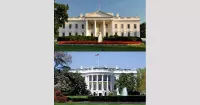
The White House located at Pennsylvania Avenue NW in Washington...
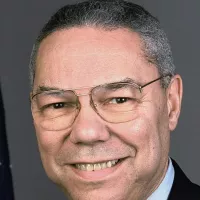
Colin Powell - was a prominent American statesman and four-star...

Sir Keir Starmer is a British politician and lawyer currently...
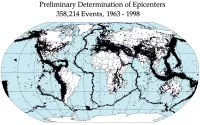
An earthquake is a sudden intense shaking of the Earth's...
Trending

4 hours ago Brock Bowers Becomes Second-Fastest Tight End to Reach Career Yards Milestone
4 hours ago Cam Skattebo Shares Confidence Ahead of Giants Matchup Against Commanders

4 hours ago D'Andre Swift Returns to Practice Amidst Fantasy Football Ranking Surge

4 hours ago Ja'Marr Chase and Tee Higgins Cleared for Bengals Upcoming Game
4 hours ago Tyler Warren Featured in NFL Week 5 Fantasy Football Projections and Lineup Advice
4 hours ago Kendre Miller Fantasy Football Outlook and Waiver Wire Value for Week 5
Popular

Ken Paxton is an American politician and lawyer serving as...

Cristiano Ronaldo widely considered one of the greatest footballers captains...

Michael Joseph Jackson the King of Pop was a highly...

Elon Musk is a visionary entrepreneur and engineer known for...

Shakira Isabel Mebarak Ripoll the Queen of Latin Music is...

Bernie Sanders is a prominent American politician and the senior...