Early Life and Education of Haile Selassie: A Complete Timeline


An overview of the childhood and early education of Haile Selassie, highlighting the experiences that shaped the journey.
Haile Selassie I served as the Emperor of Ethiopia from 1930 to 1974. A defining figure of the 20th century, he gained international prominence for his opposition to the Italian fascist invasion during the 1930s and his eloquent plea for collective security before the League of Nations. Domestically, he modernized Ethiopia, introduced the nation's first written constitution, and played a pivotal role in the formation of the Organization of African Unity. However, his long reign was marked by significant challenges, including internal unrest, land reform failures, and economic issues, which ultimately led to a military coup in 1974. Beyond politics, he is revered as a messianic figure in the Rastafari movement, which considers him the living embodiment of God. His legacy remains deeply complex, balancing his status as a champion of African independence against the authoritarian nature of his later rule.
November 1905: Appointment as Dejazmatch of Gara Mulatta
On 1 November 1905, at the age of 13, Tafari was appointed by his father as the Dejazmatch of Gara Mulatta, a position of nobility equivalent to a count.


November 1905: Tafari Appointed Dejazmach
On November 1, 1905, at the young age of 13, Tafari Makonnen was bestowed with the title of Dejazmach, a position of leadership roughly equivalent to a count, as he began his ascent into his future royal role.
1906: Appointment as Governor of Selale
In 1906, Tafari was appointed to the governorship of Selale, a region of minor significance that allowed him the time and space to pursue his ongoing educational studies.
1906: Death of Ras Makonnen
In 1906, shortly after Tafari's appointment to Dejazmach, his father Ras Makonnen passed away at Kulibi, marking a significant transition in his early life.
1907: Death of Yelma
In 1907, the death of Yelma, the brother of Haile Selassie, created a vacancy in the governorate of Harar, leading to a shift in regional administration.
1910: Tafari Appointed Governor of Harar
During the final illness of Menelik II in 1910, Tafari (later Haile Selassie) was appointed as the governor of Harar to address the ineffective administration previously overseen by Dejazmach Balcha Safo.
August 1911: Marriage of Tafari and Menen Asfaw
In August 1911, Tafari (later Haile Selassie) married Menen Asfaw of Ambassel. Despite the potential political motivations behind the union between the two Ethiopian noble families, the couple maintained a marriage that lasted five decades, which Tafari described as being rooted in mutual consent.
1913: Lij Iyasu becomes the designated emperor
In 1913, Lij Iyasu was appointed as the designated but uncrowned emperor of Ethiopia, a position he held until 1916.
September 1916: Deposition of Iyasu
On 27 September 1916, Iyasu was officially deposed from his position, marking a significant shift in Ethiopian leadership that eventually led to his flight into the Ogaden Desert.
September 1916: Proclaimed Crown Prince and Regent
On 27 September 1916, Tafari was proclaimed Crown Prince and heir apparent to the Ethiopian throne, while also being appointed as the Regent Plenipotentiary.
1916: Appointment as Regent Plenipotentiary
Beginning in 1916, Haile Selassie I, then known as Lij Tafari, rose to political prominence by serving as the Regent Plenipotentiary (Enderase) under Empress Zewditu.
February 1917: Coronation of Empress Zewditu
On 11 February 1917, Empress Zewditu was officially crowned as the monarch of Ethiopia. During this coronation, she pledged to rule with justice alongside her regent, Tafari, who took on the responsibilities of daily administration while Zewditu retained the authority to arbitrate between competing political factions.
February 1917: Crowned as Le'ul-Ras
On 11 February 1917, Tafari was crowned Le'ul-Ras, a title equivalent to a royal duke, and began to be referred to as Ras Tafari Makonnen.
1918: Survival of the 1918 Flu Pandemic
In 1918, the future Haile Selassie contracted the flu during the global 1918 flu pandemic; despite his lifelong susceptibility to illness, he successfully survived the infection.
January 1921: Capture of Iyasu
On 11 January 1921, after successfully evading authorities for approximately five years following his deposition, Iyasu was finally apprehended and taken into custody by Gugsa Araya Selassie.
1924: Diplomatic Tour of Europe and the Middle East
In 1924, Ras Tafari embarked on an extensive diplomatic tour across Europe and the Middle East, visiting cities including Paris, London, and Jerusalem to advocate for Ethiopian access to the sea. Although his primary goal was not achieved, the 1924 tour allowed him to study European infrastructure and implement cautious modernization reforms that prioritized local ownership to prevent economic imperialism.
1928: Conferral of the title Negus
In 1928, despite Empress Zewditu's original plan to grant him the throne of Shewa, Tafari was instead conferred the title of Negus, or King, without a specific geographical designation due to opposition from provincial rulers.
November 1930: Coronation of Haile Selassie I
On November 2, 1930, following the death of Empress Zewditu, Tafari Makonnen ascended to the throne as the Negusa Nagast (King of Kings) and adopted the regnal name Haile Selassie I, signifying 'Power of the Trinity'.
1930: Ascension to the Imperial Throne
In 1930, Haile Selassie I transitioned from his role as Regent Plenipotentiary to become the Emperor of Ethiopia, a position he would hold until 1974.
1930: Adoption of Regnal Name
In 1930, Lij Tafari Makonnen adopted the name Haile Selassie as his official regnal name, which had originally been given to him during his infant baptism.
1931: Introduction of the 1931 Constitution
In 1931, Haile Selassie implemented a new constitution as part of his broader efforts to modernize the political and social structures of the Ethiopian Empire.
1942: Abolition of Slavery
As part of his ongoing social reform initiatives, Haile Selassie officially abolished the practice of slavery in Ethiopia in 1942.
1950: Establishment of the Federation of Ethiopia and Eritrea
The United Nations General Assembly established the Federation of Ethiopia and Eritrea in 1950, a geopolitical arrangement that Haile Selassie would later dissolve to annex Eritrea as a province.
1974: The Overthrow of Haile Selassie
In 1974, Haile Selassie was deposed from power following a series of popular uprisings and a coup d'état orchestrated by the Derg, a military junta that subsequently established a Marxist–Leninist state in Ethiopia.
1974: End of Imperial Reign
The year 1974 marked the conclusion of Haile Selassie I's tenure as the Emperor of Ethiopia, ending a rule that began in 1930.
August 1975: Death of Haile Selassie I
Haile Selassie I, the former Emperor of Ethiopia, passed away on August 27, 1975, marking the end of his life.
November 2000: Burial at Holy Trinity Cathedral
On 5 November 2000, the previously excavated remains of Haile Selassie were given a formal burial at the Holy Trinity Cathedral located in Addis Ababa.
Mentioned in this timeline
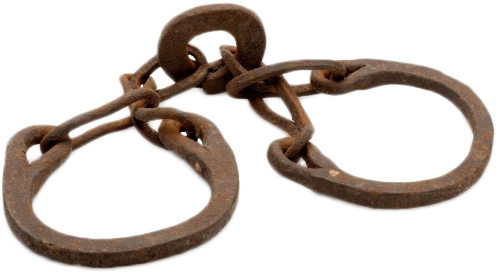
Slavery is a systemic practice in which individuals are owned...
A desert is a landscape characterized by minimal precipitation leading...

Justice in its broadest sense is the concept of treating...
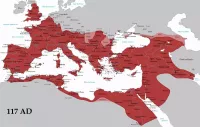
An empire is a political structure consisting of a dominant...
A constitution serves as the foundational legal document for any...
September is the ninth month of the year in the...
Trending

5 hours ago Halle Berry Denies Abuse Allegations Amid Custody Dispute with Ex-Husband Olivier Martinez

5 hours ago Jasmine Paolini Faces Sonay Kartal in WTA Wuhan Open Round of 16 Match

6 hours ago Jelena Ostapenko Stuns Jessica Pegula in Thrilling Wuhan Open Comeback
6 hours ago Leylah Fernandez Advances to Third Round at the Wuhan Open
5 hours ago Riot Games Announces Closure of League of Legends Classic Mode in January

6 hours ago Sonay Kartal achieves major upset victory against Belinda Bencic at the Wuhan Open
Popular

Ilhan Omar is a prominent American politician currently serving as...

Ken Paxton is an American politician and lawyer serving as...

Jameis Winston is an American football quarterback currently playing for...

Elon Musk is a visionary entrepreneur and engineer known for...

Cristiano Ronaldo widely considered one of the greatest footballers captains...

Michael Joseph Jackson the King of Pop was a highly...