History of Laguna Niguel, California in Timeline


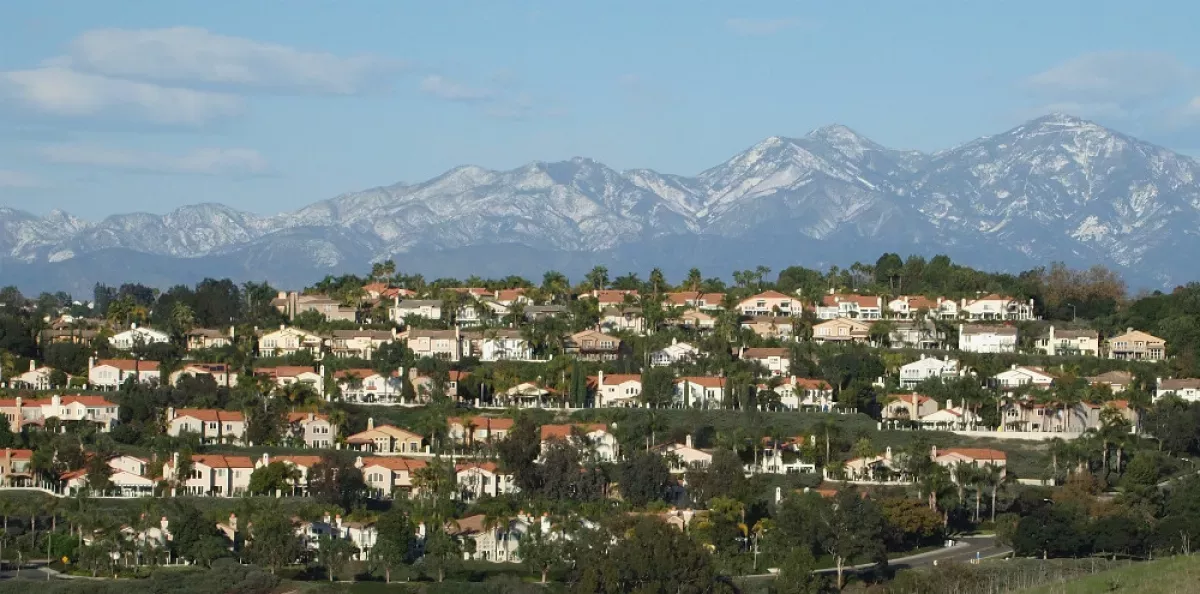
Laguna Niguel is a city in Orange County, California with a population of 64,355 as of 2020. The name combines "Laguna" and "Niguili". It's nestled in the San Joaquin Hills, close to the Pacific Ocean, and shares borders with Aliso Viejo, Dana Point, Laguna Beach, Laguna Hills, Mission Viejo, and San Juan Capistrano.
1949: Lowest Recorded Temperature
The lowest recorded temperature in Laguna Niguel, California was 21 degrees Fahrenheit, occurring in 1949.


April 1959: Laguna Niguel Corporation Goes Public
In April 1959, the Laguna Niguel Corporation went public and raised $8.2 million from investors.
1959: Laguna Niguel Corporation Forms and Develops Master Plan
In 1959, Cabot, Cabot & Forbes partnered with Paine Webber to form the Laguna Niguel Corporation, which purchased land to develop a master-planned community. Viennese architect Victor Gruen created the initial town plan.
1959: Gruen Plan
In 1959, the Gruen plan led to over one-third of Laguna Niguel, California becoming public open space, divided between 31 city parks and 4 county parks.
1960: Moulton Niguel Water District Established
The Moulton Niguel Water District, which still serves all of Laguna Niguel, was established in 1960 by a group of ranchers to address the area's insufficient water supply.
1962: First Homes Completed
The first tracts of Monarch Bay and Niguel Terrace, consisting of 565 homes, were completed in 1962.
1963: Highest Recorded Temperature
The highest recorded temperature in Laguna Niguel, California was 108 degrees Fahrenheit, occurring in 1963.
1964: Crown Valley Parkway Completed
Crown Valley Parkway, a major thoroughfare in Laguna Niguel, was completed from Interstate 5 to the Pacific Coast Highway in 1964.
1965: Laguna Niguel Reaches 1,000 Residents
By 1965, the population of the planned community of Laguna Niguel reached 1,000 residents.
1965: Laguna Niguel Corporation Purchases Oceanfront Property
The Laguna Niguel Corporation purchased George Capron's oceanfront property in 1965 and began developing the Niguel Shores neighborhood.
1966: Laguna Niguel Homeowner's Association Formed
The Laguna Niguel Homeowner's Association was formed in 1966 to advise the Orange County Board of Supervisors on matters relating to the unincorporated community.
1971: AVCO Community Developers Expands Town Plan
AVCO Community Developers acquired the Laguna Niguel Corporation in 1971 and began expanding the town plan originally created by Victor Gruen.
1971: Chet Holifield Federal Building Constructed
The Chet Holifield Federal Building, a local landmark designed by William L. Pereira, was built for Rockwell International in 1971.
1973: Laguna Niguel Regional Park Opens
Laguna Niguel Regional Park, a popular recreational area, opened to the public in 1973.
1977: Dana Point Proposes Joint Incorporation with Laguna Niguel
In 1977, the unincorporated community of Dana Point suggested a joint incorporation with Laguna Niguel as a single city.
1980: Population Reaches 12,237
By 1980, the population of Laguna Niguel had grown to 12,237, marking a period of significant growth for the city.
December 1986: Incorporation Requests Spark Controversy
Both Dana Point and Laguna Niguel submitted incorporation requests in December 1986, sparking a controversy over the coastal Monarch Beach community.
December 1, 1989: Laguna Niguel Officially Becomes a City
Laguna Niguel was officially incorporated as Orange County's 29th city on December 1, 1989, after a period of growth and development.
1989: Planning Begins for New City Hall
Plans for a dedicated City Hall building in Laguna Niguel were initiated as early as 1989.
1992: Alicia Parkway Opens, Providing New Route to I-5
The completion of Alicia Parkway in 1992 provided residents with a more direct route to Interstate 5, improving transportation options.
1994: Damage to Retaining Walls Noticed
In 1994, residents observed damage to retaining walls and roads near a slope in the Niguel Summit area, raising concerns about potential landslides.
1996: 73 San Joaquin Hills Toll Road Opens, Connecting to I-405
The 73 San Joaquin Hills Toll Road opened in 1996, providing a connection to Interstate 405 in Costa Mesa and improving regional transportation.
1997: Heavy Rains from El Niño
The heavy rains and storms brought by the 1997–1998 El Niño event contributed to the instability of the slope in Niguel Summit, ultimately leading to the landslide.
March 19, 1998: Landslide in Niguel Summit
On March 19, 1998, a landslide in the Niguel Summit community destroyed several homes. Though there were no fatalities, the event revealed improper construction practices by J.M. Peters Inc.
2000: United States Census
As of the census of 2000, there were 61,891 people, 23,217 households, and 16,785 families residing in Laguna Niguel, California. The population density was 4,221.0 inhabitants per square mile.
2000: Population Reaches 61,891
Laguna Niguel experienced rapid growth in the late 20th century, with its population reaching 61,891 by the year 2000.
2010: United States Census
The 2010 United States Census reported that Laguna Niguel had a population of 62,979 with a population density of 4,231.1 inhabitants per square mile.
October 15, 2011: New City Hall Opens
After years of planning, the Laguna Niguel City Hall officially opened its doors on October 15, 2011.
2015: Population Growth Slows
Due to limited land available for development, population growth in Laguna Niguel slowed after 2000, with an estimated population of 65,806 by 2015.
February 10, 2019: California Secretary of State Registered Voters
According to the California Secretary of State, as of February 10, 2019, Laguna Niguel has 40,461 registered voters. Of those, 16,071 (39.72%) are registered Republicans, 11,615 (28.71%) are registered Democrats, and 10,843 (26.80%) have no political party preference/are independents.
2020: Presidential Election
In the 2020 presidential elections, Joe Biden became the first Democratic presidential nominee to win Laguna Niguel, California since its incorporation.
2020: United States Census
The 2020 United States Census reported that Laguna Niguel had a population of 64,239, with a racial makeup of 72.6% White, 1.9% African American, 11.3% Asian, and 15.8% Hispanic or Latino of any race.
2022: Coastal Fire Devastates Niguel Summit
In 2022, the Niguel Summit community faced devastation from a coastal fire that destroyed 20 homes. The fire's origin was linked to problems with a Southern California Edison electricity tower in Laguna Beach.
Mentioned in this timeline

Joe Biden served as the th President of the United...
California is a U S state on the Pacific Coast...

Fire is a rapid oxidation process specifically combustion that releases...

An election is a structured decision-making process where a population...
A presidential election is a formal process through which a...
Trending

4 hours ago Isack Hadjar Continues Red Bull Tenure Amid Strong Return to Formula 1 Form

5 hours ago Taylor Townsend Makes Historic US Open Tennis Performance

5 hours ago Sylvester Stallone Opens Up About Personal Struggles and Childhood Trauma in New Memoir

6 hours ago Daniil Medvedev Faces Valentin Royer in ATP Hangzhou Match

6 hours ago Kaia Gerber Searches for Missing Cat Following Brother Presley's Tragic Death

6 hours ago DHS Issues Stark Warning Over Increasing Hostile Cartel Drone Activity at Southern Border
Popular

Jameis Winston is an American football quarterback currently playing for...

Shakira Isabel Mebarak Ripoll the Queen of Latin Music is...

Michael Joseph Jackson the King of Pop was a highly...

Ken Paxton is an American politician and lawyer serving as...

Lane Kiffin is an American football coach with a notable...

Cristiano Ronaldo widely considered one of the greatest footballers captains...