Challenges in the Life of Larry Summers in a Detailed Timeline


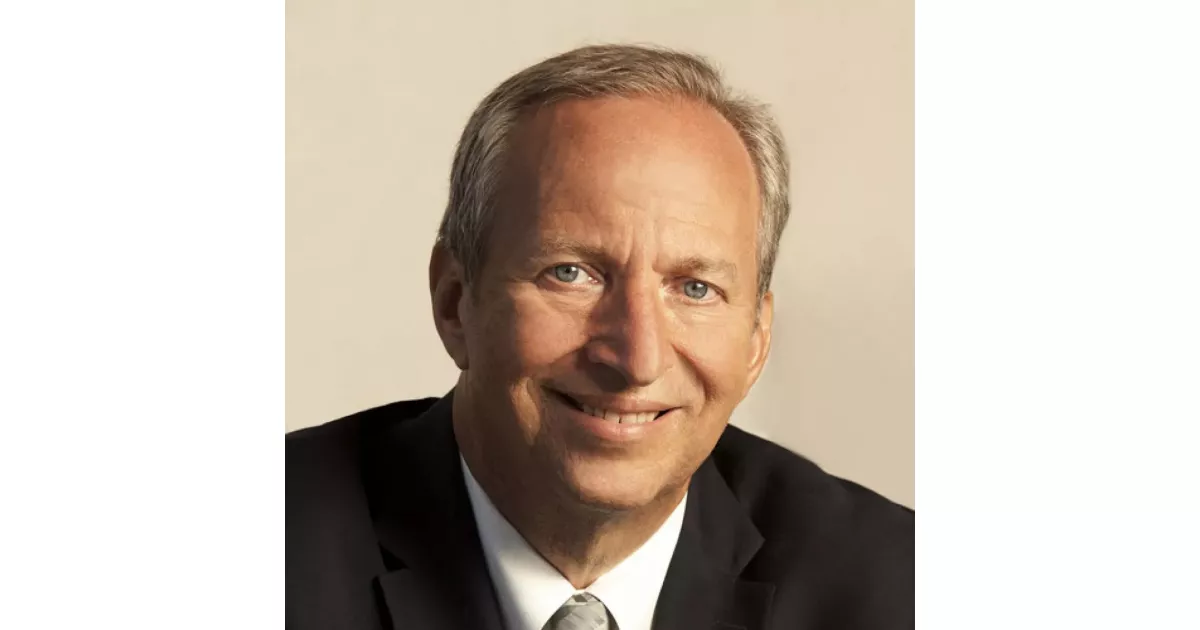
Resilience and perseverance in the journey of Larry Summers. A timeline of obstacles and growth.
Lawrence Henry Summers is an American economist who has held several prominent positions including U.S. Secretary of the Treasury, President of Harvard University, and Director of the National Economic Council. Currently a professor at Harvard Kennedy School, he is on leave from his teaching responsibilities and role as director of the Mossavar-Rahmani Center for Business and Government as of November 19, 2025, due to an investigation into his ties with Jeffrey Epstein.
1983: Diagnosis of Hodgkin's Lymphoma
Around 1983, Summers was diagnosed with Hodgkin's lymphoma, underwent treatment, and has remained cancer-free.


1994: American Response to the Mexican Economic Crisis
In 1994, Lawrence Summers played a leading role in the American response to the economic crisis in Mexico.
1997: American Response to the Asian Financial Crisis
In 1997, Lawrence Summers played a leading role in the American response to the Asian financial crisis.
1998: American Response to the Russian Financial Crisis
In 1998, Lawrence Summers played a leading role in the American response to the Russian financial crisis.
2000: California Energy Crisis Advice
During the California energy crisis of 2000, then-Treasury Secretary Lawrence Summers, Alan Greenspan, and Enron executive Kenneth Lay lectured California Governor Gray Davis on the causes of the crisis, attributing it to excessive government regulation.
March 15, 2005: Harvard Faculty Passes Motion of "Lack of Confidence"
On March 15, 2005, the Harvard Faculty of Arts and Sciences passed a motion of "lack of confidence" in Larry Summers' leadership by a vote of 218–185, with 18 abstentions. A second, milder censure motion also passed.
2006: Resignation as Harvard's President
In 2006, Lawrence Summers resigned as the president of Harvard University following a no-confidence vote by faculty.
2007: Subprime Mortgage Crisis
The subprime mortgage crisis of 2007 is mentioned in relation to the partial repeal of the 1933 Glass-Steagall Act.
2008: Financial Market Downturn
In Fall 2008, the financial market downturn is discussed in relation to financial derivatives and the actions of President Clinton's Working Group on Financial Markets, including Summers.
March 15, 2009: Summers on A.I.G. and Financial Crisis
On March 15, 2009, Lawrence Summers, in an ABC interview, commented on the 2008 financial crisis, particularly the lack of regulation and oversight of A.I.G., calling it "outrageous."
2010: Subprime Mortgage Crisis
The subprime mortgage crisis of 2010 is mentioned in relation to the partial repeal of the 1933 Glass-Steagall Act.
2013: Withdrawal from Federal Reserve Chair Consideration
In 2013, Summers was a leading candidate to succeed Ben Bernanke as chair of the Federal Reserve. However, on September 15, Summers withdrew his name from consideration, citing an acrimonious confirmation process.
2020: Criticism and Response in 2020 Presidential Campaign
In 2020, progressive groups called on Joe Biden's presidential campaign to stop using Summers as an advisor due to his past policies. Following the outcry, Summers stated he would not join a future Biden administration.
Mentioned in this timeline
Mark Zuckerberg is an American businessman and programmer best known...
Barack Obama the th U S President - was the...
Bill Clinton served as the nd U S President from...
Joe Biden served as the th President of the United...

Founded in by Mark Zuckerberg and his Harvard roommates Facebook...

Benjamin Netanyahu is a prominent Israeli politician who has served...
Trending
4 hours ago Leylah Fernandez Secures New Position in Updated WTA World Rankings

4 hours ago Katie Volynets Set For WTA Guangzhou Clash Against Dayana Yastremska

4 hours ago Sadie Sink and Maya Hawke Star in New Whimsical Prada Fantasy Holiday Campaign

5 hours ago Aliaksandra Sasnovich Faces Nikola Bartunkova at WTA Toray Pan Pacific Open

4 hours ago Venus Williams Faces Lilli Tagger at WTA Guangzhou Open

5 hours ago Pokimane Expresses Safety Concerns Over Atrioc Following Past Deepfake Controversy
Popular

Ilhan Omar is a prominent American politician currently serving as...

Ken Paxton is an American politician and lawyer serving as...
Elon Musk is a visionary entrepreneur and engineer known for...
William Franklin Graham III known as Franklin Graham is an...
Barack Obama the th U S President - was the...
Kathy Hochul is an American politician and lawyer who has...