


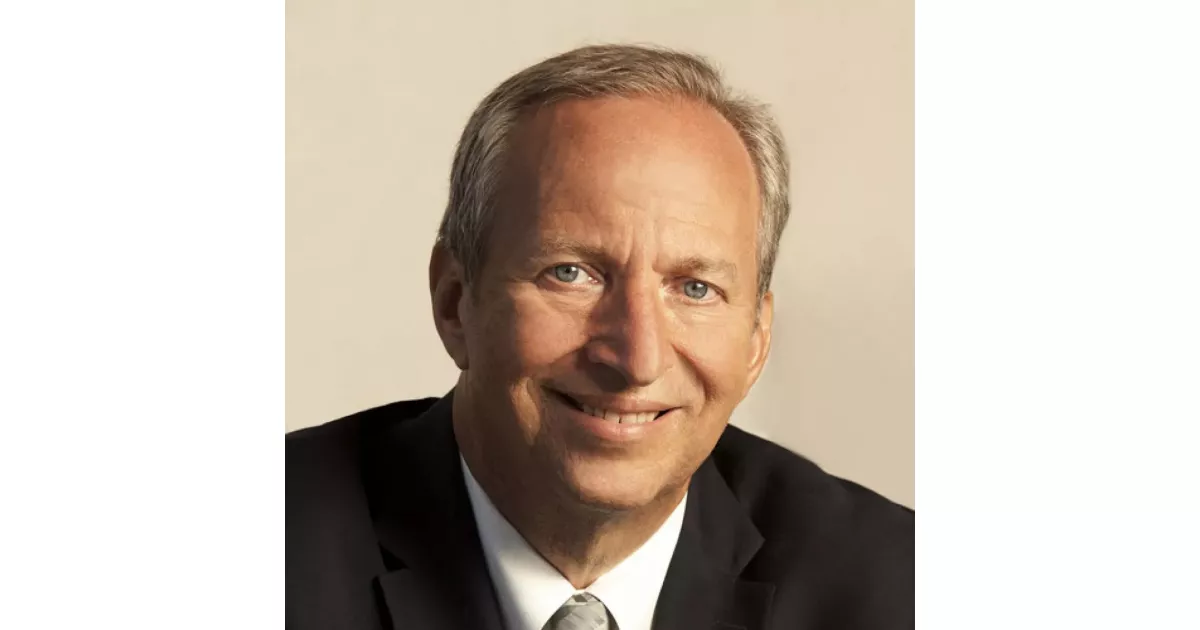
Lawrence Henry Summers is an American economist who has held several prominent positions including U.S. Secretary of the Treasury, President of Harvard University, and Director of the National Economic Council. Currently a professor at Harvard Kennedy School, he is on leave from his teaching responsibilities and role as director of the Mossavar-Rahmani Center for Business and Government as of November 19, 2025, due to an investigation into his ties with Jeffrey Epstein.
1933: Reference to Glass-Steagall Act
The Gramm–Leach–Bliley Act of 1999 repealed key provisions in the 1933 Glass–Steagall Act.


November 30, 1954: Lawrence Henry Summers Born
On November 30, 1954, Lawrence Henry Summers was born. He is an American economist who later served in high-profile government and academic positions.
1975: Graduation from MIT
In 1975, Lawrence Summers graduated from the Massachusetts Institute of Technology (MIT) with a degree in economics.
1982: Received Ph.D. from Harvard University
In 1982, Lawrence Summers received his Ph.D. from Harvard University.
1982: Staff of Council of Economic Advisers
In 1982, Lawrence Summers was on the staff of the Council of Economic Advisers under President Reagan.
1983: Diagnosis of Hodgkin's Lymphoma
Around 1983, Summers was diagnosed with Hodgkin's lymphoma, underwent treatment, and has remained cancer-free.
1983: Professor of Economics at Harvard University
In 1983, Lawrence Summers became a professor of economics at Harvard University.
1983: Staff of Council of Economic Advisers
In 1983, Lawrence Summers was on the staff of the Council of Economic Advisers under President Reagan.
1983: Tenured Professor at Harvard
In 1983, at age 28, Lawrence Summers became one of the youngest tenured professors in Harvard's history.
1987: Won Alan T. Waterman Award
In 1987, Lawrence Summers became the first social scientist to win the Alan T. Waterman Award from the National Science Foundation.
1988: Economic Adviser to Dukakis Presidential Campaign
In 1988, Lawrence Summers served as an economic adviser to the Dukakis Presidential campaign.
December 1991: Toxic Waste Memo
In December 1991, while at the World Bank, Lawrence Summers signed a controversial memo (claimed to be authored by Lant Pritchett) about dumping toxic waste in low-wage countries, which was leaked to the press.
1991: Chief Economist of the World Bank
In 1991, Lawrence Summers left Harvard and began working as the chief economist of the World Bank.
1991: Left Harvard to Join the World Bank
In 1991, Lawrence Summers left Harvard to serve as the Vice President of Development Economics and Chief Economist for the World Bank.
1991: World Bank Vice President of Development Economics and Chief Economist
In 1991, Lawrence Summers returned to Washington, D.C., as the World Bank's Vice President of Development Economics and Chief Economist, playing a key role in strategies for developing countries.
1992: Harvard Institute Advice to Russia
In 1992, Lawrence Summers set up a project through which the Harvard Institute for International Development provided advice to the Russian government. The project lasted until 1997.
1993: Departure from World Bank
In 1993, Lawrence Summers departed from his position as the Vice President of Development Economics and Chief Economist for the World Bank.
1993: Received John Bates Clark Medal
In 1993, Lawrence Summers received the John Bates Clark Medal from the American Economic Association.
1993: Appointed Under Secretary for International Affairs
In 1993, Lawrence Summers was appointed Under Secretary for International Affairs of the United States Department of the Treasury.
1994: American Response to the Mexican Economic Crisis
In 1994, Lawrence Summers played a leading role in the American response to the economic crisis in Mexico.
1995: Promoted to Deputy Secretary of the Treasury
In 1995, Lawrence Summers was promoted to Deputy Secretary of the Treasury.
1996: Summers Forewarned Shleifer About Conflict-of-Interest Regulations
Back in 1996, Larry Summers reportedly forewarned Andrei Shleifer and his wife Nancy Zimmerman about conflict-of-interest regulations, detailed in an article about Harvard losing Russia.
1997: American Response to the Asian Financial Crisis
In 1997, Lawrence Summers played a leading role in the American response to the Asian financial crisis.
1997: Harvard project ended
The project through which the Harvard Institute for International Development provided advice to the Russian government ended in 1997. Later a scandal emerged, as it turned out some members of the project invested in Russia, becoming partial advisors.
May 7, 1998: CFTC Concept Release on OTC Derivatives
On May 7, 1998, the Commodity Futures Trading Commission (CFTC) issued a Concept Release soliciting input on regulating over-the-counter (OTC) derivatives.
July 30, 1998: Summers Testimony on OTC Derivatives
On July 30, 1998, then-Deputy Secretary of the Treasury Lawrence Summers testified before the U.S. Congress, stating that sophisticated financial institutions are capable of protecting themselves from fraud in the OTC derivatives market and that there was no clear evidence of a need for additional regulation.
1998: Summers Flew on Epstein's Private Plane as Deputy Secretary of the Treasury
In 1998, Larry Summers, while serving as United States Deputy Secretary of the Treasury, flew on Jeffrey Epstein's private plane.
1998: American Response to the Russian Financial Crisis
In 1998, Lawrence Summers played a leading role in the American response to the Russian financial crisis.
1999: Endorsement of the Gramm–Leach–Bliley Act
In 1999, Lawrence Summers endorsed the Gramm–Leach–Bliley Act, which removed the separation between investment and commercial banks, stating it was a major step forward for the American financial system.
1999: Succeeded Rubin as Secretary of the Treasury
In 1999, Lawrence Summers succeeded Robert Rubin as Secretary of the Treasury.
1999: Appointed Secretary of the Treasury
In 1999, Lawrence Summers was appointed as the 71st United States Secretary of the Treasury.
1999: Opposition to Republican Tax Cuts
In 1999, as Treasury Secretary, Lawrence Summers led the Clinton Administration's opposition to tax cuts proposed by the Republican Congress.
1999: Summers Listed Assets Upon Nomination as Treasury Secretary
Upon being nominated Treasury Secretary by President Clinton in 1999, Larry Summers listed assets of about $900,000 and debts of $500,000.
2000: California Energy Crisis Advice
During the California energy crisis of 2000, then-Treasury Secretary Lawrence Summers, Alan Greenspan, and Enron executive Kenneth Lay lectured California Governor Gray Davis on the causes of the crisis, attributing it to excessive government regulation.
July 2001: President of Harvard University
In July 2001, Lawrence Summers became the 27th president of Harvard University after leaving the Treasury Department.
October 2001: Summers Criticizes Cornel West
In October 2001, Lawrence Summers criticized African American Studies department head Cornel West for allegedly missing classes and contributing to grade inflation, also calling West's "rap" album an "embarrassment" to the university.
2001: President of Harvard University
In 2001, Lawrence Summers became the 27th president of Harvard University.
2003: "Special Connection" Between Summers and Jeffrey Epstein Detailed
In 2003, during Larry Summers' tenure as president, an article in The Harvard Crimson detailed a reportedly "special connection" between Summers and Jeffrey Epstein, who pledged to donate at least $25 million to Harvard and was given an office at Harvard for his personal use.
February 2004: Winklevoss Twins Request Intervention from Summers
In February 2004, the Winklevoss twins requested a meeting with Larry Summers to intervene in their dispute with Mark Zuckerberg over the idea for Facebook. Summers declined, advising them to take their complaint to the courts.
2004: Federal Judge Rules on Harvard and Shleifer Case
In 2004, a federal judge ruled that while Harvard had violated its contract, Andrei Shleifer and his associate alone were liable for treble damages in a lawsuit by the U.S. government over conflict of interest Shleifer had while advising Russia's privatization program.
2004: West's book Democracy Matters
In Cornel West's book Democracy Matters (2004), West called Summers "uninformed" and "an unprincipled power player" in describing their October 2001 encounter.

January 2005: Controversy at NBER Conference on Diversifying Science & Engineering Workforce
In January 2005, at a conference on diversifying the Science & Engineering Workforce sponsored by the National Bureau of Economic Research, Larry Summers sparked controversy with his discussion of why women may have been underrepresented in tenured positions in science and engineering at top universities and research institutions.
March 15, 2005: Harvard Faculty Passes Motion of "Lack of Confidence"
On March 15, 2005, the Harvard Faculty of Arts and Sciences passed a motion of "lack of confidence" in Larry Summers' leadership by a vote of 218–185, with 18 abstentions. A second, milder censure motion also passed.
June 2005: Harvard and Shleifer Reach Tentative Settlement
In June 2005, Harvard and Andrei Shleifer announced they reached a tentative settlement with the US government regarding the lawsuit over Shleifer's conflict of interest in Russia's privatization program.
July 2005: Conrad K. Harper Resigns from Harvard Corporation
In July 2005, Conrad K. Harper, a board member of the Harvard Corporation, resigned due to anger over Larry Summers' comments about women and his subsequent salary increase, stating that Harvard's best interests required Summers' resignation.
December 2005: Marriage to Elisa New and Honeymoon
In December 2005, Summers married English professor Elisa New at Elmwood and spent his honeymoon on Jeffrey Epstein's island.
2005: Controversial Speech on Women in Science
In 2005, Lawrence Summers delivered a speech where he suggested possible reasons for the under-representation of women in science and engineering, causing controversy.
February 21, 2006: Summers Announced Intention to Step Down as President
On February 21, 2006, Larry Summers announced his intention to step down as president of Harvard at the end of the school year, effective June 30, 2006.
June 2006: Departure from Harvard Presidency
In June 2006, Lawrence Summers departed from his position as the 27th president of Harvard University.
June 30, 2006: Summers Stepped Down as President
On June 30, 2006, Larry Summers stepped down as president of Harvard at the end of the school year.
October 19, 2006: Summers Hired as Managing Director of D. E. Shaw & Co.
On October 19, 2006, Larry Summers was hired as a part-time managing director of the New York-based hedge fund D. E. Shaw & Co.
2006: Resignation from Harvard University
In 2006, Lawrence Summers resigned as the 27th president of Harvard University.
2006: Resignation as Harvard's President
In 2006, Lawrence Summers resigned as the president of Harvard University following a no-confidence vote by faculty.
2006: Summers Became Charles W. Eliot University Professor and Member of the Panel of Eminent Persons
In 2006, after a one-year sabbatical, Larry Summers accepted Harvard University's invitation to serve as the Charles W. Eliot University Professor and became a member of the Panel of Eminent Persons which reviewed the work of the United Nations Conference on Trade and Development.
February 11, 2007: Drew Gilpin Faust Named as Summers' Replacement
On February 11, 2007, Drew Gilpin Faust was named as the replacement for Larry Summers as president of Harvard.
2007: Subprime Mortgage Crisis
The subprime mortgage crisis of 2007 is mentioned in relation to the partial repeal of the 1933 Glass-Steagall Act.
2008: Financial Market Downturn
In Fall 2008, the financial market downturn is discussed in relation to financial derivatives and the actions of President Clinton's Working Group on Financial Markets, including Summers.
2008: Summers and Advisors Presented Memo with Economic Stimulus Options
In late 2008, Larry Summers and economic advisors for then-President-elect Obama presented a memo with options for an economic stimulus package ranging from $550 billion to $900 billion.
2008: 2008 financial crisis
In the 2010 documentary Inside Job, Summers is presented as one of the key figures behind the 2008 financial crisis, with Charles Ferguson highlighting his role in the deregulation of the financial sector.
January 2009: Director of the National Economic Council
In January 2009, Lawrence Summers became the director of the White House United States National Economic Council for President Barack Obama.
January 2009: Summers Criticized for Views on Economic Stimulus Spending
In January 2009, Representative Peter DeFazio criticized Larry Summers, saying that President Barack Obama was "ill-advised" by Summers, who allegedly "hates infrastructure."
January 2009: Summers Appointed Director of the National Economic Council
In January 2009, upon the inauguration of Barack Obama as president, Larry Summers was appointed to the post of director of the National Economic Council.
February 2009: Quoting Keynes on Changing Opinions
In February 2009, Lawrence Summers quoted John Maynard Keynes, saying "When circumstances change, I change my opinion", reflecting on the failures of Wall Street deregulation.
March 15, 2009: Summers on A.I.G. and Financial Crisis
On March 15, 2009, Lawrence Summers, in an ABC interview, commented on the 2008 financial crisis, particularly the lack of regulation and oversight of A.I.G., calling it "outrageous."
April 3, 2009: Summers Criticized for Payments from Companies with Government Influence
On April 3, 2009, Larry Summers faced renewed criticism after it was disclosed that he was paid millions of dollars the previous year by companies over which he now had influence as a public servant.
2009: Summers Reported Net Worth Upon Returning to Obama Administration
By the time Larry Summers returned in 2009 to serve in the Obama administration, he reported a net worth between $17 million and $39 million.
2009: Director of the National Economic Council
In 2009, Lawrence Summers became the eighth director of the National Economic Council.
2009: Opposition to Greenhouse Gas Reductions
In 2009, internal documents revealed that Lawrence Summers was a leading voice within the Clinton Administration arguing against American leadership in greenhouse gas reductions and against US participation in the Kyoto Protocol.
April 18, 2010: Clinton on Summers' Advice on Derivatives
On April 18, 2010, in an interview on ABC's This Week program, Bill Clinton stated that Lawrence Summers was wrong in the advice he gave him not to regulate derivatives.
November 2010: Departure from the National Economic Council
In November 2010, Lawrence Summers left his position as the director of the White House United States National Economic Council.
December 2010: Advisor Roles Post-NEC
In December 2010, after leaving the NEC, Summers became an advisor to the hedge fund D. E. Shaw & Co., Citigroup, and the NASDAQ OMX Group, while also resuming his role as a tenured professor at Harvard.
2010: Departure from the National Economic Council
In 2010, Lawrence Summers left his position as the director of the National Economic Council.
2010: Depiction in The Social Network
In 2010, the film The Social Network portrayed Summers, then President of Harvard, meeting with Cameron and Tyler Winklevoss to discuss their accusations against Mark Zuckerberg.
2010: Depiction in Inside Job
In the 2010 documentary Inside Job, Summers is presented as one of the key figures behind the 2008 financial crisis, with Charles Ferguson highlighting his role in the deregulation of the financial sector.
2010: Subprime Mortgage Crisis
The subprime mortgage crisis of 2010 is mentioned in relation to the partial repeal of the 1933 Glass-Steagall Act.
June 2011: Board of Directors of Square
In June 2011, Summers joined the board of directors of Square, a company developing an electronic payment service, and also became a special adviser at venture capital firm Andreessen Horowitz.
December 2012: Board of Directors of Lending Club
In December 2012, Summers joined the board of directors of Lending Club, a person-to-person lending company.
2013: Offer to be governor of the Bank of Israel
During 2013, Summers was approached by the Cabinet of Israel and Prime Minister Benjamin Netanyahu to succeed Stanley Fischer as governor of the Bank of Israel, an offer he turned down.
2013: Summers Became an Early Angel Investor in Zoomcar
In 2013, Larry Summers became an early angel investor in India's first car rental company, Zoomcar, which was started by his former Harvard Teaching Fellow.
2013: Withdrawal from Federal Reserve Chair Consideration
In 2013, Summers was a leading candidate to succeed Ben Bernanke as chair of the Federal Reserve. However, on September 15, Summers withdrew his name from consideration, citing an acrimonious confirmation process.
2014: Summers Sought "Small Scale Philanthropy Advice" from Epstein
In 2014, Larry Summers emailed Jeffrey Epstein requesting "small scale philanthropy advice" for his wife's nonprofit, Verse Video Education.
July 2015: Board of Directors of Premise Data
In July 2015, Summers joined the Board of Directors of Premise Data, a San Francisco-based data and analytics technology company.
2015: Summers Participated in Berggruen Meeting with Xi Jinping
In 2015, Larry Summers participated in a Berggruen-organized meeting with Chinese president Xi Jinping.
April 2016: Call to Remain in the European Union
In April 2016, Summers was one of eight former Treasury secretaries who called on the United Kingdom to remain a member of the European Union ahead of the June 2016 Referendum.
June 2016: Brexit Referendum
In June 2016, Summers was one of eight former Treasury secretaries who called on the United Kingdom to remain a member of the European Union ahead of the June 2016 Referendum.
June 2016: Summers on Trump's Election
In June 2016, Summers wrote that the risks to the US and global economies of Mr. Trump's election as president were far greater than the passage of Brexit, and he expected a protracted recession within 18 months if Trump were elected.
June 23, 2016: Summers on Brexit Vote
On June 23, 2016, Summers described the United Kingdom's Brexit vote in favor of leaving the European Union as the "worst self-inflicted policy wound that a country has done since the Second World War". He also called for "responsible nationalism" in response to public sentiment.
2016: Summers Remarks on Political Correctness in Higher Education
In 2016, Larry Summers remarked upon political correctness in institutions of higher education.
2017: Summers Implied to Epstein Women Had Lower IQ
In a 2017 email, Larry Summers implied to Jeffrey Epstein that women on average had lower IQ than men.
November 2018: Summers Sought Advice from Epstein on Pursuing a Sexual Relationship
From November 2018 to July 5, 2019, a day before Jeffrey Epstein's arrest, Larry Summers sought advice from him on how to pursue a sexual relationship with a woman he described as a mentee.
July 5, 2019: Summers Sought Advice from Epstein on Pursuing a Sexual Relationship
From November 2018 to July 5, 2019, a day before Jeffrey Epstein's arrest, Larry Summers sought advice from him on how to pursue a sexual relationship with a woman he described as a mentee.
2020: Criticism and Response in 2020 Presidential Campaign
In 2020, progressive groups called on Joe Biden's presidential campaign to stop using Summers as an advisor due to his past policies. Following the outcry, Summers stated he would not join a future Biden administration.
2021: Criticism of American Rescue Plan Act
In 2021, Summers criticized President Joe Biden's economic policy, calling the $1.9 trillion American Rescue Plan Act of 2021 "the least responsible macroeconomic policy we've had in the last 40 years."
2021: Flight Records Show Summers Flew on Epstein's Private Plane
In 2021, flight records introduced as evidence in the trial of Ghislaine Maxwell showed that Larry Summers flew on Jeffrey Epstein's private plane on at least four occasions, including in 1998 and at least three times while Harvard president.
October 2023: Response to Harvard Student Letter on Israel
In October 2023, following the October 7 attacks and the subsequent Gaza war, Summers criticized a letter signed by several Harvard undergraduate student groups condemning Israel. He also disagreed with Bill Ackman's request to release the names of the students involved.
November 2023: Joined OpenAI Board of Directors
In November 2023, Lawrence Summers joined the board of directors of the artificial intelligence organization OpenAI.
January 2024: Harvard task force on combating antisemitism
In January 2024, Harvard President Alan Garber convened a task force on combating antisemitism.
August 2024: Summers joined SandboxAQ Advisory Board
In August 2024, Larry Summers joined the advisory board of SandboxAQ.
March 2025: Criticism of Harvard Administration on Antisemitism
In March 2025, Summers criticized the Harvard administration for its failure to curb rising antisemitism at the university, specifically criticizing current Harvard President Alan Garber for not issuing a final report with recommendations after forming a task force in January 2024.
November 12, 2025: Congress Released Documents Revealing Summers-Epstein Email Communication
On November 12, 2025, documents released by Congress revealed frequent email communication between Larry Summers and Jeffrey Epstein from 2017 to 2019.
November 14, 2025: President Trump Directed DOJ to Investigate Epstein's Relationship with Summers
On November 14, 2025, President Trump directed the U.S. Department of Justice to investigate Jeffrey Epstein's relationship with Larry Summers, among others.
November 2025: Resigned from OpenAI Board
In November 2025, Lawrence Summers resigned from the board of directors of OpenAI after revelations about his ties to Jeffrey Epstein.
November 2025: Summers Resigned from OpenAI Board and No Longer Listed as SandboxAQ Advisor
In November 2025, Larry Summers resigned from the OpenAI board following the release of the Epstein emails, and he was no longer listed as an advisor for SandboxAQ.
November 17, 2025: Summers Stepped Back from Public Commitments
On November 17, 2025, Larry Summers agreed to step back from his public commitments, including roles in The Yale Budget Lab, The Hamilton Project, the Center for American Progress, and the Center for Global Development.
November 18, 2025: Summers Ended Role as Bloomberg News Contributor and Took Leave from Harvard
On November 18, 2025, Larry Summers ended his role as a paid contributor to Bloomberg News. Summers also agreed to go on leave from his teaching duties at Harvard and from being director of the Mossavar-Rahmani Center for Business and Government.
November 19, 2025: Leave from Harvard Roles
As of November 19, 2025, Lawrence Summers went on leave from his teaching responsibilities and role as director of the Mossavar-Rahmani Center for Business and Government due to an investigation.
December 2, 2025: AEA Imposed Lifetime Ban on Summers
On December 2, 2025, the American Economic Association (AEA) imposed a lifetime ban on Larry Summers, prohibiting him from holding membership or participating in AEA-sponsored events.
2025: Summers Announced Resignation from Harvard Professorship
In 2025, Larry Summers announced he would resign from his professorship at Harvard, as well as from his directorship of the Mossavar-Rahmani Center for Business and Government, at the end of the 2025-26 academic year due to continuing fallout from revelations of his relationship with Epstein.
February 2026: Resignation from Harvard
In February 2026, Lawrence Summers announced his resignation from Harvard University, effective at the end of the academic year.
February 25, 2026: Summers Announced Resignation from Harvard Professorship
On February 25, 2026, Larry Summers announced he would resign from his professorship at Harvard, as well as from his directorship of the Mossavar-Rahmani Center for Business and Government, at the end of the 2025-26 academic year.
Mentioned in this timeline
Mark Zuckerberg is an American businessman and programmer best known...
Barack Obama the th U S President - was the...
Bill Clinton served as the nd U S President from...
Joe Biden served as the th President of the United...

Founded in by Mark Zuckerberg and his Harvard roommates Facebook...
Benjamin Netanyahu is a prominent Israeli politician who has served...
Trending

3 hours ago Sadie Sink and Maya Hawke Star in New Whimsical Prada Fantasy Holiday Campaign

4 hours ago Aliaksandra Sasnovich Faces Nikola Bartunkova at WTA Toray Pan Pacific Open

3 hours ago Venus Williams Faces Lilli Tagger at WTA Guangzhou Open

4 hours ago Pokimane Expresses Safety Concerns Over Atrioc Following Past Deepfake Controversy
3 hours ago Leylah Fernandez Secures New Position in Updated WTA World Rankings

4 hours ago Cordae Addresses Split with Naomi Osaka in New Emotional Track Helpless
Popular

Ilhan Omar is a prominent American politician currently serving as...

Ken Paxton is an American politician and lawyer serving as...
Elon Musk is a visionary entrepreneur and engineer known for...
William Franklin Graham III known as Franklin Graham is an...
Barack Obama the th U S President - was the...
Kathy Hochul is an American politician and lawyer who has...