Career Timeline of Larry Summers: Major Achievements and Milestones


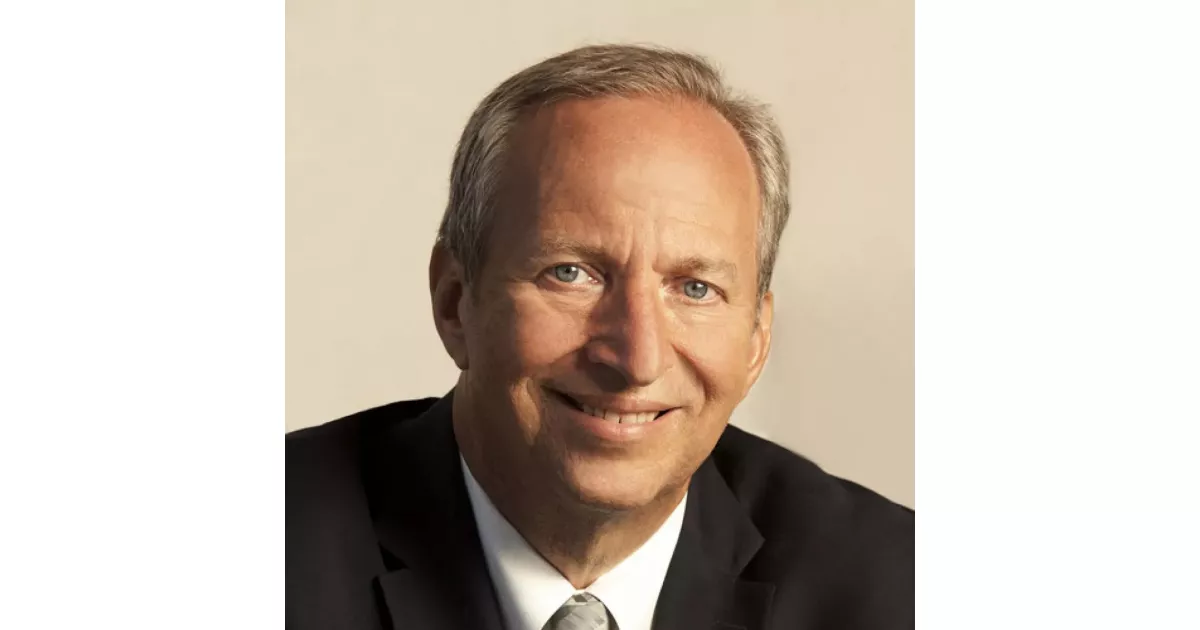
Discover the career path of Larry Summers, from the first major opportunity to industry-changing achievements.
Lawrence Henry Summers is an American economist who has held several prominent positions including U.S. Secretary of the Treasury, President of Harvard University, and Director of the National Economic Council. Currently a professor at Harvard Kennedy School, he is on leave from his teaching responsibilities and role as director of the Mossavar-Rahmani Center for Business and Government as of November 19, 2025, due to an investigation into his ties with Jeffrey Epstein.
1982: Staff of Council of Economic Advisers
In 1982, Lawrence Summers was on the staff of the Council of Economic Advisers under President Reagan.


1983: Professor of Economics at Harvard University
In 1983, Lawrence Summers became a professor of economics at Harvard University.
1983: Staff of Council of Economic Advisers
In 1983, Lawrence Summers was on the staff of the Council of Economic Advisers under President Reagan.
1983: Tenured Professor at Harvard
In 1983, at age 28, Lawrence Summers became one of the youngest tenured professors in Harvard's history.
1988: Economic Adviser to Dukakis Presidential Campaign
In 1988, Lawrence Summers served as an economic adviser to the Dukakis Presidential campaign.
1991: Chief Economist of the World Bank
In 1991, Lawrence Summers left Harvard and began working as the chief economist of the World Bank.
1991: Left Harvard to Join the World Bank
In 1991, Lawrence Summers left Harvard to serve as the Vice President of Development Economics and Chief Economist for the World Bank.
1991: World Bank Vice President of Development Economics and Chief Economist
In 1991, Lawrence Summers returned to Washington, D.C., as the World Bank's Vice President of Development Economics and Chief Economist, playing a key role in strategies for developing countries.
1992: Harvard Institute Advice to Russia
In 1992, Lawrence Summers set up a project through which the Harvard Institute for International Development provided advice to the Russian government. The project lasted until 1997.
1993: Departure from World Bank
In 1993, Lawrence Summers departed from his position as the Vice President of Development Economics and Chief Economist for the World Bank.
1993: Appointed Under Secretary for International Affairs
In 1993, Lawrence Summers was appointed Under Secretary for International Affairs of the United States Department of the Treasury.
1994: American Response to the Mexican Economic Crisis
In 1994, Lawrence Summers played a leading role in the American response to the economic crisis in Mexico.
1995: Promoted to Deputy Secretary of the Treasury
In 1995, Lawrence Summers was promoted to Deputy Secretary of the Treasury.
1997: American Response to the Asian Financial Crisis
In 1997, Lawrence Summers played a leading role in the American response to the Asian financial crisis.
May 7, 1998: CFTC Concept Release on OTC Derivatives
On May 7, 1998, the Commodity Futures Trading Commission (CFTC) issued a Concept Release soliciting input on regulating over-the-counter (OTC) derivatives.
July 30, 1998: Summers Testimony on OTC Derivatives
On July 30, 1998, then-Deputy Secretary of the Treasury Lawrence Summers testified before the U.S. Congress, stating that sophisticated financial institutions are capable of protecting themselves from fraud in the OTC derivatives market and that there was no clear evidence of a need for additional regulation.
1998: American Response to the Russian Financial Crisis
In 1998, Lawrence Summers played a leading role in the American response to the Russian financial crisis.
1999: Endorsement of the Gramm–Leach–Bliley Act
In 1999, Lawrence Summers endorsed the Gramm–Leach–Bliley Act, which removed the separation between investment and commercial banks, stating it was a major step forward for the American financial system.
1999: Succeeded Rubin as Secretary of the Treasury
In 1999, Lawrence Summers succeeded Robert Rubin as Secretary of the Treasury.
1999: Appointed Secretary of the Treasury
In 1999, Lawrence Summers was appointed as the 71st United States Secretary of the Treasury.
1999: Opposition to Republican Tax Cuts
In 1999, as Treasury Secretary, Lawrence Summers led the Clinton Administration's opposition to tax cuts proposed by the Republican Congress.
1999: Summers Listed Assets Upon Nomination as Treasury Secretary
Upon being nominated Treasury Secretary by President Clinton in 1999, Larry Summers listed assets of about $900,000 and debts of $500,000.
July 2001: President of Harvard University
In July 2001, Lawrence Summers became the 27th president of Harvard University after leaving the Treasury Department.
2001: President of Harvard University
In 2001, Lawrence Summers became the 27th president of Harvard University.
January 2005: Controversy at NBER Conference on Diversifying Science & Engineering Workforce
In January 2005, at a conference on diversifying the Science & Engineering Workforce sponsored by the National Bureau of Economic Research, Larry Summers sparked controversy with his discussion of why women may have been underrepresented in tenured positions in science and engineering at top universities and research institutions.
March 15, 2005: Harvard Faculty Passes Motion of "Lack of Confidence"
On March 15, 2005, the Harvard Faculty of Arts and Sciences passed a motion of "lack of confidence" in Larry Summers' leadership by a vote of 218–185, with 18 abstentions. A second, milder censure motion also passed.
July 2005: Conrad K. Harper Resigns from Harvard Corporation
In July 2005, Conrad K. Harper, a board member of the Harvard Corporation, resigned due to anger over Larry Summers' comments about women and his subsequent salary increase, stating that Harvard's best interests required Summers' resignation.
February 21, 2006: Summers Announced Intention to Step Down as President
On February 21, 2006, Larry Summers announced his intention to step down as president of Harvard at the end of the school year, effective June 30, 2006.
June 2006: Departure from Harvard Presidency
In June 2006, Lawrence Summers departed from his position as the 27th president of Harvard University.
June 30, 2006: Summers Stepped Down as President
On June 30, 2006, Larry Summers stepped down as president of Harvard at the end of the school year.
October 19, 2006: Summers Hired as Managing Director of D. E. Shaw & Co.
On October 19, 2006, Larry Summers was hired as a part-time managing director of the New York-based hedge fund D. E. Shaw & Co.
2006: Resignation from Harvard University
In 2006, Lawrence Summers resigned as the 27th president of Harvard University.
2006: Resignation as Harvard's President
In 2006, Lawrence Summers resigned as the president of Harvard University following a no-confidence vote by faculty.
2006: Summers Became Charles W. Eliot University Professor and Member of the Panel of Eminent Persons
In 2006, after a one-year sabbatical, Larry Summers accepted Harvard University's invitation to serve as the Charles W. Eliot University Professor and became a member of the Panel of Eminent Persons which reviewed the work of the United Nations Conference on Trade and Development.
February 11, 2007: Drew Gilpin Faust Named as Summers' Replacement
On February 11, 2007, Drew Gilpin Faust was named as the replacement for Larry Summers as president of Harvard.
2008: Summers and Advisors Presented Memo with Economic Stimulus Options
In late 2008, Larry Summers and economic advisors for then-President-elect Obama presented a memo with options for an economic stimulus package ranging from $550 billion to $900 billion.
January 2009: Director of the National Economic Council
In January 2009, Lawrence Summers became the director of the White House United States National Economic Council for President Barack Obama.
January 2009: Summers Appointed Director of the National Economic Council
In January 2009, upon the inauguration of Barack Obama as president, Larry Summers was appointed to the post of director of the National Economic Council.
March 15, 2009: Summers on A.I.G. and Financial Crisis
On March 15, 2009, Lawrence Summers, in an ABC interview, commented on the 2008 financial crisis, particularly the lack of regulation and oversight of A.I.G., calling it "outrageous."
2009: Summers Reported Net Worth Upon Returning to Obama Administration
By the time Larry Summers returned in 2009 to serve in the Obama administration, he reported a net worth between $17 million and $39 million.
2009: Director of the National Economic Council
In 2009, Lawrence Summers became the eighth director of the National Economic Council.
November 2010: Departure from the National Economic Council
In November 2010, Lawrence Summers left his position as the director of the White House United States National Economic Council.
December 2010: Advisor Roles Post-NEC
In December 2010, after leaving the NEC, Summers became an advisor to the hedge fund D. E. Shaw & Co., Citigroup, and the NASDAQ OMX Group, while also resuming his role as a tenured professor at Harvard.
2010: Departure from the National Economic Council
In 2010, Lawrence Summers left his position as the director of the National Economic Council.
June 2011: Board of Directors of Square
In June 2011, Summers joined the board of directors of Square, a company developing an electronic payment service, and also became a special adviser at venture capital firm Andreessen Horowitz.
December 2012: Board of Directors of Lending Club
In December 2012, Summers joined the board of directors of Lending Club, a person-to-person lending company.
2013: Offer to be governor of the Bank of Israel
During 2013, Summers was approached by the Cabinet of Israel and Prime Minister Benjamin Netanyahu to succeed Stanley Fischer as governor of the Bank of Israel, an offer he turned down.
2013: Summers Became an Early Angel Investor in Zoomcar
In 2013, Larry Summers became an early angel investor in India's first car rental company, Zoomcar, which was started by his former Harvard Teaching Fellow.
2013: Withdrawal from Federal Reserve Chair Consideration
In 2013, Summers was a leading candidate to succeed Ben Bernanke as chair of the Federal Reserve. However, on September 15, Summers withdrew his name from consideration, citing an acrimonious confirmation process.
July 2015: Board of Directors of Premise Data
In July 2015, Summers joined the Board of Directors of Premise Data, a San Francisco-based data and analytics technology company.
2015: Summers Participated in Berggruen Meeting with Xi Jinping
In 2015, Larry Summers participated in a Berggruen-organized meeting with Chinese president Xi Jinping.
November 2023: Joined OpenAI Board of Directors
In November 2023, Lawrence Summers joined the board of directors of the artificial intelligence organization OpenAI.
August 2024: Summers joined SandboxAQ Advisory Board
In August 2024, Larry Summers joined the advisory board of SandboxAQ.
November 2025: Resigned from OpenAI Board
In November 2025, Lawrence Summers resigned from the board of directors of OpenAI after revelations about his ties to Jeffrey Epstein.
November 2025: Summers Resigned from OpenAI Board and No Longer Listed as SandboxAQ Advisor
In November 2025, Larry Summers resigned from the OpenAI board following the release of the Epstein emails, and he was no longer listed as an advisor for SandboxAQ.
November 17, 2025: Summers Stepped Back from Public Commitments
On November 17, 2025, Larry Summers agreed to step back from his public commitments, including roles in The Yale Budget Lab, The Hamilton Project, the Center for American Progress, and the Center for Global Development.
November 18, 2025: Summers Ended Role as Bloomberg News Contributor and Took Leave from Harvard
On November 18, 2025, Larry Summers ended his role as a paid contributor to Bloomberg News. Summers also agreed to go on leave from his teaching duties at Harvard and from being director of the Mossavar-Rahmani Center for Business and Government.
November 19, 2025: Leave from Harvard Roles
As of November 19, 2025, Lawrence Summers went on leave from his teaching responsibilities and role as director of the Mossavar-Rahmani Center for Business and Government due to an investigation.
December 2, 2025: AEA Imposed Lifetime Ban on Summers
On December 2, 2025, the American Economic Association (AEA) imposed a lifetime ban on Larry Summers, prohibiting him from holding membership or participating in AEA-sponsored events.
2025: Summers Announced Resignation from Harvard Professorship
In 2025, Larry Summers announced he would resign from his professorship at Harvard, as well as from his directorship of the Mossavar-Rahmani Center for Business and Government, at the end of the 2025-26 academic year due to continuing fallout from revelations of his relationship with Epstein.
February 2026: Resignation from Harvard
In February 2026, Lawrence Summers announced his resignation from Harvard University, effective at the end of the academic year.
February 25, 2026: Summers Announced Resignation from Harvard Professorship
On February 25, 2026, Larry Summers announced he would resign from his professorship at Harvard, as well as from his directorship of the Mossavar-Rahmani Center for Business and Government, at the end of the 2025-26 academic year.
Mentioned in this timeline
Mark Zuckerberg is an American businessman and programmer best known...
Barack Obama the th U S President - was the...
Bill Clinton served as the nd U S President from...
Joe Biden served as the th President of the United...

Founded in by Mark Zuckerberg and his Harvard roommates Facebook...
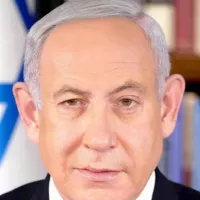
Benjamin Netanyahu is a prominent Israeli politician who has served...
Trending
4 hours ago Leylah Fernandez Secures New Position in Updated WTA World Rankings

4 hours ago Katie Volynets Set For WTA Guangzhou Clash Against Dayana Yastremska

4 hours ago Sadie Sink and Maya Hawke Star in New Whimsical Prada Fantasy Holiday Campaign

5 hours ago Aliaksandra Sasnovich Faces Nikola Bartunkova at WTA Toray Pan Pacific Open

4 hours ago Venus Williams Faces Lilli Tagger at WTA Guangzhou Open

5 hours ago Pokimane Expresses Safety Concerns Over Atrioc Following Past Deepfake Controversy
Popular
Ilhan Omar is a prominent American politician currently serving as...

Ken Paxton is an American politician and lawyer serving as...

Elon Musk is a visionary entrepreneur and engineer known for...
William Franklin Graham III known as Franklin Graham is an...
Barack Obama the th U S President - was the...
Kathy Hochul is an American politician and lawyer who has...