Lasting Legacy of Michael Schumacher: A Look at the Influence on History


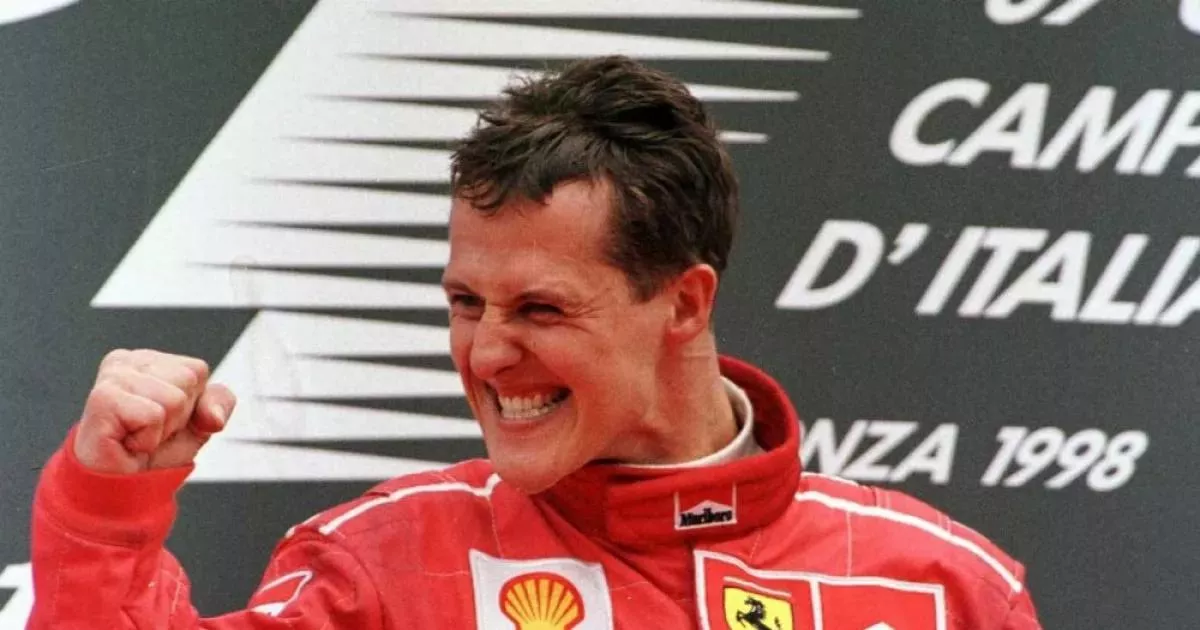
A closer look at the lasting mark left by Michael Schumacher—a timeline of influence.
Michael Schumacher is a retired German Formula One racer widely regarded as one of the sport's greatest. He holds a record-tying seven World Drivers' Championship titles. Until his retirement, he held records for the most wins, pole positions, and podium finishes. He currently maintains the record for the most fastest laps. Schumacher raced from 1991-2006 and later returned to the sport from 2010-2012.
1970: Jochen Rindt's Domination
In 1970, Jochen Rindt's domination was later equalled by Michael Schumacher. Rindt was German but raced under the Austrian flag, and was the only posthumous Drivers' Champion.


1999: Start of Ferrari's Dominance
From 1999 to 2004, Schumacher's Ferrari dominated Formula 1, this would later be superseded by Mercedes' run from 2014 to 2021.
2001: Records
At the end of 2006, Schumacher's 91 wins were 40 more than his nearest rival Prost. Schumacher held at least 31 records, including consecutive podium finishes (19, 2001–2002), consecutive race finishes (24, 2001–2003).
2002: Records
At the end of 2006, Schumacher's 91 wins were 40 more than his nearest rival Prost. Schumacher held at least 31 records, including podium finishes in a season (17, 2002), championship won with most races left (6, 2002).
2003: Records
At the end of 2006, Schumacher's 91 wins were 40 more than his nearest rival Prost. Schumacher held at least 31 records, including consecutive race finishes (24, 2001–2003).
2003: Deutsche Welle on Schumacher's Talent and Leadership
In 2003, Deutsche Welle highlighted Michael Schumacher's "natural talent" for racing and his "discipline and leadership" qualities, acknowledging his impact on the sport.
2004: Records
At the end of 2006, Schumacher's 91 wins were 40 more than his nearest rival Prost. Schumacher held at least 31 records, including consecutive wins (7, 2004).
2004: End of Ferrari's Dominance
From 1999 to 2004, Schumacher's Ferrari dominated Formula 1, this would later be superseded by Mercedes' run from 2014 to 2021.
2004: Schumacher: The Ultimate Driving Machine
In 2004, Nick Schulz of Slate described Schumacher as "the ultimate driving machine," highlighting his dominance and the impact he had on Formula One by setting new benchmarks for fitness and technology.
2006: Turning the struggling Ferrari Team
At the end of 2006, Schumacher's 91 wins were 40 more than his nearest rival Prost. Schumacher held at least 31 records, including for most championship titles (7), consecutive titles (5), race victories (91).
2006: First retirement in 2006
By the time of his first retirement in 2006, Schumacher was widely considered among the greatest Formula One drivers.
2006: Most Popular Driver
In 2006, a FIA survey revealed Schumacher was voted the most popular driver of the season among Formula One fans.
2009: Schumacher reflects on his career
In 2009, Michael Schumacher stated that if he could have his career over again, he would "do some things differently", citing Jerez 1997 as something that he would have changed.
2009: Eichenberger and Stadelmann mathematical models.
Objective mathematical models, such as Eichenberger and Stadelmann (2009, 3rd), put Schumacher consistently among the top five greatest Formula One drivers ever.
2012: Final retirement in 2012
By the time of his final retirement in 2012, Schumacher was widely considered among the greatest Formula One drivers.
2012: Schumacher's Retirement and Team Contribution
Despite retiring in 2012, Schumacher was credited with contributing significantly to the development and future success of Mercedes. His work ethic and dedication were noted by team principal James Vowles in 2023.
2013: Ski Injury and Potential Eighth Championship
Brawn suggested that had Schumacher not retired in 2012 and not suffered a ski injury in 2013, he could have contended for an eighth World Championship in 2014.
2014: Mercedes' Dominance Begins
From 2014, Mercedes began an unprecedented run, winning eight Constructors' Championships under Hamilton, Rosberg, and Bottas. This success was attributed in part to Schumacher's earlier contributions to the team between 2010 and 2012.
2014: original F1metrics mathematical models.
Objective mathematical models, such as original F1metrics (2014, 4th), put Schumacher consistently among the top five greatest Formula One drivers ever.
2015: Bell et al. mathematical models.
Objective mathematical models, such as Bell et al. (2015, 3rd), put Schumacher consistently among the top five greatest Formula One drivers ever.
2018: FiveThirtyEight mathematical models.
Objective mathematical models, such as FiveThirtyEight (2018, 2nd), put Schumacher consistently among the top five greatest Formula One drivers ever.
2019: updated F1metrics mathematical models.
Objective mathematical models, such as updated F1metrics (2019, 1st), put Schumacher consistently among the top five greatest Formula One drivers ever.
2020: Hamilton Surpasses Schumacher's Wins
Before 2020, Michael Schumacher's 91 wins were one fewer of Senna and Prost's combined total. But in 2020 Hamilton surpassed that record.
2020: Lewis Hamilton equals Schumacher's championship record
In 2020, Lewis Hamilton matched Michael Schumacher's record of seven Formula One World Drivers' Championship titles.
2020: Most Influential Person in Formula One History in 2020
In 2020, Schumacher was voted the most influential person in Formula One history, recognizing his profound effect on motorsport.
2021: End of Mercedes' Dominance
From 2014 to 2021, Mercedes won a record-breaking eight Constructors' Championships under drivers Hamilton, Rosberg, and Valtteri Bottas, setting a new benchmark in Formula One.
2021: Release of Netflix documentary film Schumacher in 2021
Schumacher is the subject of the 2021 Netflix documentary film Schumacher.
2023: Fisichella on Schumacher's Greatness
In 2023, Fisichella remarked that Schumacher "did not even seem to have sweated" during races, affirming that Schumacher is the greatest Formula One driver and "rewrote the history of Formula One".
2023: Vowles on Schumacher's Influence at Mercedes
In 2023, Williams team principal James Vowles, reflecting on Schumacher's time at Mercedes between 2010 and 2012, emphasized Schumacher's role in bringing the team together and influencing drivers like Rosberg and Hamilton.
Mentioned in this timeline

Lewis Hamilton is a British racing driver widely regarded as...
Germany officially the Federal Republic of Germany is located in...
An earthquake is a sudden intense shaking of the Earth's...

Football commonly known as soccer in many regions is the...
A tank is an armored fighting vehicle designed for front-line...

Pixar Animation Studios based in Emeryville California is renowned for...
Trending

3 hours ago Michael Strahan Updates on Daughter Isabella's Brain Cancer Recovery Journey

3 hours ago Rob Gronkowski Discusses NFL Analysis and Reflects on Chad O'Shea's Impact
3 hours ago Marvin Harrison Jr. Faces Uncertain Future Amidst Cardinals Trade Rumors and Career Struggles

22 days ago UNC Shooter Found Not Guilty by Reason of Insanity and Local Car Accident Reported

4 hours ago Enzo Fernández and Mac Allister Ahead of Liverpool vs Manchester City Clash

4 hours ago Erling Haaland Urges Manchester City Positivity Amid Ongoing Premier League Legal Charges
Popular

Ken Paxton is an American politician and lawyer serving as...

Cristiano Ronaldo widely considered one of the greatest footballers captains...

Michael Joseph Jackson the King of Pop was a highly...
Elon Musk is a visionary entrepreneur and engineer known for...

Shakira Isabel Mebarak Ripoll the Queen of Latin Music is...

Bernie Sanders is a prominent American politician and the senior...