Career Timeline of Michael Schumacher: Major Achievements and Milestones


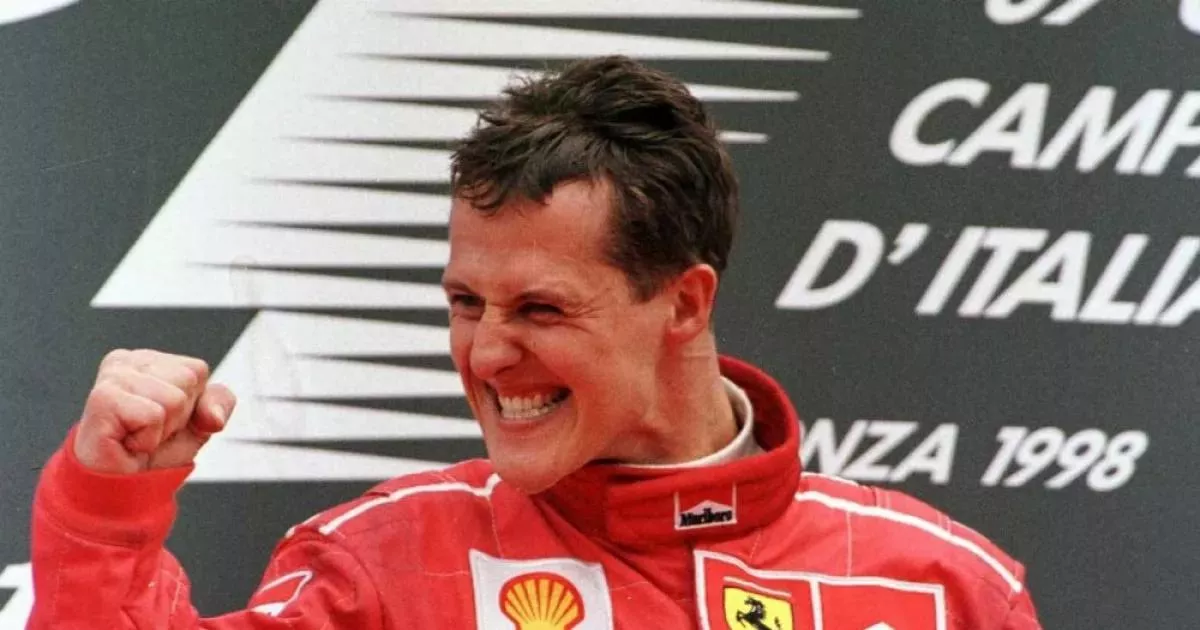
From career breakthroughs to professional milestones, explore how Michael Schumacher made an impact.
Michael Schumacher is a retired German Formula One racer widely regarded as one of the sport's greatest. He holds a record-tying seven World Drivers' Championship titles. Until his retirement, he held records for the most wins, pole positions, and podium finishes. He currently maintains the record for the most fastest laps. Schumacher raced from 1991-2006 and later returned to the sport from 2010-2012.
1955: Mercedes Returns to F1 as Constructor
In 1955, Mercedes returned to Formula One as a constructor for the first time, before Michael Schumacher rejoined the team in 2010.


1961: Original founding of the Grand Prix Drivers' Association in 1961
The Grand Prix Drivers' Association, a representative body, was originally set up in 1961.
1970: Brabham's Podium Finish
In 1970, Brabham finished second at the British Grand Prix, the last time an older driver achieved a podium finish before Schumacher's third place at the European Grand Prix in 2012.
1970: Jack Brabham Last Oldest Driver to Lead a Race
In 1970, Jack Brabham was the oldest driver to lead a race until Michael Schumacher in the Japanese Grand Prix in 2011.
1970: Jochen Rindt's Domination
In 1970, Jochen Rindt's domination was later equalled by Michael Schumacher. Rindt was German but raced under the Austrian flag, and was the only posthumous Drivers' Champion.
1979: Last Drivers' Championship before Schumacher
In 1979, Ferrari last won the Drivers' Championship before Schumacher joined the team.
1979: Piquet's qualifying streak start
In 1979, Piquet started a 36-race streak of outqualifying his teammates.
1979: Ferrari's first Drivers' Championship since 1979
Schumacher beat Häkkinen for his first World Championship at Ferrari and the team's first Drivers' Championship since the 1979 season.
1982: Ferrari close to the championship
In 1982, Ferrari came close to the championship
1982: Niki Lauda's Comeback
In 1982, Niki Lauda came out of a two-year retirement to race for McLaren, setting a precedent for high-profile Formula One comebacks, like Michael Schumacher's return to F1.
1982: Piquet's qualifying streak end
In 1982, Piquet's 36-race streak of outqualifying his teammates ended.
1983: Last Constructors' Championship before Schumacher
In 1983, Ferrari last won the Constructors' Championship before Schumacher joined the team.
1983: Ferrari's last title
In 1983, Ferrari won the Constructors' Championship, the team's first title since 1983.
1983: Received German Kart License
In 1983, Michael Schumacher obtained his German kart license, a year after winning the German Junior Kart Championship.
1984: Lauda Wins Third Title
In 1984, Niki Lauda won his third world title after coming out of retirement in 1982, a feat that added to the anticipation surrounding Michael Schumacher's own comeback to Formula One.
1985: Joined Eurokart Dealer Adolf Neubert
In 1985, Michael Schumacher joined Eurokart dealer Adolf Neubert and won the direct-drive Karting European Championship (ICA).
1985: Senna's qualifying sessions start
In 1985, Senna started a streak of 44 consecutive qualifying sessions.
1987: German and European Kart Champion
By 1987, Michael Schumacher was the German and European kart champion and quit school to begin working as a mechanic.
1987: Victory at the European Championship
In 1987, Michael Schumacher won the European Championship in karting, marking a culmination of his successful karting career.
1988: Move into single-seat car racing
In 1988, Michael Schumacher transitioned into single-seat car racing by participating in the German Formula Ford and Formula König series, winning the latter.
1988: Senna's qualifying sessions end
In 1988, Senna ended a streak of 44 consecutive qualifying sessions.
1989: Finished third in German Formula Three
In 1989, Michael Schumacher finished third in the German Formula Three, which he entered after dominating Formula König in his debut season.
1989: Signed with WTS Formula Three team
In 1989, Michael Schumacher signed with Willi Weber's WTS Formula Three team.
1989: Drivers' Championship decided in a similar manner
The Drivers' Championship in 1989 was decided in a similar manner to Schumacher's championship win.
1990: Ferrari close to the championship
In 1990, Ferrari came close to the championship
1990: Ferrari's last 1-2 finish before 1998
In 1990, Ferrari had their last 1-2 finish before the 1-2 finish at the French Grand Prix in 1998.
1990: Won German Formula Three Title
In 1990, Michael Schumacher won the German Formula Three Championship, also claiming the Macau Grand Prix.
1990: Won German Formula Three Championship and Macau Grand Prix
In 1990, Michael Schumacher won the German Formula Three Championship. He also won the 1990 Macau Grand Prix under controversial circumstances, driving to victory without a rear wing after an incident with Mika Häkkinen.
1990: Won season finale at Autódromo Hermanos Rodríguez
In 1990, Michael Schumacher won the season finale at the Autódromo Hermanos Rodríguez in a Sauber–Mercedes C11, and finished fifth in the Drivers' Championship.
1990: Joined Mercedes-Benz junior racing programme
In 1990, along with Heinz-Harald Frentzen and Karl Wendlinger, Michael Schumacher joined the Mercedes-Benz junior racing program in the World Sportscar Championship.
1990: Drivers' Championship decided in a similar manner
The Drivers' Championship in 1990 was decided in a similar manner to Schumacher's championship win.
1991: Formula One Debut at Belgian Grand Prix
In 1991, Michael Schumacher made his Formula One debut with Jordan at the Belgian Grand Prix. His performance led to Benetton signing him for the rest of the season.
1991: Won at Autopolis in Japan
In 1991, Michael Schumacher won at Autopolis in Japan with a Sauber–Mercedes-Benz C291, finishing ninth in the Drivers' Championship. He also finished fifth at the 24 Hours of Le Mans.
1991: First Winless Year Since 1991
In 2010, Michael Schumacher finished the season in ninth place with 72 points. It marked the first time since 1991 that Schumacher concluded a year without securing a win, pole position, podium finish, or fastest lap.
1991: Finished 1991 season
Michael Schumacher finished the 1991 Formula One season with four points out of six races, achieving a best finish of fifth at the Italian Grand Prix.
1992: First podium finish and first F1 victory
In 1992, Michael Schumacher achieved his first podium finish at the Mexican Grand Prix and his first Formula One victory at the Belgian Grand Prix.
1992: First F1 Victory at Belgian Grand Prix
In 1992, Michael Schumacher achieved his maiden Formula One victory at the Belgian Grand Prix. He also secured several podium finishes during the season.
1992: Finished third in Drivers' Championship
In 1992, Michael Schumacher finished third in the Drivers' Championship with 53 points, surpassing teammate Martin Brundle, which led to Brundle being fired.
1992: End of qualifying streak
In 1992, Schumacher's 56-race streak of outqualifying his teammates came to an end after he missed a gear in qualifying at the Australian Grand Prix and was outqualified by Piquet.
1993: Victory at the Portuguese Grand Prix
In 1993, Michael Schumacher achieved several podiums, including a victory at the Portuguese Grand Prix.
1993: Won Portuguese Grand Prix
In 1993, Michael Schumacher won the Portuguese Grand Prix, beating Alain Prost, and achieved nine podium finishes. He finished the season in fourth place with 52 points.
1993: Prost's record for most career wins
In the 2001 Belgian Grand Prix, Schumacher scored his 52nd career win, breaking Prost's record for most career wins that had stood since 1993.
1994: Controversy in the 1994 World Championship season final
During the 1994 World Championship season final, Schumacher was involved in a controversy that arose from his will-to-win mentality.
1994: Won First Drivers' Championship
In 1994, Michael Schumacher won his first Drivers' Championship. He won the first four races and finished the season with eight wins. Schumacher also witnessed the death of Ayrton Senna during the San Marino Grand Prix.
1994: Mansell Wins Australian Grand Prix
In 1994, Nigel Mansell won the Australian Grand Prix at the age of 41, the same age Michael Schumacher turned in 2010, leading to comparisons regarding their careers.
1994: Schumacher cites Benetton's damaging actions
In 1994, Schumacher cited Benetton's damaging actions as his reason for opting out of his deal with the team.
1994: Narrowly Missed World Championship in 1994
In 1994, Schumacher narrowly missed winning the World Championship, despite arguably driving an inferior car.
1994: Schumacher helped relaunch the Grand Prix Drivers' Association in 1994
Schumacher helped to relaunch the Grand Prix Drivers' Association, originally set up in 1961 and disbanded in 1982, in 1994.
1995: Ferrari improved into a solid competitor
At the end of 1995, although Ferrari had improved into a solid competitor, it was still considered inferior to front-running teams like Benetton and Williams.
1995: Second World Drivers' Championship
In 1995, Michael Schumacher defended his title and won his second World Drivers' Championship, with nine Grand Prix victories.
1995: Schumacher defends title with Benetton
In 1995, Michael Schumacher successfully defended his title with Benetton, which now had the same Renault engine as Williams. He accumulated 33 more points than second-placed Hill and helped Benetton secure its first Constructors' Championship. He also became the youngest two-time World Champion in Formula One history.
1995: Domination in the 1995 World Championship
Schumacher dominated the 1995 World Championship, showcasing his exceptional driving skills.
1996: Schumacher finishes third in the Drivers' Championship
In 1996, Michael Schumacher finished third in the Drivers' Championship and helped Ferrari to second place in the Constructors' Championship. He won three races, including the Spanish Grand Prix and the Belgian Grand Prix.
1996: Schumacher joins Ferrari
In 1996, Michael Schumacher joined Ferrari for a salary of $60 million over two years.
1996: Return to top-level karting
In 1996, Michael Schumacher returned to top-level karting, winning both the Monaco Kart Cup in Formula A and the Masters of Paris-Bercy.
1997: Controversy in the 1997 World Championship season final
During the 1997 World Championship season final, Schumacher was involved in a controversy that arose from his will-to-win mentality.
1997: Schumacher and Villeneuve compete for the title
In 1997, Michael Schumacher and Jacques Villeneuve competed for the title, with Villeneuve leading early in the season. Schumacher won the Monaco Grand Prix and entered the season's finale with a one-point advantage.
1997: Schumacher lures Benetton employees to Ferrari
In 1997, Michael Schumacher lured Benetton employees Rory Byrne and Ross Brawn to Ferrari.
1997: Schumacher disqualified from the Drivers' Championship
In 1997, Michael Schumacher was disqualified from the entire Drivers' Championship after a controversial incident with Villeneuve at the European Grand Prix. Schumacher turned in on Villeneuve, causing him to retire from the race. Villeneuve went on to win the championship. Schumacher's actions were widely condemned.
1997: Involved in title battles, disqualified for collision
In 1997, Michael Schumacher was involved in title battles but was disqualified for a collision with Jacques Villeneuve.
1997: Narrowly Missed World Championship in 1997
In 1997, Schumacher narrowly missed winning the World Championship, despite arguably driving an inferior car.
1997: Participation in FIA European road safety campaign in 1997
Since his participation in an FIA European road safety campaign, as part of his punishment after the collision at the 1997 European Grand Prix, Schumacher continued to support other campaigns.
1997: Ralf Schumacher Competed in Formula One
Starting from 1997, Schumacher's younger brother Ralf competed in Formula One.
1998: Winning streak ended
From the 1992 Portuguese Grand Prix to the 1998 Monaco Grand Prix, Schumacher consistently outperformed his teammate when both cars finished. In 1992 Schumacher beat his teammate through the full season, and Martin Brundle was fired as a result.
1998: Runner-up to Mika Häkkinen
In 1998, Michael Schumacher finished as runner-up to Mika Häkkinen in the championship.
1998: Hakkinen becomes Schumacher's title rival
In 1998, Mika Häkkinen became Schumacher's main title rival, winning the first two races of the season. Schumacher won the Argentine Grand Prix and had six victories and five other podium finishes during the season.
1998: Narrowly Missed World Championship in 1998
In 1998, Schumacher narrowly missed winning the World Championship, despite arguably driving an inferior car.
1998: Controversies and Championship Loss
The 1998 season was marked by two controversies. One at the British Grand Prix, and another at the Belgian Grand Prix where Schumacher collided with Coulthard. Despite these events, Häkkinen ultimately won the Drivers' Championship.
1999: Schumacher's injury and Ferrari's Constructors' Championship
In 1999, Michael Schumacher's efforts helped Ferrari win the Constructors' Championship, their first since 1983. However, he suffered a broken leg at the British Grand Prix and missed several races.
1999: World Championship runner-up due to leg injury
In 1999, Schumacher missed six races after a leg injury, resulting in Irvine becoming the World Championship runner-up.
2000: Five Drivers' Championships
Between 2000 and 2004, Schumacher achieved five Drivers' Championships, 48 wins, and almost all Formula One records.
2000: First Title with Ferrari
In 2000, Michael Schumacher won his first title with Ferrari, which was their first in 21 years.
2000: Narrowly Missed World Championship in 2000
In 2000, Schumacher narrowly missed winning the World Championship, despite arguably driving an inferior car.
2001: Records
At the end of 2006, Schumacher's 91 wins were 40 more than his nearest rival Prost. Schumacher held at least 31 records, including consecutive podium finishes (19, 2001–2002), consecutive race finishes (24, 2001–2003).
2001: Fourth Drivers' Title
In 2001, Michael Schumacher claimed his fourth Drivers' title. He secured a record-tying nine wins and clinched the World Championship with four races remaining. Schumacher concluded the championship with 123 points, 58 ahead of Coulthard, the runner-up. Notable moments included winning the Spanish Grand Prix after Häkkinen's car malfunctioned, finishing second to his brother Ralf at the Canadian Grand Prix (the first 1–2 finish by brothers in Formula One), and securing his 52nd career win at the Belgian Grand Prix in 2001.
2001: Defended Title with Ferrari
In 2001, Michael Schumacher successfully defended his title with Ferrari.
2001: Domination in the 2001 World Championship
Schumacher dominated the 2001 World Championship, reinforcing his reputation as a top driver.
2002: Records
At the end of 2006, Schumacher's 91 wins were 40 more than his nearest rival Prost. Schumacher held at least 31 records, including podium finishes in a season (17, 2002), championship won with most races left (6, 2002).
2002: Controversy at the Austrian Grand Prix
During the 2002 season, the Austrian Grand Prix was mired in controversy as Barrichello, who was leading, slowed down in the final meters to allow Schumacher to win under team orders. This action, although not violating any specific sporting or technical rules, sparked outrage among fans and was viewed as unsportsmanlike. The incident occurred during only the sixth race of the season, prompting arguments that Schumacher did not require an engineered win, particularly since he had already secured four of the previous five Grand Prix victories in 2002.
2002: Donated to European floods in 2002
For the 2002 European floods, Schumacher donated €1 million to help the victims.
2002: Equalled Record Fifth Title
In 2002, Michael Schumacher claimed a record-equalling fifth title with a perfect podium rate.
2002: Appointed UNESCO Champion for Sport
In 2002, Michael Schumacher was appointed a UNESCO Champion for Sport, recognizing his involvement in humanitarian projects and charitable donations.
2002: 11 Wins and Podium Finish
In 2002, Schumacher broke his own record, shared with Mansell, of nine race wins in a season, by winning 11 times and finishing every race on the podium.
2002: Fifth World Championship
In 2002, Schumacher secured his Drivers' Championship, matching Juan Manuel Fangio's record of five World Championships. Ferrari dominated, winning 15 of 17 races, with Schumacher clinching the title with six races left. He surpassed his own record by winning 11 times, finishing every race on the podium. He ended the season with 144 points, a record 67 points ahead of Barrichello. This pair finished nine of the 17 races in the first two places in 2002.
2002: Domination in the 2002 World Championship
Schumacher dominated the 2002 World Championship, with Barrichello as the runner-up that year.
2003: Records
At the end of 2006, Schumacher's 91 wins were 40 more than his nearest rival Prost. Schumacher held at least 31 records, including consecutive race finishes (24, 2001–2003).
2003: Deutsche Welle on Schumacher's Talent and Leadership
In 2003, Deutsche Welle highlighted Michael Schumacher's "natural talent" for racing and his "discipline and leadership" qualities, acknowledging his impact on the sport.
2003: Analysis of Schumacher's Driving Style
In 2003, F1 Racing analyzed Schumacher's driving style using telemetry data, revealing his sensitivity on the accelerator and brakes, often using both pedals simultaneously to stabilize his car. This was different than his Ferrari teammate.
2003: Sixth World Title
In 2003, Michael Schumacher claimed his unprecedented sixth title, holding off Kimi Räikkönen and Juan Pablo Montoya.
2003: Sixth Drivers' Championship
Michael Schumacher secured his sixth Drivers' Championship in 2003, surpassing Fangio's 46-year record, amidst fierce competition. The FIA implemented new regulations and a points system to enhance competition. Schumacher faced challenges early in the season, falling behind Räikkönen by 16 points. Despite the passing of his mother, Elisabeth, he won the San Marino Grand Prix in 2003.
2003: Won competitive 2003 World Championship
Schumacher won the competitive 2003 World Championship, showcasing his ability to win even with a less dominant car.
August 2004: Ferrari's Sixth Consecutive Constructors' Championship
In August 2004, Schumacher's victory at the Hungarian Grand Prix played a crucial role in securing Ferrari's sixth consecutive Constructors' Championship. This achievement highlighted Ferrari's dominance during that period.
2004: Records
At the end of 2006, Schumacher's 91 wins were 40 more than his nearest rival Prost. Schumacher held at least 31 records, including consecutive wins (7, 2004).
2004: Seventh World Title
In 2004, Michael Schumacher won his seventh title, securing 13 victories out of 18 Grands Prix.
2004: Schumacher: The Ultimate Driving Machine
In 2004, Nick Schulz of Slate described Schumacher as "the ultimate driving machine," highlighting his dominance and the impact he had on Formula One by setting new benchmarks for fitness and technology.
2004: Public test of carbon fiber helmet
In 2004, a prototype of the lightweight carbon fiber reinforced polymer helmet, developed with Schuberth, was publicly tested by being driven over by a tank; it survived intact.
2004: Domination in the 2004 World Championship
Schumacher dominated the 2004 World Championship, with Barrichello as the runner-up that year.
2004: Donated to Indian Ocean earthquake in 2004
Schumacher donated $10 million for aid after the 2004 Indian Ocean earthquake, which surpassed that of any other sports person.
2005: Finished third in Championship
In 2005, Michael Schumacher finished third in the championship.
2005: San Marino Grand Prix reversal
In 2006 his pole position at San Marino Grand Prix was his 66th, breaking Senna's 12-year-old record, which was described as perhaps the greatest record that stood in the sport, and was a reversal of the 2005 race.
2006: Last Season with Ferrari
2006 marked Michael Schumacher's final season with Ferrari. After three races, he trailed Alonso by 17 points but subsequently won the next two races. He was stripped of pole position at the Monaco Grand Prix and started at the back of the grid due to blocking the circuit during qualifying. Before the Turkish Grand Prix, Renault's mass damper was banned in 2006.
2006: Turning the struggling Ferrari Team
At the end of 2006, Schumacher's 91 wins were 40 more than his nearest rival Prost. Schumacher held at least 31 records, including for most championship titles (7), consecutive titles (5), race victories (91).
2006: First retirement in 2006
By the time of his first retirement in 2006, Schumacher was widely considered among the greatest Formula One drivers.
2006: Controversy in the 2006 Monaco qualifying
During the 2006 Monaco qualifying, Schumacher was involved in a controversy that arose from his will-to-win mentality.
2006: Donated to various charities from 2002 to 2006
From 2002 to 2006, Schumacher donated at least $50 million to various charities, showcasing his philanthropic efforts.
2006: Last Time Leading a Race
In 2006 was the last time Schumacher lead a race until the Japanese Grand Prix in 2011.
2006: Retirement Announcement
In 2006, Michael Schumacher narrowly finished runner-up to Fernando Alonso and announced his retirement from Formula One.
2006: First Retirement from Formula One
In 2006, Michael Schumacher retired from Formula One, after having competed since 1991.
2007: End of Ralf Schumacher Formula One career
At the end of 2007, Schumacher's younger brother Ralf ended his Formula One career.
2007: Adviser and Assistant
During the 2007 season, Michael Schumacher served as Ferrari's adviser and Jean Todt's assistant. He also supported Ferrari's development program, focusing on testing electronics and tyres for the 2008 season.
2008: Motorcycle Racing in IDM Superbike Series
In 2008, Michael Schumacher participated in motorcycle racing in the IDM Superbike series. He finished third at a Superbike cup race at the Pannónia-Ring on a Honda CBR1000RR.
2008: Donated to Clinton Foundation in 2008
In 2008, Schumacher donated between $5 million and $10 million to the Clinton Foundation, continuing his support for charitable causes.
2008: Advertising campaign by Bacardi in 2008
In 2008, Schumacher was the figurehead of an advertising campaign by Bacardi to raise awareness about responsible drinking.
July 2009: Aborted F1 Return Due to Injury
In July 2009, Michael Schumacher was set to replace the injured Felipe Massa at Ferrari for the European Grand Prix. After testing a modified Ferrari F2007, Schumacher had to call off his return due to a neck injury sustained in a motorcycle accident. This was described by Schumacher as his "toughest moment".
December 2009: Schumacher Announces F1 Return with Mercedes
In December 2009, Michael Schumacher announced his return to Formula One for the 2010 season, joining Nico Rosberg at the new Mercedes GP team. He cited renewed interest and the opportunity to drive for Mercedes and work with Ross Brawn as key factors in his decision.
2009: Schumacher reflects on his career
In 2009, Michael Schumacher stated that if he could have his career over again, he would "do some things differently", citing Jerez 1997 as something that he would have changed.
2010: Schumacher at Mercedes
Between 2010 and 2012, Schumacher was at Mercedes with Vowles, and he was credited with bringing the team together.
2010: Schumacher's First Race After Return
In 2010, Michael Schumacher finished sixth at the Bahrain Grand Prix, marking his first race after 1,239 days since his previous Formula One appearance. He consistently finished behind teammate Rosberg in the initial races.
2010: Return to Formula One
In 2010, Michael Schumacher returned to Formula One racing, having initially retired in 2006.
2010: Return to Formula One with Mercedes
In 2010, Michael Schumacher returned to Formula One with Mercedes, marking the team's return as a constructor since 1955. He joined team principal Ross Brawn, aiming to replicate their past success.
2011: Team orders ban lifted
After the end of the 2002 season, the FIA banned "team orders which interfere with the race result"; the ban was lifted for the 2011 season because the ruling was difficult to enforce.
2011: Special gold-leafed helmet for the 2011 Belgian Grand Prix
For the 2011 Belgian Grand Prix, which marked the 20th anniversary of his Formula One debut and his seven Drivers' titles, Schumacher wore a special gold-leafed helmet.
2011: Scoring Points and Leading Races
In 2011, Schumacher scored his first points at the Malaysian Grand Prix. At the Canadian Grand Prix, he finished fourth after running as high as second. The Japanese Grand Prix marked the first time since 2006 that he had led a race, becoming the oldest driver to do so since Jack Brabham in 1970.
October 2012: Schumacher Announces Second Retirement
In October 2012, Michael Schumacher announced his second retirement from Formula One, citing a lack of desire to continue dealing with the sport. He was replaced by Lewis Hamilton at Mercedes for the 2013 season.
2012: Final retirement in 2012
By the time of his final retirement in 2012, Schumacher was widely considered among the greatest Formula One drivers.
2012: Schumacher's Retirement and Team Contribution
Despite retiring in 2012, Schumacher was credited with contributing significantly to the development and future success of Mercedes. His work ethic and dedication were noted by team principal James Vowles in 2023.
2012: Platinum-leafed helmet for the 2012 Belgian Grand Prix
For his 300th Grand Prix appearance, the 2012 Belgian Grand Prix, Schumacher wore a platinum-leafed helmet with a message of the achievement.
2012: Final Podium
In 2012, Michael Schumacher claimed his final podium at the European Grand Prix.
2012: Second Retirement from Formula One
In 2012, Michael Schumacher retired for the second and final time from Formula One racing, after returning in 2010.
2012: Qualifying and Race Results in 2012
In 2012, Michael Schumacher, partnered by Nico Rosberg at Mercedes, qualified fourth at the Australian Grand Prix, his best since his return. He retired from that race and scored a point at the Malaysian Grand Prix. At the Chinese Grand Prix, he retired due to a loose wheel.
2013: Replaced by Hamilton at Mercedes
For the 2013 season, Lewis Hamilton replaced Michael Schumacher at Mercedes, following Schumacher's second retirement announcement in October 2012.
2013: Donated to European floods in 2013
Years after his initial donation, Schumacher donated €500,000 after the 2013 European floods.
2016: Teammate Rosberg becomes World Champion
In 2016, Schumacher was outperformed by his teammate Rosberg, who went on to become the World Champion.
2020: Lewis Hamilton equals Schumacher's championship record
In 2020, Lewis Hamilton matched Michael Schumacher's record of seven Formula One World Drivers' Championship titles.
2021: Mick Schumacher Formula One debut
In the 2021 season, Mick became the third Schumacher to race in Formula One, making his debut with Haas.
2023: Vowles on Schumacher's Influence at Mercedes
In 2023, Williams team principal James Vowles, reflecting on Schumacher's time at Mercedes between 2010 and 2012, emphasized Schumacher's role in bringing the team together and influencing drivers like Rosberg and Hamilton.
Mentioned in this timeline
Lewis Hamilton is a British racing driver widely regarded as...
Germany officially the Federal Republic of Germany is located in...
An earthquake is a sudden intense shaking of the Earth's...
Football commonly known as soccer in many regions is the...
A tank is an armored fighting vehicle designed for front-line...
Pixar Animation Studios based in Emeryville California is renowned for...
Trending
4 hours ago Hurricane Isaias Remnants Bring Threat of Heavy Rain and Flooding to East Coast
5 hours ago NFL Teams Speculate on Potential Trade Rumors Surrounding Jaguars Receiver Brian Thomas Jr.
5 hours ago Indian Activists and YouTuber Dhruv Rathee Released Amid Ongoing New Delhi Protests

5 hours ago Pamela Anderson Cultivates Community Garden and Launches New Beauty Brand
4 hours ago Hong Kong Citizens Face US Deportation Amid Multiple Police Crackdowns on Criminal Syndicates
5 hours ago Upcoming Tennis Match Predictions and ATP Shanghai Masters Betting Analysis
Popular

Ken Paxton is an American politician and lawyer serving as...
Cristiano Ronaldo widely considered one of the greatest footballers captains...

Michael Joseph Jackson the King of Pop was a highly...

Elon Musk is a visionary entrepreneur and engineer known for...

Bernie Sanders is a prominent American politician and the senior...

Shakira Isabel Mebarak Ripoll the Queen of Latin Music is...