Most Talked-About Controversies Linked to Neil Gorsuch


Public opinion and media debates around Neil Gorsuch—discover key moments of controversy.
Neil Gorsuch is an Associate Justice of the Supreme Court of the United States, appointed by President Donald Trump in 2017. A staunch originalist and textualist, Gorsuch advocates for interpreting the Constitution and statutes based on their original public meaning at the time of enactment rather than evolving judicial standards. Before his elevation to the Supreme Court, he served as a judge on the United States Court of Appeals for the Tenth Circuit. Educated at Columbia, Harvard Law School, and Oxford, his judicial philosophy emphasizes judicial restraint and the separation of powers, often challenging the scope of administrative agency authority. Throughout his tenure, he has been a consistent voice for federalism, religious liberty, and the protection of constitutional rights against overreaching government power, often forming unexpected coalitions with his liberal colleagues on matters concerning criminal justice reform and indigenous rights.
1984: Chevron U.S.A., Inc. v. Natural Resources Defense Council, Inc.
In 1984, the Supreme Court established the Chevron deference doctrine, which mandated that courts defer to federal agencies when interpreting ambiguous laws and regulations, a decision Neil Gorsuch would later call for the court to reconsider.


2001: Assistance in NSA surveillance hearings and Detainee Treatment Act drafting
Starting in 2001 and continuing through 2007, Neil Gorsuch assisted Attorney General Alberto Gonzales in preparing for hearings regarding the NSA's warrantless surveillance program. During this period, he also collaborated with Senator Lindsey Graham to draft provisions for the Detainee Treatment Act, which sought to remove federal court jurisdiction over detainees.
2002: Criticism of Senate Confirmation Delays
In 2002, Neil Gorsuch published an op-ed in which he expressed strong disapproval regarding the Senate's delay in confirming judicial nominees, specifically highlighting the treatment of Merrick Garland and John Roberts for the U.S. Court of Appeals for the D.C. Circuit, noting that the most qualified candidates were being unfairly mistreated.
2005: Criticism of National Cable & Telecommunications Ass'n v. Brand X Internet Services
In 2005, the case of National Cable & Telecommunications Ass'n v. Brand X Internet Services occurred, which Neil Gorsuch later criticized in a concurring opinion as an abdication of judicial duty and a departure from the constitutional design intended by the framers.
2015: Dissent in Little Sisters of the Poor Home for the Aged v. Burwell
In 2015, after a panel denied claims regarding the Religious Freedom Restoration Act, Gorsuch joined several other judges in a formal dissent regarding the court's denial of a rehearing en banc.
Mentioned in this timeline
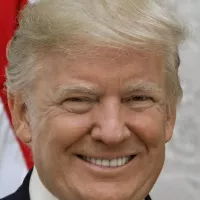
Donald John Trump is an American politician media personality and...
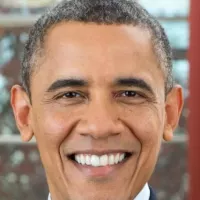
Barack Obama the th U S President - was the...
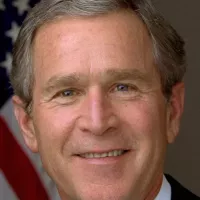
George W Bush the rd U S President - is...
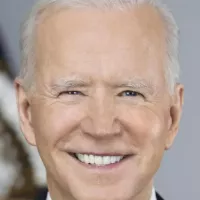
Joe Biden served as the th President of the United...
Mitch McConnell is a prominent American politician and the longest-serving...
Ronald Reagan the th U S President - was a...
Trending
3 hours ago Daily Horoscope Insights for Sagittarius on October 12, 2026
4 hours ago UCLA Quarterback Nico Iamaleava Out for Season Following Knee Injury

5 hours ago Selma Blair Arrested Following Mid-Air Altercation with Flight Crew

5 hours ago Peggy Flanagan Maintains Lead Against Michele Tafoya in Competitive Minnesota U.S. Senate Race
5 hours ago Sean Combs Rushed to Hospital From Prison Following Medical Emergency
6 hours ago Packers Defensive Lineman Javon Hargrave Out for Season With Torn Achilles
Popular

Ken Paxton is an American politician and lawyer serving as...

Jameis Winston is an American football quarterback currently playing for...

Cristiano Ronaldo widely considered one of the greatest footballers captains...

Michael Joseph Jackson the King of Pop was a highly...
Elon Musk is a visionary entrepreneur and engineer known for...
Marco Rubio is a prominent American politician serving as the...