History of Portugal and the Holocaust in Timeline


Portugal maintained official neutrality during World War II and the Holocaust. Despite being under the authoritarian rule of António de Oliveira Salazar, Portugal wasn't significantly influenced by racial antisemitism and leaned towards the Allies more than Francoist Spain. This neutrality allowed Portugal to play a complex role, including aiding some refugees while also engaging in economic activities with both sides of the conflict.
1933: Foundation of COMASSIS
In 1933 Augusto d’Esaguy became the committee’s Secretary-General of COMASSIS since its foundation.


1933: Establishment of the Estado Novo Regime
In 1933, Portugal was ruled by the authoritarian Estado Novo regime under António de Oliveira Salazar, which remained neutral during World War II and did not explicitly incorporate antisemitism into its ideology.
1937: Publication Applauding Lack of Anti-Semitism
In 1937, Adolfo Benarus published a book in which he applauded the lack of anti-Semitism in Portugal, and the honorary president of the Jewish community of Lisbon claimed that "happily in Portugal, modern anti-Semitism doesn't exist".
1937: Salazar's Criticism of Nuremberg Laws
In 1937, Salazar published a book entitled Como se Levanta um Estado (How to Raise a State), in which he criticised the philosophical ideals behind Nazi Germany's Nuremberg laws.
1938: Portugal Not Invited to Évian Conference
In 1938, Portugal was not invited to participate in the Évian Conference, a meeting convened to address the growing refugee crisis caused by Nazi persecution.
1938: Salazar Orders Non-Discrimination of Jewish Citizens
In 1938, Salazar sent a telegram to the Portuguese Embassy in Berlin, ordering that it should be made clear to the German Reich that Portuguese law did not allow any distinction based on race, and that therefore, Portuguese Jewish citizens could not be discriminated against.
1938: Increased Refugee Influx and COMASSIS Leadership Change
With the Anschluss of 1938, Portugal experienced an increased influx of refugees, and Adolf Benarus, stepped down as president of COMASSIS and Augusto d’Esaguy assumed the presidency.
November 1939: Tightening of Transit Visa Rules
In November 1939, the Salazar regime, along with many other countries, tightened the rules governing the issuance of transit visas by its consuls, due to fears of economic and political consequences from the influx of refugees.
November 1939: Issuance of Circular 14
On 11 November 1939, the Portuguese government sent Circular 14 to its consuls in Europe outlining categories of refugees considered "inconvenient or dangerous" imposing restrictions on the issuance of visas.
December 1939: Increased border control
Between September and December 1939, approximately 9,000 refugees entered Portugal. The Portuguese regime felt the need for tighter control.
June 1940: Unitarian Service Committee Sets Up Operations in Lisbon
In June 1940, Waitstill Sharp and his wife Martha set up their operations at the Metropole Hotel in Lisbon, Portugal, to assist Jewish refugees fleeing the Nazi regime, securing visas, arranging safe passage, offering financial support, and giving legal assistance to hundreds of refugees.
June 1940: Aristides de Sousa Mendes Issues Transit Visas
In June 1940, amid the Fall of France, Aristides de Sousa Mendes, the Portuguese consul in Bordeaux, issued substantial numbers of transit visas at his own initiative, contravening regulations.
June 1940: United States Tightens Conditions for Admitting Refugees
In June 1940, the United States further tightened its conditions for admitting refugees from German-occupied Europe, making it more difficult to use Portugal as an escape route.
June 1940: Sousa Mendes Issues Transit Visas Against Orders
In May and June 1940, Aristides de Sousa Mendes, Portuguese consul at Bordeaux, issued an undetermined number of transit visas to substantial numbers of refugees on his own initiative, acting contrary to Circular 14.
June 1940: Salazar Authorizes HIAS-HICEM Transfer to Lisbon
On 26 June 1940, four days after the French armistice, Salazar authorised the Hebrew Immigrant Aid Society (HIAS-HICEM) in Paris to transfer its main office to Lisbon.
1940: D’Esaguy and Amzalak Intervene for Luxembourgish Jews
In 1940 Augusto d’Esaguy together with Moisés Bensabat Amzalak played a decisive role on behalf of the Luxembourgish Jews whom the Germans deported from Luxembourg aboard the Zwangstransporte, they were released from detention and made their way into Portugal in late 1940.
January 1941: COMASSIS Acts as Liaison for Refugees
From January 1941, COMASSIS acted as a liaison for thousands of refugees who migrated from Nazi-occupied territories in sealed trains that connected Berlin with Lisbon, within the first three months of 1941, over 1,603 Jewish refugees passed through Lisbon in this way.
1941: Ministry of Foreign Affairs Informed of Jewish Persecution
From 1941, the Ministry of Foreign Affairs received information from its consuls in German-occupied Europe about the escalation of the persecution of Jews.
1941: Decline in Refugee Numbers Passing Through Portugal
From 1941, there was a significant decline in the number of refugees passing through Portugal en route to the United States and Latin America, although some continued to transit.
July 1942: German Interest in Preventing Jewish Emigration from Portugal
In July 1942 the Reich Security Main Office asked German diplomats in Lisbon if it was possible to "prevent emigration from Portugal" as they had interest in "the seizure of the Jews...as part of the final solution for the Jewish question in Europe."
1942: Allied Leaders Aware of the Extent of Jewish Plight
By 1942, Allied leaders were aware of the deadly attempts to kill millions of Jews, but in public, downplayed their plight.
1942: Allied Revelations About the Extermination of Jews
From 1942, The Ministry of Foreign Affairs was also kept informed of revelations about the extermination of Jews which had been published in Allied countries.
February 1943: Nazi Repatriation Ultimatum
In February 1943, the Nazi authorities issued a repatriation ultimatum (Heimschaffungsaktion) informing the Portuguese Ministry of Foreign Affairs that Portuguese Jews would no longer enjoy protected status in German-occupied Europe.
March 1943: Salazar's Intervention for Portuguese Jews in the Netherlands
In March 1943, Salazar, after being implored by Moisés Bensabat Amzalak, ordered the Portuguese Legation in Berlin to inquire about the possibility of treating Portuguese-Sephardic Jews in the German-occupied Netherlands as Portuguese nationals for evacuation purposes; however, the Germans rejected Salazar's request.
October 1944: Branquinho Recalled to Lisbon
On 30 October 1944, Carlos de Liz-Texeira Branquinho, who had been issuing protective passports to Hungarian Jews, was recalled to Lisbon.
1944: Repatriation of Sephardic Jews from Vichy France
In 1943 and 1944, The Portuguese regime assisted small numbers of Jews considered "Portuguese", including 137 Sephardic Jews of Portuguese descent from Vichy France.
1944: Extermination of Jews in the Netherlands Continues
In 1944, the extermination of Jews in the Netherlands continued and only around 400 individuals within the Portuguese community survived the war. This event is the consequence of the inaction of the German government in the previous year.
1944: Issuance of Protective Passports to Hungarian Jews
In late 1944, the regime provided tacit support for small-scale rescue operations including the issuance of 1,000 protective passports to Hungarian Jews by the diplomat Carlos de Liz-Texeira Branquinho.
1945: Augusto d’Esaguy as president of COMASSIS
In 1945, Augusto d’Esaguy remained as president of COMASSIS a role he kept through 1945.
1954: Death of Sousa Mendes
Aristides de Sousa Mendes received a full consul salary until his death in 1954.
1998: US Allegations Regarding Stolen Gold
In 1998, the United States alleged that much of the gold Portugal received from Germany during the war had been stolen from Holocaust victims by German authorities.
1999: Commission of Inquiry Established
In 1999, following allegations that Portugal had received gold stolen from Holocaust victims, a commission of inquiry led by Mario Soares was established to investigate the matter.
December 2019: Portugal Joins the International Holocaust Remembrance Alliance
In December 2019, Portugal became a member of the International Holocaust Remembrance Alliance (IHRA).
February 2021: Opening of Portugal's First Holocaust Museum
In February 2021, Portugal's first museum dedicated to the Holocaust was opened in Porto.
Mentioned in this timeline
The United States of America is a federal republic primarily...

Germany officially the Federal Republic of Germany is located in...
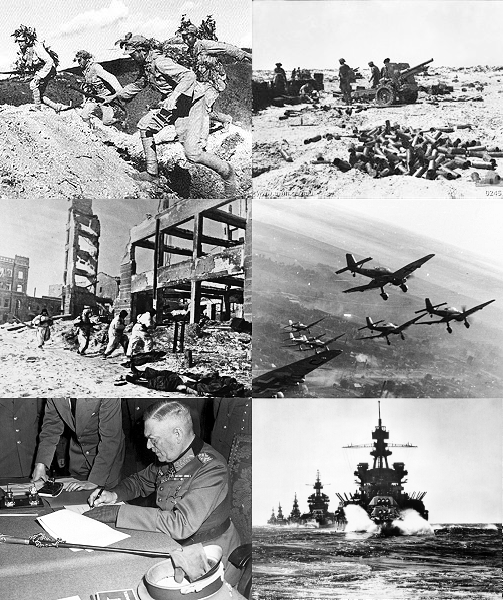
World War II - was a global conflict between the...
France officially the French Republic is primarily in Western Europe...
Spain officially the Kingdom of Spain is a large country...
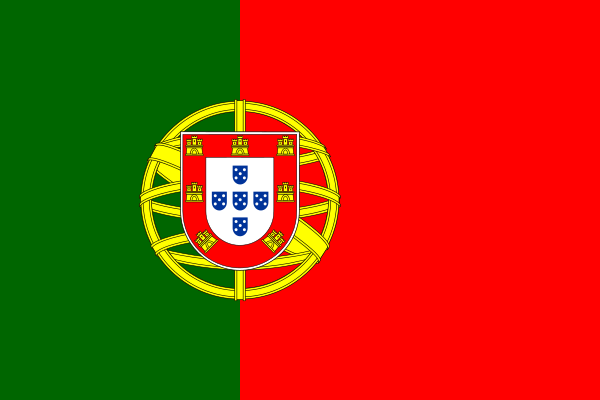
Portugal is a unitary republic located on the Iberian Peninsula...
Trending

2 months ago Roger Goodell Confident in Future NFL International Team Expansion

16 days ago Mike Tirico Reports on Saints Superdome Anniversary and NBC Sunday Night Football Coverage

4 hours ago Hilary Duff Showcases Fall Fashion Trends While Addressing Online Mom Drama

4 hours ago Andre Drummond Joins New York Knicks Rotation for Upcoming Opening Night

4 hours ago NBC Unveils Official Trailers for New Comedy Series St. Denis Medical and Reggie Dinkins

5 hours ago Karl-Anthony Towns Expresses Willingness to Take Pay Cut to Keep Knicks Roster Intact
Popular

Ilhan Omar is a prominent American politician currently serving as...

Ken Paxton is an American politician and lawyer serving as...

Elon Musk is a visionary entrepreneur and engineer known for...

Michael Joseph Jackson the King of Pop was a highly...

Cristiano Ronaldo widely considered one of the greatest footballers captains...

Linda Ronstadt is a versatile American singer renowned for her...