


World Health Day, observed annually on April 7th and sponsored by the World Health Organization (WHO) and related entities, serves as a global health awareness day. It aims to highlight pressing health issues and promote actions needed to improve public health worldwide. The day provides an opportunity to focus on specific health topics of concern to the WHO, facilitating discussion and encouraging international cooperation to address healthcare challenges.
1948: First World Health Assembly
In 1948, the WHO convened the First World Health Assembly.


1950: First World Health Day Celebrated
Starting in 1950, the Assembly decided to celebrate World Health Day on April 7th each year to mark WHO's founding and draw attention to global health issues.
2006: World Health Day Focuses on Health Workforce Crisis
In 2006, World Health Day highlighted the health workforce crisis, addressing chronic shortages of health workers worldwide due to underinvestment in their education, training, salaries, working environment, and management. The day also celebrated individual health workers.
2006: Launch of WHO's World Health Report 2006
In 2006, the WHO's World Health Report 2006, focused on the health workforce crisis, was launched. It revealed a shortage of 4.3 million health providers globally and proposed actions for countries and the international community.
2008: World Health Day Focuses on Climate Change Effects
In 2008, World Health Day addressed the need to protect health from the adverse effects of climate change and establish links between climate change, health, environment, food, energy, and transport.
2009: World Health Day Focuses on Health Facilities Safety
In 2009, World Health Day focused on the safety of health facilities and the readiness of health workers to treat those affected by emergencies, emphasizing the critical role of health systems in disasters.
April 2010: "1000 cities, 1000 lives" campaign
In April 2010, events were organized worldwide during the week starting 7 April, with the campaign "1000 cities, 1000 lives".
April 2011: World Health Day on Antimicrobial Resistance
Marked on April 7, 2011, World Health Day's theme was "antimicrobial resistance and its global spread" and focused on the need for governments and stakeholders to implement policies and practices needed to prevent and counter the emergence of highly resistant microorganisms.
2011: WHO Calls for Commitment to Safeguard Antimicrobial Medicines
On World Health Day in 2011, WHO called for intensified global commitment to safeguard antimicrobial medicines for future generations and introduced a six-point policy package to combat the spread of antimicrobial resistance.
2012: Activities Organized for World Health Day
In 2012, WHO, non-governmental and community organizations around the world organized different activities to mark World Health Day.
2012: World Health Day: "Good health adds life to years"
In 2012, World Health Day was marked with the slogan "Good health adds life to years", highlighting the need for innovative and sustainable ways to cope with the demographic shift of an aging population.
April 2013: World Health Day Focuses on Hypertension
In April 2013, the theme of World Health Day was the need to control raised blood pressure (hypertension) as a "silent killer, global public health crisis" with the slogan "Healthy Heart Beat, Healthy Blood Pressure".
2013: Objectives of the World Health Day 2013 Campaign
In 2013, World Health Day focused on specific objectives related to the campaign on hypertension.
2014: World Health Day Highlights Vector-Borne Diseases
In 2014, World Health Day put the spotlight on vectors such as mosquitoes, sandflies, bugs, ticks, and snails responsible for transmitting parasites and pathogens that cause illnesses like malaria, dengue fever and yellow fever.
2014: Goal of the World Health Day 2014 Campaign
In 2014, the goal of the World Health Day campaign was better protection from vector-borne diseases through improved surveillance and protection measures, especially for families in affected areas and travelers.
2015: WHO Promotes Food Safety
As part of the 2015 World Health Day campaign, the WHO promoted the improvement of food safety, highlighting the impact of unsafe food on diseases and deaths, particularly among children.
2016: World Health Day Focuses on Diabetes
World Health Day in 2016 focused on diabetes, a preventable and treatable non-communicable disease, emphasizing prevention, care, and surveillance. The WHO estimated that about 422 million people in the world had diabetes, with the disease the direct cause of some 1.5 million deaths.
2017: World Health Day Mobilizes Action on Depression
World Health Day in 2017 aimed to mobilize action on depression, emphasizing its impact on people of all ages and the importance of understanding, preventing, and treating the condition.
2018: World Health Day 2018 Theme: Universal Health Coverage
The 2018 World Health Day theme was "Universal Health Coverage: Everyone, Everywhere", emphasizing health as a fundamental human right and access to healthcare for all. The slogan for the day was "Health For All".
2019: World Health Day 2019 Theme: Universal Health Coverage
The 2019 World Health Day theme was "Universal Health Coverage: Everyone, Everywhere", a repeat of the 2018 theme, with an emphasis on the idea that "Universal Health Coverage is the WHO's number one goal".
2020: World Health Day During the COVID-19 Pandemic
In 2020, World Health Day was launched as 'Support Nurses and Midwives' in the context of the COVID-19 pandemic, with people thanking healthcare workers and raising funds for the COVID-19 solidarity response fund.
Mentioned in this timeline

Malaria is a mosquito-borne infectious disease transmitted by Anopheles mosquitoes...

Hypertension commonly known as high blood pressure is a chronic...
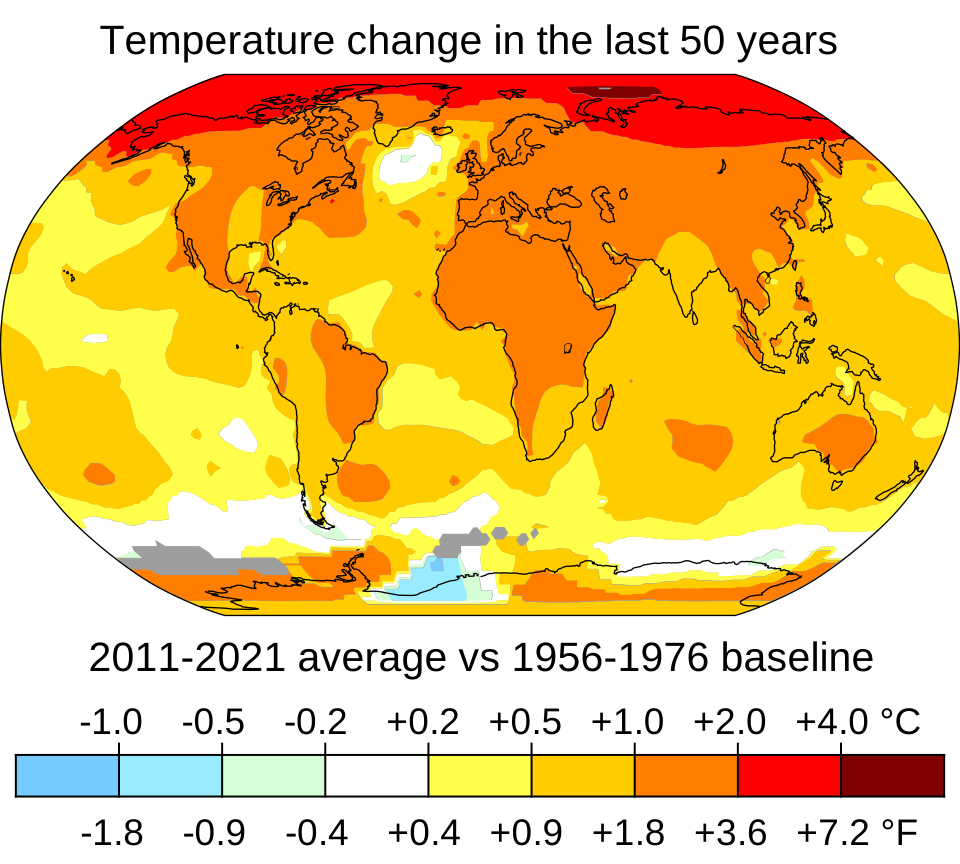
Climate change refers to long-term shifts in global temperatures and...

The heart a muscular organ in humans and animals pumps...

Dengue fever a mosquito-borne viral disease common in tropical and...
Trending

3 hours ago Josh Brolin Discusses Career Shift to Stock Trading and Embracing New Hollywood Roles

3 hours ago Kendall Jenner Addresses Longstanding Dating Rumors Involving Cara Delevingne

3 hours ago JJ Redick Evaluates Bronny James' Performance During Ongoing Lakers Preseason Games

3 hours ago Medical Examiner Reveals Causes of Death for Three Men at Burning Man Festival
3 hours ago Kristaps Porzingis Remains Out Indefinitely With Mysterious Health Issues

3 hours ago Trump Waives Russia Sanctions Despite Congressional Support From Lindsey Graham
Popular

Ilhan Omar is a prominent American politician currently serving as...

Ken Paxton is an American politician and lawyer serving as...

Elon Musk is a visionary entrepreneur and engineer known for...

Michael Joseph Jackson the King of Pop was a highly...

Jameis Winston is an American football quarterback currently playing for...

Cristiano Ronaldo widely considered one of the greatest footballers captains...