History of Air Canada in Timeline


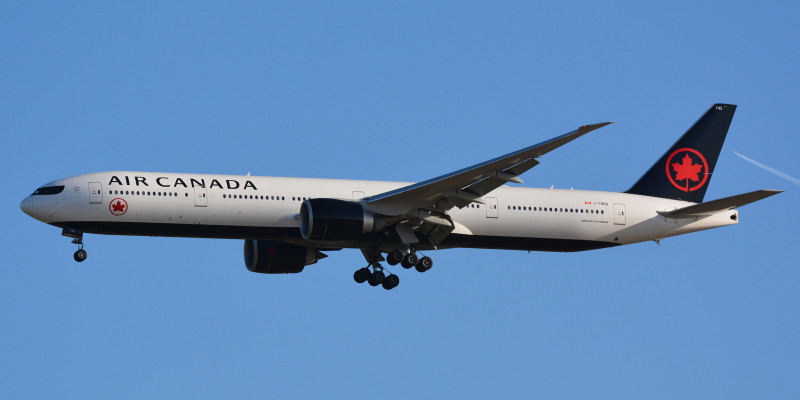
Air Canada is Canada's largest airline and flag carrier, established in 1937 and headquartered in Montreal. It provides scheduled and charter air transport for passengers and cargo, serving 222 destinations worldwide. It operates major hubs in Montreal, Toronto, and Vancouver. Air Canada is also a founding member of the Star Alliance.
3 hours ago : Air Canada's Airbus A350-1000 unlocks new routes, exceeding Boeing's 777-300ER capabilities.
Air Canada's acquisition of the Airbus A350-1000 will enable new ultra-long-range routes previously unattainable by its Boeing 777-300ER fleet, signaling a significant shift in fleet strategy as 2025 approaches.


1936: Creation of Trans-Canada Air Lines
In 1936, the Canadian federal government created Trans-Canada Air Lines (TCA), which would later become Air Canada.
April 1937: Creation of Trans-Canada Air Lines (TCA)
On April 11, 1937, Trans-Canada Air Lines (TCA), Air Canada's predecessor, was created by federal legislation as a subsidiary of Canadian National Railway (CNR).
1937: Airline founded
In 1937, Air Canada was founded as the flag carrier and largest airline of Canada.
July 1938: First flight attendants hired
On July 1, 1938, TCA hired its first flight attendants.
1938: First transcontinental flight routes
In 1938, Trans-Canada Air Lines (TCA) began operating its first transcontinental flight routes.
April 1939: Transcontinental routes begin
On April 1, 1939, transcontinental routes from Montreal to Vancouver began, using 12 Lockheed Model 14 Super Electras and six Lockheed Model 18 Lodestars.
January 1940: Employee Growth
By January 1940, the airline had grown to about 579 employees.
1942: Merger proposal rejected
In 1942, Canadian Pacific Airlines (CP Air) suggested a merger with TCA, but Prime Minister William Lyon Mackenzie King rejected the proposal.
1949: Headquarters relocation to Montreal
In 1949, the federal government moved TCA's headquarters from Winnipeg to Montreal.
1953: Use of a computer reservation system
With the development of the ReserVec in 1953, TCA became the first airline in the world to use a computer reservation system with remote terminals.
1964: Bill to change name to Air Canada submitted
In 1964, Jean Chrétien submitted a private member's bill to change the name of the airline from Trans-Canada Airlines to Air Canada.
1964: Design aspects from old logo
In 2017, Air Canada's new retro livery incorporated design aspects from the logo used between 1964 and 1992.
January 1965: Name change to Air Canada takes effect
On January 1, 1965, the name change from Trans-Canada Airlines to Air Canada took effect.
1965: Renaming of TCA to Air Canada
In 1965, Trans-Canada Air Lines (TCA) was officially renamed Air Canada following government approval.
1975: Headquarters Location
In 1975, Air Canada was headquartered at 1 Place Ville-Marie in Montreal.
1976: Air Canada becomes an independent Crown corporation
In 1976, with reorganization at CNR, Air Canada became an independent Crown corporation.
1978: Air Canada Act
The Air Canada Act of 1978 ensured that the carrier would compete on a more equal footing with rival regional airlines and CP Air, and ended the government's direct regulatory control over Air Canada's routings, fares, and services.
1985: Privatization indicated
By 1985, the Canadian government was indicating a willingness to privatize both Canadian National Railways and Air Canada.
December 1987: First airline with fleet-wide non-smoking policy
On December 7, 1987, Air Canada became the first airline in the world with a fleet-wide non-smoking policy.
1987: Air Canada enacted no-smoking flights between Canada and New York City
In the spring of 1987, Air Canada initiated a test program of no-smoking flights between Canada and New York City, which was then extended to other flights after a survey showed strong passenger support.
1987: Deregulation of airline market
The deregulation of the Canadian airline market, under the new National Transportation Act, 1987, officially opened the airline market in Canada to equal competition.
1988: Privatization of Air Canada
In 1988, Air Canada was privatized, and 43% of shares were sold on the public market, with the initial public offering completed in October of that year.
1989: Air Canada becomes completely privatized
In 1989, Air Canada became completely privatized.
1990: Headquarters Relocation
In 1990, Air Canada moved its headquarters to the airport to cut costs.
1992: First Canadian President since Claude Taylor
Călin Rovinescu became the first Canadian President since Claude Taylor in 1992 on 1 April 2009.
1992: Sale of enRoute card business
In 1992, Air Canada sold the enRoute card business to Diners Club.
1992: Design aspects from old logo
In 2017, Air Canada's new retro livery incorporated design aspects from the logo used between 1964 and 1992.
1995: New trans-border routes added
In 1995, taking advantage of a new US-Canada open skies agreement, Air Canada added 30 new trans-border routes.
September 1998: Pilots strike
On September 2, 1998, pilots for Air Canada launched the company's first pilots' strike, demanding higher wages.
1999: Relaxation of aviation regulations and takeover bids
At the end of 1999, the Canadian government relaxed some aviation regulations, aiming to consolidate the Canadian airline industry, leading to takeover bids for Canadian Airlines and Air Canada.
1999: Profits earned
The second half of the 1990s saw the airline earn consistent profits, totaling $1 billion for the 1997 to 1999 period.
January 2000: Air Canada acquires Canadian Airlines International
In January 2000, Air Canada acquired Canada's second-largest air carrier, Canadian Airlines International, merging the latter's operations and becoming the world's twelfth-largest airline.
January 2000: Acquisition of Canadian Airlines
On January 4, 2000, Air Canada took over its largest rival, Canadian Airlines.
January 2001: Pledge to improve service
Service improved following Air Canada officials' pledge to do so by January 2001, after integration efforts in summer 2000 led to flight delays and other issues.
2001: Regional carriers consolidated
In 2001, Air Canada consolidated its wholly owned regional carriers into Air Canada Regional Incorporated.
2002: Back-to-back losses
Air Canada posted back-to-back losses in 2001 and 2002 due to a global aviation market downturn and increased competition.
2002: Air Canada launched a discount airline Zip
In 2002, Air Canada launched a discount airline named Zip to compete directly with WestJet on routes in Western Canada.
April 2003: Filing for protection under the Companies' Creditors Arrangement Act
On April 1, 2003, Air Canada filed for protection under the Companies' Creditors Arrangement Act.
2003: Restructuring officer
Călin Rovinescu was Air Canada's chief restructuring officer during its 2003 bankruptcy.
2003: Filing for bankruptcy protection
In 2003, Air Canada filed for bankruptcy protection.
2003: Financing package
In 2003, Deutsche Bank unveiled an $850 million financing package for Air Canada, contingent on cost cuts.
2003: Bankruptcy Mediation
In 2003, retired judge James Farley presided over Air Canada's bankruptcy.
September 2004: Emergence from bankruptcy protection
Air Canada emerged from protection under the Companies' Creditors Arrangement Act on September 30, 2004, 18 months after filing.
October 2004: Celine Dion becomes the face of Air Canada
In October 2004, Canadian singer Celine Dion became the face of Air Canada to relaunch the airline and draw in a more international market. She also recorded her single, "You and I".
2004: Air Canada uniforms used a midnight blue colour
Between 2004 and 2017, Air Canada uniforms used a midnight blue colour. The uniforms were designed by Canadian fashion designer Debbie Shuchat.
2004: Zip was disbanded
In 2004, Zip, the discount airline launched by Air Canada in 2002, was disbanded.
2004: Air Canada Tango service was dissolved
In 2004, the Air Canada Tango service, which had been launched in 2001, was dissolved.
2005: Aeroplan spun off from Air Canada
Aeroplan, Air Canada's loyalty marketing program, was spun off from Air Canada in 2005.
July 2006: Project XM: Extreme Makeover initiated
Started in July 2006, Project XM: Extreme Makeover, was a $300 million aircraft interior replacement project to install new cabins on all aircraft.
March 2007: First Boeing 777 delivery
In March 2007, deliveries of the Boeing 777s began.
2007: Pension shortfall growth
In 2007, Air Canada's pension shortfall grew to $1.2 billion, contributing to a $2.85 billion shortfall by 2010.
March 2009: Montie Brewer Resigns
Montie Brewer resigned on 30 March 2009.
July 2009: Financial aid received
In July 2009, Air Canada received CA$1 billion in financial aid from a consortium, including the Canadian government, ACE, and Aeroplan. Only CA$600 million was actually loaned to Air Canada.
2009: Capacity cuts
By the first quarter of 2009, the airline cut its capacity by 7 percent due to high fuel prices and the Great Recession.
2009: Pension payment moratorium request
In 2009, Air Canada requested a moratorium on its pension payments after suffering a Q1 loss of $400 million, while being obligated to pay $650 million into the pension fund. Judge James Farley was appointed to mediate the pension issues.
December 2010: ACE share sale
In December 2010, ACE sold 44 million Air Canada shares.
2010: Liquidity risk due to pension shortfall
In 2010, Air Canada reported a $2.85 billion pension shortfall as a "liquidity risk" in its first-quarter report, requiring new financing and pension relief to conserve cash.
September 2012: Air Canada unveiled new frequent flyer status program
On 20 September 2012, Air Canada introduced "Air Canada Altitude," a new frequent flyer status program to complement Aeroplan.
November 2012: Sale of remaining shares to Cormark Securities Inc.
In November 2012, ACE sold its remaining 31 million Air Canada shares to Cormark Securities Inc.
December 2012: Air Canada Rouge Launch
Launched in December 2012, Air Canada Rouge is a subsidiary of Air Canada serving predominantly leisure destinations.
2012: Return to Profitability
Air Canada, previously loss-making for several years, became profitable again starting in 2012.
December 2013: Boeing 737 MAX order
In December 2013, Air Canada ordered 61 Boeing 737 MAX aircraft to replace its Airbus A320 fleet.
2013: TCC partnership with Pretium Partners
In 2013, Trans-Canada Capital began a partnership with Pretium Partners, investing in their single-family rental real estate strategy.
February 2014: Decision to leave sports charter business
In February 2014, Air Canada decided to leave the sports charter business.
May 2014: First Boeing 787 delivery
In May 2014, deliveries of the Boeing 787s began.
March 2015: Agreement with NHL teams for charter services
On 17 March 2015, Air Canada announced an agreement with several NHL teams to provide charter services under the Air Canada Jetz brand for six years starting from the 2015–2016 NHL season.
July 2016: OTCQX International Premier Listing
Since 29 July 2016, Air Canada's variable voting shares have been traded on OTCQX International Premier in the US under the single ticker symbol "ACDVF".
2016: Start of NHL charter services
On 17 March 2015, Air Canada announced an agreement with several NHL teams to provide charter services under the Air Canada Jetz brand for six years starting from the 2015–2016 NHL season.
February 2017: New aircraft livery launch
On 9 February 2017, Air Canada launched a new retro red and black aircraft livery to coincide with its 80th anniversary and Canada's 150th anniversary of Confederation, incorporating design aspects from the logo used between 1964 and 1992.
February 2017: Air Canada unveiled a new uniform scheme
On 9 February 2017, Air Canada unveiled a new uniform scheme, designed by Christopher Bates, coinciding with Canada's 150th and Air Canada's 80th anniversaries.
May 2017: Air Canada announced plans to launch a new loyalty program
In May 2017, Air Canada announced its intention to launch a new loyalty program in 2020, replacing Aeroplan and Altitude.
November 2017: First MAX 8 variant delivery
On 2 November 2017, Air Canada received its first MAX 8 variant from its order of Boeing 737 MAX aircraft.
2017: New image debut for Air Canada
Between 2004 and 2017, Air Canada uniforms used a midnight blue colour. In 2017, Celine Dion helped the newly solvent airline debut its new image.
April 2018: Air Canada Signature Class rebrand
In April 2018, Air Canada rebranded its international business class cabin as Air Canada Signature Class, offering an enhanced menu, new amenity kits, a chauffeur service using BMW vehicles, and access to the Air Canada Signature Suite at Toronto Pearson International Airport.
2018: Air Canada renamed the Tango fare class to Standard fare
As of 2018, Air Canada renamed the Tango fare class to Standard fare.
January 2019: Air Canada repurchased Aeroplan
In January 2019, Air Canada re-purchased Aeroplan from Aimia Inc.
May 2019: Exclusive talks to buy Transat A.T.
On 16 May 2019, Air Canada announced it was in exclusive talks to buy Transat A.T., the parent company of Air Transat, for CA$520 million.
June 2019: Agreement to purchase Transat A.T.
On 27 June 2019, Transat A.T. agreed to be purchased by Air Canada for CA$13 per share.
August 2019: Raised purchase price for Transat A.T.
On 11 August 2019, Air Canada raised the purchase price of Transat A.T. to CA$18 per share, bringing the overall value of the deal to $720 million. The acquisition was approved by 95% of Transat A.T. shareholders on 23 August 2019.
2019: Q1 financial report profit
In its first quarterly financial report, Air Canada announced it had lost CA$1.05 billion in 2020, compared to a profit of CA$345 million in Q1 2019.
March 2020: Suspension of flights due to COVID-19
On 18 March 2020, Air Canada announced it would suspend most of its flights by 31 March due to travel restrictions caused by the COVID-19 pandemic.
October 2020: Revised agreement for Transat A.T. purchase
In October 2020, the agreement to purchase Transat A.T. was revised downwards to CA$5 per share, reflecting the challenges posed by the COVID-19 pandemic.
November 2020: Air Canada Altitude renamed as Aeroplan Elite Status
On 8 November 2020, Air Canada Altitude was renamed Aeroplan Elite Status, with changes to the qualification metrics.
2020: Return to Loss-Making Due to COVID-19
Due to the impact of the COVID-19 pandemic, Air Canada became loss-making again in 2020.
2020: Air Canada Altitude and Aeroplan merged
In 2020, Air Canada Altitude and Aeroplan merged, with Aeroplan as the surviving entity.
2020: Fund growth at TCC
Trans-Canada Capital's (TCC) team grew the Air Canada pension fund from $23 billion in 2020 to $30 billion in 2024.
February 2021: Government of Canada approves takeover
On 11 February 2021, the Government of Canada approved the takeover of Transat A.T. by Air Canada.
April 2021: Government of Canada investment
In April 2021, the Government of Canada acquired 6.4% of Air Canada as part of a $5.9 billion COVID-19 related assistance package.
April 2021: Transat A.T. takeover dropped
In April 2021, the planned takeover of Transat A.T. by Air Canada was dropped following a failure to secure approval from the European Commission.
October 2021: Government of Canada acquired 6.4% of Air Canada
In October 2021, the Government of Canada acquired 6.4% of Air Canada in return for financial support to mitigate the impacts from the COVID-19 pandemic.
June 2022: Cancellation of daily flights
In June 2022, Air Canada announced it was cancelling over 150 daily flights in the summer due to unexpected pressure in the aviation industry following the lifting of pandemic restrictions.
September 2022: Government of Canada lifted COVID-19 restrictions
In September 2022, Air Canada welcomed the Government of Canada's decision to lift remaining COVID-19 restrictions, including requirements for wearing masks on aircraft, testing and quarantine.
October 2022: Compulsory use of ArriveCAN lifted
In September 2022, Air Canada welcomed the Government of Canada's decision to lift remaining COVID-19 restrictions, including requirements for the compulsory use of ArriveCAN beginning 1 October 2022 and noted that the measures were not justified by science.
October 2023: Aircraft Retrofit Announcement
On 23 October 2023, Air Canada announced that it would retrofit the Airbus A321, and 8 of its Airbus A320 aircraft with the A220 standard to replace the XM cabin, which would feature Airspace XL bins, new entertainment screens, exterior cameras, and satellite based Wi-Fi.
January 2024: Air Canada destinations in January 2024
As of January 2024, Air Canada flies to 64 domestic destinations and 158 international destinations across Asia, Africa, the Americas, Europe, and Oceania.
December 2024: Boeing 737 MAX 8 aircraft transferred to Air Canada Rouge
On 17 December 2024, Air Canada announced that it would transfer its Boeing 737 MAX 8 aircraft to Air Canada Rouge, creating a hub for Rouge at Vancouver International Airport. Air Canada Rouge's Airbus A320 and A321 fleet will transfer to the mainline fleet.
2024: Government of Canada sold its stake
In 2024, the Government of Canada sold its stake in Air Canada, confirming they did not intend to be a long-term owner of the shares.
2024: Assets managed by TCC
Trans-Canada Capital manages Air Canada's pension plan and its $30 billion in assets in 2024.
August 2025: Flight Attendant Strike
In August 2025, Air Canada experienced a work stoppage involving more than 10,000 flight attendants represented by the Canadian Union of Public Employees. The strike began on 16 August and led to the cancellation of approximately 130,000 passenger journeys per day.
March 30, 2026: CEO Retirement Announcement
On March 30, 2026, Air Canada announced that its chief executive, Michael Rousseau, will retire from his position by the end of September 2026.
September 2026: CEO to Retire
On March 30, 2026, Air Canada announced that its chief executive, Michael Rousseau, will retire from his position by the end of September 2026.
2026: Air Canada plans to roll out Wi-Fi to its international fleet
Air Canada plans to roll out Wi-Fi to its international fleet starting in 2026.
Mentioned in this timeline
Elizabeth II reigned as Queen of the United Kingdom and...

C line Dion is a highly successful Canadian singer entrepreneur...

Deutsche Bank is a German multinational investment bank and financial...

The Boeing Company is a multinational corporation and one of...
China officially the People's Republic of China PRC is located...
The Boeing MAX is the latest iteration of the Boeing...
Trending

59 seconds ago Arnold Palmer's hilarious Augusta advice revealed; Bhatia shines at Masters Tournament

1 minute ago Maren Morris defends her son against gender-based criticism and expressing himself.

2 minutes ago Stellantis Considers Producing Leapmotor Chinese EVs in Canada Amidst Opel EV Development Talks

2 minutes ago Pat's Run in Tempe: Honoring Pat Tillman and Supporting Future Scholars.

2 hours ago Kara Swisher's CNN docuseries explores longevity trends, tech, and living longer.
2 hours ago Viktor Gyökeres on Arsenal's Title Hopes, Arteta's Impact, and Harnessing Nerves
Popular

Paula White-Cain is a prominent American televangelist and key figure...

William Franklin Graham III commonly known as Franklin Graham is...

Melania Trump is a Slovenian-American former model who served as...

XXXTentacion born Jahseh Dwayne Ricardo Onfroy was a controversial yet...

Bernie Sanders is a prominent American politician currently serving as...

J D Vance is an American politician and author He...