


Baghdad is the capital and largest city of Iraq, situated on the Tigris River. With an estimated population of 8 million, it's one of the most populous cities in the Middle East and the Arab world, representing 22% of Iraq's population. Baghdad serves as a major financial and commercial hub in the region.
1900: Jewish population growth
By 1900, the Jewish population in Baghdad had grown to around 50,000, comprising over a quarter of the city's total population.


1900: Population estimate
In 1900, the estimated population of Baghdad was 145,000.
1907: Baghdad population
The Nuttall Encyclopedia reported Baghdad's population as 185,000 in 1907.
1909: Death of Ben Ish Chai
In 1909, Rabbi Joseph Hayyim ben Eliahu Mazal-Tov, known as the Ben Ish Chai (1834–1909), passed away. He was a great rabbi in Baghdad.
1918: British capture of Baghdad
In 1918, during World War I, Baghdad and southern Iraq were captured by the British.
1920: Revolt against British policies
In the summer of 1920, a revolt erupted in Baghdad against new British policies, leading to mass demonstrations and air bombing by British authorities which killed thousands of residents.
1921: Baghdad as capital of British-protected monarchy
In 1921, under the Mandate of Mesopotamia, Baghdad became the capital of the British-protected monarchy.
1932: Baghdad as capital of independent Iraq
In 1932, Baghdad was made the capital of the independent Kingdom of Iraq.
1932: Umm Kulthum sang at the Crescent Theatre
In 1932, Egyptian singer Umm Kulthum sang at the Crescent Theatre on Al-Rasheed Street during her visit to Baghdad.
1932: Recognition of Iraq as an independent monarchy
In 1932, Iraq was recognized as an independent monarchy, and Baghdad gradually regained its former prominence as a significant center of Arab culture.
April 1941: Coup by the "Golden Square"
On April 1, 1941, members of the "Golden Square" led by Rashid Ali al-Gaylani staged a coup in Baghdad, installing a pro-German and pro-Italian government. The mayor of Baghdad surrendered to British and Commonwealth forces after Gaylani and his government had fled.
1948: Jewish population in Baghdad
In 1948, Jews in Baghdad numbered approximately 150,000, constituting 33% of the city's population.
1950: Bombings targeting Jews
Between 1950 and 1951, Jewish residents in Baghdad were targeted in a series of bombings.
1950: Population growth
By 1950, Baghdad's population had grown to 580,000.
1951: Bombings targeting Jews
Between 1950 and 1951, Jewish residents in Baghdad were targeted in a series of bombings.
1957: Development Plan by Frank Lloyd Wright
In 1957, Frank Lloyd Wright envisioned a development plan for Baghdad, proposing a cultural hub on an island with an opera house, museums, a university, shopping malls, and a statue of Harun al-Rashid.
July 1958: Coup to topple the Kingdom of Iraq
On July 14, 1958, a coup led by Abdul-Karim Qasim toppled the Kingdom of Iraq. Many people were brutally killed, including King Faisal II, former Regent Abd al-Ilah and former Prime Minister Nuri al-Said and members of the royal family. Mob violence emerged and several foreign nationals staying at the Baghdad Hotel were killed.
1960: Founding of OPEC
In 1960, Baghdad hosted an international conference with dignitaries from Iran, Venezuela and Saudi Arabia, during which the Organization of Petroleum Exporting Countries (OPEC) was founded.
1963: Name change of Mustansiriya Madrasa to al-Mustansiriya University
In 1963, the name of Mustansiriya Madrasa was changed to al-Mustansiriya University.
1966: Opening of Al-Shaab Stadium
Al-Shaab Stadium, the largest stadium in Baghdad, was opened in 1966.
1967: Master plan by Miastoprojekt-Kraków
In 1967, a master plan of the city was delivered by the Polish planning office Miastoprojekt-Kraków.
1973: Master plan by Miastoprojekt-Kraków
In 1973, a master plan of the city was delivered by the Polish planning office Miastoprojekt-Kraków.
1982: Opening of Saddam International Airport
Saddam Hussein opened Baghdad International Airport in 1982, originally named Saddam International Airport.
February 1991: Amiriya aerial bombing
On February 13, 1991, during the Gulf War, an aerial bombing attack in Amiriya killed at least 408 civilians in Baghdad.
June 1993: Cruise missile attack
On June 26, 1993, cruise missiles were launched into downtown Baghdad, targeting the intelligence headquarters in the Mansour district, resulting in the deaths of nine civilians, including actress and painter Layla Al-Attar.
1998: Bombing of Iraq
During the 1998 bombing of Iraq, missiles struck multiple locations across Baghdad, including presidential palaces, several Republican Guard barracks, and offices of the Ministry of Defense and the Military industry.
1999: Uprising after Ayatollah assassination
In 1999, an uprising occurred after Ayatollah Muhammad Sadiq al-Sadr was assassinated in Najaf, with large-scale protests taking place in Shia neighborhoods of Baghdad, particularly Saddam City, and the Republican Guard suppressed the demonstration.
August 2000: Reopening of Saddam International Airport
In August 2000, Saddam International Airport in Baghdad was reopened after being closed as a result of the Gulf War and subsequent embargo.
February 16, 2001: U.S. air strikes
On February 16, 2001, the U.S. launched air strikes on five military targets at Taji in Baghdad.
2001: Revival of Baghdad's cultural heritage
In 2001, a broad initiative was launched to revive Baghdad's cultural heritage. Older mosques, churches, synagogues, mandis were rebuilt.
April 2003: Coalition Provisional Authority and local government
In April 2003, the U.S.—controlled Coalition Provisional Authority (CPA) began creating new functions for Baghdad's official subdivisions, initially focusing on electing neighborhood councils through neighborhood caucuses to explain local government and encourage participation.
2003: Deterioration of Jewish sites after 2003
After 2003, many of the historic Jewish sites in the Bataween and Shorja quarters of Baghdad fell into poor condition.
2003: Mixed Marriages in Baghdad
As early as 2003, about 20% of the population of Baghdad was the result of mixed marriages between Shi'ites and Sunnis.
2003: Jewish community in Baghdad during the Iraq War
By 2003, Iraq still had a Jewish community of about 1,500 people, a majority of whom resided in Baghdad. The population decreased sharply after the war.
2003: Looting of the National Theater
During the 2003 invasion of Iraq, the National Theater in Baghdad was looted, although efforts are underway to restore it.
2003: Statue of Saddam Hussein pulled down
During the 2003 invasion of Iraq, the statue of Saddam Hussein in Firdos Square was pulled down by coalition forces in a widely televised event.
2003: Baghdad Zoo suffered significant losses
Following the 2003 invasion of Iraq, Baghdad Zoo experienced significant losses, with only 35 of 650 animals surviving due to theft and starvation.
2003: Renaming of Baghdad International Airport
Following the 2003 invasion of Iraq, Saddam International Airport adopted its current name, Baghdad International Airport.
2003: City as stronghold for Sunni insurgency
In 2003, Mansour district in Baghdad became a stronghold for the Sunni insurgency.
2003: Kurdish population in Baghdad
In 2003, approximately 500,000 Kurds lived in Baghdad, impacting the city's ethnic composition after 2003.
2003: Assyrian population in Dora
In 2003, the Assyrian Quarter of Dora in Baghdad boasted a population of 150,000 Assyrians, making up over 3% of the capital's Assyrian population at the time.
2003: U.S. forces capture Baghdad
In 2003, the United States-led coalition invaded Iraq and on April 9th, the U.S forces captured Baghdad. The statue of Saddam Hussein was toppled at the Firdous Square. Religious and ethnic minorities were subjected to kidnappings, death threats and violence.
2003: Growth of religious tourism in Baghdad
Religious tourism in Baghdad has grown since 2003, with sites like Al-Kadhimiya Mosque and Abu Hanifa Mosque attracting visitors.
2003: Public sector struggles in Baghdad
Since 2003, the public sector in Baghdad has struggled to provide jobs, and the private sector hasn't grown sufficiently, leading companies to hire mainly foreigners.
2003: Persecution of Mandaeans decreased
The persecution of Mandaeans in Baghdad greatly decreased since 2003.
February 2004: Establishment of the Baghdad Provincial Council
In February 2004, the 41-member Baghdad Provincial Council took office, with representatives elected by their peers from the lower district councils, proportional to the population of the districts they represent.
March 2004: Bombings on the eve of Ashura
On the eve of Ashura on March 2, 2004, Baghdad experienced one of its deadliest bombings, resulting in at least 80–100 fatalities and 200 injuries.
January 2005: National elections and a new Provincial Council
In January 2005, national elections were held in Baghdad, leading to the election of a new Provincial Council to replace the one that had been in office since February 2004.
2007: Defeat of insurgents
In 2007, coalition forces and the Iraqi Army successfully defeated the insurgents in Baghdad, decreasing the level of violence.
January 2008: First snowfall in 100 years
On January 11, 2008, light snow fell across Baghdad for the first time in 100 years.
April 2009: Uptick in attacks
In early April 2009, Baghdad witnessed an uptick in attacks, including suicide bomb and vehicle-borne improvised explosive device attacks.
2009: Construction plan proposed
In late 2009, a construction plan was proposed to rebuild the heart of Baghdad, but the plan was never realized because corruption was involved in it.
2011: End of the war
In 2011, the war in Baghdad ended, but instability continued.
June 2013: Destruction of the House of Baháʼu'lláh
On June 23, 2013, the House of Baháʼu'lláh in the Kadhimiya district of Baghdad, a holy place for Baha'is, was destroyed under unclear circumstances.
2013: Continuation of Insurgency
An insurgency lasted in Baghdad until 2013.
2013: Insurgency and renewed war
From 2013 to 2017, during the insurgency and renewed war, Baghdad experienced one of the highest rates of terrorist attacks in the world.
2013: Publication of "Baghdad: The City in Verse"
In 2013, "Baghdad: The City in Verse" edited by Reuven Snir, was published by Harvard.
2013: Migration to Baghdad begins
In 2013, approximately 1.5 million people migrated to Baghdad.
2014: Decline in Assyrian population in Dora
By the end of 2014, only 1,500 Assyrians remained in Dora, Baghdad, due to kidnappings, death threats, vandalism, and house burnings by al-Qaeda and other insurgent groups.
2014: Civil war and displacement to Baghdad
In 2014, the Islamic State's invasion triggered the 2013-2017 civil war, causing hundreds of thousands of Iraqi internally displaced people to flee to Baghdad.
December 2015: UNESCO designation
In December 2015, Baghdad was selected by UNESCO as the first Arab city of the center of literary creativity.
2015: Baghdad population estimate
In 2015, Baghdad's population was estimated at 7.22 million, with the surrounding metropolitan region's population estimated to be 10.5 million.
2016: Decrease in Kurdish Population
As of 2016, around 300,000 Kurds remained in Baghdad, with about 150,000 of them being Shi'a mostly of Luri origin.
2017: Decline of terrorist attacks
In 2017, terrorist attacks in Baghdad gradually declined following the territorial defeat of the Islamic State militant group in Iraq. Since then, numerous reconstruction projects have been initiated to induce stability.
2017: Civil war impact on Baghdad
The 2013–2017 civil war following the Islamic State's invasion in 2014 caused hundreds of thousands of Iraqi internally displaced people to flee to Baghdad. The civil war ended in 2017.
January 2018: Suicide Bombings
In January 2018, suicide bombings occurred in Baghdad as part of ongoing instability.
2019: Baghdad Metro project
In 2019, it was reported that Korean Hyundai and French Alstom would be building the Baghdad metro, but the planned construction did not happen.
January 2020: Assassination of Iranian general
On January 3, 2020, Baghdad attracted global media attention when Iranian general Qasem Soleimani was assassinated in a U.S. drone strike near Baghdad Airport.
February 2020: Snowfall reported
On February 11, 2020, snowfall was again reported in Baghdad, with accumulations across the city.
July 2020: Record highest temperature
On July 28, 2020, Baghdad's record highest temperature of 51.8 °C (125.2 °F) was reached.
2020: Period of violence
Between 2003 and 2020, Baghdad was disturbed by series of violence and terrorist activities.
January 2021: Suicide Bombings
In January 2021, suicide bombings occurred in Baghdad as part of ongoing instability.
2021: Car congestion in Baghdad
According to MP Jassim Al-Bukhati in 2021, Baghdad's roads are designed to accommodate 700,000 cars, while there are between 2.5 and 3 million cars on them.
2023: Plans to build bridges in Baghdad
In 2023, authorities announced plans to build 19 bridges in Baghdad as part of post-war reconstruction efforts, as many bridges were damaged during the war.
February 2024: Baghdad Metro Project Plan
As of February 2024, the Baghdad Metro project plan consisted of fully electric and automated (driverless) trains running on an extensive railway network.
July 2024: Contract awarded for Baghdad's metro construction
In July 2024, an international consortium of German, French, Spanish, and Turkish companies was awarded a $17.5 billion contract to construct Baghdad's metro. The consortium, including Alstom, Systra, SNCF, Talgo, Deutsche Bank, and SENER, was to negotiate the technical, financial, and operational details of the project.
May 2029: Estimated completion of Baghdad's metro
The Baghdad metro project, awarded in July 2024, is estimated to be completed in May 2029.
Mentioned in this timeline
The United States of America is a federal republic primarily...
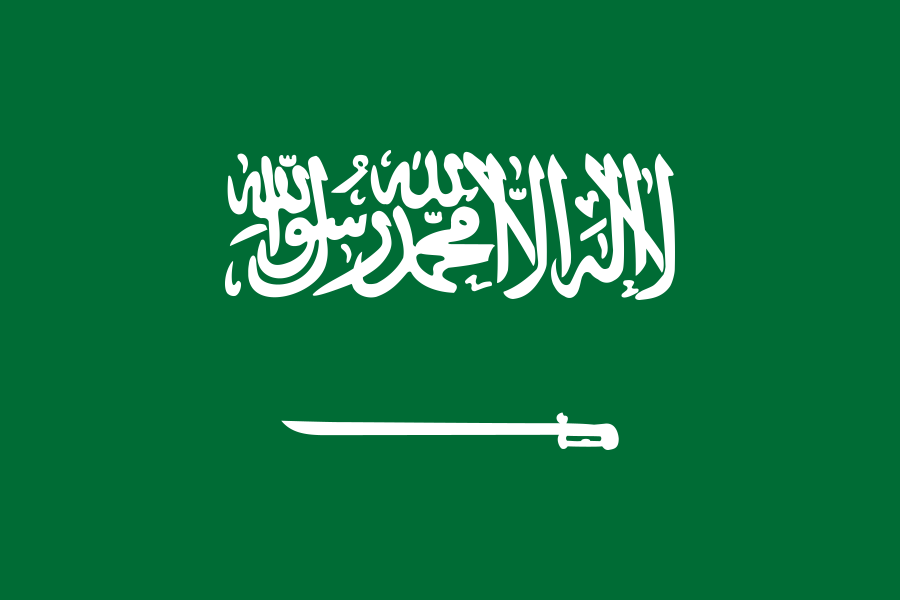
Saudi Arabia officially the Kingdom of Saudi Arabia KSA is...
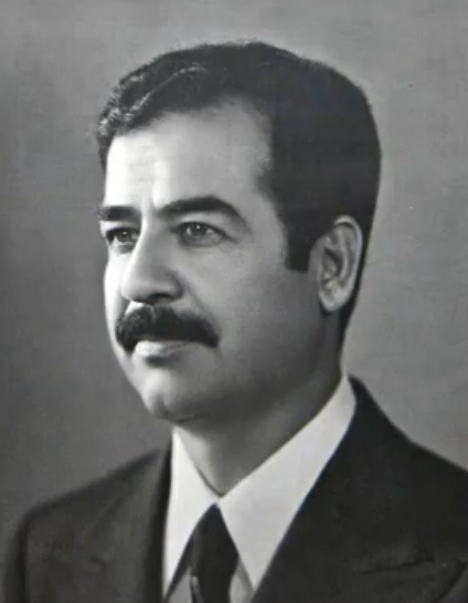
Saddam Hussein was the fifth president of Iraq from to...
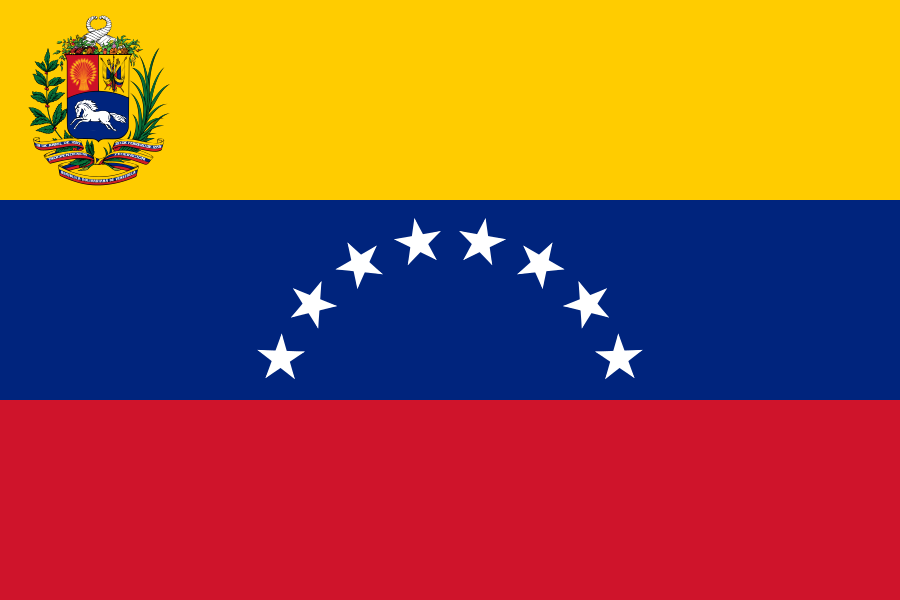
Venezuela officially the Bolivarian Republic of Venezuela is a country...
Deutsche Bank is a German multinational investment bank and financial...
Iraq officially the Republic of Iraq is a country in...
Trending
3 hours ago Tech Industry Faces Major Uncertainty Over Trump Administration Visa Restrictions and PERM Suspension
3 hours ago Hubert Hurkacz faces Yi Zhou in the third round of ATP 1000 Shanghai tournament
3 hours ago Indian Activists and YouTuber Dhruv Rathee Released Amid Ongoing New Delhi Protests

3 hours ago Will Shipley Prepares for First Career NFL Start With Philadelphia Eagles in London
3 hours ago Upcoming Tennis Match Predictions and ATP Shanghai Masters Betting Analysis

3 hours ago Anthony Mackie to Star in Macbeth on Broadway Following West End Run
Popular

Ken Paxton is an American politician and lawyer serving as...

Cristiano Ronaldo widely considered one of the greatest footballers captains...

Michael Joseph Jackson the King of Pop was a highly...

Elon Musk is a visionary entrepreneur and engineer known for...

Shakira Isabel Mebarak Ripoll the Queen of Latin Music is...

Bernie Sanders is a prominent American politician and the senior...