


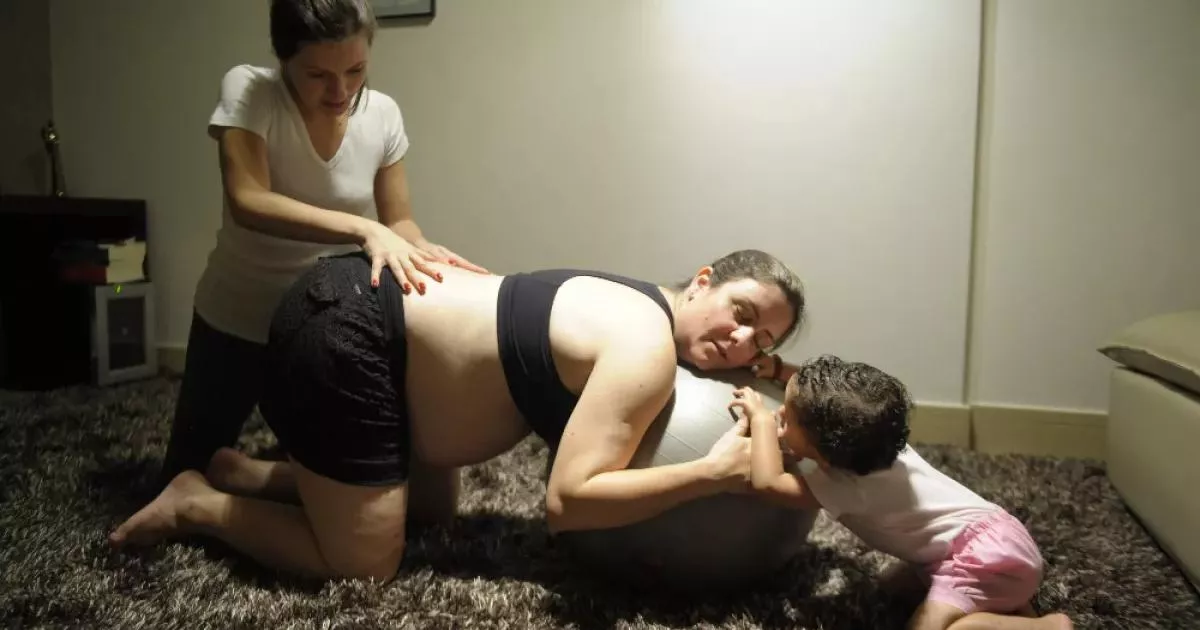
A doula is a non-medical professional who provides continuous physical, emotional, and informational support to a person before, during, and shortly after a significant health-related experience, such as childbirth, miscarriage, induced abortion, or stillbirth. Doulas also support clients through non-reproductive experiences, such as dying. A doula's role is to advocate for the client's preferences and provide evidence-based information so that the client can make informed decisions. They offer comfort measures, encouragement, and practical assistance, but they do not perform clinical tasks. Doula support can extend to the client's partner, family, and friends.
1969: Term "Doula" First Used
In 1969, Dana Raphael, a protégée of Margaret Mead, first used the term "doula" in an anthropological study. She observed that across human societies, a female companion traditionally assisted with childbirth, often a family member or friend, contributing to successful breastfeeding. Raphael derived the term from the modern Greek word "δούλα" (doúla), meaning "female slave," a term relayed to her by an elderly Greek woman who attributed its origins to ancient times.


1992: Founding of DONA International
In 1992, physician-researchers Marshall Klaus and John Kennell, along with Phyllis Klaus, Penny Simkin, and Annie Kennedy, co-founded Doulas of North America (later DONA International). This marked the establishment of the first organization to formally train and certify doulas, professionalizing the role and lending credibility to the practice with their research backing.
1996: Doula Profession Introduced in China
The doula profession was introduced in mainland China in 1996.
2003: "Doula" Enters Dictionaries
The term "doula" gained official recognition in 2003 when it was included in both the American Heritage Dictionary and the Oxford Dictionary, thanks to the lobbying efforts of DONA International. This marked a significant step towards mainstream acceptance of the profession.
2004: Study Identifies Challenges Faced by Doulas
A 2004 North American study identified challenges facing doulas, including lack of support from clinicians, work-life balance issues, on-call demands, public misunderstanding of the doula's role, boundary setting, complex socio-economic client issues, and navigating medicalized birth environments. Doulas often had to negotiate power dynamics with medical professionals while advocating for their clients.
2004: "Doula" Added to Merriam-Webster
Further solidifying its place in the lexicon, the term "doula" was added to the Merriam-Webster Dictionary in 2004.
2008: The Doula Project and the Rise of the Full-Spectrum Doula
In 2008, activists in New York City launched the Doula Project. This initiative expanded the doula's role beyond childbirth to encompass other reproductive experiences, including abortion, miscarriage, and fetal loss, within a reproductive justice framework. This led to the term "full-spectrum doula," signifying support for all pregnancy outcomes.
2010: Survey of Canadian Doulas
A 2010 survey of professional doulas in Canada revealed common motivations for their work, including a desire to support women, personal interest, and sharing positive birth experiences. Financial gain was not a primary motivator. Doulas of color also emphasized providing culturally competent care to their communities. Volunteer doulas often viewed the work as a pathway to paid doula work, nursing, or midwifery.
March 2014: ACOG Recognizes Doula Support
In March 2014, the American College of Obstetricians and Gynecologists (ACOG) issued a consensus statement acknowledging the role of continuous labor support, including doulas, in reducing cesarean birth rates.
2017: ACOG Officially Endorses Doula Care
Building on previous findings, ACOG formally recognized the benefits of continuous labor support provided by doulas and other non-hospital staff in 2017. They advocated for all birthing individuals to have access to such support, further solidifying the doula's role in maternity care.
2017: Royal College of Midwives Supports Doula Choice
The Royal College of Midwives in the United Kingdom issued a position statement in 2017 supporting an individual's choice to hire a doula, provided the doula does not offer medical care. This reflects growing international recognition of the doula's role.
2018: Study on Chinese Doula Practices and Media Discourse
A 2018 study analyzing news media in China highlighted the connection between Chinese doulas and midwifery, with doulas required to register with official bodies. The study also noted increased demand for doula services driven by dissatisfaction with medical care, and the link between doula support and family planning after China's second-child policy.
2018: International Study on Women's Perceptions of Doulas
A 2018 study explored women's views on doulas across various countries, including Egypt, Lebanon, Syria, Malawi, Sweden, Nepal, Russia, Canada, and the USA. While continuous support from a doula was generally appreciated, cultural nuances, such as those regarding modesty and privacy, were found to influence preferences.
2018: Washington State Leads in Providing Doula Services for Incarcerated Women
In 2018, Washington became the first state to legislate access to midwifery and doula services for incarcerated women during prenatal, delivery, and postpartum care. However, the bill lacked funding mechanisms and specific care guidelines.
2019: Study Highlights Barriers to Universal Doula Care
A 2019 study examined perceptions of labor companionship, primarily in high-income countries, and identified barriers to widespread doula care implementation. These challenges included perceptions about doulas' roles and benefits, as well as logistical obstacles like policy gaps, integration difficulties, and lack of training.
2019: New York State Paves the Way for Medicaid Doula Reimbursement
In 2019, New York State launched a doula pilot program for Medicaid reimbursement in Erie and Kings Counties. Also in 2019, New York became the first state to pass a bill to certify doulas, aiming to legitimize the profession and facilitate federal Medicaid reimbursement. However, some doulas expressed concerns about not being involved in the bill's creation and potential impacts on their work.
2019: Harris Addresses Doula Popularity and Reintroduces Maternal CARE Act
In 2019, then-Senator Kamala Harris discussed the growing popularity of doulas, especially within the Black community, and reintroduced the Maternal Care Access and Reducing Emergencies (CARE) Act. This legislation sought to address racial disparities in maternal mortality by training healthcare providers to recognize and mitigate the impact of implicit racial bias.
2021: Focus on Indigenous Doula Practices in Canada
From 2021 onwards, research in Canada has highlighted the cultural significance of indigenous practices within doula work.
Mentioned in this timeline
Kamala Harris is an American politician and attorney She served...
The rapid advancement of artificial intelligence continues to dominate the...

China officially the People's Republic of China PRC is located...

Syria officially the Syrian Arab Republic is a West Asian...
Virginia a state in the Southeastern and Mid-Atlantic regions of...

Medicaid is a joint federal and state government program providing...
Trending

4 hours ago Halle Berry Denies Abuse Allegations Amid Custody Dispute with Ex-Husband Olivier Martinez

4 hours ago Jasmine Paolini Faces Sonay Kartal in WTA Wuhan Open Round of 16 Match

5 hours ago Jelena Ostapenko Stuns Jessica Pegula in Thrilling Wuhan Open Comeback
5 hours ago Leylah Fernandez Advances to Third Round at the Wuhan Open

5 hours ago Riot Games Announces Closure of League of Legends Classic Mode in January

5 hours ago Sonay Kartal achieves major upset victory against Belinda Bencic at the Wuhan Open
Popular

Ilhan Omar is a prominent American politician currently serving as...

Ken Paxton is an American politician and lawyer serving as...

Jameis Winston is an American football quarterback currently playing for...

Elon Musk is a visionary entrepreneur and engineer known for...

Cristiano Ronaldo widely considered one of the greatest footballers captains...

Michael Joseph Jackson the King of Pop was a highly...