


Falcon 9 is a partially reusable, two-stage-to-orbit, medium-lift launch vehicle created by SpaceX. Its initial launch occurred on June 4, 2010, and it achieved a milestone by undertaking the first commercial resupply mission to the ISS on October 8, 2012. Notably, in 2020, it marked a historic moment as the first commercial rocket to send humans into orbit. Falcon 9 has gained recognition for its dependability and rapid launch frequency. It has completed 633 successful launches, along with two in-flight failures, one partial failure, and one pre-flight destruction.


2005: v1.0 Development Start
The expendable launch vehicle F9 v1.0 was developed from 2005 to 2010.
January 2008: First Multi-Engine Test
In January 2008, SpaceX completed the first multi-engine test, firing two engines simultaneously connected to the first stage.
February 2008: Demonstration Flight Date Slip
In February 2008, the first demonstration flight date slipped into the first quarter of 2009 due to complexity and regulatory requirements.
September 2008: Original First Demonstration Flight Target
The original NASA COTS contract targeted September 2008 for the first demonstration flight.
November 2008: Nine Engine Test-Fire
In November 2008, successive tests led to a 178-second (mission length), nine engine test-fire.
September 2009: Original Demonstration Mission Completion Target
The original NASA COTS contract targeted completion of all three demonstration missions by September 2009.
October 2009: First Flight-Ready All-Engine Test Fire
In October 2009, the first flight-ready all-engine test fire was conducted at its test facility in McGregor, Texas.
January 2010: Second Stage Orbit-Insertion Firing
In January 2010, a 329-second (mission length) orbit-insertion firing of the second stage was conducted at McGregor.
February 2010: Arrival at Launch Site
At the beginning of February 2010, the elements of the Falcon 9 arrived at the launch site for integration.
2010: First Falcon 9 Launch
The initial launch of the Falcon 9 ultimately occurred in 2010, later than the originally planned 2007 date.
February 2012: Powered Descent Design Completion
By February 2012, SpaceX had completed the design for powered descent, eliminating the use of parachutes.
October 8, 2012: First Commercial Resupply Mission to ISS
On October 8, 2012, the first commercial resupply mission to the International Space Station (ISS) was launched by Falcon 9.
October 2012: CRS-1 Partial Success
In October 2012, the CRS-1 mission experienced an engine failure at 79 seconds into the flight. Despite this, the mission was partially successful. The first stage burned longer, and NASA declined SpaceX's request to restart the second stage, resulting in the secondary payload's reentry into the atmosphere.
2012: Price Increase to $54-59.5 Million
By 2012, the price for commercial satellite launches with the Falcon 9 rose to $54–59.5 million, reflecting inflation.
March 2013: Powered Descent on Every Booster
In March 2013, SpaceX announced that every booster would be equipped for powered descent, starting with the first v1.1 flight.
July 2013: First Stage Development Testing Complete
In July 2013, the development testing of the first stage of the Falcon 9 was completed.
September 2013: Manufacturing Space Increase
By September 2013, SpaceX's total manufacturing space had increased to nearly 93,000 m, in order to support a production capacity of 40 rocket cores annually.
September 2013: First Controlled Atmospheric Entry
In September 2013, during Flight 6, the first stage made a controlled entry into the atmosphere after stage separation. However, the RCS thrusters couldn't overcome an aerodynamically induced spin during the final landing burn, leading to early engine shutdown and a hard splashdown.
September 2013: First Flight of the Developed First Stage
In September 2013, the developed first stage of the Falcon 9 had its first flight.
September 2013: First Flight of V1.1
In September 2013, the much larger V1.1 made its first flight. The demonstration mission carried a small 500 kg primary payload, the CASSIOPE satellite.
2013: DSCOVR Mission Cost
In 2013, the DSCOVR mission for NOAA, launched aboard a Falcon 9, cost $97 million.
2013: v1.1 Version Price: $56.5 Million
In 2013, the price for a Falcon 9 launch with the v1.1 version was $56.5 million.
2013: v1.1 Flights
In 2013, the v1.1 version of Falcon 9 began flights and continued until 2016, featuring improvements over the original design.
2013: SLC-4E Operational
Space Launch Complex 4E (SLC-4E) of Vandenberg Space Force Base in California became operational in 2013 as a Falcon 9 orbital launch site.
March 2014: SpaceX Pricing and Payload Specifications for v1.1
As of March 2014, SpaceX pricing and payload specifications published for v1.1 included about 30% more performance than the published price list indicated. SpaceX reserved the additional performance to perform reusability testing.
2014: Second-Stage Reusability Abandoned
By late 2014, SpaceX abandoned efforts to make the second stage reusable, determining that the mass needed for a heat shield, landing engines, and other equipment was prohibitive.
2014: Price Increases to $61.2 Million
In 2014, the price for a Falcon 9 launch increased to $61.2 million.
January 2015: First ASDS Landing Attempt
In January 2015, during the CRS-5 mission, the booster attempted the first landing on the ASDS floating platform. The rocket successfully guided itself to the ship but ran out of hydraulic fluid, crashing into the platform.
April 2015: Second ASDS Landing Attempt
In April 2015, during the CRS-6 mission, a second landing attempt was made on the ASDS. The bipropellant valve became stuck, preventing the control system from reacting rapidly enough for a successful landing.
December 2015: First Successful Booster Landing
In December 2015, Falcon 9 achieved its first successful landing of the booster stage, a crucial step towards the rocket's reusability.
December 2015: First Flight of Full Thrust
In December 2015, The Falcon 9 Full Thrust made its first flight, the first stage of which was reusable.
2015: v1.2 Full Thrust First Launch
In 2015, the v1.2 Full Thrust version of Falcon 9 was first launched, encompassing the Block 5 variant, which has been in operation since May 2018.
February 2016: Falcon 9 Core Production Rate Increase
By February 2016, the production rate for Falcon 9 cores had increased to 18 per year, and the number of first stage cores that could be assembled at one time reached six.
April 2016: First Successful ASDS Landing
In April 2016, during CRS-8, the first successful booster landing on an ASDS occurred on the drone ship Of Course I Still Love You.
April 2016: CRS-8 Mission
In April 2016, the CRS-8 mission led to the first operational relaunch of a previously flown booster, which was B1021, on the SES-10 mission in March 2017.
October 2016: Block 5 Refinements Described
In October 2016, Elon Musk described Block 5 as coming with many minor refinements that collectively are important, but uprated thrust and improved legs are the most significant.
2016: Falcon 9 booster public display
In 2016, SpaceX put the first Falcon 9 booster to successfully land (B1019) on public display at their headquarters in Hawthorne, California.
2016: Full Thrust Version Price: $62 Million
In 2016, the price for a Falcon 9 Full Thrust version launch was $62 million.
2016: End of v1.1 Flights
The v1.1 version of Falcon 9 ended flights in 2016.
January 2017: Block 5 Performance and Reusability Improvements
In January 2017, Elon Musk added that Block 5 significantly improves performance and ease of reusability.
January 2017: Iridium NEXT LEO Mission
In January 2017, booster B1029 carried the Iridium NEXT LEO mission before being reused to carry BulgariaSat-1 towards GTO in June 2017.
February 2017: First Operational Launch Utilizing AFSS
In February 2017, the CRS-10 launch was the first operational launch utilizing Autonomous Flight Safety System (AFSS).
March 2017: First Fairing Half Recovered
In March 2017, following the SES-10 mission, a payload fairing half was recovered after a soft landing in the ocean. The fairings were equipped with steerable parachutes and RCS thrusters.
March 2017: First Relaunch of a Flown Booster
In March 2017, the first operational relaunch of a previously flown booster was accomplished with B1021 on the SES-10 mission, after the CRS-8 mission in April 2016. It was later retired after landing a second time.
March 2017: First Reflight
In March 2017, the first reflight of a Falcon 9 first stage occurred.
May 2017: NROL-76 and Inmarsat-5 F5 Launches
In May 2017, the NROL-76 and Inmarsat-5 F5 missions launched with a Block 4 second stage on top of a Block 3 first stage, as SpaceX started including incremental changes to the Full Thrust, internally dubbed Block 4.
June 2017: Reuse of Booster B1029
In June 2017, booster B1029 carried BulgariaSat-1 towards GTO after an Iridium NEXT LEO mission in January 2017, marking another instance of booster reuse and landing.
July 2017: Intelsat 35e Launch
In July 2017, the Intelsat 35e mission launched with a Block 4 second stage on top of a Block 3 first stage.
2017: Congressional Testimony on Development Costs
In 2017, Congressional testimony by SpaceX suggested that the unusual NASA process allowed SpaceX to complete the task at a substantially lower cost, with development costs of both Falcon 1 and Falcon 9 rockets estimated at approximately $390 million in total.
May 2018: First Flight of Block 5
In May 2018, the current version, known as Falcon 9 Block 5, made its first flight.
May 2018: Block 5 variant in operation
Since May 2018, the Block 5 variant has been in operation.
2018: Routine First Stage Reuse
Since 2018, SpaceX has routinely reused first stages, reducing the demand for new cores.
2019: First Fairing Catches
In 2019, SpaceX's ship-based system involving a massive net began catching returning fairings, though after mixed success, SpaceX returned to water landings and wet recovery.
March 18, 2020: Engine Failure during Starlink Mission
On March 18, 2020, during a Starlink mission, one of the first stage engines failed 3 seconds before cut-off. The failure was due to the ignition of residual isopropyl alcohol after cleaning. The primary mission was not affected, but the landing attempt failed.
2020: First Commercial Human Orbit Launch
In 2020, Falcon 9 became the first commercial rocket to launch humans into orbit, marking a significant milestone in commercial spaceflight.
January 24, 2021: Record for Most Satellites Launched
On January 24, 2021, a Falcon 9 rocket set a record for the most satellites launched by a single rocket, carrying 143 satellites into orbit.
February 15, 2021: Engine Failure Due to Exhaust Gas Leak
On February 15, 2021, during another Starlink mission, hot exhaust gasses entered an engine due to a fatigue-related hole in its cover. SpaceX noted that the failed cover had the highest number of flights for that design. This caused an engine failure and a failed landing attempt.
July 2024: Falcon 9 Upper Stage Engine Malfunction
In July 2024, the upper stage engine of the Falcon 9 malfunctioned during the Starlink Group 9-3 mission launch, leading to the complete loss of the payload. The Federal Aviation Administration subsequently grounded the rocket for two weeks as a result of the malfunction.
August 2024: Falcon 9 Booster Landing Failure
In August 2024, a Falcon 9 booster tipped over and was destroyed during landing after a successful Starlink launch, marking SpaceX's first unsuccessful booster landing in over three years. The rocket was briefly grounded for two days following the landing failure.
September 2024: Second Upper Stage Engine Malfunction
In September 2024, following the successful launch of the Crew-9 mission, another malfunction occurred in the upper stage engine during a deorbit burn. This caused the stage to reenter outside its designed zone, leading to another grounding of the Falcon fleet. The anomaly happened just ten days before the planned launch of NASA's Europa Clipper mission.
2024: Estimated Internal Launch Costs
As of 2024, SpaceX's internal costs for a Falcon 9 launch are estimated between $15 million and $28 million, factoring in workforce expenses, refurbishment, assembly, operations, and facility depreciation. The second stage is believed to cost $12 million to produce.
2024: Commercial space as a key industry
In 2024, China's central government designated commercial space as a key industry for support, with the reusable medium-lift launchers being necessary to deploy China's planned low Earth orbit communications megaconstellations. Beijing Tianbing Technology company is developing Tianlong-3, which is benchmarked against Falcon 9.
2024: SLC-40 Upgraded for Crew Dragon Launches
In 2024, Space Launch Complex 40 (SLC-40) was upgraded to accommodate Crew Dragon launches as a backup to LC-39A.
2024: Bandwagon Program Begins
In 2024, SpaceX's Bandwagon program began, providing access to mid-inclination orbits of about 45°, with missions operating roughly every six months from Cape Canaveral.
February 2025: Upper Stage Malfunction after Starlink Launch
In February 2025, after the launch of the Starlink Group 11-4 mission, another upper stage malfunction occurred, preventing the planned deorbit burn. The stage remained in orbit for two weeks before an uncontrolled reentry near Poznań, Poland. This was similar to the July 2024 failure.
2025: Launch pricing
As of 2025, SpaceX launch pricing begins at US$300,000 for 50 kg to SSO.
2026: Block 5 Version Price: $74 Million
By 2026, the price for a Falcon 9 Block 5 version launch reached $74 million.
2028: Soyuz-7 development launch
The Russian space agency has launched the development of Soyuz-7 which shares many similarities with Falcon 9. The first launch is planned for 2028–2030.
2030: Soyuz-7 development launch
The Russian space agency has launched the development of Soyuz-7 which shares many similarities with Falcon 9. The first launch is planned for 2028–2030.
Mentioned in this timeline

Elon Musk is a visionary entrepreneur and engineer known for...
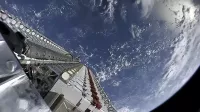
Starlink is a satellite internet constellation operated by Starlink Services...
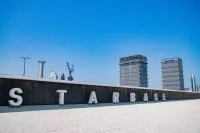
SpaceX founded by Elon Musk in is a private aerospace...

California is a U S state on the Pacific Coast...
NASA the National Aeronautics and Space Administration is the U...
Texas is the second-largest U S state by area and...
Trending
4 hours ago Vivek Ramaswamy's Nuclear Startup Atlas Atomics Reaches $1.9 Billion Valuation

4 hours ago José Mourinho Defends Kylian Mbappé Against Ridiculous Criticism at Real Madrid
4 hours ago Oregon QB Dante Moore Ruled Out Against UCLA; Dylan Raiola Named Starter

4 hours ago Robert Lewandowski's Team Secures Remarkable Comeback Win in Major League Soccer
4 hours ago Jimmy Kimmel Live Announces Star-Studded Guest Lineup for October 12-16

5 hours ago Marshall Manning Receives Multiple College Football Scholarship Offers
Popular

Ken Paxton is an American politician and lawyer serving as...

Cristiano Ronaldo widely considered one of the greatest footballers captains...

Michael Joseph Jackson the King of Pop was a highly...
Elon Musk is a visionary entrepreneur and engineer known for...

Shakira Isabel Mebarak Ripoll the Queen of Latin Music is...

Bernie Sanders is a prominent American politician and the senior...