History of Goldman Sachs in Timeline


Goldman Sachs is a multinational investment bank and financial services company founded in 1869 and headquartered in New York City. It is one of the largest investment banks globally by revenue, ranked 32nd on the Fortune 500, and 20th on the Forbes Global 2000 of 2025. Recognized as a systemically important financial institution by the Financial Stability Board, it maintains regional offices in numerous international financial centers.


1906: Entered IPO market with Sears, Roebuck and Company
In 1906, Goldman Sachs entered the IPO market by taking Sears, Roebuck and Company public, facilitated by Henry Goldman's friendship with Julius Rosenwald. The firm also underwrote the IPO of General Cigar Company in 1906.
1912: Underwriting work for IPOs
In 1912, Goldman Sachs continued its underwriting work for IPOs, including that of F. W. Woolworth Company.
1912: Henry S. Bowers became partner
In 1912, Henry S. Bowers became the first non-member of the founding family to become a partner of the firm and share in its profits.
1917: Henry Goldman Resigned
In 1917, Henry Goldman resigned from Goldman Sachs under pressure from other partners due to his pro-German stance.
1918: Opened office in San Francisco
In 1918, Goldman Sachs opened an office in San Francisco.
1918: Waddill Catchings Joined Goldman Sachs
In 1918, Waddill Catchings joined Goldman Sachs, eventually becoming the partner with the largest stake in the firm by 1928.
1919: Acquired interest in Merck & Co.
In 1919, Goldman Sachs acquired a major interest in Merck & Co.
1920: Opened offices in Philadelphia and St. Louis
In 1920, Goldman Sachs opened offices in Philadelphia and St. Louis.
1922: Acquired interest in General Foods
In 1922, Goldman Sachs acquired a major interest in General Foods.
December 4, 1928: Launched Goldman Sachs Trading Corp.
On December 4, 1928, Goldman Sachs launched the Goldman Sachs Trading Corp., a closed-end fund.
1929: Wall Street Crash
During the Wall Street Crash of 1929, the Goldman Sachs Trading Corp. failed amid accusations of share price manipulation and insider trading.
1930: Sidney Weinberg Assumed Senior Partner Role
In 1930, during the Great Depression, Catchings was ousted, and Sidney Weinberg became the senior partner, shifting focus to investment banking and restoring the firm's reputation.
1956: Formed an investment banking division
In 1956, Goldman Sachs formed an investment banking division in an attempt to shift focus off Weinberg.
1956: Lead advisor on Ford Motor Company IPO
In 1956, under Weinberg's leadership, Goldman Sachs was the lead advisor on the $657 million IPO of Ford Motor Company.
1957: Relocated headquarters to 20 Broad Street, New York City
In 1957, Goldman Sachs relocated its headquarters to 20 Broad Street, New York City.
1958: Advisor on Sears Roebuck debenture offering
In 1958, under Weinberg's leadership, Goldman Sachs advised on the $350 million debenture offering by Sears Roebuck.
1969: Gus Levy took over Weinberg's role as senior partner
In 1969, Gus Levy took over Weinberg's role as senior partner and built the firm’s trading franchise once again. Weinberg remained a senior partner of the firm and died in July of that year.
1970: Opened first international office in London
In 1970, Goldman Sachs opened its first international office in London, under the direction of partner Stanley R. Miller.
1970: Penn Central Transportation Company Bankruptcy
In 1970, the Penn Central Transportation Company went bankrupt with over $80 million in commercial paper outstanding, most of it issued through Goldman Sachs, leading to lawsuits and credit ratings for commercial paper issuers.
1972: Created private wealth management and fixed income divisions
In 1972, Goldman Sachs created a private wealth management division along with a fixed income division.
1974: Pioneered the "white knight" strategy
In 1974, Goldman Sachs pioneered the "white knight" strategy during its attempts to defend Electric Storage Battery against a hostile takeover bid from International Nickel and Morgan Stanley.
1976: John Weinberg and John C. Whitehead assumed roles of co-senior partners
In 1976, John Weinberg and John C. Whitehead assumed the roles of co-senior partners at Goldman Sachs and established 14 business principles.
November 16, 1981: Acquired J. Aron & Company
On November 16, 1981, Goldman Sachs acquired J. Aron & Company, a commodities trading firm involved in the coffee and gold markets.
1983: Moved into new global headquarters
In 1983, Goldman Sachs moved into a newly constructed global headquarters at 85 Broad Street.
1985: Underwrote Rockefeller Center REIT offering
In 1985, Goldman Sachs underwrote the public offering of the real estate investment trust that owned Rockefeller Center.
1990: Robert Rubin and Stephen Friedman became co-senior partners
In 1990, Robert Rubin and Stephen Friedman became co-senior partners at Goldman Sachs and introduced paperless trading to the New York Stock Exchange.
1992: Robert Rubin left the firm
In 1992, Robert Rubin left Goldman Sachs to work in the Presidency of Bill Clinton.
1994: Launched Goldman Sachs Commodity Index and opened Beijing office
In 1994, Goldman Sachs launched the Goldman Sachs Commodity Index (GSCI) and opened its first office in China in Beijing. Jon Corzine became CEO that same year.
May 1999: Became a public company via IPO
In May 1999, Goldman Sachs became a public company via an IPO, selling 12.6% of the firm to the public at $53 per share. Henry Paulson succeeded Jon Corzine as chairman and CEO after the IPO.
September 2000: Purchased Spear, Leeds, & Kellogg
In September 2000, Goldman Sachs purchased Spear, Leeds, & Kellogg, one of the largest specialist firms on the New York Stock Exchange, for $6.3 billion.
May 2006: Lloyd Blankfein became chairman and CEO
In May 2006, Lloyd Blankfein was promoted to chairman and chief executive officer of Goldman Sachs after Henry Paulson left to serve as United States Secretary of the Treasury.
September 21, 2008: Became a bank holding company
On September 21, 2008, Goldman Sachs confirmed it would become a traditional bank holding company.
September 23, 2008: Berkshire Hathaway invested in Goldman Sachs
On September 23, 2008, Berkshire Hathaway agreed to purchase $5 billion in Goldman Sachs preferred stock and received warrants to buy another $5 billion in common stock.
October 2008: Received TARP investment from U.S. Treasury
In October 2008, Goldman Sachs received a $10 billion preferred stock investment from the U.S. Treasury as part of the Troubled Asset Relief Program (TARP).
2008: Role in the 2008 global financial crisis
In 2008, Goldman Sachs faced criticism for its involvement in the global financial crisis.
June 2009: Repaid TARP investment
In June 2009, Goldman Sachs repaid the U.S. Treasury's TARP investment, with 23% interest.
November 16, 2009: Opened new headquarters at 200 West Street
On November 16, 2009, Goldman Sachs opened its new headquarters at 200 West Street.
2009: Moved to current headquarters
In 2009, Goldman Sachs moved to its current headquarters.
March 18, 2011: Bought back Berkshire Hathaway's preferred stock
On March 18, 2011, Goldman Sachs received Federal Reserve approval to buy back Berkshire Hathaway's preferred stock in Goldman Sachs.
June 2011: AUM declines
By June 2011, assets under management (AUM) of the Global Alpha fund was less than $1.7 billion.
September 2011: Shut down Global Alpha Fund LP
In September 2011, Goldman Sachs announced that it was shutting down Global Alpha Fund LP, its largest hedge fund, which had been housed under Goldman Sachs Asset Management (GSAM).
August 2015: Agreed to acquire GE Capital Bank online deposit platform
In August 2015, Goldman Sachs agreed to acquire General Electric's GE Capital Bank online deposit platform, including $8 billion of online deposits and another $8 billion of brokered certificates of deposit.
April 2016: Launched GS Bank
In April 2016, Goldman Sachs launched GS Bank, a direct bank.
October 2016: Launched Marcus by Goldman Sachs
In October 2016, Goldman Sachs Bank USA started offering no-fee unsecured personal loans under the brand Marcus by Goldman Sachs.
2018: David Solomon to succeed Lloyd Blankfein
In 2018, Goldman Sachs announced that David Solomon would succeed Lloyd Blankfein as chairman and chief executive officer.
March 2019: Announced Apple Card partnership
In March 2019, Apple announced that it would partner with Goldman Sachs to launch the Apple Card, the bank's first credit card offering.
August 2021: Acquired NN Investment Partners
In August 2021, Goldman Sachs announced that it had agreed to acquire NN Investment Partners for €1.7 billion from NN Group.
December 2025: Largest shareholders
In December 2025, the top 10 largest shareholders of Goldman Sachs were identified.
2025: Ranked 20th in Forbes Global 2000
In 2025, Goldman Sachs was ranked 20th in the Forbes Global 2000 list.
2025: Sourced data from company's SEC Form 10-K
In 2025, financial and employee data were sourced from the company's SEC Form 10-K.
January 2026: Transitioned Apple Card program to JPMorgan Chase
In January 2026, Goldman Sachs announced that it has entered into an agreement to transition the Apple Card program to JPMorgan Chase in 2028.
Mentioned in this timeline
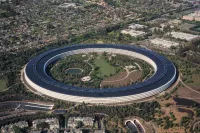
Apple Inc founded in and headquartered in Cupertino California is...

Vladimir Putin is a Russian politician who has dominated Russian...

Bill Clinton served as the nd U S President from...

Ukraine is a country in Eastern Europe the second largest...

Bank of America is a multinational investment bank and financial...
The United States of America is a federal republic located...
Trending

10 minutes ago Brad Stevens Praises Ronald Nored as New Butler Basketball Coach

10 minutes ago Orioles call up catcher Sam Huff; Sandridge cut; Mountcastle receives positive news.

11 minutes ago Rosemead street takeover shooting: Four injured amidst chaos and erupting gunfire.
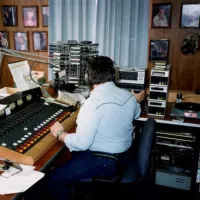
11 minutes ago Bob Labbe Honored as Radio Personality of the Year After Decades on Air.

1 hour ago Shumpert urges Antetokounmpo to join Curry; NBA reviews Ball's trip on Adebayo.

1 hour ago Cody Rhodes vs. Pat McAfee Feud Intensifies Before WrestleMania 42 Showdown
Popular

Paula White-Cain is a prominent American televangelist and key figure...

Melania Trump is a Slovenian-American former model who served as...
Eric Swalwell is an American lawyer and politician currently serving...
William Franklin Graham III commonly known as Franklin Graham is...

J D Vance is an American politician and author He...

Viktor Orb n is a prominent Hungarian politician and lawyer...