


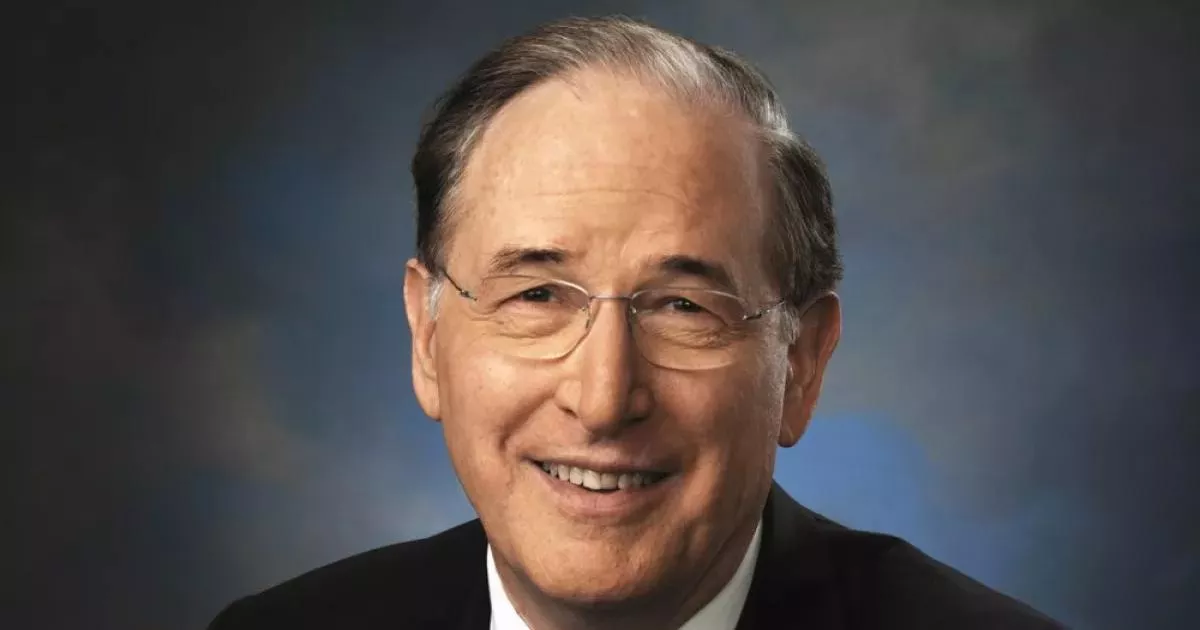
John Davison "Jay" Rockefeller IV is a retired American politician who served as a U.S. Senator for West Virginia from 1985 to 2015. Prior to his Senate career, Rockefeller served as the Governor of West Virginia from 1977 to 1985. His political career began with his work as a VISTA volunteer in Emmons, West Virginia, followed by his election to the West Virginia House of Delegates (1966-1968) and later as West Virginia's Secretary of State (1968-1973). He also served as president of West Virginia Wesleyan College (1973-1975). Upon the death of Senator Robert Byrd in 2010, Rockefeller became the state's senior U.S. Senator.
1906: Birth of John Davison Rockefeller III
In 1906, John Davison Rockefeller III, Jay Rockefeller's father, was born.


1908: Birth of Nelson Aldrich Rockefeller
In 1908, Nelson Aldrich Rockefeller, Jay Rockefeller's uncle, was born.
1909: Birth of Blanchette Ferry Hooker
In 1909, Blanchette Ferry Hooker, Jay Rockefeller's mother, was born.
1912: Birth of Winthrop Rockefeller
In 1912, Winthrop Rockefeller, Jay Rockefeller's uncle, was born.
1915: Death of Nelson Wilmarth Aldrich
In 1915, Nelson Wilmarth Aldrich, the maternal grandfather of John D. Rockefeller Jr. and great grandfather of Jay Rockefeller, passed away.
1919: Birth of Charles Harting Percy
In 1919, Charles Harting Percy, the father-in-law of Jay Rockefeller, was born.
June 18, 1937: Birth of John Davison "Jay" Rockefeller IV
On June 18, 1937, John Davison "Jay" Rockefeller IV was born. He later became a U.S. Senator from West Virginia.
1937: Birth of Jay Rockefeller
In 1937, John Davison Rockefeller IV, also known as Jay Rockefeller, was born in New York Hospital in Manhattan.
1948: Death of Abigail Greene Aldrich
In 1948, Jay Rockefeller's paternal grandmother, Abigail Greene "Abby" Aldrich, passed away.
1955: Graduation from Phillips Exeter Academy
In 1955, Jay Rockefeller graduated from Phillips Exeter Academy.
1956: Asia Society Established
In 1956, the Asia Society was established by Rockefeller's father in New York.
1959: Nelson Aldrich Rockefeller's Time as Governor of New York
From 1959, Nelson Aldrich Rockefeller, Jay Rockefeller's uncle, served as Governor of New York.
1960: Death of John Davison Rockefeller Jr.
In 1960, John Davison Rockefeller Jr., Jay Rockefeller's grandfather, passed away.
1960: Senator Lindsey Graham Discusses McCain's Military Service
In 1960, Senator Lindsey Graham highlighted that "John didn't drop bombs from 35,000 feet. ... the bombs were not laser guided (in the 1960 and 1970s)".
1961: Graduation from Harvard
In 1961, Jay Rockefeller graduated from Harvard with a Bachelor of Arts degree in Far Eastern languages and history.
1964: Joined VISTA
In 1964, Rockefeller continued his public service by joining Volunteers in Service to America (VISTA) and moved to Emmons, West Virginia.
1965: Continued service in VISTA
In 1965, Rockefeller continued his public service in VISTA, under President Lyndon B. Johnson.
1966: Elected to WV House of Delegates
In 1966, Rockefeller was elected as a member of the West Virginia House of Delegates.
1966: Elected to the West Virginia House of Delegates
In 1966, Rockefeller was elected to the West Virginia House of Delegates, marking his entry into state politics.
1967: Winthrop Rockefeller's Time as Governor of Arkansas
From 1967, Winthrop Rockefeller, Jay Rockefeller's uncle, served as Governor of Arkansas.
1967: Rockefeller Marries Sharon Lee Percy
In 1967, Rockefeller married Sharon Lee Percy, who would become the chief executive officer of WETA-TV.
1968: Secretary of State of West Virginia
In 1968, Rockefeller was elected as the Secretary of State of West Virginia.
1968: Elected WV Secretary of State
In 1968, Rockefeller was elected as the West Virginia Secretary of State, further advancing his political career.
1968: Offered Senate Seat
In the summer of 1968, after Robert Kennedy's assassination, Nelson Rockefeller offered him to take up the Senator's seat. He would ultimately refuse.
1972: Lost Gubernatorial Election
In 1972, Rockefeller secured the Democratic nomination for governor but was defeated in the general election by Arch A. Moore Jr.
1973: President of West Virginia Wesleyan College
In 1973, Rockefeller became the president of West Virginia Wesleyan College.
1973: Death of Winthrop Rockefeller
In 1973, Winthrop Rockefeller, Jay Rockefeller's uncle, passed away.
1974: Nelson Aldrich Rockefeller's Time as Vice President of the United States
From 1974, Nelson Aldrich Rockefeller, Jay Rockefeller's uncle, served as Vice President of the United States.
1975: Served as president of West Virginia Wesleyan College
From 1973 to 1975, Rockefeller served as the president of West Virginia Wesleyan College.
1975: End of College Presidency
In 1975, Rockefeller concluded his service as the president of West Virginia Wesleyan College.
1976: Elected Governor of West Virginia
In 1976, Rockefeller was elected governor of West Virginia.
1977: Governor of West Virginia
In 1977, Rockefeller began his term as the governor of West Virginia, a role he held until 1985.
1978: Death of John Davison Rockefeller III
In 1978, John Davison Rockefeller III, Jay Rockefeller's father, passed away.
1979: Death of Nelson Aldrich Rockefeller
In 1979, Nelson Aldrich Rockefeller, Jay Rockefeller's uncle, passed away.
1980: Re-elected Governor of West Virginia
In 1980, Rockefeller was re-elected as the governor of West Virginia, securing a second term.
1980: Gubernatorial Campaign
In his 1980 gubernatorial campaign against Arch Moore, Rockefeller spent over $12 million to win a Senate seat.
1982: High Unemployment in West Virginia
Between 1982 and 1984, West Virginia experienced significant economic challenges, with unemployment rates hovering between 15 and 20 percent during Rockefeller's tenure as governor.
1984: High Unemployment in West Virginia
Between 1982 and 1984, West Virginia experienced significant economic challenges, with unemployment rates hovering between 15 and 20 percent during Rockefeller's tenure as governor.
1984: Elected to the U.S. Senate
In 1984, Rockefeller was elected to the United States Senate, marking a significant step in his political career.
January 1985: Start of Senate Service
From January 1985 to July 2014, Rockefeller served as a U.S. Senator, missing 541 of 9,992 roll call votes.
1985: Start of Senate Career
In 1985, Rockefeller began his service as a United States Senator from West Virginia, a position he held until 2015.
1990: Re-elected to the U.S. Senate
In 1990, Rockefeller was re-elected to the United States Senate, continuing his service in Congress.
April 1992: Considered Presidential Run
In April 1992, Rockefeller, then the Democratic Party's finance chairman, considered running for president but withdrew after consulting with advisors and endorsed Bill Clinton.
1992: Death of Blanchette Ferry Hooker
In 1992, Blanchette Ferry Hooker, Jay Rockefeller's mother, passed away.
1993: Chair of the Committee on Veterans' Affairs
From 1993 to 1995, Rockefeller served as the chair of the Committee on Veterans' Affairs.
1993: Supported Clinton's Health Care Reform
In 1993, Rockefeller became the principal Senate supporter, with Ted Kennedy, behind Bill and Hillary Clinton's sweeping health care reform package, liaising closely with the First Lady.
1993: Voted Against NAFTA
In 1993, Rockefeller voted against the North American Free Trade Agreement, despite it being heavily backed by his uncle, David Rockefeller.
August 1995: Clinton Family Vacations at Rockefeller Ranch
In August 1995, President Bill Clinton and his family vacationed at the Rockefeller ranch in Jackson Hole, Wyoming.
1995: Chair of the Committee on Veterans' Affairs
From 1993 to 1995, Rockefeller served as the chair of the Committee on Veterans' Affairs.
1996: Re-elected to the U.S. Senate
In 1996, Rockefeller was re-elected to the United States Senate, marking another term in office.
1997: Rockefeller Co-Authors the Children's Health Insurance Program (CHIP)
In 1997, Rockefeller co-authored the Children's Health Insurance Program (CHIP), aimed at providing health insurance coverage to low-income children, successfully covering about 6 million children annually.
1999: Rockefeller Family Founds the Blanchette Rockefeller Neurosciences Institute (BRNI)
In 1999, Rockefeller and his family founded the Blanchette Rockefeller Neurosciences Institute (BRNI) in Morgantown to advance medical and scientific understanding of Alzheimer's and other brain diseases.
June 6, 2001: Chair of the Committee on Veterans' Affairs
On June 6, 2001, Rockefeller became the chair of the Committee on Veterans' Affairs.
2001: Low Contributions From AT&T
Between 2001 and the start of a lobbying effort, AT&T employees had contributed only $300 to the senator.
January 2002: Trip to Middle East
In January 2002, Rockefeller stated that he told heads of state in Saudi Arabia, Jordan and Syria that George Bush had already decided to go to war against Iraq.
October 11, 2002: Voted for Iraq Resolution
On October 11, 2002, Rockefeller was among the 77 senators who voted for the Iraq Resolution authorizing the Iraq invasion.
2002: Re-elected to the U.S. Senate
In 2002, Rockefeller secured another term as a United States Senator, demonstrating continued support from his constituents.
2002: Middle East Visit and Concerns About Iraq
In 2002, Rockefeller visited several Middle Eastern countries to discuss U.S. military intentions and expressed concern for Saddam Hussein's alleged weapons program.
January 3, 2003: End of term as Chair of the Committee on Veterans' Affairs
On January 3, 2003, Rockefeller's term as chair of the Committee on Veterans' Affairs ended.
2003: Expressed Concerns About NSA
In 2003, Senator Rockefeller hand-wrote a letter to Vice President Dick Cheney expressing concerns about the legality of NSA's warrantless wire-tapping program.
November 2005: TV Interview
In November 2005 during a TV interview, Rockefeller stated.
December 30, 2005: Abuse Took Place
Rockefeller's vote gave a retroactive, nine-year immunity to U.S. officials who authorized, ordered, or committed acts of torture and abuse, permitting the use of statements obtained through torture to be used in military tribunals so long as the abuse took place by December 30, 2005.
September 28, 2006: Voted to Suspend Habeas Corpus
On September 28, 2006, Rockefeller voted to suspend habeas corpus provisions for those deemed "unlawful combatants."
October 17, 2006: Bill Became Law
On October 17, 2006, the bill suspending habeas corpus became law.
2006: Death of Winthrop Paul Rockefeller
In 2006, Winthrop Paul Rockefeller, Jay Rockefeller's cousin, passed away.
July 2007: Planned Legislation on TV Violence
In July 2007, Rockefeller announced plans to introduce legislation giving the FCC power to regulate TV violence.
July 16, 2007: New Law on TV Violence
According to the edition of July 16, 2007, of Broadcasting & Cable, the new law would apply to both broadcast as well as cable and satellite programming.
August 2, 2007: Reauthorization of CHIP passes
On August 2, 2007, the vote for reauthorization of the Children's Health Insurance Program (CHIP) passed legislation by a strong, bipartisan vote (68–31).
September 30, 2007: Children's Health Insurance Program Expires
On September 30, 2007, the Children's Health Insurance Program (CHIP) expired, requiring Congress to reauthorize the legislation.
December 2007: Opposed Inquiry into Tape Destruction
In December 2007, Rockefeller opposed a special counsel or commission inquiry into the destruction of tapes related to CIA practices.
2007: Steering Senate Intelligence Committee
In 2007, Rockefeller began steering the Senate Intelligence Committee to grant retroactive immunity to telecommunications companies accused of assisting the NSA in monitoring communications.
February 29, 2008: Endorsed Barack Obama for President
On February 29, 2008, Rockefeller endorsed Barack Obama for president, citing Obama's judgment on the Iraq war and national security issues.
April 7, 2008: Criticized John McCain's Vietnam Experience
On April 7, 2008, in an interview for The Charleston Gazette, Rockefeller criticized John McCain's Vietnam experience.
June 5, 2008: Released Report on Iraq War Intelligence
On June 5, 2008, Rockefeller and the Senate Select Committee on Intelligence released the final two pieces of the Phase II report on Iraq war intelligence.
2008: Re-elected to the U.S. Senate
In 2008, Rockefeller was re-elected to the United States Senate.
2008: State-of-the-Art BRNI Research Facility Opens at West Virginia University
In Fall 2008, a $30 million state-of-the-art BRNI research facility was opened at West Virginia University.
January 2009: Retired from Senate Intelligence Committee
In January 2009, Rockefeller retired as chair from the Senate Intelligence Committee, where he frequently commented on the war in Iraq.
April 1, 2009: Rockefeller Introduces the Cybersecurity Act of 2009
On April 1, 2009, Rockefeller introduced the Cybersecurity Act of 2009 (S.773) before Congress, aiming to enhance Internet security against cyber-attacks by creating a public-private threat information clearinghouse within the Department of Commerce.
September 29, 2009: Rockefeller Offers Amendment to Baucus Health Bill to Add Public Option
On September 29, 2009, Rockefeller proposed an amendment to the Baucus Health Bill in the Senate Finance Committee to incorporate a public option; however, the amendment was turned down with a vote of 15 to 8.
December 2009: Rockefeller Voted for the Patient Protection and Affordable Care Act
In December 2009, Rockefeller voted for the Patient Protection and Affordable Care Act.
2009: Chair of the Committee on Commerce, Science, and Transportation
In 2009, Rockefeller became the chair of the Committee on Commerce, Science, and Transportation.
February 2010: Comment on President Obama
In February 2010, Rockefeller commented regarding President Obama.
June 2010: Became Senior Senator
In June 2010, Rockefeller became the senior U.S. Senator from West Virginia following the death of Robert Byrd.
June 2010: Senior Senator after Byrd's Death
In June 2010, Rockefeller became the senior U.S. senator from West Virginia when Robert Byrd died, after serving in the senate with Rockefeller for 25 years.
2010: Rockefeller Voted for the Health Care and Education Reconciliation Act
In 2010, Rockefeller voted for the Health Care and Education Reconciliation Act.
June 1, 2011: Rockefeller Sponsors West Virginia Homeland Security Summit and Expo
On June 1, 2011, Rockefeller sponsored the fourth West Virginia Homeland Security Summit and Expo. The event, focused on homeland security, with Rockefeller emphasizing cybersecurity.
July 2011: Called for Investigation into Phone Hacking
In July 2011, Rockefeller called for U.S. agencies to investigate alleged phone hacking at News Corporation's newspapers and requested an investigation into the hiring of Les Hinton.
2011: Death of Charles Harting Percy
In 2011, Charles Harting Percy, the father-in-law of Jay Rockefeller, died.
2012: BRNI Research Facility Expected to House 100 Scientists
By 2012, the BRNI research facility was expected to house 100 scientists.
January 11, 2013: Announced Retirement
On January 11, 2013, Rockefeller announced that he would not seek re-election for a sixth term in the Senate.
March 25, 2013: Announced Support for Gay Marriage
On March 25, 2013, Rockefeller announced his support for gay marriage.
July 2014: End of Senate Service
From January 1985 to July 2014, Rockefeller served as a U.S. Senator, missing 541 of 9,992 roll call votes.
November 2014: Donated Senatorial Archives
In November 2014, Rockefeller donated his senatorial archives to the West Virginia University Libraries.
2015: End of Senate Career
In 2015, Rockefeller's tenure as a United States Senator from West Virginia came to an end.
2015: End of Chairmanship of Committee on Commerce, Science, and Transportation
In 2015, Rockefeller's tenure as chair of the Committee on Commerce, Science, and Transportation concluded.
2017: Death of David Rockefeller
In 2017, David Rockefeller, Jay Rockefeller's uncle, passed away.
Mentioned in this timeline
Lindsey Graham is a prominent American politician serving as the...
Barack Obama the th U S President - was the...
Bill Clinton served as the nd U S President from...
Hillary Diane Rodham Clinton is a prominent American politician lawyer...
The United States of America is a federal republic primarily...
The Affordable Care Act ACA also known as Obamacare is...
Trending

4 hours ago Alexia Putellas Discusses Women's Sports Growth Amidst 2026 Ballon d'Or Nominations

4 hours ago Learner Tien Competes at ATP Vienna as Jannik Sinner Announces His Highly Anticipated Return

15 hours ago Beyoncé Reunites With Destiny's Child Members During Jay-Z Concert at SoFi Stadium
5 hours ago Chrishell Stause and G Flip Announce Breakup After Four Years Together
6 days ago Ina Garten Reveals Unique Insights and Essential Lessons Behind Her Latest Cookbook Career
6 hours ago Dawn Staley Secures Top 2027 Recruit Jordyn Palmer for South Carolina
Popular

Ilhan Omar is a prominent American politician currently serving as...

Ken Paxton is an American politician and lawyer serving as...

Elon Musk is a visionary entrepreneur and engineer known for...
Greg Abbott is the current and th Governor of Texas...
William Franklin Graham III known as Franklin Graham is an...
Barack Obama the th U S President - was the...