


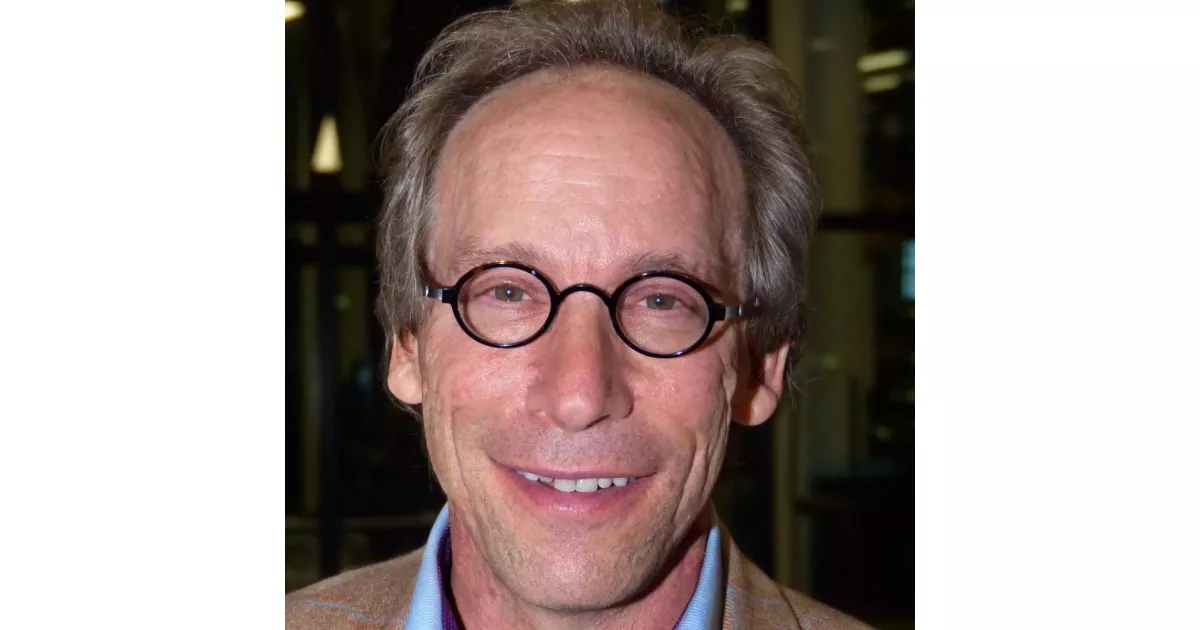
Lawrence Krauss is a Canadian-American theoretical physicist and cosmologist. He is known for his work in cosmology, including his research on dark matter and dark energy. Krauss has held teaching positions at multiple universities, including Arizona State University (ASU), Yale University, and Case Western Reserve University. At ASU, he founded the Origins Project in 2008, serving as its director to explore fundamental questions about the universe. He is also a popular science communicator and has written several books, lectured widely, and appeared in media to promote scientific literacy and critical thinking.
May 27, 1954: Lawrence Krauss Born
On May 27, 1954, Lawrence Maxwell Krauss was born. He is a Canadian-American theoretical physicist and cosmologist.


1977: Received Undergraduate Degrees
In 1977, Lawrence Krauss received undergraduate degrees in mathematics and physics with first-class honors at Carleton University in Ottawa.
1982: Awarded Ph.D. in physics
Lawrence Krauss was awarded a Ph.D. in physics at the Massachusetts Institute of Technology in 1982.
1985: Assistant Professor at Yale
In 1985, Lawrence Krauss became an assistant professor at Yale University.
1988: Associate Professor at Yale
In 1988, Lawrence Krauss became an associate professor at Yale University.
1993: Professor at Case Western Reserve University
In 1993, Lawrence Krauss left Yale for Case Western Reserve University, where he was named the Ambrose Swasey Professor of Physics, professor of astronomy, and chairman of the physics department.
1995: Argued for the energy-density of the universe being dominated by the energy of empty space
In 1995, Lawrence Krauss argued in favour of the energy-density of the universe being dominated by the energy of empty space, quoting many other scientists who supported the existence of a nonzero cosmological constant.
1995: Published The Physics of Star Trek
In 1995, Lawrence Krauss authored "The Physics of Star Trek", a bestselling book.
1998: Prediction confirmed by observational collaborations
In 1998, Lawrence Krauss's prediction from 1995 was confirmed by two observational collaborations.
2002: Opposition to intelligent design gained prominence
In 2002, as a result of his appearance before the state school board of Ohio, Lawrence Krauss's opposition to intelligent design gained national prominence.
2005: Published Hiding in the Mirror
In 2005, Lawrence Krauss published "Hiding in the Mirror", a book where he discusses his criticism of string theory.
2005: Chairman of the physics department until 2005
Lawrence Krauss served as chairman of the physics department until 2005 at Case Western Reserve University.
March 2, 2006: No-confidence votes carried against Hundert and Anderson
On March 2, 2006, the no-confidence votes against Case Western Reserve University's president Edward M. Hundert and provost John L. Anderson were carried: 131–44 against Hundert and 97–68 against Anderson, after Lawrence Krauss led the initiative.
November 2006: Speaker at Beyond Belief symposia
In November 2006, Lawrence Krauss attended and was a speaker at the Beyond Belief symposia.
2006: Organized physics conference funded by Epstein
In 2006, Krauss organized a physics conference funded by an Epstein foundation, and later received Epstein funding for an academic project.
August 2008: Joined ASU Faculty
In August 2008, Lawrence Krauss joined the faculty at Arizona State University as a foundation Professor in the School of Earth and Space Exploration at the Department of Physics in the College of Liberal Arts and Sciences and became the director of the Origins Project.
October 2008: Speaker at Beyond Belief symposia
In October 2008, Lawrence Krauss attended and was a speaker at the Beyond Belief symposia.
2008: Defended Epstein after guilty plea
In 2008, Lawrence Krauss defended Jeffrey Epstein after his guilty plea of procuring for prostitution a girl below age 18.
2008: Founded ASU's Origins Project
In 2008, Lawrence Krauss founded the Origins Project at Arizona State University (ASU) to investigate fundamental questions about the universe and served as its director.
2009: Origins Symposium Inaugurated
In 2009, Lawrence Krauss helped inaugurate the Origins Symposium, with eighty scientists participating and three thousand people attending.
2010: Elected to board of directors of the Federation of American Scientists
In 2010, Lawrence Krauss was elected to the board of directors of the Federation of American Scientists.
March 2011: Released Quantum Man: Richard Feynman's Life in Science
In March 2011, Lawrence Krauss released a book titled "Quantum Man: Richard Feynman's Life in Science".
June 2011: Joined New College of the Humanities
In June 2011, Lawrence Krauss joined the professoriate of the New College of the Humanities in London.
2011: Stated views about Epstein
In 2011, Lawrence Krauss told an interviewer about his views and relationship with Jeffrey Epstein.
2011: Wrote to Epstein
In 2011, Lawrence Krauss wrote to Jeffrey Epstein, "Beyond anything else, you are my friend. I hope we can both always remember that, no matter what."
2011: Nobel Prize awarded for discovery
In 2011, the Nobel Prize was awarded for the discovery that confirmed Krauss's 1995 prediction.
January 2012: Released A Universe from Nothing
In January 2012, Lawrence Krauss released "A Universe from Nothing", which became a New York Times bestseller within a week.
July 2012: Wrote article in Newsweek
In July 2012, Lawrence Krauss wrote an article in Newsweek, indicating how the Higgs particle is related to our understanding of the Big Bang. He also wrote a longer piece in The New York Times explaining the science behind and significance of the particle.
2012: Published A Universe from Nothing
In 2012, Lawrence Krauss authored "A Universe from Nothing", a bestselling book.
2012: Outlined model in A Universe from Nothing
In 2012, Lawrence Krauss formulated a model in which the Universe could have potentially come from "nothing", as outlined in his book "A Universe from Nothing".
2012: Awarded National Science Board's Public Service Medal
In 2012, Lawrence Krauss was awarded the National Science Board's Public Service Medal for his contributions to public education in science and engineering in the United States.
2012: Discussed 'something from nothing' in book
In his book "A Universe from Nothing: Why There is Something Rather than Nothing" released in 2012, Krauss discusses the premise that something cannot come from nothing, often used as an argument for the existence of a prime mover.
January 2013: Paperback version of 'A Universe from Nothing' appeared.
In January 2013, the paperback version of "A Universe from Nothing" appeared with a new question-and-answer section and a preface integrating the 2012 discovery of the Higgs boson at the Large Hadron Collider.
2013: Accepted professorship at Australian National University
In 2013, Lawrence Krauss accepted a part-time professorship at the Research School of Astronomy and Astrophysics in the physics department of the Australian National University.
2013: Featured in The Unbelievers
Lawrence Krauss is featured in the 2013 documentary "The Unbelievers", in which he and Richard Dawkins travel across the globe speaking publicly about the importance of science and reason as opposed to religion and superstition.
March 21, 2017: Released The Greatest Story Ever Told—So Far
On March 21, 2017, Lawrence Krauss's book, "The Greatest Story Ever Told—So Far: Why Are We Here?" was released in hardcover, paperback, and audio version.
2017: Asked Epstein for advice
In 2017, Lawrence Krauss asked Jeffrey Epstein for advice in responding to allegations of sexual misconduct.
February 2018: Sexual Misconduct Allegations Reported by BuzzFeed News
In February 2018, BuzzFeed News reported allegations of sexual misconduct against Lawrence Krauss, including claims from his time at Case Western Reserve University. Krauss responded by calling the article slanderous and factually incorrect, while also apologizing for any discomfort he may have caused. Case Western Reserve restricted his campus access in response to a student complaint.
March 2018: Placed on Paid Administrative Leave
In March 2018, following an investigation by ASU, Lawrence Krauss was placed on paid administrative leave. The dean of the department recommended his dismissal.
July 2018: ASU Directorship Not Renewed
In July 2018, Arizona State University (ASU) determined that Lawrence Krauss had violated university policy, leading to the non-renewal of his directorship of ASU's Origins Project for a third term.
2018: Responded to Epstein's joke
In 2018, Lawrence Krauss responded to Jeffrey Epstein's joke "Let's do a men of the world conference," by suggesting that the notional conference include Kevin Spacey, Bill Clinton, Al Franken and Woody Allen. Each of these men had been publicly accused of sexual wrongdoing.
January 2019: President of the Origins Project Foundation
In January 2019, Lawrence Krauss became President of the Origins Project Foundation, a non-profit corporation intended to host public panel discussions on science, culture, and social issues.
May 2019: Retired from ASU
In May 2019, Lawrence Krauss retired as a professor at Arizona State University (ASU) at the end of the academic year.
June 21, 2019: Launched The Origins Podcast
On June 21, 2019, Lawrence Krauss launched a new video podcast, "The Origins Podcast with Lawrence Krauss", with the first episodes including dialogues with Ricky Gervais, Noam Chomsky, and Jenny Boylan.
2019: Retirement from ASU
At the end of the 2018–2019 academic year, Lawrence Krauss retired from ASU.
2022: Principal Officer of The Origins Project Foundation, Inc.
As of 2022, Lawrence Krauss was listed as the Principal Officer of The Origins Project Foundation, Inc., a new organization founded in 2019.
2024: Edited the book The War on Science
In 2024, Lawrence Krauss edited the book "The War on Science", a collection of essays from 39 academics addressing perceived threats to academic freedom and scientific progress.
August 2025: The New York Times published reports of letters given to Epstein
In August 2025, The New York Times published reports of letters given to Epstein for his 63rd birthday, including one from Krauss. Krauss stated that he did not recall the letter but attended several gatherings at Epstein's home.
November 12, 2025: House Committee published additional files related to Epstein
On November 12, 2025, the House Committee on Oversight and Government Reform published additional files related to Jeffrey Epstein showing that he had exchanged more than 60 emails with Lawrence Krauss.
Mentioned in this timeline
Joe Rogan is an American podcaster comedian and UFC color...
Bill Clinton served as the nd U S President from...
The United States of America is a federal republic primarily...
Jeffrey Epstein was an American financier and convicted sex offender...

Arizona is a state in the Southwestern United States part...
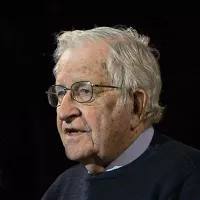
Noam Chomsky is a highly influential American linguist philosopher cognitive...
Trending
3 hours ago Updates and tactical analysis from the New England Patriots football team
3 hours ago Alvin Kamara Active for Saints in Week 6 Matchup

3 hours ago Keenan Allen Expected to Play in Week 5 Following Full Practice Session

3 hours ago Nolan Smith Identified as Potential Trade Candidate Amid Eagles Roster Shakeup
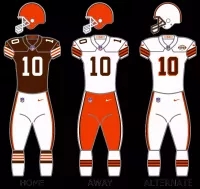
3 hours ago Recent NFL Week Results and Final Game Scores Across the League

3 hours ago Romeo Doubs Scores Touchdown Before Exiting Patriots Game With Injury
Popular

Ilhan Omar is a prominent American politician currently serving as...

Ken Paxton is an American politician and lawyer serving as...

Elon Musk is a visionary entrepreneur and engineer known for...

Jameis Winston is an American football quarterback currently playing for...

Michael Joseph Jackson the King of Pop was a highly...

Cristiano Ronaldo widely considered one of the greatest footballers captains...