


The Mac Pro is Apple's high-end workstation and server computer, positioned as the most powerful Mac available. Introduced in 2006, it is one of four desktop computers in Apple's current Mac lineup, offering significantly more performance than the Mac Mini, iMac, and Mac Studio. It caters to professionals requiring substantial computing power for demanding tasks.


January 2006: Transition to Intel-Based Architecture Begins
Starting in January 2006, Apple began transitioning other Mac products to an Intel-based architecture, including the iMac, Mac Mini, MacBook, and MacBook Pro. This left the Power Mac G5 as the only Mac still based on the PowerPC architecture.

August 2006: PCIe Bandwidth Allocation Configuration
On the August 2006 Mac Pro, the PCIe slots' bandwidth allocation could be configured via the Expansion Slot Utility included with Mac OS X.
August 2006: Original Mac Pro PCIe Configuration
The original Mac Pro, which was introduced in August 2006, featured PCIe slots that could be individually configured to give more bandwidth to devices that required it. This provided a total of 40 "lanes" or 13 GB/s of throughput.
2006: Mac Pro Exterior Design
From 2006, the exterior design of the Mac Pro's aluminum case was very similar to that of the Power Mac G5.
2006: Mac Pro External Connectivity
In 2006, the Mac Pro included five USB 2.0 ports, two FireWire 400 and two FireWire 800 ports. Networking was supported with two built-in Gigabit Ethernet ports. 802.11 a/b/g/n Wi-Fi support required an optional module, and Bluetooth also required an optional module.
2006: Mac Pro Socket Type
The Mac Pro models introduced in 2006 used the LGA 771 socket for their CPUs.
April 4, 2007: Mac Pro Updated with Dual Quad-Core Xeon Clovertown
On April 4, 2007, the Mac Pro was updated with a dual quad-core Xeon Clovertown processor model, enhancing its processing capabilities.
April 2007: Mac Pro Refresh PCIe Configuration
The Mac Pro refresh in April 2007 featured PCIe slots that could be individually configured to give more bandwidth to devices that required it. This provided a total of 40 "lanes" or 13 GB/s of throughput.
2007: PCIe Bandwidth Allocation Configuration
On the 2007 Mac Pro refresh, the PCIe slots' bandwidth allocation could be configured via the Expansion Slot Utility included with Mac OS X.
January 8, 2008: Mac Pro Updated with Dual Quad-Core Xeon Harpertown
On January 8, 2008, Apple updated the Mac Pro with a dual quad-core Xeon Harpertown processor model.
2008: Hardwired PCIe Slots
From the Early-2008 Mac Pros onwards, the PCIe slots were hardwired with a set configuration, in contrast to the earlier models where bandwidth allocation could be configured.
2008: SATA Ports Configuration
In 2008 and earlier models, the Mac Pro had a total of six SATA ports, with four connected to the system's drive bays and two unconnected.
2008: Mac Pro Expansion Slots
In 2008, the Mac Pro featured two PCI Express (PCIe) 2.0 expansion slots and two PCI Express 1.1 slots, which provided up to 300 W of power in total.
2008: Mac Pro External Connectivity
In the Early 2008 Mac Pro, external connectivity included five USB 2.0 ports, two FireWire 400 and two FireWire 800 ports. Networking was supported with two built-in Gigabit Ethernet ports. 802.11 a/b/g/n Wi-Fi support required an optional module, but Bluetooth was standard.
2008: Mac Pro Memory Specifications
The Early 2008 Mac Pro model utilized 800 MHz ECC DDR2 FB-DIMMS for its main memory.
2008: Mac Pro Socket Type
The Mac Pro models introduced in 2008 used the LGA 771 socket for their CPUs.
2009: UATA Port Removal
In 2009, Apple removed the Ultra ATA/100 (UATA) port from the Mac Pro models. These ports were originally included in the optical drive bays.
2009: Mac Pro External Connectivity
In the Early 2009 Mac Pro, external connectivity included five USB 2.0 ports and four FireWire 800 ports. Networking was supported with two built-in Gigabit Ethernet ports. 802.11 a/b/g/n Wi-Fi support required an optional module, and Bluetooth was standard.
2009: Mac Pro Memory Specifications
The 2009 Mac Pro and later models used 1066 MHz DDR3 ECC DIMMs for the standard models, with 1333 MHz DDR3 ECC DIMMs for systems configured with 2.66 GHz or faster CPUs.
2009: Mac Pro Socket Type
The Early 2009 Mac Pro models used the LGA 1366 socket, allowing for CPU upgrades with compatible 64-bit Intel Xeon CPUs.
2010: SSD Support via Adapters
From mid-2010, Mac Pro models and later began supporting Serial ATA solid-state drives (SSD) in the 4 hard drive bays via an SSD-to-hard drive sled adapter.
2010: Mac Pro 2010 Core Configuration Example
In 2010, the 8-core standard Mac Pro configuration used two 4-core Intel Xeon E5620 CPUs at 2.4 GHz, with an option to upgrade to two 6-core Intel Xeon X5670 CPUs at 2.93 GHz.
2010: Mac Pro Revision with Intel Xeon Processors
In 2010, the Mac Pro underwent a revision incorporating Nehalem-EP/Westmere-EP architecture Intel Xeon processors.
2010: Mac Pro External Connectivity
In the 2010 Mac Pro model, external connectivity included five USB 2.0 ports and four FireWire 800 ports. Networking was supported with two built-in Gigabit Ethernet ports. Wi-Fi was standard.
2012: Mac Pro Core Configurations
As of 2012, Mac Pro models had been sold with 2, 4, 6, 8, or 12 cores, offering a range of processing power options.
2012: Incremental Upgrade and Criticism
Following the 2012 WWDC conference, Apple received criticism for an incremental upgrade to the Mac Pro line. The line received more default memory and increased processor speed but still used older Intel Westmere-EP processors and lacked current technologies like SATA III, USB 3, and Thunderbolt.
2012: Mac Pro Revision with Intel Xeon Processors
In 2012, the Mac Pro underwent another revision featuring Nehalem-EP/Westmere-EP architecture Intel Xeon processors.
2012: Mac Pro External Connectivity
In the Mid 2012 Mac Pro, external connectivity included five USB 2.0 ports and four FireWire 800 ports. Networking was supported with two built-in Gigabit Ethernet ports. Wi-Fi was standard.
2012: Mac Pro Exterior Design
Through 2012, the exterior of the Mac Pro's aluminum case remained very similar to that of the Power Mac G5, with minor variations like an additional optical drive bay and I/O port arrangements.
October 22, 2013: Removal of First-Generation Mac Pro from Online Store
On October 22, 2013, following the unveiling of the redesigned cylindrical Mac Pro at a media event, the first-generation Mac Pro was removed from Apple's online store.
December 2013: Release of the Cylindrical Mac Pro
In December 2013, Apple released a new cylindrical Mac Pro, often called the "trash can Mac Pro". It featured up to a 12-core Xeon E5 processor, dual AMD FirePro D series GPUs, PCIe-based flash storage, and an HDMI port. It also supported six Thunderbolt Displays through Thunderbolt 2 ports. The design, however, lacked PCIe expansion slots.
2019: Mac Pro Returns to Tower Form Factor
In 2019, the Mac Pro returned to a tower design, similar to the first-generation model, but with enhanced air cooling. It included up to a 28-core Xeon-W processor, eight PCIe slots, AMD Radeon Pro Vega GPUs, and primarily used USB-C and Thunderbolt 3 ports.
March 2026: Mac Pro Discontinuation
Apple discontinued the Mac Pro line in March 2026, marking the end of the series of professional workstations and servers.
March 26, 2026: Discontinuation of the Mac Pro Line
On March 26, 2026, Apple officially discontinued the Mac Pro line, marking the end of the professional workstation series.
Mentioned in this timeline
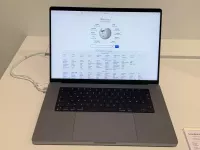
The MacBook Pro a high-end laptop from Apple introduced in...

The apple is a widely cultivated edible fruit originating from...
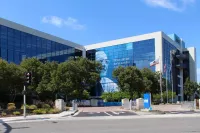
Intel Corporation headquartered in Santa Clara California is a multinational...
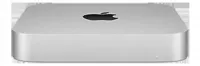
The Mac Mini is a small form factor desktop computer...
Advanced Micro Devices AMD is a multinational semiconductor company based...
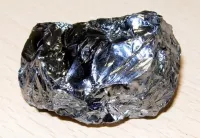
Silicon Si element is a hard brittle blue-grey tetravalent non-metal...
Trending
4 hours ago Sassuolo vs Lazio Serie A Match Preview and Streaming Information

4 hours ago Sauce Gardner Faces Criticism Following Difficult NFL Trade Deadline Performance

4 hours ago Trisha Paytas Breaks Silence Regarding Ethan Klein Amid Ongoing Cheating Scandal Allegations

4 hours ago Martín Landaluce Faces Alexander Zverev at ATP Vienna Tournament

4 hours ago Chicago Bears Weigh Options Regarding Khalil Mack Potential Trade
5 hours ago DeForest Buckner Faces Trade Speculation Amid Indianapolis Colts Struggles
Popular

Ilhan Omar is a prominent American politician currently serving as...

Ken Paxton is an American politician and lawyer serving as...

Elon Musk is a visionary entrepreneur and engineer known for...

William Franklin Graham III known as Franklin Graham is an...

Barack Obama the th U S President - was the...

Nicki Minaj born Onika Tanya Maraj-Petty is a highly influential...