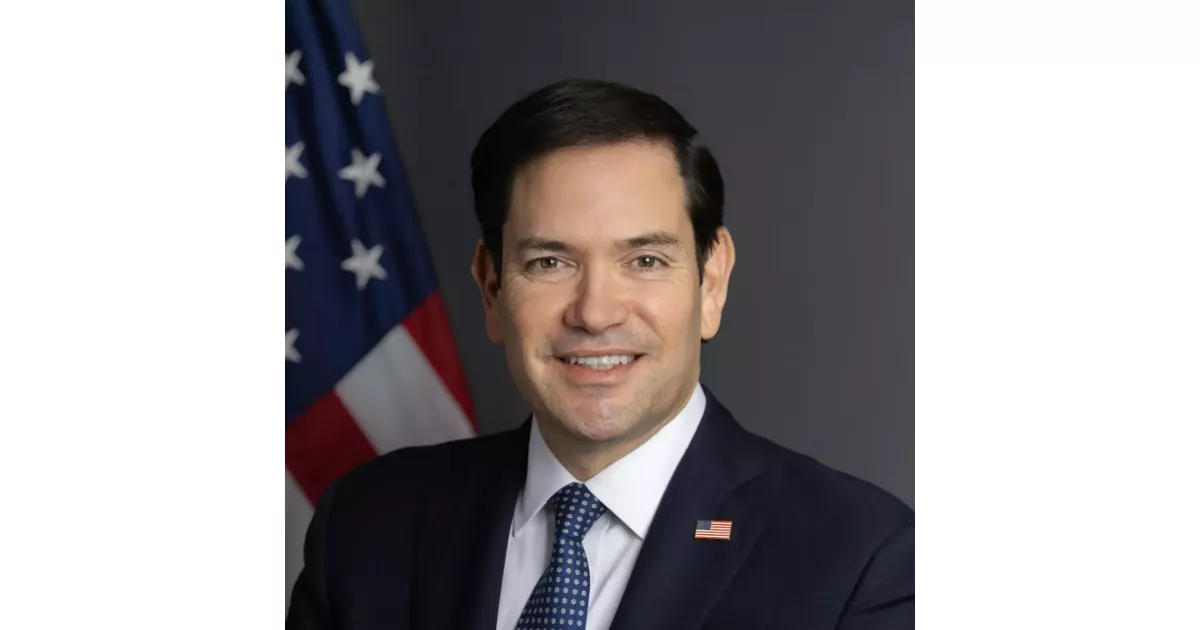
Marco Rubio is an American politician, attorney, and diplomat. He has served as the 72nd United States Secretary of State since 2025 and also acts as the National Security Advisor. Previously, he represented Florida in the U.S. Senate from 2011 to 2025 as a member of the Republican Party.
In 1956, Marco Rubio's maternal grandfather, Pedro Victor Garcia, legally immigrated to the U.S.
Rubio's parents left Cuba in 1956, during the Batista regime. This fact was highlighted in a 2011 Washington Post report that disputed Rubio's claims.
In 1959, Marco Rubio's grandfather returned to Cuba to find work.
In 2011, The Washington Post reported that Rubio's statements about his parents leaving Cuba in 1959 (after Fidel Castro came to power) were falsehoods.
In 1961, Marco Rubio's mother made a month-long return trip to Cuba.
In 1961, Rubio's mother took his two elder siblings back to Cuba with the intention of living there permanently, but the nation's move toward communism caused the family to change its plans.
In 1962, Rubio's grandfather fled communist Cuba and returned to the U.S. without a visa and was detained as an undocumented immigrant.
In 1966, Marco Rubio's grandfather reapplied for permanent resident status after the Cuban Adjustment Act passed, and his residency was approved.
From 1969 to 1977, Henry Kissinger served in one or both of Secretary of State or National Security Advisor position in the Nixon and Ford administrations.
On May 28, 1971, Marco Antonio Rubio was born.
From 1973 to 1975, Henry Kissinger held the dual role of Secretary of State and National Security Advisor, a position Marco Rubio would later hold.
In 1975, Marco Rubio's parents were naturalized as U.S. citizens.
Marco Rubio became the first person to be both secretary of state and national security advisor in fifty years, since Henry Kissinger in 1975.
From 1969 to 1977, Henry Kissinger served in one or both of Secretary of State or National Security Advisor position in the Nixon and Ford administrations.
In 1984, Marco Rubio received his first communion as a Catholic.
In 1993, Marco Rubio earned his Bachelor of Arts degree in political science from the University of Florida.
In 1996, Marco Rubio received his Juris Doctor, cum laude, from the University of Miami School of Law.
In 1996, Marco Rubio worked on Republican senator Bob Dole's presidential campaign.
In April 1998, Marco Rubio was elected to a seat as city commissioner for West Miami.
In 1998, Marco Rubio married Jeanette Dousdebes in a Catholic church. She is a former bank teller and Miami Dolphins cheerleader, and they have four children.
On December 14, 1999, Marco Rubio placed second in the Republican primary for the 111th House District seat.
In January 2000, Marco Rubio took his seat in the Florida legislature in Tallahassee.
On January 25, 2000, Marco Rubio defeated Democrat Anastasia Garcia with 72% of the vote in a special election for the 111th House District seat.
In November 2000, Marco Rubio was reelected unopposed to the Florida House of Representatives.
In 2000, Marco Rubio was elected to represent the 111th district in the Florida House of Representatives.
Later in 2000, Mike Fasano, the majority leader of the House, promoted Marco Rubio to be one of two majority whips.
In September 2001, Mike Fasano resigned as majority leader of the House due to disagreements with the House speaker.
In 2001, Marco Rubio requested legislative earmarks totaling about $145 million.
Marco Rubio introduced a plan to reduce state property taxes to 2001 levels, and potentially eliminate them, while increasing sales taxes by 1% to 2.5% to fund schools.
In December 2002, Marco Rubio was appointed House majority leader by Speaker Johnnie Byrd.
In 2002, Marco Rubio requested legislative earmarks totaling about $145 million.
In 2002, Marco Rubio was reelected to a second term unopposed in the Florida House of Representatives.
In 2003, Marco Rubio supported the invasion of Iraq.
In 2004, Marco Rubio was reelected to a third term in the Florida House of Representatives with 66% of the vote.
From January 2005, Rubio's party credit card statements showed personal charges, which he reimbursed.
On September 13, 2005, at age 34, Marco Rubio became speaker-designate of the Florida House of Representatives.
In 2005, after being chosen as future speaker, Marco Rubio gave a speech to the Florida House, presenting members with a blank hardcover book titled "100 Innovative Ideas For Florida's Future", and asking them to fill it with ideas from ordinary Floridians.
In 2005, the Supreme Court case Kelo v. City of New London took a broad view of governmental power to take private property under eminent domain.
Through October 2006, Rubio's party credit card statements showed personal charges, which he reimbursed.
In November 2006, Marco Rubio was elected speaker of the Florida House, serving for two years.
In November 2006, Marco Rubio was sworn in as speaker of the Florida House of Representatives.
In 2006, Florida enacted into law limitations upon the authority of the state government to take private property. This was in response to the 2005 Supreme Court decision in Kelo v. City of New London. The legislation had been proposed by a special committee chaired by Rubio prior to his speakership.
In 2006, Marco Rubio was reelected to a fourth term unopposed in the Florida House of Representatives.
In 2006, after gathering ideas from citizens across Florida, Marco Rubio published the book "100 Innovative Ideas For Florida's Future". The National Journal called it "the centerpiece of Rubio's early speakership." Multiple ideas from the book became law.
In January 2007, Charlie Crist took office as Governor of Florida, succeeding Jeb Bush. Rubio and Crist often clashed, especially over Crist's initiative to expand casino gambling in Florida, which led to Rubio suing Crist and winning in the Florida Supreme Court.
In January 2007, as Marco Rubio took office as Speaker, Jeb Bush was completing his term as governor. Rubio hired 18 Bush aides, leading to comments that the speaker's suite was "the governor's office in exile".
In 2007, John McCain missed a much higher percentage of votes in 2007 compared to Rubio's attendance record during the presidential campaign.
In 2007, Tony Hill requested the Florida legislature apologize for slavery, and Rubio said the idea merited discussion.
In November 2008, Marco Rubio's term as speaker of the Florida House of Representatives ended.
From 2008 to 2011, Jonathan D. Farrar was the Chief of Mission of the United States Interests Section in Havana.
George Seay previously worked on Mitt Romney's campaign in 2008.
In 2008, Marco Rubio left the Florida legislature due to term limits and began teaching at Florida International University.
In 2008, Marco Rubio voiced his support for an apology for slavery, emphasizing the importance of symbolic gestures and addressing the perception among young African-American males that the American dream was unattainable. He also helped establish a council on issues facing black men and boys, supported replicating the Harlem Children's Zone in Miami, and promoted literacy and mentoring for black children.
In 2008, after leaving the Florida Legislature, Marco Rubio began teaching at Florida International University (FIU) as an adjunct professor.
On May 5, 2009, Marco Rubio announced his candidacy for the U.S. Senate seat being vacated by Mel Martínez.
On April 28, 2010, Charlie Crist announced he would run for U.S. Senate without a party affiliation, effectively ceding the Republican nomination to Marco Rubio.
On November 2, 2010, Marco Rubio won the general election with 49% of the vote. He and Bob Menendez were the only two Hispanic Americans in the Senate at the time.
A 2010 report by the Tampa Bay Times and Miami Herald said that some of Rubio's spending requests dovetailed with his personal interests.
In 2010, Marco Rubio was elected to the U.S. Senate in a three-way race.
In 2010, a house Marco Rubio co-owned with David Rivera went into foreclosure after missed mortgage payments. Rubio assumed responsibility for the payments, and the house was eventually sold.
In 2010, during his Senate campaign, issues were raised about items charged by Rubio to his Republican Party of Florida American Express card during his time as House speaker.
From January 2011 to February 2015, Marco Rubio missed 8.3% of total votes.
In March 2011, Marco Rubio supported U.S. participation in the military campaign in Libya. He urged Senate leaders to bring a bipartisan resolution to the Senate floor authorizing the president's decision to participate in allied military action in Libya.
In June 2011, Senator Joe Lieberman and Marco Rubio wrote an opinion piece for The Wall Street Journal urging passage of authorization for U.S. involvement in Libya.
In October 2011, Marco Rubio joined other senators in pushing for continued engagement to help Libya lay the foundation for sustainable security.
In October 2011, The Washington Post reported that Marco Rubio's previous statements about his parents leaving Cuba in 1959 were false; they left in 1956.
During his first year in office, 2011, Marco Rubio became an influential defender of the United States embargo against Cuba and induced the State Department to withdraw an ambassadorial nomination of Jonathan D. Farrar. Rubio also visited the Reagan Library, gave a speech praising Ronald Reagan, and rescued Nancy Reagan from falling.
In 2011, Marco Rubio began serving as a U.S. Senator representing Florida.
In 2011, Marco Rubio said he had no interest in running for president or vice president in the 2012 presidential election.
In 2011, Marco Rubio voted against the Budget Control Act of 2011, which included mandatory automatic budget cuts from sequestration. He later criticized the policy as a "terrible idea".
In 2011, after entering the U.S. Senate, Marco Rubio rejoined the FIU faculty, teaching undergraduate courses on Florida politics, political parties, and legislative politics.
Since 2011, Cesar Conda was Marco Rubio's chief of staff. In April 2014, Conda departed to lead Rubio's Reclaim America PAC.
In March 2012, Marco Rubio endorsed Mitt Romney for president, stating he did not expect to be selected as a vice presidential running mate, though he was vetted for the position.
George Seay previously worked on Rick Perry's campaign in 2012.
In 2012, Marco Rubio paid off $100,000 in student loans.
In 2012, the Florida Commission on Ethics cleared Marco Rubio of wrongdoing in his use of the party-issued credit card, although the commission inspector said that Rubio exhibited a "level of negligence" in not using his personal MasterCard.
Marco Rubio voted against the 2012 "fiscal cliff" resolutions. He stated that the new tax would force small businesses to fire employees and cut back on benefits.
In April 2013, Marco Rubio voted against expanding background checks for gun purchases, asserting that increased regulations would not effectively capture criminals.
According to the National Journal, in 2013 Marco Rubio was the 17th most conservative senator.
In 2013, Marco Rubio delivered the Republican response to President Obama's State of the Union Address in both English and Spanish for the first time. His attempt to challenge defense sequestration was countered by Senator Rand Paul's call for its implementation.
In 2013, Marco Rubio was part of the bipartisan "Gang of Eight" senators and proposed immigration reform legislation, providing a path to citizenship for undocumented immigrants involving fines, back taxes, background checks, and a probationary period after strengthening border security. The bill passed the Senate, but Rubio later suggested the House should prioritize repealing Obamacare.
In 2013, Marco Rubio's support for comprehensive immigration reform legislation led to a decline in support from the Tea Party.
In April 2014, Marco Rubio stated he would not run for reelection to the Senate if he ran for president in 2016 due to Florida law prohibiting appearing twice on a ballot, though he did not rule out running for either office at that time. Also in April 2014, Cesar Conda, Rubio's chief of staff since 2011, departed to lead Rubio's Reclaim America PAC.
As of April 18, 2014, Marco Rubio had dropped to 10th place behind other Republican contenders in a poll tracking New Hampshire's Republican primary voters' sentiment.
From October 27, 2014, to October 26, 2015, Marco Rubio voted in 74% of Senate votes, according to GovTrack.us.
In November 2014, after Republicans gained control of the U.S. Senate, Marco Rubio advocated for eliminating the "risk corridors" in the Patient Protection and Affordable Care Act (PPACA). His efforts led to a provision in the 2014 federal budget that prevented the replenishment of these risk corridors from other funding sources.
After the 2014 midterm elections, the Republicans obtained majority control of the Senate, giving Marco Rubio and the Republicans vast federal influence during the final two years of Barack Obama's presidency.
In 2014, Alberto Martinez succeeded Cesar Conda as Marco Rubio's chief of staff, but remained as a part-time adviser.
In 2014, Marco Rubio took a position with Broad and Cassel, a Miami law and lobbying firm.
The Club for Growth gave Marco Rubio ratings of 93 percent based on his voting record in 2014.
In January 2015, Marco Rubio began contacting top donors and appointing advisors for a potential 2016 presidential run, including George Seay and Jim Rubright, and instructed his aides to "prepare for a presidential campaign".
In January 2015, Marco Rubio placed second among potential 2016 Republican presidential candidates in an online poll of likely voters conducted by Zogby Analytics.
From January 2011 to February 2015, Marco Rubio missed 8.3% of total votes.
In March 2015, Marco Rubio and Senator Mike Lee proposed a tax plan that aimed to lower the corporate income tax rate, eliminate taxes on capital gains, dividends, and inherited estates, and create a new child tax credit. The plan also sought to replace the means-tested welfare system with a new "consolidated system of benefits".
On April 13, 2015, Marco Rubio launched his campaign for president in 2016, pitching his candidacy as an effort to restore the American Dream for middle and working-class families.
In April 2015, Marco Rubio launched a presidential bid instead of seeking reelection to the Senate.
In April 2015, Marco Rubio ran for president instead of seeking reelection to the Senate, pledging to either become president or return to private life.
From October 27, 2014, to October 26, 2015, Marco Rubio voted in 74% of Senate votes, according to GovTrack.us.
In November 2015, Rubio released his party credit card statements for January 2005 through October 2006, which showed eight personal charges totaling $7,243.74, all of which he had personally reimbursed.
In November 2015, following the Paris terrorist attacks, Marco Rubio stated that the U.S. should not accept any more Syrian refugees because background checks could not be effectively conducted.
As of early 2015, Marco Rubio had a rating of 98.67 by the American Conservative Union, based on his lifetime voting record in the Senate.
During a nationally televised debate among Republican candidates in New Hampshire on February 6, 2016, Marco Rubio was criticized by Chris Christie for speaking repetitively, with Christie saying Rubio sounded "scripted".
In February 2016, Marco Rubio criticized Donald Trump, calling him a "con artist" and saying that Trump is "wholly unprepared to be president of the United States".
On March 15, 2016, Marco Rubio suspended his campaign for the presidency after losing to Donald Trump in the Florida Republican primary.
In March 2016, Marco Rubio opposed President Obama's nomination of Merrick Garland to the Supreme Court, arguing against moving forward with a nominee in the last year of Obama's term.
On May 17, 2016, Marco Rubio broke with the Republican majority by supporting President Obama's request for $2 billion in emergency spending on the Zika virus, as Florida had roughly 20% of the recorded cases in the U.S.
In June 2016, Marco Rubio reaffirmed his February 2016 comments that we must not hand "the nuclear codes of the United States to an erratic individual" after Trump became the presumptive GOP nominee.
On July 20, 2016, Marco Rubio endorsed Donald Trump after Trump won the Republican Party's nomination.
On October 7, 2016, Marco Rubio commented on the Donald Trump Access Hollywood controversy, writing that "Donald's comments were vulgar, egregious & impossible to justify. No one should ever talk about any woman in those terms, even in private."
During the Republican primaries in the 2016 presidential election, Marco Rubio and Donald Trump harshly criticized each other. However, during Trump's presidency, Rubio largely supported Trump's actions.
In 2016, Marco Rubio backed Donald Trump for president, stating he was a better choice than Hillary Clinton and would repeal the Affordable Care Act and replace Antonin Scalia with a conservative Supreme Court Justice. Rubio also confirmed he would attend the 2016 Republican National Convention.
In 2016, Marco Rubio condemned Turkey's wide-ranging crackdown on dissent following a failed coup.
In 2016, Marco Rubio stated the U.S. should "find out everything they know" from captured terrorists without revealing interrogation techniques.
In April 2014, Marco Rubio stated he would not run for reelection to the Senate if he ran for president in 2016 due to Florida law prohibiting appearing twice on a ballot, though he did not rule out running for either office at that time.
In January 2015, Marco Rubio began contacting top donors and appointing advisors for a potential 2016 presidential run, including George Seay and Jim Rubright, and instructed his aides to "prepare for a presidential campaign".
In January 2015, Marco Rubio placed second among potential 2016 Republican presidential candidates in an online poll of likely voters conducted by Zogby Analytics.
Marco Rubio was a candidate during the 2016 Republican Party primary elections for president of the United States.
On April 13, 2015, Marco Rubio launched his campaign for president in 2016, pitching his candidacy as an effort to restore the American Dream for middle and working-class families.
In January 2017, Marco Rubio stated he would be a "private citizen", leading to media speculation about the termination of his political career.
On April 5, 2017, Marco Rubio stated that Bashar al-Assad felt he could act with "impunity" due to the United States not prioritizing his removal from office.
In September 2017, Marco Rubio defended President Trump's decision to rescind the Deferred Action for Childhood Arrivals (DACA) program, calling it "unconstitutional".
At a February 2018 CNN town hall following the Stoneman Douglas High School shooting, Marco Rubio defended his record of accepting contributions from the National Rifle Association (NRA), attributing the group's influence to its widespread support among millions of Americans.
In March 2018, Marco Rubio defended the Trump administration's decision to add a citizenship question to the 2020 census, despite concerns from experts and fellow Republicans about potential undercounting and faulty data.
In July 2018, Marco Rubio proposed an amendment to a major congressional spending bill aimed at compelling companies purchasing real estate with cash to disclose their owners, in an effort to combat the use of illicit funds and anonymous shell companies.
On August 28, 2018, Marco Rubio and 16 other members of Congress urged the U.S. to impose sanctions under the Global Magnitsky Act against Chinese officials responsible for human rights abuses against the Uyghur Muslim minority in Xinjiang.
By 2018, Marco Rubio reversed his earlier position on climate change, acknowledging that humans contribute to an increase in greenhouse gases and that sea levels are rising at a measurable rate.
In January 2019, Marco Rubio became Florida's senior senator after Bill Nelson's defeat.
In 2019, Marco Rubio defended President Trump's decision to host the 46th G7 summit at the Trump National Doral Miami, a resort owned by Trump, stating it would be good for local businesses.
In April 2020, the U.S. Supreme Court voted 8–1 to defeat Marco Rubio's attempt to stop Obamacare.
On July 13, 2020, Marco Rubio was sanctioned by the Chinese government for "interfering in China's internal affairs" by condemning human rights abuses in Xinjiang.
On August 10, 2020, Marco Rubio was sanctioned by the Chinese government along with 10 other Americans for "behaving badly on Hong Kong-related issues".
In September 2020, Marco Rubio applauded Trump's nomination of Amy Coney Barrett to the Supreme Court after Justice Ruth Bader Ginsburg's death.
In November 2020, Marco Rubio announced he would run for a third Senate term in the 2022 election.
By November 23, 2020, Marco Rubio referred to Joe Biden as president-elect after initially defending Trump's right to assert claims of election fraud.
After the 2020 elections, the Democrats regained majority control of the Senate, and Republicans again reassumed minority status within the Senate.
In 2020, Marco Rubio joined the bipartisan Climate Solutions Caucus.
In 2020, Marco Rubio supported the nomination of Judy Shelton to the Federal Reserve board of governors, despite bipartisan criticism over her views on monetary policy.
In 2020, the Chinese government sanctioned Marco Rubio twice, banning him from entering China.
In 2020, the International Criminal Court (ICC) opened an investigation into alleged war crimes in Afghanistan.
In March 2018, Marco Rubio defended the Trump administration's decision to add a citizenship question to the 2020 census, despite concerns from experts and fellow Republicans about potential undercounting and faulty data.
In January 2021, Marco Rubio sponsored the Uyghur Forced Labor Prevention Act.
In February 2021, Marco Rubio voted to acquit Trump for his role in inciting the mob to storm the Capitol.
In May 2021, Marco Rubio argued that "Wall Street must stop enabling Communist China" and called for bipartisan action to address the threat posed by the CCP to American workers and communities.
On May 28, 2021, Marco Rubio voted against creating the January 6 commission.
As of 2021, Marco Rubio held various committee memberships.
In 2021, the International Criminal Court (ICC) deprioritized the investigation into U.S. troops, focusing instead on crimes committed by the Taliban and ISIS-K.
In February 2022, Marco Rubio condemned Russia's invasion of Ukraine.
In 2022, Marco Rubio condemned holding the 2022 Winter Olympics in China due to its "evil, genocidal regime", stating that he would "work to ensure that the Olympics are never hosted in the People's Republic of China again".
In 2022, Marco Rubio denounced the Russian invasion of Ukraine and co-sponsored a bill targeting pro-Russian separatist groups.
In 2022, Marco Rubio was reelected to a third term in the Senate, defeating Val Demings.
In 2022, Marco Rubio won the election and secured his third term in the Senate.
In March 2023, Marco Rubio voiced support for revoking China's permanent normal trade relations status.
In 2023 and 2024, Marco Rubio introduced 270 bills and resolutions, including the Make America Active Again Act, Patriotic Investment Act, and the Preventing Antisemitic Harassment on Campus Act. This was the most by any U.S. senator during the 118th Congress.
In 2023, Marco Rubio stated that Hamas was "100 percent to blame" for Palestinian casualties in Gaza.
In 2023, the National Taxpayers Union (NTU) noted Marco Rubio's past opposition to tariffs.
In November 2024, Donald Trump chose Marco Rubio as United States Secretary of State in his second administration; Trump confirmed this on November 13.
In November 2024, Marco Rubio called Ukrainians "incredibly brave and strong," but said the war in Ukraine had reached a "stalemate" and "needs to be brought to a conclusion" to avoid further casualties.
In November 2024, President-elect Trump announced his intention to nominate Marco Rubio to be secretary of state in his second administration.
In 2023 and 2024, Marco Rubio introduced 270 bills and resolutions, including the Make America Active Again Act, Patriotic Investment Act, and the Preventing Antisemitic Harassment on Campus Act. This was the most by any U.S. senator during the 118th Congress.
In 2024, Marco Rubio endorsed Donald Trump for president days before the Iowa caucuses.
In 2024, the International Criminal Court (ICC) issued arrest warrants for Israeli Prime Minister Benjamin Netanyahu and Minister of Defence Yoav Gallant.
On January 15, 2025, Marco Rubio appeared before the Senate Committee on Foreign Relations. During the hearing, he called China "the most potent and dangerous near-peer adversary this nation has ever faced".
On January 20, 2025, Donald Trump formally nominated Marco Rubio as Secretary of State. The Senate Committee on Foreign Relations unanimously approved his nomination and the Senate confirmed him a few hours later by a vote of 99 to 0.
On January 21, 2025, Marco Rubio was confirmed as Secretary of State and took office.
On January 23, 2025, Marco Rubio instructed State Department staff to freeze any passport applications that requested "X" sex markers, creating confusion among applicants.
On January 24, 2025, Marco Rubio enacted an unprecedented freeze on all U.S. foreign aid for 90 days, shutting down many of USAID's programs worldwide, effective January 28.
In February 2025, Marco Rubio announced that the State Department's Counter Foreign Information and Manipulation and Interference Office would be shut down.
In February 2025, Marco Rubio met with El Salvador president Nayib Bukele and reached an agreement for the country to take in deported foreign nationals who committed crimes, in addition to jailed U.S. citizens and permanent residents.
In February 2025, Marco Rubio supported Donald Trump's proposal that the U.S. take over the Gaza Strip, saying that the U.S. "stands ready to lead and Make Gaza Beautiful Again".
On February 16, 2025, Marco Rubio rejected concerns that Ukraine and Europe would be excluded from any future peace negotiations in the Russian invasion of Ukraine, saying, "Donald Trump is the only leader in the world that could potentially begin that process."
On March 7, 2025, The New York Times reported that Marco Rubio had clashed with Elon Musk during a White House cabinet meeting.
On March 9, 2025, Marco Rubio condemned the massacres of Syrian minorities committed by pro-government fighters during clashes in western Syria.
In March 2025, Marco Rubio bypassed Congress by issuing an emergency declaration to send Israel a $4 billion shipment of arms.
On May 1, 2025, Marco Rubio was appointed acting national security advisor, while continuing to serve as secretary of state.
On May 15, 2025, Marco Rubio acknowledged the criticism of the U.S.-backed Gaza Humanitarian Foundation plan and said the U.S. government is "open to an alternative if someone has a better one".
In May 2025, Marco Rubio announced the U.S. government would "aggressively revoke visas for Chinese students, including those with connections to the Chinese Communist Party or studying in critical fields" and increase scrutiny of all future visa applications from China and Hong Kong.
On May 16, 2025, while in Abu Dhabi, UAE, Donald Trump said: "We're looking at Gaza. And we're going to get that taken care of. A lot of people are starving."
In June 2025, Marco Rubio announced sanctions on four International Criminal Court judges for allegedly targeting the United States and Israel.
In June 2025, Marco Rubio defended the direct U.S. strikes on Iranian nuclear sites, known as Operation Midnight Hammer, which followed a wave of Israeli attacks.
In June 2025, the White House requested that Congress pass rescissions of approximately $8 billion in foreign aid and $1 billion for the Corporation for Public Broadcasting.
On June 27, 2025, Marco Rubio hosted a peace agreement between the Democratic Republic of the Congo and Rwanda, stipulating that Rwanda would withdraw its soldiers from the eastern DRC. Additionally, the two countries were set to launch a framework for economic integration within 90 days, and President Trump planned deals with the West for minerals.
In September 2025, Marco Rubio met with Mexican President Claudia Sheinbaum to discuss cooperation between the U.S. and Mexico on drug smuggling from Mexico into the U.S. and gun smuggling from the U.S. into Mexico.
In October 2025, Marco Rubio and Russian Foreign Minister Sergey Lavrov began holding discussions in preparation for the 2025 Budapest Summit between Donald Trump and Vladimir Putin.
In October 2025, Marco Rubio called the Knesset bill that would apply Israeli sovereignty to all West Bank settlements "counterproductive" to Donald Trump's Gaza peace plan.
On October 28, 2025, after Hurricane Melissa made landfall at Jamaica, Marco Rubio activated a disaster assistance response team.
In November 2025, Marco Rubio urged international action to halt the flow of weapons to the Rapid Support Forces (RSF) in Sudan's Darfur region. He indicated that the U.S. was aware of the countries supplying the RSF and was applying pressure to stop the support.
As a member of the Republican Party, he represented Florida in the United States Senate from 2011 to 2025.
In 2025, Marco Rubio began serving as the 72nd United States Secretary of State and is also the acting national security advisor.
In 2025, Marco Rubio participated in "The Age of Disclosure", a documentary film centered on UFOs and alleged government programs related to the recovery of crashed alien technology on Earth.
On January 3, 2026, the U.S. launched airstrikes in Venezuela and captured Venezuelan President Nicolás Maduro and his wife. CNN identified Marco Rubio as a "driving force" behind the operation's strategy. President Trump indicated that Rubio would be among the officials responsible for the power transition in Venezuela.
In January 2026, Marco Rubio expressed strong support for the anti-government protests in Iran.
On February 4, 2026, Marco Rubio gave up the role as acting archivist of the United States to comply with the Vacancies Reform Act; no immediate successor was appointed, though "authority" was delegated to Jim Byron, his senior advisor.
As of 2026, Marco Rubio was the longest-serving Republican senator from Florida.
In a 2026 speech at the Security Conference in Munich, Marco Rubio stated that he was of Spanish and Italian heritage from Seville and Casale Monferrato, Kingdom of Piedmont.
Donald John Trump is an American politician media personality and...
Fox News Channel FNC is a conservative American news and...
Ukraine is a country in Eastern Europe the second-largest on...
Rand Paul is an American politician and ophthalmologist He has...
Joe Biden is an American politician who served as the...
The Affordable Care Act ACA also known as Obamacare is...
15 minutes ago Maryland and Virginia Brace for Heavy Snow Risk This Weekend Amidst Uncertainty
16 minutes ago CBS supports Leah Lewis, upholding David Del Rio's 'Matlock' firing after investigation.
2 hours ago Iowa Schools Delay, Cancel Classes Due to Winter Storm and Snow Forecast
3 hours ago Trump Considers Iran Options: Targeted Attacks, Regime Change, Amidst Growing US Military Buildup.
3 hours ago Jes Staley's Connection to Epstein Files Examined Amidst Leon Black Revelations and Contradictory Testimony.
4 hours ago Del Taco exits Columbus, Phenix City; Georgia locations close permanently and abruptly
Jesse Jackson is an American civil rights activist politician and...
Randall Adam Fine is an American politician a Republican who...
Pam Bondi is an American attorney lobbyist and politician currently...
Ken Paxton is an American politician and lawyer serving as...
Bernie Sanders is a prominent American politician currently serving as...

Barack Obama the th U S President - was the...