


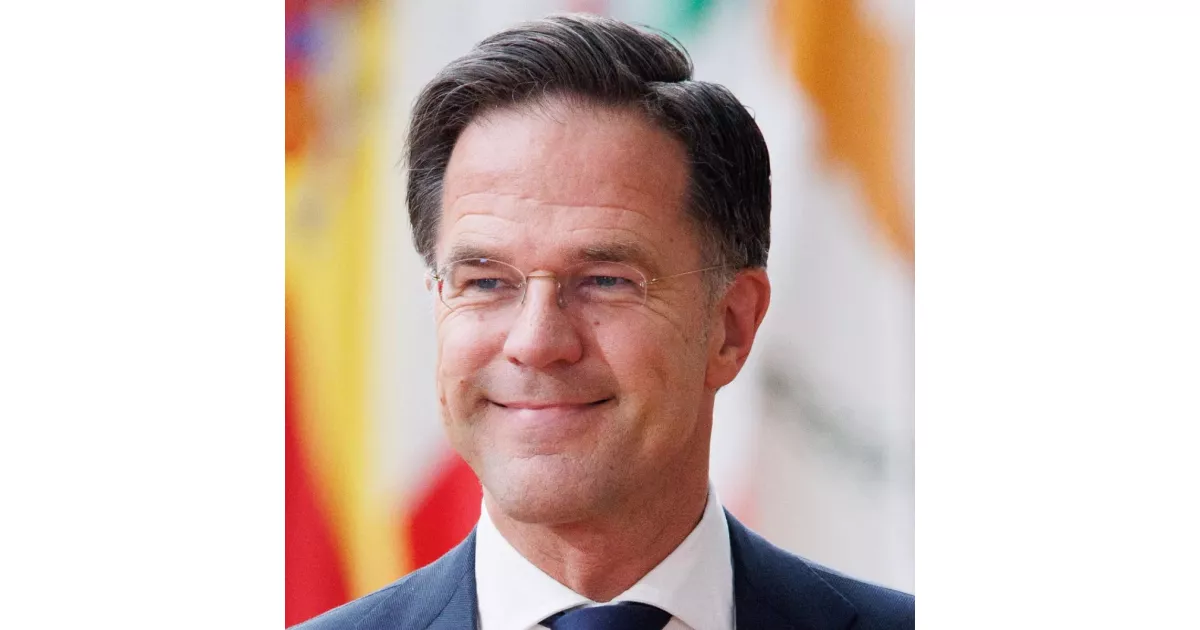
Mark Rutte is a Dutch politician who served as the Prime Minister of the Netherlands from 2010 to 2024, making him the longest-serving prime minister in Dutch history. He led the People's Party for Freedom and Democracy (VVD) from 2006 to 2023. In October 2024, Rutte became the 14th Secretary General of NATO. His tenure as Prime Minister was marked by navigating economic challenges, forming coalition governments, and addressing various social and political issues within the Netherlands and the European Union.
1974: Publication of 'The Power Broker'
In 1974, Robert Caro's biography of Robert Moses, The Power Broker, was published. This book is admired by Rutte.


1979: Attended Maerlant Lyceum
In 1979, Rutte began attending the Maerlant Lyceum, where he specialized in the arts.
1985: Finished at Maerlant Lyceum
In 1985, Rutte finished his studies at Maerlant Lyceum, having specialized in the arts.
April 1988: Death of father Izaäk Rutte
The death of his father Izaäk Rutte, in April 1988, was an event that Rutte later described as changing the course of his life.
1988: Joined board of Youth Organisation Freedom and Democracy
In 1988, Rutte joined the board of the Youth Organisation Freedom and Democracy, marking his early involvement in political organizations.
1991: Served as chair of the Youth Organisation Freedom and Democracy
By 1991, Rutte had served as the chair of the Youth Organisation Freedom and Democracy.
1992: Obtained MA degree from Leiden University
In 1992, Rutte obtained his MA degree in History from Leiden University.
1993: Became member of the national board of the VVD
In 1993, Mark Rutte became a member of the national board of the VVD.
1997: Became staff manager of Van den Bergh Nederland
In 1997, Rutte became the staff manager of the Unilever subsidiary Van den Bergh Nederland.
1997: Member of the national board of the VVD
Until 1997, Mark Rutte remained a member of the national board of the VVD.
2000: Became a member of the Corporate Human Resources Group
In 2000, Rutte became a member of the Corporate Human Resources Group at Unilever.
July 2002: Served as State Secretary
In July 2002, Rutte began serving as State Secretary at the Social Affairs and Employment Ministry in the First Balkenende cabinet.
2002: Entered national politics
In 2002, Mark Rutte transitioned from a business career at Unilever to national politics, becoming a member of Jan Peter Balkenende's cabinet.
2002: Became human resource manager for IgloMora Groep
In 2002, Rutte became the human resource manager for IgloMora Groep, another Unilever subsidiary.
May 2003: Became a member of the House of Representatives
From 30 January to 27 May 2003, Rutte was briefly a member of the House of Representatives.
2003: Advised municipalities to check Somali residents for social assistance fraud
During his time as State Secretary in 2003, Rutte advised municipalities to check Somali residents for social assistance fraud. This led to controversy when a court ruled that investigations targeting exclusively persons of Somali descent were discriminatory and violated the Constitution.
2003: Supported the US-led invasion of Iraq
In 2003, Mark Rutte voiced his support for the US-led invasion of Iraq.
June 2004: Appointed State Secretary for Higher Education and Science
In June 2004, Rutte was appointed as the State Secretary for Higher Education and Science within the Education, Culture and Science Ministry in the Second Balkenende Cabinet.
June 2004: End of term as State Secretary
In June 2004, Rutte's term as State Secretary at the Social Affairs and Employment Ministry came to an end.
May 2006: Announced as lijsttrekker of the VVD
On 31 May 2006, Mark Rutte was announced as the lijsttrekker (lead candidate) of the VVD, after winning an internal election.
June 2006: Resigned to return to the House of Representatives
In June 2006, Rutte resigned from his position as State Secretary to return to the House of Representatives and became the parliamentary leader of the VVD.
2006: Won VVD leadership election
In 2006, Rutte won the VVD leadership election, setting the stage for his future role as prime minister.
2006: VVD campaign did not get off to a good start
In 2006, the VVD campaign with Rutte as leader did not get off to a good start, facing criticism from within the party.
September 2007: Expelled Rita Verdonk from the party's parliamentary group
On 13 September 2007, Rutte expelled Rita Verdonk from the VVD's parliamentary group after repeated criticisms of party policy.
October 2010: Appointed formateur and presented first cabinet
In October 2010, Rutte was appointed as formateur and presented his first cabinet, subsequently being sworn in as Prime Minister of the Netherlands on 14 October.
2010: Became Prime Minister of the Netherlands
Following the 2010 general election, after negotiations, Mark Rutte became the Prime Minister of the Netherlands, marking a historic moment as the first self-described liberal to hold the position in 92 years.
2010: VVD became largest party in the House of Representatives
In the 2010 general election, the VVD, led by Rutte, won 31 seats and became the largest party in the House of Representatives for the first time.
March 2012: Began talks on budget cuts
In March 2012, Rutte began talks with coalition partners on budget cuts to comply with EU requirements.
April 2012: Government collapses due to budget negotiations
In April 2012, Mark Rutte's government collapsed due to an impasse on budget negotiations, leading to early elections.
November 2012: Returned as prime minister of the Second Rutte cabinet
On 5 November 2012, Rutte returned as prime minister, leading the Second Rutte cabinet after the VVD negotiated a coalition agreement with the Labour Party.
2014: The Hague hosted a Group of Seven special meeting
In 2014, The Hague hosted a Group of Seven special meeting after the Russian annexation of Crimea.
April 2016: Appointed to the High-Level Panel on Water
In April 2016, Rutte was appointed by the UN Secretary-General and the President of the World Bank Group to the High-Level Panel on Water.
November 2016: House of Representatives approved a ban on the Islamic burqa
In November 2016, the House of Representatives approved a ban on the Islamic burqa in some public spaces, with support from the VVD.
October 2017: Installation of Third Rutte Cabinet
In October 2017, Mark Rutte presented his third cabinet, a grand coalition with CDA, D66, and CU, and was sworn in as prime minister for a third term, marking the end of the longest cabinet formation period in Dutch history, which took 225 days.
2017: VVD remained largest party in general election
Although the VVD lost seats in the 2017 general election, it remained the largest party, allowing Rutte to form his third cabinet.
March 2018: Dutch Intelligence and Security Services Act Referendum
In March 2018, the Dutch Intelligence and Security Services Act referendum was held, which resulted in a rejection.
2019: VVD Suffers Blow in Provincial Elections
In the 2019 provincial elections, Rutte's VVD suffered a blow following the victory of right-wing populist newcomer Forum for Democracy (FvD).
May 2020: Death of mother Hermina Cornelia Dilling
The death of his mother Hermina Cornelia Dilling, in May 2020, was a significant life event for Mark Rutte.
2020: Rutte and the COVID-19 Recovery Fund
During the 2020 negotiations for the COVID-19 recovery fund in the European Union, Rutte was considered the unofficial leader of the Frugal Four, advocating for loans with more conditions. He also suggested the EU could be dissolved and reformed without Poland and Hungary due to concerns about the rule of law.
January 2021: Third Rutte Cabinet Resigns
On January 15, 2021, the third Rutte cabinet collectively resigned following the publication of research centered around the childcare subsidies scandal in the Netherlands. Rutte offered his resignation to King Willem-Alexander, accepting responsibility for the scandal.
December 2021: Presentation of New Coalition Agreement
In December 2021, following the Dutch general election and the longest formation process in Dutch history, Rutte presented a coalition agreement with D66, CDA, and CU, the same parties as his previous government.
2021: VVD won general election despite childcare benefits scandal
In 2021, despite the Dutch childcare benefits scandal leading to his cabinet's resignation, the VVD won the general election.
October 2022: Rutte on War Crimes in Nagorno-Karabakh
In October 2022, Rutte called for investigations into alleged war crimes and human rights violations committed during the Armenian-Azerbaijani war in Nagorno-Karabakh.
2022: Rutte began his fourth term
In 2022, Rutte began his fourth term as prime minister following a record-length formation period.
January 2023: Agreement to Limit Chip Exports to China
In January 2023, the U.S., Japan, and the Netherlands reached an agreement to limit certain advanced chip exports to China.
March 2023: Restrictions on Chip Exports
In March 2023, the Dutch government placed restrictions on chip exports in order to protect national security, affecting ASML.
July 2023: Government Resignation and Departure from Politics
In July 2023, after failing to reach an agreement on immigration policy, Rutte's coalition government resigned. Rutte then announced his departure as political leader of the VVD and from national politics in general.
July 2023: Government resignation due to migration disagreement
On 7 July 2023, Rutte's government resigned after failing to reach an agreement on migration policies.
October 2023: Announcement of Candidacy for NATO Secretary General
In October 2023, despite previously wanting to focus on teaching, Rutte announced his candidacy for NATO Secretary General.
November 2023: Early General Elections
Due to the resignation of the cabinet, early general elections were held in November 2023, with the VVD now under the leadership of Dilan Yeşilgöz.
2023: Rutte's Response to the October 7 Attacks
In 2023, as outgoing prime minister, Rutte condemned the October 7 attacks, supported Israel's right to self-defense, and was the first foreign leader to speak with Benjamin Netanyahu. He later visited Israel to express solidarity and supported "humanitarian pauses" in Gaza.
January 2024: Further Restrictions on Chip-Making Equipment to China
In January 2024, the Dutch government placed further restrictions on the shipment of some advanced chip-making equipment to China.
February 2024: Rutte's Diplomatic Engagements
In February 2024, Rutte visited Saudi Arabia, discussing cooperation with Mohammed bin Salman, and attended an emergency summit in Paris concerning Ukraine. He committed €100 million to a Czech initiative to purchase artillery ammunition for Ukraine.
February 2024: Gaining Support for NATO Candidacy
In February 2024, Rutte's bid for NATO Secretary General received public support from the governments of the United States, the United Kingdom, Germany, and France.
February 2024: Court Orders Halt to F-35 Parts Export to Israel
In February 2024, despite the Netherlands providing military aid to Israel, a court ordered the Dutch government to stop exporting parts for F-35 fighter jets to the country.
March 2024: Xi Jinping's Message to Rutte
On March 27, 2024, Chinese president Xi Jinping told Rutte that "no force can stop the pace of China's scientific and technological progress".
June 2024: Rutte's Official Appointment as NATO Secretary General
On June 26, 2024, Klaus Iohannis dropped out of the NATO Secretary General race, a week before Rutte's official appointment.
July 2024: Schoof cabinet sworn in
In July 2024, the Schoof cabinet was sworn in, marking the end of Rutte IV's caretaker function.
October 2024: Appointed Secretary General of NATO
In October 2024, Mark Rutte became the 14th Secretary General of NATO, marking a significant turn in his career after serving as Prime Minister of the Netherlands.
October 2024: Rutte on Russian Casualties in Ukraine
In October 2024, Rutte stated that more than 600,000 Russian soldiers had been killed or wounded during the war against Ukraine.
October 2024: Rutte Succeeded Stoltenberg as Secretary General of NATO
On October 1, 2024, Rutte succeeded Jens Stoltenberg as Secretary General of NATO during a ceremony at the NATO Headquarters in Brussels.
2024: Remained in office until 2024 despite scandals
By 2024, Rutte had remained in office despite various political scandals, earning him the nickname "Teflon Mark".
2024: Rutte Moves to Brussels
In 2024, following his appointment as Secretary General of NATO, Rutte moved to Brussels after living in an apartment in Benoordenhout, The Hague, for several decades.
March 2025: Rutte on NATO Membership for Ukraine
In March 2025, following the new Trump administration's announcement that it does not support NATO membership for Ukraine, Rutte stated that Ukraine had never been promised NATO membership as part of a peace agreement, and that Europe and the US should eventually normalise relations with Russia after a peace agreement.
June 2025: Rutte's Support for US Strikes on Iranian Nuclear Sites
In June 2025, Rutte voiced support for US strikes on Iranian nuclear sites: in a private message published by Trump, Rutte praised and thanked the latter for his "decisive action" in Iran, calling it "truly extraordinary and something no one else dared to do."
November 2025: Rutte Meets with Pakistani Foreign Minister
In November 2025, Rutte met with Pakistani Foreign Minister Ishaq Dar in Brussels to discuss deeper cooperation on regional security, counterterrorism, and the strengthening of the Pakistan–NATO partnership.
December 2025: Rutte Warns of Large-Scale War in Europe
In December 2025, during a NATO keynote speech, Rutte warned that Russia has returned large scale war to Europe and argued that NATO countries must urgently prepare their societies, economies and armed forces for a level of conflict comparable to that endured by their grandparents or great-grandparents, in order to deter war and prevent such devastation from becoming reality.
2025: The Hague NATO Summit
In 2025, The Hague NATO summit, Rutte's inaugural as Secretary General, is to be a tightrope between Donald Trump and Volodymyr Zelenskyy, President of Ukraine. Rutte is often referred to as "Trump Whisperer" by publicly lauding Trump policies and Trump himself. Rutte even called Trump the "daddy" of NATO.
March 2026: Rutte's Support for US and Israeli Military Actions Against Iran
In March 2026, Rutte expressed strong support for U.S. and Israeli military actions against Iran, praising strikes against Tehran's nuclear capabilities but clarified that NATO would not be involved. He also played a central role in coordinating NATO's response to the closure of the Strait of Hormuz. Critics suggested that Rutte went beyond his remit as Secretary General of NATO due to his support for the Iran war that does not involve NATO
Mentioned in this timeline
Benjamin Netanyahu is a prominent Israeli politician who has served...
Ukraine is a country in Eastern Europe the second-largest on...
The United States of America is a federal republic primarily...
Xi Jinping is the paramount leader of China holding the...
Saudi Arabia officially the Kingdom of Saudi Arabia KSA is...
Germany officially the Federal Republic of Germany is located in...
Trending

4 hours ago Pittsburgh Penguins' Ben Kindel Hospitalized Following Sudden Medical Episode

4 hours ago Brandon McManus Joins LA Rams Following Blake Grupe's Season-Ending Knee Injury
4 hours ago Rio Ngumoha Emerges as a Key Game-Changer for Liverpool FC
5 hours ago Luka Garza Faces Roster Competition as NBA 2026 Season Begins
5 hours ago Neemias Queta Expected to Contribute Off the Bench for Boston Celtics
5 hours ago LaLiga Reports Offensive Chants Against Joan García During Espanyol Versus Atlético Match
Popular
Ilhan Omar is a prominent American politician currently serving as...
Ken Paxton is an American politician and lawyer serving as...
Elon Musk is a visionary entrepreneur and engineer known for...
Michael Joseph Jackson the King of Pop was a highly...
Cristiano Ronaldo widely considered one of the greatest footballers captains...

Linda Ronstadt is a versatile American singer renowned for her...