Career Timeline of Richard Petty: Major Achievements and Milestones


From career breakthroughs to professional milestones, explore how Richard Petty made an impact.
Richard Petty, "The King," is a legendary NASCAR driver who raced from 1958-1992. He holds the record for most Cup Series championships (7, tied with Dale Earnhardt and Jimmie Johnson) and race wins (200). Petty also boasts a record seven Daytona 500 victories and an unparalleled 27 wins in a single season (1967). Driving primarily the No. 43 for Petty Enterprises, he's considered one of the sport's all-time greats and a member of the famous Petty racing family.


1958: Start of NASCAR Career
In 1958, Richard Petty began his career as a stock car racing driver in the NASCAR Grand National Series (now the NASCAR Cup Series).
1959: NASCAR Rookie of the Year
In 1959, Richard Petty was named NASCAR Rookie of the Year after achieving nine top-ten finishes, including six top-five finishes.
1960: Second in NASCAR Points Race
In 1960, Richard Petty finished second in the NASCAR Grand National Points Race and secured his first career win at the Charlotte Fairgrounds Speedway.
1963: Breakout Year
1963 marked a breakout year for Richard Petty, as he achieved victories at tracks such as Martinsville and Bridgehampton.
1964: First Daytona 500 Win
In 1964, Richard Petty won his first Daytona 500 driving a Plymouth with a Hemi engine. He led 184 of 200 laps, won nine races, earned over $114,000, and claimed his first Grand National championship.
February 27, 1966: Second Daytona 500 Win
On February 27, 1966, Richard Petty won his second Daytona 500 after overcoming a two-lap deficit. The race was stopped early due to a thunderstorm, making him the first driver to win the event twice.
October 1, 1967: Ten Consecutive Wins
Between August 12 and October 1, 1967, Richard Petty won a record ten consecutive races, contributing to his dominant season.
1967: Record-Breaking Season
In 1967, Richard Petty had a record-breaking season, winning 27 races, including the Daytona 500, and securing his second Grand National Championship.
1968: Occoneechee Speedway Victory
In 1968, Richard Petty won sixteen races, including the last-ever race held at Occoneechee Speedway.
1969: Switch to Ford
In 1969, Richard Petty switched to Ford due to concerns about the competitiveness of Plymouth on super-speedways. He won ten races and finished second in points.
1970: Return to Plymouth
In 1970, Richard Petty returned to Plymouth and won in the new Plymouth Superbird.
1970: Win at Middle Georgia Raceway
In 1970, despite being ill, Richard Petty won a race at Middle Georgia Raceway, marking one of his four career wins at that track.
February 14, 1971: Third Daytona 500 Win
On February 14, 1971, Richard Petty won his third Daytona 500, driving a Plymouth Road Runner, and became the first driver to win the race three times. He also won twenty more races and claimed his third Grand National Championship.
1971: Consecutive Starts Record
In 1971, Richard Petty began a record of 513 consecutive starts in NASCAR races, which lasted until 1989.
1972: STP Sponsorship Begins
In 1972, STP began a 28-year sponsorship arrangement with Richard Petty, which led to the iconic STP orange/"Petty blue" paint scheme and his fourth NASCAR Cup Series championship.
February 18, 1973: Fourth Daytona 500 Win
On February 18, 1973, Richard Petty won his fourth Daytona 500 in a Dodge Charger after Buddy Baker's engine failed near the end of the race.
1974: Secondhand Chevrolet Monte Carlo
In 1974, Richard Petty raced a secondhand Chevrolet Monte Carlo at the fall race at Michigan.
1975: World 600 Win
In 1975, Richard Petty won the World 600 for the first time and secured thirteen victories, leading to his sixth Winston Cup. This was also a modern-era record that was later tied by Jeff Gordon.
1976: Famous Daytona 500 Finish
In 1976, Richard Petty was involved in a famous finish at the Daytona 500, where a last-lap collision with David Pearson led to Pearson winning the race while Petty finished second.
1977: End of Dodge Charger Era
By the end of 1977, Richard Petty stopped using the Dodge Charger body style he had been racing since 1973.
1978: Winless Season and Switch to Chevrolet
In 1978, Richard Petty didn't secure any wins during the season, leading him to switch from Dodge to a secondhand 1974 Chevrolet Monte Carlo, marking the end of his long-time relationship with Chrysler.
1978: Elected to Randolph County Commission
In 1978, Richard Petty was elected to the Randolph County Commission as a Republican, marking his entry into local politics.
1979: Seventh NASCAR Championship
In 1979, Richard Petty won his seventh and final NASCAR championship after winning the Daytona 500 in an Oldsmobile and additional races in a Chevrolet.
1979: Sixth Daytona 500 Win
In 1979, Richard Petty won his sixth Daytona 500 after a 45-race drought. This race was the first to be televised live flag-to-flag and is known for a fistfight between competitors.
1980: Endorsed John Connally for Republican Presidential Nomination
In 1980, Richard Petty endorsed John Connally for the Republican nomination for president, citing Connally's personality and experience in Washington.
January 1981: Petty Tests Dodge Mirada
In January 1981, Richard Petty tested the 1981 Dodge Mirada at Daytona, but the car's speed was significantly slower than GM and Ford cars. Petty decided to use a Buick Regal for the Daytona 500, abandoning his return to Dodge due to the Mirada's lack of competitiveness.
January 17, 1981: Fans gather to watch Mirada testing
On January 17, 1981, approximately 15,000 fans gathered at Daytona Speedway to observe Richard Petty testing the 1981 Dodge Mirada. The fans wanted to see Petty put the Dodge through its paces.
1981: Daytona 500 Win
In 1981, Richard Petty won another Daytona 500, further cementing his legacy.
1982: Re-elected to Randolph County Commission
In 1982, Richard Petty was re-elected to the Randolph County Commission, continuing his service in local government.
October 1983: Controversial Win at Charlotte
In October 1983, Richard Petty had a controversial win at Charlotte, recognized by NASCAR as his 198th win. Following this victory, Petty left the race team founded by his father for the 1984 season.
May 20, 1984: Petty wins Budweiser 500
On May 20, 1984, Richard Petty won the Budweiser 500 at Dover International Speedway. This win would be recognized as his two-hundredth Cup class win under modern regulations, considering the Winston-Salem class win.
July 4, 1984: Petty Wins Firecracker 400
On July 4, 1984, Richard Petty won the Firecracker 400 at Daytona International Speedway, marking his officially recognized 200th and final victory. President Ronald Reagan attended the race and celebrated with Petty and his family.
1986: Re-elected to Randolph County Commission
In 1986, Richard Petty was re-elected to the Randolph County Commission, marking another term in local politics.
1989: End of Consecutive Starts Record
In 1989, Richard Petty's record of 513 consecutive starts in NASCAR races came to an end.
1990: Re-elected to Randolph County Commission
In 1990, Richard Petty was re-elected to the Randolph County Commission, extending his tenure to 16 years of service.
October 1, 1991: Petty Announces Retirement
On October 1, 1991, Richard Petty announced his retirement, set to take place after the 1992 season. He planned to run the entire season, participating in various special events as part of his Fan Appreciation Tour.
1992: Parade Lap During Retirement Tour
During his 1992 retirement tour, Richard Petty took a parade lap before every race with the exception of the Southern 500.
1992: Retirement from NASCAR
In 1992, Richard Petty retired from racing in the NASCAR Winston Cup Series, concluding a remarkable career.
1992: Close Points Margin
In 1992, Richard Petty's 1979 championship was the closest points margin in NASCAR history until 1992.
1993: Formed Political Action Committee
In 1993, Richard Petty formed a political action committee to support Republican candidates.
1996: Republican Nominee for North Carolina Secretary of State Election
In 1996, Richard Petty was the Republican nominee in the North Carolina Secretary of State election, but was defeated by Elaine Marshall.
1997: Opening of Richard Petty Driving Experience in Walt Disney World
In 1997, the Richard Petty Driving Experience was opened in Walt Disney World, offering the public a chance to drive stock cars at Walt Disney World Speedway.
2003: Secretary's Award from Department of Veterans Affairs
In 2003, Richard Petty was honored by The Department of Veterans Affairs being given the Secretary’s Award for his contributions to the organization.
2008: Founded Petty Family Foundation
In 2008, Richard Petty and his family founded the Petty Family Foundation, which supports children, veterans, and education in North Carolina.
2008: Played Himself in the Film 'Swing Vote'
In 2008, Richard Petty played himself in the film "Swing Vote", where he allowed the protagonist to briefly drive his famous "43" Plymouth.
May 2011: Grand Marshal for the 2011 STP 400
In May 2011, Richard Petty was chosen to be the Grand Marshal for the 2011 STP 400 of the Sprint Cup Series.
2012: Endorsed Mitt Romney
In 2012, Richard Petty endorsed Republican presidential nominee Mitt Romney.
2013: Driver Wins 500th Race Start
In 2013, Matt Kenseth joined Richard Petty as the only drivers to win in their 500th race start.
2014: Established Lynda Petty Scholarship
In 2014, Richard Petty established the Lynda Petty Scholarship in his wife’s honor, benefiting students at Randolph Community College and high school students pursuing automotive careers.
2014: Received Gregor Grant Award and Good Guy Award
In 2014, Richard Petty received the Gregor Grant Award from the Autosport Awards and the Good Guy Award from the American Legion for his contributions to the community.
2015: Cameron R. Argetsinger Award for Outstanding Contributions to Motorsports
In 2015, Richard Petty received the Cameron R. Argetsinger Award for Outstanding Contributions to Motorsports, further recognizing his significant impact on the sport.
June 2016: Appearance on Stage with Donald Trump
In June 2016, Richard Petty made an appearance on stage with Donald Trump.
2025: Donated Additional Land to Victory Junction Camp
In 2025, Richard Petty donated an additional 403 acres of land to the Victory Junction Camp, furthering its mission to provide a summer camp experience for seriously ill children.
Mentioned in this timeline
The Daytona is a -mile NASCAR Cup Series race held...
North Carolina is a diverse U S state situated on...
Michigan is a state in the Great Lakes region of...
Football commonly known as soccer in many regions is the...
Pixar Animation Studios based in Emeryville California is renowned for...
A car also known as an automobile is a wheeled...
Trending
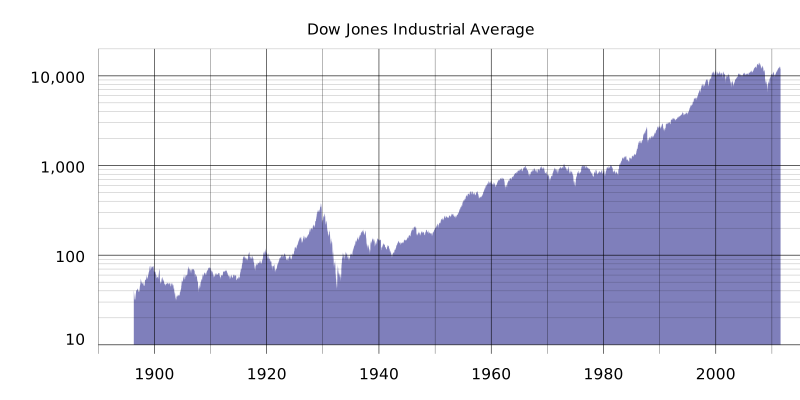
1 day ago Dow Jones Surges Amid Growing Corporate Earnings Optimism
3 hours ago Illinois Man Indicted in Massive $66 Million COVID-19 Testing Fraud Scheme
4 hours ago Grizzlies Waive Walter Clayton Jr. as Mavericks Explore Potential Signing
4 hours ago Thibaut Courtois Backs Kylian Mbappe for Ballon d'Or Amid Performance Debate
4 hours ago Liev Schreiber Stars in New Mystery Thriller Nocturne and Makes Red Carpet Appearances

4 hours ago Declan Rice Praises Harry Kane As Best Teammate He Has Ever Played Along Side
Popular

Ken Paxton is an American politician and lawyer serving as...

Ilhan Omar is a prominent American politician currently serving as...
Elon Musk is a visionary entrepreneur and engineer known for...

Michael Joseph Jackson the King of Pop was a highly...
Cristiano Ronaldo widely considered one of the greatest footballers captains...
Linda Ronstadt is a versatile American singer renowned for her...