Rise to Success: Career Highlights of Richard Russell Jr.


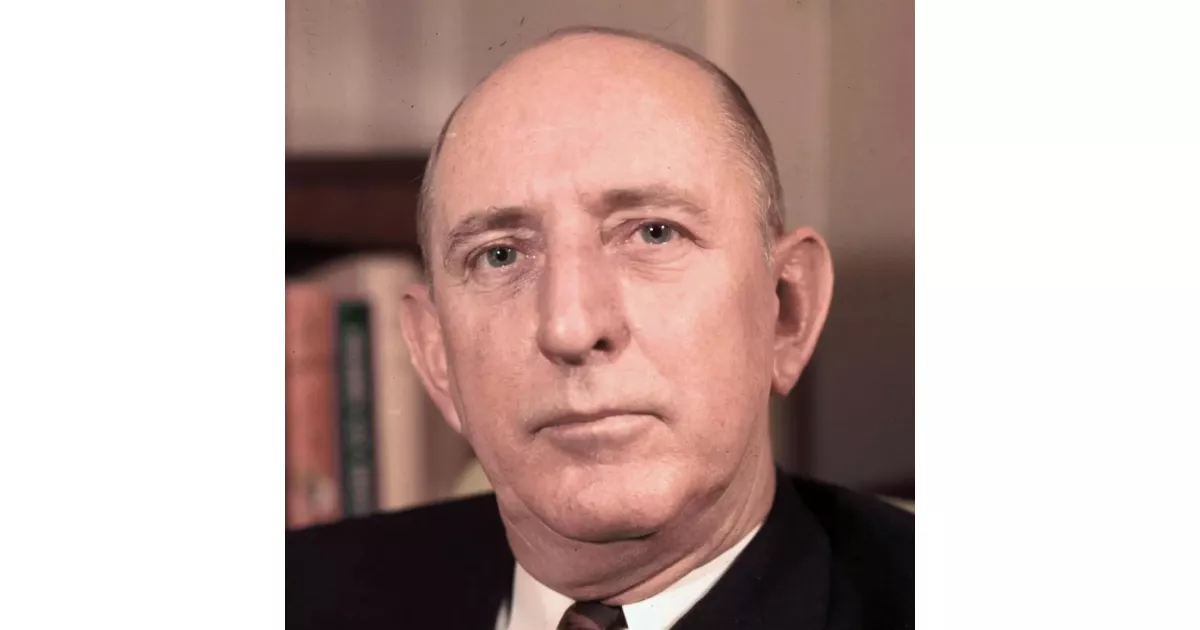
Discover the career path of Richard Russell Jr., from the first major opportunity to industry-changing achievements.
Richard Brevard Russell Jr. was a prominent American politician representing Georgia. He served as the state's 66th Governor from 1931-1933 before a nearly four-decade tenure in the U.S. Senate (1933-1971). By the end of his career, he was the Senate's most senior member. A Southern Democrat, Russell played a significant role in Southern resistance to the civil rights movement throughout his time in the Senate. His long career marked him as a key figure in 20th-century American politics, particularly concerning states' rights and racial segregation.
1921: Russell serves in the Georgia House of Representatives
In 1921, Richard Russell Jr. began his service in the Georgia House of Representatives, a position he held until 1931 before becoming Governor of Georgia.


1931: Russell becomes Governor of Georgia
In 1931, Richard Russell Jr. became the 66th Governor of Georgia, holding the position until 1933.
September 1932: First Campaign for Senate
In September 1932, Richard Russell's first campaign for the Senate was held following the death of William J. Harris.
1933: Russell joins the Senate
In 1933, Richard Russell Jr. joined the Senate after winning a special election to succeed Senator William J. Harris.
1933: Russell Joins Appropriations Committee
In 1933, upon entering the Senate, Richard Russell Jr. was assigned to the Appropriations Committee, and subsequently became chairman of the Appropriations Subcommittee on Agriculture, granting him significant influence over funding for farmers.
1935: Russell continues to support the New Deal
In 1935, as a rift emerged in the Democratic Party, resulting in filibusters and deadlocks, Russell continued to support President Franklin D. Roosevelt and the New Deal.
1936: Russell defeats Talmadge for US Senate seat
In 1936, Russell defeated the former Democratic Governor Eugene Talmadge for the US Senate seat by defending the New Deal as good for Georgia.
1946: Russell sponsors the National School Lunch Act
In 1946, Richard Russell was the main sponsor of the National School Lunch Act, which was eventually named after him.
1948: Russell runs for President at the Democratic National Convention
In 1948, Richard Russell was a candidate for President of the United States at the Democratic National Convention.
1951: Russell becomes Chairman of the Senate Armed Services Committee
In 1951, Richard Russell became chairman of the Senate Armed Services Committee, a position he used to gain defense installations and jobs for Georgia until 1969.
1951: Russell becomes Chairman of Senate Committee on Armed Services
In 1951, Richard Russell became the Chairman of the Senate Committee on Armed Services, a position he held for most of the period until 1969, gaining defense installations and jobs for Georgia.
1952: Russell's Presidential Candidacy
In 1952, Richard Russell ran for the Democratic presidential nomination. His platform emphasized "local self-government," and he aimed to unite Southern Democrats. However, he faced opposition for his refusal to support the party's civil rights plank.
1952: Russell runs for President at the Democratic National Convention
In 1952, Richard Russell was a candidate for President of the United States at the Democratic National Convention.
1960: Russell campaigns for Kennedy-Johnson ticket
In 1960, despite calling the Democratic Party platform a "complete surrender to the NAACP and the other extreme radicals at Los Angeles", Richard Russell agreed to campaign for the Kennedy-Johnson ticket for the 1960 United States presidential election.
November 1963: Investigation of President Kennedy's assassination
In November 1963, Richard Russell Jr. became a member of the Warren Commission, tasked with investigating the assassination of President John F. Kennedy.
September 1964: Doubts About Single-Bullet Theory
In September 1964, Richard Russell Jr. expressed his disbelief in the single-bullet theory to President Johnson during a telephone conversation. Russell's papers also indicated he was troubled by the Soviet Union's lack of detail regarding Lee Harvey Oswald's time in Russia and the limited information on Oswald's Cuba-related activities.
1964: Service on the Warren Commission
In 1964, Richard Russell Jr. served on the Warren Commission. He initially expressed reservations to President Lyndon B. Johnson about serving due to his lack of confidence in Earl Warren, the commission's head. Russell was part of the commission from 1963 to 1964.
1969: Russell leaves Chairmanship of Senate Committee on Armed Services
In 1969, Richard Russell left his position as Chairman of the Senate Committee on Armed Services, a position he held for most of the period since 1951.
1969: Russell steps down as Chairman of the Senate Armed Services Committee
In 1969, Richard Russell stepped down as chairman of the Senate Armed Services Committee.
January 1970: Television interview on Kennedy assassination
In January 1970, Richard Russell Jr. stated in a television interview that he accepted that Oswald shot Kennedy but doubted he acted alone. He had previously written a dissenting opinion for the Warren Commission expressing his belief that 'too many things' made him doubt that Oswald planned it all alone, but this opinion was not included in the final report.
Mentioned in this timeline
John F Kennedy JFK was the th U S President...
The United States of America is a federal republic primarily...

The Union of Soviet Socialist Republics USSR existed from to...
The Vietnam War was a conflict in Vietnam Laos and...
Los Angeles California's most populous city and Southern California's hub...

Russia is the world's largest country spanning Eastern Europe and...
Trending
3 hours ago Pelle Larsson Available for Miami Heat Against Charlotte Hornets
4 hours ago Atlanta Hawks Dominate Charlotte Hornets in Record-Breaking 128-81 Season Opener Victory

5 hours ago Paul Bettany and Owen Wilson to Guest Star on Jimmy Kimmel Live
5 hours ago Robert Griffin III Attends UCF Event Amidst Ongoing NFL Injury Updates
5 hours ago Military Boards Quietly Defy Hegseth's Ban on Transgender Troops
1 year ago Aljamain Sterling questions Sean O'Malley's stardom, personality deemed 'a little dry'.
Popular
Ilhan Omar is a prominent American politician currently serving as...

Ken Paxton is an American politician and lawyer serving as...
Elon Musk is a visionary entrepreneur and engineer known for...

Michael Joseph Jackson the King of Pop was a highly...

Elizabeth Holmes is an American entrepreneur and the founder of...
Cristiano Ronaldo widely considered one of the greatest footballers captains...