Most Talked-About Controversies Linked to Robert Gates


Controversies are a part of history. Explore the biggest scandals linked to Robert Gates.
Robert Gates is an American intelligence analyst and university president, currently serving as the chancellor of the College of William and Mary since 2012. He is most notable for his prior roles as the 22nd United States Secretary of Defense from 2006 to 2011, under Presidents George W. Bush and Barack Obama, and as the 15th Director of Central Intelligence from 1991 to 1993, under President George H.W. Bush. His career reflects a significant involvement in national security and higher education.
1981: CIA study on the shooting of Pope John Paul II
According to Newsweek, Robert Gates allegedly vouched for the comprehensiveness of a CIA study presented to the Senate and President Reagan alleging that the Soviet Union played a role in the 1981 shooting of Pope John Paul II. A CIA internal review later denounced the report as being skewed, but that Gates did not try to influence the report's conclusions.


1982: George Shultz's Distrust of the CIA under Gates
From 1982 to 1989, George Shultz, as Secretary of State, distrusted the CIA under Robert Gates, feeling it was trying to "manipulate" him.
1985: Shultz's Softening of Stance Towards USSR
In 1985, George Shultz convinced President Reagan to soften the U.S. stance towards the USSR after Gorbachev came to power, telling Robert Gates that his CIA was "usually wrong" about the Soviet Union.
October 1, 1986: Heard about diversion of Iran arms sales proceeds
On October 1, 1986, Robert Gates stated he first heard from Charles E. Allen that proceeds from the Iran arms sales may have been diverted to support the Contras.
1989: George Shultz's Distrust of the CIA under Gates
From 1982 to 1989, George Shultz, as Secretary of State, distrusted the CIA under Robert Gates, feeling it was trying to "manipulate" him.
May 15, 1991: Senate Committee requested information on Gates's fitness for CIA post
On May 15, 1991, the chairman and vice chairman of the United States Senate Select Committee on Intelligence (SSCI) requested any information that would "significantly bear on the fitness" of Robert Gates for the CIA post from the independent counsel.
May 1991: Intensified investigation into Gates's Iran-Contra activities
In May 1991, the investigation of Robert Gates intensified as part of a larger inquiry into the Iran–Contra activities of CIA officials. This received impetus when President George H. W. Bush nominated Gates to be Director of Central Intelligence (DCI).
September 3, 1991: Independent Counsel determined Gates's activities did not warrant prosecution
By September 3, 1991, Independent Counsel determined that Robert Gates's Iran–Contra activities and testimony did not warrant prosecution, subject to developments that could have warranted reopening the inquiry.
September 19, 1991: Indictment of Clair E. George
Clair E. George, the CIA's former deputy director for operations, was indicted on September 19, 1991, after refusing to cooperate with Independent Counsel.
1991: Criticism of CIA's failure to forecast Soviet crisis
In 1991, Stansfield Turner and Melvin Goodman criticized the CIA and Robert Gates for failing to forecast the magnitude of the Soviet crisis, alleging deliberate distortion to support the Reagan administration's defense buildup.
August 4, 1993: Final report of the Independent Counsel
On August 4, 1993, the final report of the Independent Counsel for Iran–Contra Scandal stated that Robert Gates "was close to many figures who played significant roles in the Iran/contra affair and was in a position to have known of their activities. The evidence developed by Independent Counsel did not warrant indictment ..."
1994: Gates subpoenaed as defense witness in George's trial
In the summer of 1994, Robert Gates was subpoenaed to testify as a defense witness at Clair E. George's first trial, but was never called.
January 16, 2008: Remarks on NATO forces in Afghanistan
On January 16, 2008, Robert Gates stated that NATO forces in southern Afghanistan did not know how to properly combat a guerrilla insurgency, which could be contributing to rising violence, prompting protests from the Netherlands and United Kingdom.
2011: Frustration with the Netanyahu government
In the summer of 2011, shortly after retiring as Defense Secretary, Robert Gates highlighted U.S. measures to advance Israel's security but expressed frustration that the U.S. received nothing in return from the Israeli government regarding the peace process.
May 21, 2015: Statement on BSA membership standards
On May 21, 2015, Robert Gates stated that the BSA's ban on gay adult leaders could not be sustained and that he would no longer seek to revoke the charters of scout units that accept gay adult leaders.
2016: Review of Gates's memoirs
In 2016, Goodman reviewed the third installment of Gates's memoirs, describing a toxic atmosphere at the CIA during Gates's tenure as deputy director for intelligence, deputy director of CIA, and director of CIA.
2020: Presidential election op-ed
In January 2021, Robert Gates, along with ten other living former secretaries of defense, published a Washington Post op-ed piece telling President Trump not to involve the military in determining the outcome of the 2020 elections.
January 2021: Op-ed on military involvement in 2020 elections
In January 2021, Robert Gates, along with other former secretaries of defense, published a Washington Post op-ed piece telling President Trump not to involve the military in determining the outcome of the 2020 elections.
Mentioned in this timeline
Barack Obama the th U S President - was the...
Vladimir Putin is a prominent Russian politician who has significantly...

Starbucks is an American multinational coffeehouse chain established in Seattle...
George W Bush the rd U S President - is...
Joe Biden served as the th President of the United...
The United States of America is a federal republic primarily...
Trending
4 hours ago Updates on NFL Injury Reports and Roster Changes Across Several Teams
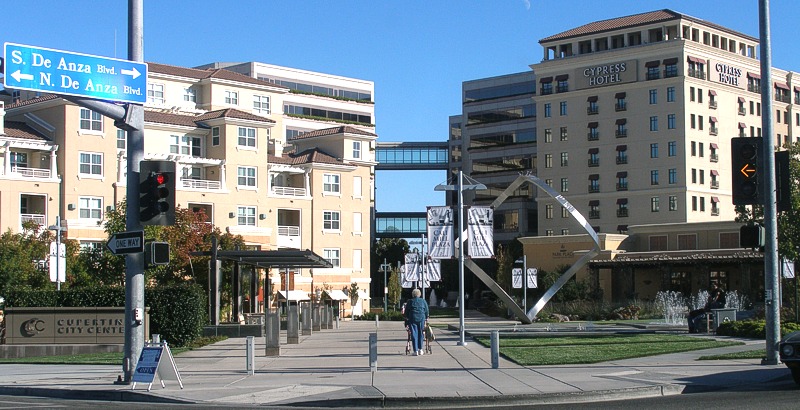
4 hours ago Hashi Market Opens First West Coast Grocery Store in Cupertino
4 hours ago Mike Tomlin Receives Praise Following Steelers Departure and Coaching News
4 hours ago Justin Hartley Returns as Colter Shaw in Action-Packed Tracker Season 4
4 hours ago DeMar DeRozan Makes Impactful Denver Nuggets Debut With Circus Shot Performance
4 hours ago Nick Saban Docuseries Premieres Celebrating Football Legacy
Popular

Ken Paxton is an American politician and lawyer serving as...
Jameis Winston is an American football quarterback currently playing for...
Cristiano Ronaldo widely considered one of the greatest footballers captains...

Michael Joseph Jackson the King of Pop was a highly...

Elon Musk is a visionary entrepreneur and engineer known for...

Shakira Isabel Mebarak Ripoll the Queen of Latin Music is...