Rise to Success: Career Highlights of Robert Gates


How Robert Gates built a successful career. Explore key moments that defined the journey.
Robert Gates is an American intelligence analyst and university president, currently serving as the chancellor of the College of William and Mary since 2012. He is most notable for his prior roles as the 22nd United States Secretary of Defense from 2006 to 2011, under Presidents George W. Bush and Barack Obama, and as the 15th Director of Central Intelligence from 1991 to 1993, under President George H.W. Bush. His career reflects a significant involvement in national security and higher education.
January 4, 1967: Commissioned as Second Lieutenant
On January 4, 1967, Robert Gates was commissioned as a Second Lieutenant in the United States Air Force after attending Officer Training School under CIA sponsorship.


1974: Gates left the CIA to serve on the staff of the National Security Council
In 1974, Robert Gates left the CIA to serve on the staff of the National Security Council.
1979: Gates returned to the CIA
In 1979, Robert Gates returned to the CIA, briefly serving as the director of the Strategic Evaluation Center, Office of Strategic Research.
1981: Named the director of the DCI/DDCI Executive Staff
In 1981, Robert Gates was named the director of the DCI/DDCI Executive Staff.
1982: Appointed deputy director for intelligence
In 1982, Robert Gates was appointed deputy director for intelligence.
April 18, 1986: Appointed Deputy Director for Intelligence
On April 18, 1986, Robert Gates was appointed as the Deputy Director for Intelligence.
March 20, 1989: End of term as Deputy Director of Central Intelligence
Robert Gates served as Deputy Director of Central Intelligence until March 20, 1989.
August 1989: Appointed Deputy National Security Advisor
In August 1989, Robert Gates was appointed as Assistant to the President and Deputy National Security Advisor under Brent Scowcroft.
May 14, 1991: Nomination as Director of Central Intelligence
On May 14, 1991, Robert Gates was nominated for the second time by President George H.W. Bush for the position of Director of Central Intelligence (DCI).
May 15, 1991: Senate Committee requested information on Gates's fitness for CIA post
On May 15, 1991, the chairman and vice chairman of the United States Senate Select Committee on Intelligence (SSCI) requested any information that would "significantly bear on the fitness" of Robert Gates for the CIA post from the independent counsel.
November 6, 1991: Richard J. Kerr became Deputy Director
On November 6, 1991, Richard J. Kerr became Deputy Director during Robert Gates's tenure as Director of Central Intelligence.
November 1991: End of term as Deputy National Security Advisor
Robert Gates's term as Assistant to the President and Deputy National Security Advisor ended in November 1991.
March 2, 1992: End of Richard J. Kerr's term as Deputy Director
Richard J. Kerr's term as Deputy Director ended on March 2, 1992, during Robert Gates's tenure as Director of Central Intelligence.
April 9, 1992: Adm. William O. Studeman became Deputy Director
On April 9, 1992, Adm. William O. Studeman became Deputy Director during Robert Gates's tenure as Director of Central Intelligence.
1993: Worked as an academic and lecturer after retiring from CIA
After retiring from the CIA in 1993, Robert Gates worked as an academic and lecturer. He evaluated student theses for the International Studies Program of the University of Washington and lectured at various universities.
1993: End of tenure as Director of Central Intelligence
Robert Gates served as Director of Central Intelligence until 1993.
1996: Publication of autobiography "From the Shadows"
In 1996, Robert Gates's autobiography, "From the Shadows: The Ultimate Insider's Story of Five Presidents and How They Won the Cold War" was published. Gates has also written numerous articles on government and foreign policy.
August 1, 2002: Became president of Texas A&M University
On August 1, 2002, Robert Gates became the 22nd president of Texas A&M University.
February 2005: Declined Director of National Intelligence Position
In February 2005, Robert Gates addressed rumors on his school's website that he was leaving Texas A&M to become the new director of National Intelligence in Washington, D.C., stating that he had been asked to take the position but ultimately declined after wrestling with the decision.
November 8, 2006: Nominated as U.S. Secretary of Defense
On November 8, 2006, President George W. Bush announced his intent to nominate Robert Gates to succeed Donald Rumsfeld as U.S. Secretary of Defense after the 2006 midterm election.
November 2006: Member of Iraq Study Group
In November 2006, Robert Gates was a member of the Iraq Study Group, also known as the Baker Commission, expected to issue its report. He was subsequently replaced by Lawrence Eagleburger in this role after being nominated as Secretary of Defense.
December 5, 2006: Confirmed by Senate Armed Services Committee
On December 5, 2006, Robert Gates was unanimously confirmed by the United States Senate Armed Services Committee. During his confirmation hearing on the same day, Gates stated that the United States was neither winning nor losing the war in Iraq.
December 16, 2006: Left presidency of Texas A&M University
On December 16, 2006, Robert Gates left the presidency of Texas A&M University to become Secretary of Defense.
December 18, 2006: Sworn in as Secretary of Defense
On December 18, 2006, Robert Gates was sworn in as Secretary of Defense, first in a private White House ceremony by White House Chief of Staff Josh Bolten, and then at the Pentagon by Vice President Dick Cheney.
2006: Nominated and confirmed as Secretary of Defense
In 2006, Robert Gates was nominated by President George W. Bush as Secretary of Defense, replacing Donald Rumsfeld. He was confirmed with bipartisan support.
February 18, 2007: Walter Reed Army Medical Center Neglect Scandal
Beginning February 18, 2007, The Washington Post published a series of articles that brought to light the Walter Reed Army Medical Center neglect scandal. As a result, Gates announced the removal of Secretary of the Army Francis J. Harvey and later approved the removal of Army Surgeon General Kevin C. Kiley.
June 8, 2007: Recommended Mike Mullen as Chairman of Joint Chiefs of Staff
On June 8, 2007, Robert Gates announced that he would not recommend the renomination of Peter Pace as Chairman of Joint Chiefs of Staff due to potential confirmation difficulties. Instead, he recommended Mike Mullen to fill the position.
January 16, 2008: Remarks on NATO forces in Afghanistan
On January 16, 2008, Robert Gates stated that NATO forces in southern Afghanistan did not know how to properly combat a guerrilla insurgency, which could be contributing to rising violence, prompting protests from the Netherlands and United Kingdom.
June 5, 2008: Resignations of Air Force Leaders
On June 5, 2008, Robert Gates announced the resignations of Secretary of the Air Force Michael Wynne and Air Force Chief of Staff Michael Moseley in response to findings on Air Force misshipments of nuclear weapons and nuclear weapons components.
December 1, 2008: Remained Secretary of Defense Under Obama
On December 1, 2008, President-elect Obama announced that Robert Gates would remain in his position as Secretary of Defense during his administration. One of the first priorities was a review of U.S. policy and strategy in Afghanistan.
2008: Began Troop Withdrawal from Iraq
In 2008, with violence declining in Iraq, Robert Gates, under the Bush administration, began the troop withdrawal from Iraq, a policy that was continued into the Obama administration.
March 1, 2009: Implied Limited Term as Secretary of Defense
On March 1, 2009, Robert Gates, speaking on Meet the Press with David Gregory, implied that he would not serve the entire first term as Secretary of Defense under President Obama.
April 2009: Proposed Shift in Defense Budget Priorities
In April 2009, Robert Gates proposed a large shift in budget priorities in the U.S. Department of Defense 2010 budget, including cuts to conventional warfare programs and increases in funding for programs like the special forces.
April 21, 2009: Speaker at Aggie Muster ceremony
On April 21, 2009, Robert Gates returned to Texas A&M as the speaker for the annual Aggie Muster ceremony.
May 6, 2009: Replaced General David D. McKiernan
On May 6, 2009, Robert Gates removed General David D. McKiernan from command in Afghanistan and replaced him with General Stanley A. McChrystal.
December 2009: Visited Afghanistan
In December 2009, Robert Gates visited Afghanistan following President Barack Obama's announcement of the deployment of 30,000 additional personnel against the Taliban insurgency.
February 2010: Lifted Ban on Women Serving on Submarines
In February 2010, Robert Gates announced that the department would lift its ban on women serving on submarines.
March 2010: Approved New Regulations for Gays in the Military
In late March 2010, Robert Gates approved new regulations that would make it more difficult to kick gays out of the military.
April 2010: Suggested Ceasing Funding Development of a New Submarine Program
In late April 2010, Robert Gates suggested the Navy cease funding development of a new multibillion-dollar ballistic missile submarine program on the grounds of cost and relevancy.
May 8, 2010: Speech on Pentagon Bureaucracy Cuts
In a speech made on May 8, 2010, Robert Gates stated that he would make politically unpopular cuts to the Pentagon bureaucracy in his future budgets.
August 2010: Planned Retirement as Secretary of Defense
In August 2010, Robert Gates told Foreign Policy magazine that he would remain as Secretary of Defense until 2011 and then retire.
August 2010: Sought Defense Savings
In August 2010, it was announced that Robert Gates was trying to find $100 billion in Defense savings through to 2015, in order to instill a "culture of savings and restraint" in the military.
March 20, 2011: Commented on Military Intervention in Libya
On March 20, 2011, while aboard a military aircraft, Robert Gates commented that "military forces are just one way to bring stability to Libya", during the 2011 military intervention in Libya.
May 1, 2011: White House Situation Room Photo
On May 1, 2011, Robert Gates was photographed in the White House Situation Room during the raid that killed Osama bin Laden.
June 10, 2011: Speech Before NATO
On June 10, 2011, in a speech in Brussels before NATO, Robert Gates stated that other NATO members must do more as the United States tackles its budget deficit.
July 1, 2011: Retired as Secretary of Defense
On July 1, 2011, Robert Gates officially retired as Secretary of Defense and was presented with the Presidential Medal of Freedom by President Obama during his retirement ceremony.
September 6, 2011: Accepted Chancellor Position at College of William & Mary
On September 6, 2011, it was announced that Robert Gates had accepted the position of chancellor at the College of William & Mary, succeeding Sandra Day O'Connor, for a seven-year term.
2011: Frustration with the Netanyahu government
In the summer of 2011, shortly after retiring as Defense Secretary, Robert Gates highlighted U.S. measures to advance Israel's security but expressed frustration that the U.S. received nothing in return from the Israeli government regarding the peace process.
2011: Retired as Secretary of Defense
Robert Gates retired as Secretary of Defense in 2011, after continuing to serve under President Barack Obama. He was also presented the Presidential Medal of Freedom by President Obama.
May 2, 2012: Elected to Starbucks Board of Directors
On May 2, 2012, Starbucks Corporation announced that Robert Gates had been elected to the Starbucks board of directors and will serve on the board's nominating and corporate governance committee.
2012: Elected as a fellow of the National Academy of Public Administration
In 2012, Robert Gates was elected as a fellow of the National Academy of Public Administration.
October 30, 2013: Election to the National Executive Board of the Boy Scouts of America
On October 30, 2013, Robert Gates was elected to the National Executive Board of the Boy Scouts of America and would serve as the national president-elect.
March 2014: Op-ed on Russian expansionism
In March 2014, following the annexation of Crimea, Robert Gates wrote an op-ed piece on Vladimir Putin, Russian expansionism, the nascent sanctions regime, the US military budget, and the need for bold leadership.
May 2014: Began term as BSA national president
In May 2014, Robert Gates began a two-year term as the BSA national president, with Randall Stephenson of AT&T Inc. serving as president-elect.
May 21, 2015: Statement on BSA membership standards
On May 21, 2015, Robert Gates stated that the BSA's ban on gay adult leaders could not be sustained and that he would no longer seek to revoke the charters of scout units that accept gay adult leaders.
2016: Review of Gates's memoirs
In 2016, Goodman reviewed the third installment of Gates's memoirs, describing a toxic atmosphere at the CIA during Gates's tenure as deputy director for intelligence, deputy director of CIA, and director of CIA.
September 2018: Re-appointed as Chancellor
In September 2018, Robert Gates was re-appointed to serve a second seven-year term as chancellor at the College of William & Mary.
2020: Presidential election op-ed
In January 2021, Robert Gates, along with ten other living former secretaries of defense, published a Washington Post op-ed piece telling President Trump not to involve the military in determining the outcome of the 2020 elections.
2020: Target Year for "Vision 2020" Plan
Robert Gates, as president, aimed to make Texas A&M one of the top 10 public universities by 2020 through the "Vision 2020" plan.
January 2021: Op-ed on military involvement in 2020 elections
In January 2021, Robert Gates, along with other former secretaries of defense, published a Washington Post op-ed piece telling President Trump not to involve the military in determining the outcome of the 2020 elections.
Mentioned in this timeline
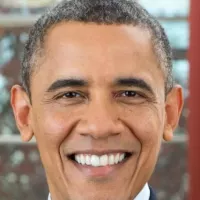
Barack Obama the th U S President - was the...
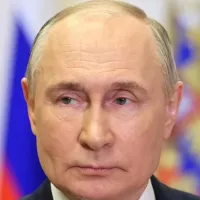
Vladimir Putin is a prominent Russian politician who has significantly...

Starbucks is an American multinational coffeehouse chain established in Seattle...
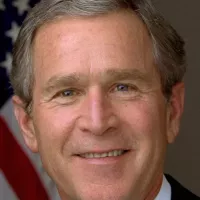
George W Bush the rd U S President - is...
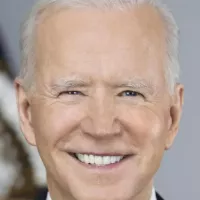
Joe Biden served as the th President of the United...
The United States of America is a federal republic primarily...
Trending

1 month ago Cruz Azul Faces Santos Laguna in Upcoming Liga MX Matchday Clash

4 hours ago Jake Matthews Questionable for Falcons Upcoming Game Against Ravens

4 hours ago Brewers Shortstop Cooper Pratt's Performance Trends During National League Division Series
4 hours ago Andrew Vaughn Replaces Christian Yelich in Brewers Starting Lineup for NLCS Game 1

4 hours ago Mookie Betts and Dodgers Players Encounter Alleged Hauntings at Milwaukee's Pfister Hotel
4 hours ago Jamie Lee Curtis Stars in NBC Newlyweds and Halloween Game Update
Popular

Ken Paxton is an American politician and lawyer serving as...

Jameis Winston is an American football quarterback currently playing for...

Cristiano Ronaldo widely considered one of the greatest footballers captains...

Michael Joseph Jackson the King of Pop was a highly...

Elon Musk is a visionary entrepreneur and engineer known for...

Shakira Isabel Mebarak Ripoll the Queen of Latin Music is...