History of Taiwan in Timeline


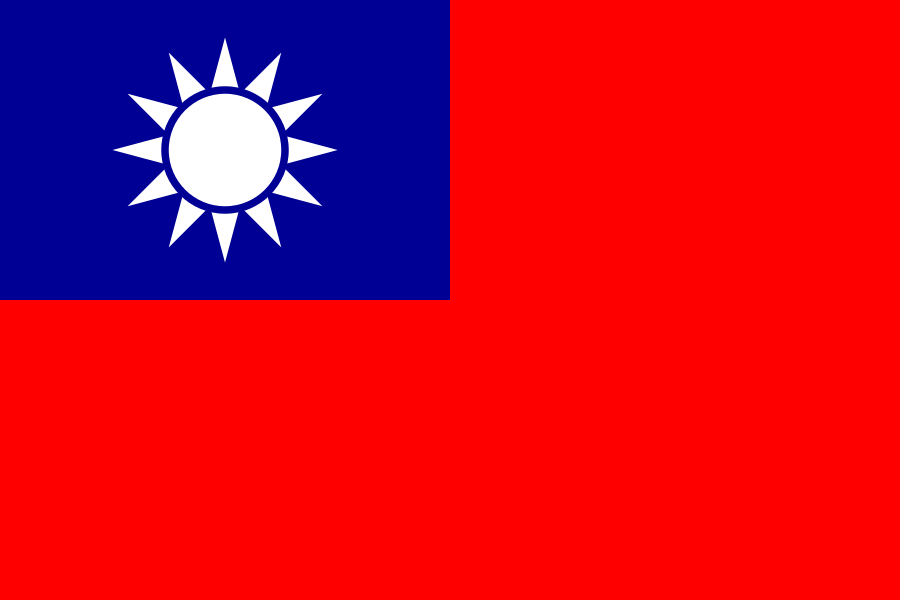
Taiwan, officially the Republic of China (ROC), is an East Asian country located between the East and South China Seas. It is positioned near the People's Republic of China (PRC), Japan, and the Philippines. The main island, Formosa, is characterized by mountains in the east and plains in the west, where the majority of its urbanized population of approximately 23.9 million resides, making it a densely populated country. The ROC's territory encompasses 168 islands, and its largest metropolitan area includes Taipei, New Taipei City, and Keelung.
10 hours ago : Taiwan watches Trump-Xi summit amid arms sales uncertainty and policy change warnings.
Taiwan is concerned about potential US arms sales discussions during the Trump-Xi summit. Senators cautioned against unilateral Taiwan policy changes, as allies felt rattled by Trump's plans.


1902: Killing of Bandit-rebels
From 1898 to 1902, about 12,000 "bandit-rebels" were killed in Taiwan.
1905: Tongmenghui manifesto
In 1905, the party manifesto of the Tongmenghui stated the four goals of the Chinese revolution were "to expel the Manchu rulers, to revive Chunghwa, to establish a Republic, and to distribute land equally among the people."
1907: Beipu uprising
In 1907, the Beipu uprising occurred as one of the rebellions against Japanese rule in Taiwan.
January 1912: Founding of the Republic of China
On January 1, 1912, the Republic of China was founded on mainland China following the Xinhai Revolution of 1911.
1912: Establishment of the Republic of China
In 1912, shortly after the Republic of China's establishment, the government used the short form "China" to refer to itself.
1912: Republic of China founded
In 1912, the Republic of China (ROC) was founded, overthrowing the Qing Dynasty under the leadership of Sun Yat-sen.
1912: Start of Minguo Era System
The Minguo era system, which starts in 1912, the year the ROC was founded, is used to denote the year.
1915: Tapani incident
In 1915, the Tapani incident occurred as a rebellion against Japanese rule in Taiwan.
1924: Establishment of the National Revolutionary Army
In 1924, Sun Yat-sen established the National Revolutionary Army in Guangdong with the goal of reunifying China under the Kuomintang.
1927: Nanjing decade
The Nanjing decade when most of China came under the control of the Kuomintang (KMT) took place between 1927 and 1937.
1928: Widespread Diplomatic Recognition of the Republic of China in 1928
After the defeat of the Peiyang Government by the Kuomintang (KMT) in 1928, widespread diplomatic recognition of the Republic of China occurred.
1929: Standardization of the Gregorian calendar
Prior to standardization in 1929, the Chinese calendar was officially used.
1930: Musha Incident
In 1930, Japanese authorities engaged in bloody campaigns against the Indigenous people residing in mountainous regions, culminating in the Musha Incident.
1936: Assimilation project
Around 1936, the Japanese governor-general Seizō Kobayashi began an island-wide assimilation project in Taiwan.
1937: Japanese invasion
The Japanese invasion took place between 1937 and 1945.
1938: Japanese residents in Taiwan
By 1938, 309,000 Japanese were residing in Taiwan.
1939: Taiwan as seventh-greatest sugar producer
By 1939, Taiwan was the seventh-greatest sugar producer in the world.
1940: Temple destruction and surname policy
By late 1940, temple destruction in Taiwan had ended, decreasing the number of native temples by a third. Starting from 1940, families were encouraged to adopt Japanese surnames.
1943: Adoption of Japanese surnames
By 1943, slightly more than 2% of families in Taiwan had adopted Japanese surnames.
1943: Cairo Declaration
In 1943, the Cairo Declaration specified that Formosa and the Pescadores be returned by Japan to the ROC.
October 1944: Formosa Air Battle
In October 1944, the Formosa Air Battle was fought between American carriers and Japanese forces in Taiwan during World War II.
August 1945: Adoption of Japanese surnames
Possibly about 7% of families in Taiwan had adopted Japanese surnames by August 1945.
October 1945: Japan surrenders Taiwan to the ROC
On 25 October 1945, Japan surrendered Taiwan to the ROC.
1945: Hyperinflation
From 1945 to 1949, hyperinflation occurred in Taiwan.
1945: Sino-Soviet Treaty of Friendship and Alliance
In 1945, the Sino-Soviet Treaty of Friendship and Alliance was signed.
1946: ROC Recognizes Mongolia
In 1946, the ROC recognized Mongolia as an independent country after the 1945 Sino-Soviet Treaty.
February 1947: February 28 Incident
The shooting of a civilian on 28 February 1947 triggered island-wide unrest, which was suppressed with military force in what is now called the February 28 incident.
1947: Territorial Division Under 1947 Constitution
According to the 1947 constitution, the territory of the ROC is based on its existing national boundaries and is divided into provinces, special municipalities, and the province-level Tibet Area.
1947: Reformation into Republic of China Armed Forces
In 1947, the Constitution of the ROC reformed the National Revolutionary Army into the Republic of China Armed Forces.
1947: 1947 Constitution and National Boundaries
In 1947, the ROC Constitution did not explicitly define national boundaries, and included articles regarding representatives from former Qing dynasty territories like Tibet and Mongol banners.
1947: Constitution of the ROC
The government of the Republic of China was founded on the 1947 Constitution of the ROC.
May 1949: Martial law declared
In May 1949, martial law was declared on Taiwan.
December 1949: Nationalist government evacuates to Taiwan
On 7 December 1949, Chiang Kai-Shek evacuated his Nationalist government to Taiwan and made Taipei the temporary capital of the ROC.
1949: Hyperinflation
From 1945 to 1949, hyperinflation occurred in Taiwan.
1949: ROC government moves to Taiwan
In 1949, after losing mainland China to the Communists in the Chinese Civil War, the government of the Republic of China moved to Taiwan under the Kuomintang (KMT).
1949: Retreat to Taiwan and Reneging on Recognition of Mongolia
In 1949, after retreating to Taiwan, the ROC reneged on its recognition of Mongolia to maintain its claim over mainland China.
1949: PRC Claims Successorship to ROC
In 1949, the People's Republic of China (PRC) claims that it became the successor state of the ROC.
1949: ROC loses control of mainland China
In 1949, the ROC lost control of mainland China but retained control of Taiwan and Penghu.
1949: Mission to "retake mainland China"
In 1949, the primary mission of the Taiwanese military was to "retake mainland China" through Project National Glory.
1950: UK Recognizes PRC in 1950
In 1950, the United Kingdom recognized the PRC.
1951: Agriculture constituted 32 percent of GDP
In 1951, agriculture constituted 32 percent of Taiwan's GDP.
1951: US Foreign Aid to Taiwan
In 1951, the United States started granting substantial foreign aid to the KMT regime, lasting until 1965.
1952: Price Stabilization in Taiwan
By 1952, US foreign aid had stabilized prices in Taiwan.
1954: Mutual Defense Treaty Between US and ROC
From 1954 to 1979, the United States had a mutual defense treaty with the ROC.
1954: Sino-American Mutual Defense Treaty signed
In 1954, the ROC and the United States signed the Sino-American Mutual Defense Treaty and established the United States Taiwan Defense Command.
1955: First Taiwan Strait Crisis
In 1955, during the First Taiwan Strait Crisis, the Communists captured the Dachen Islands and Yijiangshan Islands.
1955: Formosa Resolution
In 1955, the United States passed the Formosa Resolution, granting substantial foreign aid to the KMT regime.
1958: Second Taiwan Strait Crisis
During the Second Taiwan Strait Crisis in 1958, Nike Hercules missiles were added to missile batteries throughout Taiwan.
1959: Agricultural Production Increase
From 1952 to 1959, agricultural production increased at an average annual rate of 4 percent due to land reform and agricultural development programs.
1961: ROC forces defeated
In 1961, ROC forces entered Burma and Thailand in the 1950s and were defeated by Communists.
1962: Golden Horse Film Festival and Awards Started
Taiwan has hosted the Golden Horse Film Festival and Awards since 1962.
1965: End of US Foreign Aid
1965 marks the end of the period during which the United States granted substantial foreign aid to the KMT regime, which started in 1951.
October 1971: UN Resolution 2758 in October 1971
On October 25, 1971, UN Resolution 2758 recognized the PRC as China's sole representative in the United Nations.
1971: UN members recognize the PRC
In 1971, UN members voted to recognize the People's Republic of China (PRC) instead of the Republic of China (ROC), leading to the ROC no longer representing China in the United Nations.
1971: ROC Expelled from United Nations
In 1971, the ROC was expelled from the United Nations by Resolution 2758 and replaced with the PRC.
1972: Chiang Ching-kuo as Premier
Chiang Ching-kuo served as premier starting in 1972.
1978: Chiang Ching-kuo Becomes President
In 1978, Chiang Ching-kuo rose to the presidency.
1978: Overseas Investment
In 1978, tax incentives and a cheap labor force attracted over $1.9 billion in investments from overseas Chinese, the United States, and Japan.
1979: End of US-ROC Mutual Defense Treaty
From 1954 to 1979, the United States had a mutual defense treaty with the ROC.
1979: Kaohsiung Incident
In 1979, the Kaohsiung Incident occurred on Human Rights Day, uniting Taiwan's opposition despite being suppressed by authorities.
1979: Nagoya Resolution
In 1979, the Nagoya Resolution approved by the International Olympic Committee (IOC) allowed the ROC to use the name "Chinese Taipei" in international events.
1979: US established diplomatic relations with the PRC
In 1979, the United States established diplomatic relations with the PRC, concluding the stationing of about 30,000 US troops in Taiwan.
1980: Foreign Trade Surplus
By 1980, Taiwan's foreign trade reached $39 billion per year, generating a surplus of $46.5 million.
1984: Lee Teng-hui as Vice-President
In 1984, Chiang Ching-kuo selected Lee Teng-hui as his vice-president.
1986: Founding of DPP
In 1986, the Democratic Progressive Party (DPP) was founded as the first opposition party in Taiwan.
February 1987: Taiwan Semiconductor Manufacturing Co. (TSMC) founded
Taiwan Semiconductor Manufacturing Co. (TSMC) was founded on 21 February 1987.
July 1987: End of Martial Law
On July 15, 1987, Chiang Ching-kuo lifted martial law on the main island of Taiwan.
1987: End of martial law
Martial law, declared on Taiwan in May 1949, continued to be in effect until 1987.
1988: Lee Teng-hui as President
After Chiang Ching-kuo's death in 1988, Lee Teng-hui became the first president of the ROC born in Taiwan.
1989: Chinese Professional Baseball League Founding
Professional baseball in Taiwan started with the founding of the Chinese Professional Baseball League (CPBL) in 1989.
1990: China was the top destination of Taiwanese investment
From 1990 to 2020, China was the top destination of Taiwanese investment.
April 1991: Repeal of Temporary Provisions Against Communist Rebellion
On April 30, 1991, President Lee Teng-hui announced the repeal of the Temporary Provisions against the Communist Rebellion.
1991: Establishment of MAC, TAO, SEF, and ARATS
In 1991, the Mainland Affairs Council (MAC) of Taiwan and the Taiwan Affairs Office (TAO) of the PRC were established, along with the Straits Exchange Foundation (SEF) and the Association for Relations Across the Taiwan Straits (ARATS).
1991: ROC acknowledges PRC control over mainland China
In 1991, the ROC ceased to regard the Chinese Communist Party as a rebellious group and acknowledged its control over mainland China.
1991: ROC Participates in APEC
Since 1991, the ROC has participated in the Asia-Pacific Economic Cooperation forum (APEC) under the name "Chinese Taipei".
1991: ROC Joins UNPO
Since the foundation of the organization in 1991, the Republic of China has been a member of the Unrepresented Nations and Peoples Organization (UNPO).
November 1992: ARATS and SEF Meeting - 1992 Consensus
In November 1992, the ARATS and SEF held a meeting that later became known as the 1992 Consensus, where both sides agreed there was only one China, but disagreed on the definition.
1992: Taiwanese vs. Chinese Identification in 1992
In 1992, a survey indicated that 17.6% of respondents identified as Taiwanese, 25.5% as Chinese, and 46.4% as both.
1992: Pan-Blue Coalition and the 1992 Consensus
In 1992, the Pan-Blue Coalition generally supported the 1992 Consensus, where the KMT claimed there is one China, but the ROC and PRC have different interpretations.
1993: Constitutional Court Declines to Define Boundaries
In 1993, the Constitutional Court declined to define national boundaries, considering it a political question.
1993: ROC Petitions the UN for Entry
Since 1993, the ROC has petitioned the UN for entry, but its applications have not made it past committee stage.
1993: Establishment of the Constitutional Court
The Constitutional Court was established in 1993 to resolve constitutional disputes, regulate the activities of political parties and accelerate the democratization process.
1994: Rising Pro-Independence Sentiment Since 1994
Pro-independence sentiment has steadily risen in Taiwan since 1994.
1995: National Health Insurance Instituted
In 1995, Taiwan's National Health Insurance (NHI) system was established as a single-payer compulsory social insurance plan.
1996: University acceptance rate increased to 49 percent
In 1996 the university acceptance rate has increased to 49 percent.
1996: Lee Re-elected
In 1996, Lee was re-elected in the first direct presidential election.
1996: Democratically elected presidents begin
In 1996, Taiwan saw democratically elected presidents begin, marking a transition from a one-party state to a multi-party democracy.
1996: Joint declaration on security between the US and Japan signed
The joint declaration on security between the US and Japan signed in 1996 may imply that Japan would be involved in any response [to an invasion of Taiwan].
1997: Force reduction plans initiated
In 1997, the ROC began a series of force reduction plans to scale down its military from a level of 450,000.
1997: ROC Seeks Participation in the World Health Organization (WHO)
The ROC government sought to participate in the World Health Organization (WHO) since 1997.
September 1999: 921 Earthquake
On September 21, 1999, a 7.3 quake known as the "921 earthquake" killed more than 2,400 people.
1999: Defense spending fell below three percent of GDP
In 1999, Taiwan's defense spending as a percentage of its GDP fell below three percent.
2000: Chen Shui-bian Elected President
In 2000, Chen Shui-bian of the DPP was elected as the first non-KMT president.
2001: Military scaled down
By 2001, the ROC military had been scaled down to 380,000 as part of force reduction plans.
2001: Agriculture constituted less than 2 percent of GDP
Since 2001, agriculture has constituted less than 2 percent of Taiwan's GDP.
February 2002: ROC Accepts Mongolian Passport
In February 2002, the ROC began to accept the Mongolian passport and removed clauses referring to Outer Mongolia from the Act Governing Relations between the People of the Taiwan Area and the Mainland Area.
October 2002: ROC Recognizes Mongolia as Independent
In October 2002, the ROC recognized Mongolia as independent and began excluding it from its official maps.
2002: Cross-Strait Relations
In 2002, Chen Shui-bian's reference to "One Country on Each Side" of the Taiwan Strait strained cross-Strait relations.
2002: China surpassed the United States as Taiwan's largest export market
In 2002, China surpassed the United States to become Taiwan's largest export market for the first time.
2002: NHI Payment System Changed to Global Budget
In 2002, Taiwan's National Health Insurance (NHI) shifted its payment system from fee-for-service to a global budget to contain costs.
2002: ROC Joins WTO
Since 2002, the ROC has participated in the World Trade Organization (WTO) under the name "Separate Customs Territory of Taiwan, Penghu, Kinmen and Matsu".
March 2003: SARS Outbreak in Taiwan
In March 2003, Taiwan experienced a SARS outbreak, with 347 confirmed cases.
July 2003: SARS Contained in Taiwan
In July 2003, Taiwan successfully contained the SARS outbreak.
2003: US Treats Taiwan as Major Non-NATO Ally
Since at least 2003, the United States has de facto treated Taiwan as a major non-NATO ally.
2004: NHI Population Coverage Reaches 99 Percent
By the end of 2004, the National Health Insurance (NHI) system in Taiwan had achieved a population coverage of 99 percent.
2004: Taiwanese Olympians Win Gold Medals
In 2004, Taekwondo athletes Chen Shih-hsin and Chu Mu-yen were the first two Taiwanese Olympians to win gold medals on the official record at the Olympics.
2004: National Health Command Center Established
In 2004, Taiwan established the National Health Command Center, including the Central Epidemic Command Center (CECC), following lessons learned from the SARS outbreak.
2004: Taiwan's Legislative Election
In January 2024, no party won a majority in Taiwan's legislative election for the first time since 2004.
January 2005: Direction of writing in official documents changed
On 1 January 2005, the Executive Yuan changed its long-standing convention on the direction of writing in official documents from vertical to horizontal.
2005: Abolishment of National Assembly
In 2005, the National Assembly was abolished, with the power of constitutional amendments handed over to the Legislative Yuan and all eligible voters.
2005: Five largest religious groups reported in census
In 2005, the census reported that the five largest religious groups in Taiwan were Buddhism, Taoism, Yiguandao, Protestantism, and Roman Catholicism.
2005: ROC government adds "Taiwan" to its official name
In 2005, to avoid confusion, the ROC government in Taiwan began to put "Taiwan" next to its official name.
2005: Base Year for Carbon Emission Reduction
The Taiwanese government aims to cut carbon emissions by 20 percent in 2030 and 50 percent in 2050, compared to 2005 levels.
September 2007: DPP Resolution on Separate Identity
In September 2007, the ruling DPP approved a resolution asserting separate identity from China and called for a new constitution and the use of "Taiwan" as the country's name.
2008: Referendums on UN Membership
In 2008, referendums asked whether Taiwan should join the UN, alienating moderate constituents and creating tension.
2008: Ma Ying-jeou Elected President
In 2008, the KMT's nominee Ma Ying-jeou won the presidential election with a policy of "mutual non-denial" with the PRC.
2008: University acceptance rate increased to over 95 percent
Since 2008, the university acceptance rate has increased to over 95 percent, among the highest in Asia.
July 2009: Views on ROC and PRC as Separate Countries in July 2009
In July 2009, a survey showed that 82.8% of respondents considered the ROC and the PRC two separate countries.
2009: World Games in Kaohsiung
In 2009, Taiwan hosted the World Games in Kaohsiung, as well as the Summer Deaflympics in Taipei.
2009: Taiwan Participates in WHO as "Chinese Taipei"
In 2009, Taiwan participated in the World Health Organization (WHO) as an observer under the name "Chinese Taipei".
2011: Yani Tseng ranked number 1
From 2011 to 2013, Yani Tseng was ranked number 1 in the Women's World Golf Rankings for 109 consecutive weeks.
2012: MAC Clarifies Outer Mongolia Status
In 2012, the Mainland Affairs Council clarified that Outer Mongolia was not part of the ROC's national territory in 1947.
2013: Yani Tseng ranked number 1
From 2011 to 2013, Yani Tseng was ranked number 1 in the Women's World Golf Rankings for 109 consecutive weeks.
2014: Taiwanese Night Markets
In 2014, The Guardian called Taiwanese night markets the "best street food markets in the world".
2014: Sunflower Student Movement
In 2014, university students occupied the Legislative Yuan, preventing the ratification of the Cross-Strait Service Trade Agreement in the Sunflower Student Movement.
2015: Taiwanese students achieved one of the world's best results in mathematics, science and literacy
In 2015, Taiwanese students achieved one of the world's best results in mathematics, science and literacy, as tested by the Programme for International Student Assessment (PISA), with the average student scoring 519, compared with the OECD average of 493, placing it seventh in the world.
2015: Made in China 2025 Announced
In 2015, the "Made in China 2025" initiative was announced, leading to aggressive recruitment of Taiwanese chip industry talent and concerns about a "brain drain" in Taiwan.
2016: Increase in Carbon Emissions
Between 2005 and 2016, carbon emissions in Taiwan increased by 0.92 percent.
2016: Tsai Administration's New Southbound Policy
Since 2016, the Tsai administration's New Southbound Policy has pursued closer economic relations with South and Southeast Asian countries.
2016: DPP Legislative Majority
The 2016 elections resulted in the first DPP legislative majority in Taiwanese history.
May 2017: Constitutional Court ruled marriage laws violated the Constitution
In May 2017, the Constitutional Court ruled that then-current marriage laws had been violating the Constitution by denying same-sex couples the right to marry, mandating legislative amendments within two years.
2017: Summer Universiade in Taipei
In 2017, Taiwan hosted the Summer Universiade in Taipei.
2017: Taiwan Excluded from WHO
In 2017, Taiwan was again excluded from the World Health Organization (WHO) even in an observer capacity.
2017: Mongolian and Tibetan Affairs Commission Abolished
In 2017, the Mongolian and Tibetan Affairs Commission in the Executive Yuan was abolished.
2018: Hong Kong Immigrants
In 2018, Taiwan only had 4,000 Hong Kong immigrants.
2018: Referendum on Competing Under "Taiwan" in Olympics
In 2018, a referendum question on whether Taiwan's athletes should compete under "Taiwan" in the 2020 Summer Olympics failed to pass.
2018: Voters expressed overwhelming opposition to same-sex marriage
In 2018, voters expressed overwhelming opposition to same-sex marriage and supported the removal of content about homosexuality from primary school textbooks.
2018: Taiwan ranked #1 in Freedom of Thought Report
Taiwan earned a joint #1 ranking in the 2018 Freedom of Thought Report due to its lack of state-sanctioned discrimination and generally high regard for freedom of religion or belief.
2018: Michelin Guide Reviews Restaurants
The Michelin Guide began reviewing restaurants in Taiwan in 2018.
March 2019: 13.86 million scooters registered
In March 2019, 13.86 million scooters were registered in Taiwan, twice the number of cars.
May 2019: Taiwan approved a bill legalizing same-sex marriage
On 17 May 2019, Taiwan's parliament approved a bill legalizing same-sex marriage, making it the first country in Asia to do so.
2019: Religious buildings in Taiwan
As of 2019, there were 15,175 religious buildings in Taiwan, approximately one place of worship per 1,572 residents.
2019: Hong Kong Residents Moved to Taiwan
From 2019 to 2022, 36,789 Hong Kong residents moved to Taiwan.
2019: Forest Landscape Integrity Index
In 2019, Taiwan had a Forest Landscape Integrity Index mean score of 6.38/10, ranking it 76th globally.
2019: Infant Mortality Rate
In 2019, Taiwan's infant mortality rate was 4.2 deaths per 1,000 live births, with 20 physicians and 71 hospital beds per 10,000 people.
2019: DPP Rejects the 1992 Consensus since early 2019
In Taiwan, the ruling Democratic Progressive Party has rejected the 1992 Consensus since early 2019.
2019: Downsizing of Examination Yuan
The Examination Yuan was downsized in 2019, and there have been calls for its abolition.
2020: Literacy Rate in Taiwan
As of 2020, the literacy rate in Taiwan reached 99.03 percent.
2020: China was the top destination of Taiwanese investment until 2020
From 1990 to 2020, China was the top destination of Taiwanese investment.
2020: Life Expectancy at Birth
In 2020, the life expectancy at birth in Taiwan was 77.5 years for males and 83.9 years for females.
2020: 2020 Summer Olympics Referendum Context
The New York Times attributed the failure of the 2018 referendum to compete under "Taiwan" in the 2020 Summer Olympics to concerns about Chinese pressure.
June 2021: Taiwanese vs. Chinese Identification in June 2021
In June 2021, a survey showed that 63.3% of respondents identified as Taiwanese, 2.6% as Chinese, and 31.4% as both.
June 2021: Public Opinion on Status Quo in June 2021
In June 2021, an annual poll found that a majority of respondents supported maintaining the status quo in some form.
December 2021: TSMC Market Capitalization
As of December 2021, Taiwan Semiconductor Manufacturing Co. (TSMC)'s market capitalization equated to roughly 90% of Taiwan's GDP.
2021: Armed Forces capped at 215,000
As of 2021, the total strength of the Armed Forces is capped at 215,000 with 90 percent manning ratio for volunteer military.
2021: Port of Kaohsiung handled largest volume of cargo
In 2021, the Port of Kaohsiung handled the largest volume of cargo in Taiwan, with about 440 million shipping tonnes, accounting for 58.6% of Taiwan's total throughput.
2022: Military reservists
As of 2022, the military's reservists is around 2.5 million including first-wave reservists numbered at 300,000.
2022: Taiwan's Democracy Index Ranking
In 2022, the Economist Intelligence Unit's Democracy Index ranked Taiwan as having the second-highest democracy score in Asia and Australasia.
2022: Taiwan wins baseball medals
In 2022, the men's baseball team won medals across all levels of baseball. Its women's national softball team won a bronze medal at the 2022 World Games.
2023: Religious composition of Taiwan
According to Pew Research, the religious composition of Taiwan in 2023 was 28 percent Buddhist, 24% Taoist, 7% Christian, 5% combination of religions, 4% local/indigenous, 27% no religion, and 4% others.
January 2024: William Lai Ching-te Wins Presidential Election
In January 2024, William Lai Ching-te of the ruling Democratic Progressive Party won Taiwan's presidential elections, however no party won a majority in the simultaneous Taiwan's legislative election for the first time since 2004.
2024: Proposed defense spending of 2.45 percent of GDP
In 2024, Taiwan proposed 2.45 percent of projected GDP in defense spending for the following year.
December 2025: Estimates for the ten most populous administrative divisions
The figures below are the December 2025 estimates for the ten most populous administrative divisions; a different ranking exists when considering the total metropolitan area populations.
2025: Taiwan is the 22nd largest economy in the world by nominal GDP
As of 2025, Taiwan is the 22nd largest economy in the world by nominal GDP.
2025: Chinese Professional Baseball League Teams
As of 2025, the Chinese Professional Baseball League (CPBL) has six teams, with an average attendance of over 10,000 per game. There have been eighteen Taiwanese MLB players as of the 2025 MLB season, including former pitchers Chien-Ming Wang and Wei-Yin Chen.
2025: Taiwan's total trade reached US$1.12 trillion
In 2025, Taiwan's total trade reached US$1.12 trillion with record exports and imports.
2026: International Children's Games
Hualien will host the 2026 International Children's Games.
2030: Carbon Emission Target
The Taiwanese government aims to cut carbon emissions by 20 percent in 2030 compared to 2005 levels.
2050: Carbon Emission Target
The Taiwanese government aims to cut carbon emissions by 50 percent in 2050 compared to 2005 levels.
Mentioned in this timeline

Basketball is a team sport played on a rectangular court...
Joseph Robinette Biden Jr served as the th U S...
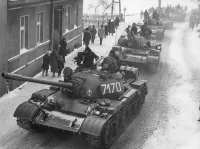
Martial law is the imposition of military rule in place...

The Guardian is a British daily newspaper founded in as...
Hong Kong is a densely populated special administrative region of...
The Chinese Civil War was a conflict between the Kuomintang...
Trending
24 minutes ago Ubisoft Launches $500K Real-World 'Assassin's Creed Black Flag' Treasure Hunt Promotion

1 hour ago Hans Zimmer's 'The Next Level' Tour Postponed Due to Unforeseen Circumstances.

1 hour ago Jill Kargman satire on NYC's elite in 'Influenced' exposes status symbols and momzillas.

3 hours ago Jaire Alexander Reveals NFL Departure, Mental Health Struggles, and Path Back.

3 hours ago Bernadette Peters Celebrates Lexington Opera House's 140th Anniversary and Its Rescue
4 hours ago Alex Call could gain starts over struggling Teoscar Hernández on Dodgers roster.
Popular
Michael Joseph Jackson the King of Pop was a highly...

Thomas Massie is a Republican politician and engineer representing Kentucky's...

William Franklin Graham III known as Franklin Graham is an...

Kash Patel is an American lawyer who currently serves as...

Ted Turner is an American entrepreneur and media mogul best...

Paula White-Cain is a prominent American televangelist and key figure...