History of Tokyo in Timeline


Tokyo is the capital and most populous city of Japan. In 2023, the city proper had a population of over 14 million. The Greater Tokyo Area, encompassing Tokyo and parts of six neighboring prefectures, is the world's most populous metropolitan area, with 41 million residents as of 2024.
2 hours ago : Tokyo's Sento bathhouses offer unique experiences, while Soho House opens Aoyama outpost.
Tokyo offers diverse experiences, from traditional sento bathhouses to modern establishments like Soho House Aoyama. Sento provide relaxation, while Soho House offers a luxury experience in the Aoyama District.


1906: Completion of the International Library of Children's Literature
The International Library of Children's Literature was completed in 1906.
1908: Publication of Sanshirō
In 1908, Natsume Sōseki's novel, Sanshirō, was published, depicting life in Tokyo during the industrialization period.
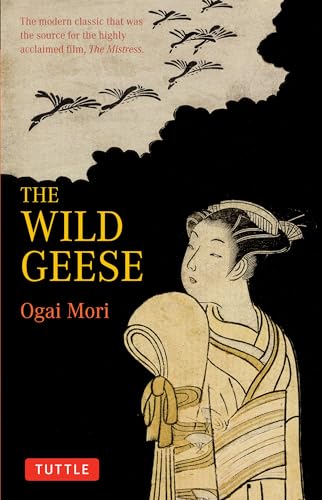
1911: Publication of The Wild Geese
In 1911, Mori Ōgai's novel, The Wild Geese, was published, depicting life in Tokyo during the industrialization period.
1914: Original Construction of Mitsukoshi Nihonbashi Flagship Store
Mitsukoshi Nihonbashi flagship store was originally constructed in 1914.
1919: Establishment of the Japan Art Academy
The Japan Art Academy was established in 1919.
1920: 31-metre Height Restriction in 1920
In 1920, a 31-metre height restriction was imposed on all buildings in Tokyo.
September 1, 1923: Great Kanto Earthquake in September 1923
On September 1, 1923, the Great Kanto Earthquake struck Tokyo, causing widespread destruction and an estimated 105,000 deaths.
1923: Great Kantō earthquake in 1923
In 1923, Tokyo was greatly damaged by the Great Kantō earthquake.
1923: Weakness of Brick Buildings Exposed by Great Kanto Earthquake
In 1923, the Great Kanto Earthquake exposed the weakness of grand brick buildings to seismic shocks.
1923: The Great Kanto Earthquake
In 1923, the Great Kanto Earthquake left the metropolis in ruins.
1923: Great Kantō Earthquake Devastates Tokyo
In 1923, the Great Kantō Earthquake, with an estimated magnitude of 7.9, struck Tokyo, killing more than 100,000 people.
1923: Beginning of Concrete Architecture Era After the Great Kanto Earthquake
The Great Kanto Earthquake in 1923 ushered in an era of concrete architecture in Tokyo.
1925: Refurbishment of Mitsukoshi Nihonbashi Flagship Store
The Mitsukoshi Nihonbashi flagship store was refurbished in 1925.
December 30, 1927: Completion of Tokyo Metro Ginza Line in December 1927
On December 30, 1927, the Tokyo Metro Ginza Line portion between Ueno and Asakusa was completed.
1927: Tokyo Metro Ginza Line Opened in 1927
The Tokyo Metro Ginza Line, the oldest underground metro line in Asia, opened in 1927.
1929: Completion of Mitsui Headquarters
The Mitsui Headquarters was completed in 1929.
1930: Publication of The Scarlet Gang of Asakusa
In 1930, Yasunari Kawabata published 'The Scarlet Gang of Asakusa', depicting the 'decadent allure' of Tokyo.

1931: Haneda Airport as Tokyo's primary airport
Haneda Airport has served as the primary airport for Tokyo since 1931.
1932: May 15 Incident in 1932
In 1932, the May 15 Incident, an attempted military coup d'état, occurred in Tokyo.
1932: Completion of Takashimaya Nihonbashi Flagship Store and Wako in Ginza
In 1932, the Takashimaya Nihonbashi flagship store and Wako in Ginza were completed.
1933: Completion of Isetan Shinjuku Flagship Store
The Isetan Shinjuku flagship store was completed in 1933.
1933: Construction of the Tokyo House of Yasuhiko, Prince Asaka
The Tokyo Metropolitan Garden Art Museum in Minato features the former Tokyo House of Yasuhiko, Prince Asaka, which was built in an opulent Art Deco style in 1933.
1934: Completion of Tsukiji Hongan-ji
In 1934, Tsukiji Hongan-ji, a work by Chuta Ito, was completed.
1934: Completion of Meiji Insurance Headquarters
The Meiji Insurance Headquarters was completed in 1934.
1936: February 26 Incident in 1936
In 1936, the February 26 Incident, another attempted military coup d'état, occurred in Tokyo.
1938: Tokyo Gave Up Hosting Summer Olympics In 1938
Due to the country's political isolation on the international stage, Tokyo had to give up hosting the 1940 Summer Olympics in 1938.
1938: Year with Highest Annual Precipitation in Tokyo
The year 1938 saw the highest annual precipitation in Tokyo, with 2,229.6 mm (87.78 in).
June 1940: Rationing started in June 1940
In June 1940, rationing started in Tokyo as the nation prepared for another world war.
1940: Population decrease between 1940 and 1945
Between 1940 and 1945, the population of Tokyo dwindled from 6,700,000 to less than 2,800,000.
December 7, 1941: Japan attacked American bases at Pearl Harbor in December 1941
On December 7, 1941, Japan attacked the American bases at Pearl Harbor in Hawaii, entering the Second World War.
1941: Establishment of Imperial Capital Rapid Transit Authority
From 1941 to 2004, the Tokyo Metro was a public entity called the Imperial Capital Rapid Transit Authority.
April 18, 1942: Doolittle Raid on April 18, 1942
On April 18, 1942, the Doolittle Raid marked the first direct foreign attack on Tokyo.
1943: Tokyo City merged with Tokyo Prefecture in 1943
In 1943, Tokyo City merged with Tokyo Prefecture to form the Tokyo Metropolis.
1943: Tokyo City's Area Covered by 23 Special Wards
In 1943, the 23 Special Wards covered the area that had been Tokyo City.
1943: Tokyo's Special Wards Designated as Self-Governing Municipalities
In 1943, the 23 special wards of Tokyo, formerly part of Tokyo City, became self-governing municipalities, each with a mayor, council, and city status.
1943: Governing structure change in 1943
Since 1943, Tokyo's governing structure has been more akin to that of a prefecture, with a Governor and Assembly taking precedence over municipal governments.
1944: Allied Air Bombing in 1944
In late 1944, large-scale Allied air bombing of Tokyo began.
1945: American "Operation Meetinghouse" raid, March 9-10, 1945
On March 9–10, 1945, the American "Operation Meetinghouse" raid resulted in extensive destruction and approximately 100,000 civilian deaths in Tokyo.
1947: Typhoon Kathleen Strikes Tokyo
In 1947, Typhoon Kathleen struck Tokyo, destroying 31,000 homes and resulting in 1,100 fatalities.
1947: Reorganization of Special Wards in 1947
In 1947, the 35 pre-war special wards were reorganized into the current 23 wards.
1949: Establishment of the Science Council of Japan
The Science Council of Japan was established in 1949.
1950: Heavy Industry Output in 1950
Around 1950, heavy industry output in Tokyo returned to pre-war levels.
1952: End of Allied Occupation in 1952
Around 1952, when the Allied occupation of Japan ended, Tokyo's focus shifted from rebuilding to developing beyond its pre-war stature.
1956: Tokyo celebrated its 500th anniversary in 1956
Tokyo celebrated its 500th anniversary in 1956.
1958: Typhoon Ida Causes Flooding in Tokyo
In 1958, Typhoon Ida dropped 400 mm (16 in) of rain in a single week, causing widespread flooding in Tokyo.
1964: 1964 Summer Olympics
In 1964, Tokyo hosted the Summer Olympics, becoming the first Asian city to host the Summer Games.
1964: 1964 Summer Olympics and Paralympics
In 1964, Tokyo was the first city in Asia to host the Summer Olympics and Paralympics.
1964: Completion of Yoyogi National Gymnasium
In 1964, the Yoyogi National Gymnasium, designed by Kenzo Tange, was completed.
1964: Launch of Shinkansen and Development of Infrastructure in 1964
In 1964, the world's first dedicated high-speed railway line, the Shinkansen, was launched between Tokyo and Osaka. The Shuto Expressway was also developed in Tokyo due to the 1964 Olympics.
1965: West Shinjuku development in 1965
In 1965, West Shinjuku became the site of a new business district characterized by skyscrapers.
1966: Narita Airport site selection
In 1966, Narita was chosen as the site for a second airport for Tokyo.
1967: Completion of St. Mary's Cathedral
In 1967, St. Mary's Cathedral, designed by Kenzo Tange, was completed.
1967: Ryokichi Minobe became governor of Tokyo in 1967
Ryokichi Minobe became the governor of Tokyo in 1967 and implemented welfare state and anti-pollution policies.
1968: Skyscrapers and return of Ogasawara Islands in 1968
Starting with the Kasumigaseki Building in 1968, skyscrapers began to dominate Tokyo's skyline. The Ogasawara Islands were also returned to Japan in 1968.
1972: Completion of the Nakagin Capsule Tower
In 1972, the Nakagin Capsule Tower, designed by Kisho Kurokawa, was completed in Tokyo.
1973: 1973 oil crisis
The 1973 oil crisis put an end to the rapid post-war recovery and development of Japan's economy, but became the world's second-largest economy at the time during that decade.
1978: Opening of Narita Airport
After delays due to protests, Narita Airport finally opened in 1978.
1978: Opening of Narita International Airport in 1978
In 1978, Narita International Airport opened as the new gateway to Tokyo.
1984: Opening up of the Japanese financial market
The Japanese financial market opened up slowly in 1984.
1984: Year with Lowest Annual Precipitation in Tokyo
The year 1984 saw the lowest annual precipitation in Tokyo, with 879.5 mm (34.63 in).
1985: Plaza Accord in 1985
In 1985, the American-led Plaza Accord had a devastating effect on Japan's manufacturing sector, particularly affecting small to mid-size companies based in Tokyo.
1987: Privatization of Japan National Railways
In 1987, JR East and JR Central were created from the privatization of Japan National Railways.
1989: Opening of Kasai Marine Park
The Kasai Marine Park initially opened in 1989.
1990: Land Prices in 1990
By 1990, the estimated value of the Imperial Palace surpassed that of the entire state of California. The Tokyo Stock Exchange became the largest stock exchange in the world by market capitalization, with the Tokyo-based NTT becoming the most highly valued company globally.
1990: Tokyo Stock Exchange at the end of Japanese asset price bubble
In 1990, at the end of the Japanese asset price bubble, the Tokyo Stock Exchange accounted for more than 60% of the world stock market value.
1991: Completion of Tokyo Metropolitan Government Building
In 1991, the Tokyo Metropolitan Government Building, designed by Kenzo Tange, was completed.
1992: Opening of Hotel Chinzanso Tokyo
Hotel Chinzanso Tokyo opened in 1992.
December 1995: Month With No Precipitation in Tokyo
December 1995 was one of only four months on record to observe no precipitation in Tokyo.
1998: The "Japanese Big Bang"
In 1998, the Japanese financial market accelerated its internationalization with the "Japanese Big Bang".
2000: Base Year for Tokyo's Greenhouse Gas Reduction Target
The year 2000 was used as the base level for Tokyo's target to reduce greenhouse gas emissions by 25%.
2001: Decision to expand Haneda Airport
In 2001, it was decided to expand Haneda Airport and build new runways.
2001: Completion of the Great Mergers of Heisei
In 2001, the Great Mergers of Heisei were completed, resulting in Tokyo consisting of 62 municipalities.
2003: Agricultural land in Tokyo
As of 2003, Tokyo had 8,460 hectares of agricultural land, placing it last among the nation's prefectures, according to the Ministry of Agriculture, Forestry and Fisheries.
2003: Plans for transferring national government functions closed in 2003
In 2003, then-prime minister Junichiro Koizumi decided to close parliamentary discussions about transferring national government functions from Tokyo.
July 20, 2004: Record High Temperature in Tokyo
On July 20, 2004, Tokyo recorded a record high temperature of 39.5 °C (103.1 °F).
October 2004: Wettest Month on Record in Tokyo
October 2004 was the wettest month on record in Tokyo since 1876, with 780 millimeters (30 in) of rain.
2004: Tokyo Metro
From 1941 to 2004, the Tokyo Metro was a public entity called the Imperial Capital Rapid Transit Authority.
2005: Daytime Population Swell in Central Tokyo Wards
According to the 2005 National Census, the collective population of Chiyoda, Chūō, and Minato wards in central Tokyo was 326,000 at night, but 2.4 million during the day.
2005: Completion of the National Art Center
In 2005, the National Art Center, designed by Kisho Kurokawa, was completed in Tokyo.
2006: Launch of the "10-Year Project for Green Tokyo"
In 2006, Tokyo enacted the "10-Year Project for Green Tokyo", aiming to increase roadside trees to 1 million and add 1,000 ha of green space by 2016.
2006: Completion of Metropolitan Area Outer Underground Discharge Channel
In 2006, the Metropolitan Area Outer Underground Discharge Channel (MAOUDC), the world's largest underground floodwater diversion facility, was completed after 13 years of construction in Tokyo.
2006: Tokyo's cost-of-living ranking
Until 2006, Tokyo was rated by the Economist Intelligence Unit as the most expensive city in the world for 14 years in a row, before being replaced by Oslo.
November 2007: Michelin Guide Release
In November 2007, Michelin released their first guide for fine dining in Tokyo, awarding 191 stars in total.
2007: Progress of "10-Year Project for Green Tokyo" from 2007-2010
From 2007 to 2010, as part of the "10-Year Project for Green Tokyo", 436 ha of green space were created and 220,000 trees were planted.
March 31, 2008: Natural Parks Designation
As of March 31, 2008, 36% of the total land area of the Tokyo prefecture was designated as Natural Parks, second only to Shiga Prefecture.
2010: Progress of "10-Year Project for Green Tokyo" from 2007-2010
From 2007 to 2010, as part of the "10-Year Project for Green Tokyo", 436 ha of green space were created and 220,000 trees were planted.
2010: Rebuilding of Mitsubishi Building One
In 2010, Mitsubishi Building One was rebuilt.
2010: Opening of Runway D at Haneda Airport
The opening of Runway D at Haneda Airport in 2010 marked the return of international flights to Haneda.
October 2011: Artistic Gymnastics World Championships
In October 2011, Tokyo hosted the Artistic Gymnastics World Championships, despite initial doubts after the 2011 Tohoku earthquake.
2011: Indirect Impact of Earthquake on Tokyo
In 2011, Tokyo was indirectly impacted by an earthquake, with some liquefaction occurring in landfill zones.
October 2012: Official Intercensal Estimate of Tokyo's Population
According to October 2012 official intercensal estimate, Tokyo had 13.506 million people, with 9.214 million living within Tokyo's 23 wards.
August 11, 2013: Record Highest Low Temperature in Tokyo
On August 11, 2013, Tokyo recorded a record highest low temperature of 30.4 °C (86.7 °F).
September 7, 2013: IOC Selected Tokyo to host 2020 Summer Olympics on September 7, 2013
On September 7, 2013, the IOC selected Tokyo to host the 2020 Summer Olympics.
2014: Update on Roadside Trees and Green Space in Tokyo as of 2014
As of 2014, roadside trees in Tokyo had increased to 950,000, and an additional 300 ha of green space was added.
2016: Target Date for "10-Year Project for Green Tokyo"
2016 was the target date for realizing the goals of the "10-Year Project for Green Tokyo", including increasing roadside trees and adding green space.
2016: Yuriko Koike Elected Governor of Tokyo
In 2016, Yuriko Koike was elected as the governor of Tokyo, succeeding Yoichi Masuzoe.
2016: New National Stadium Plans
In 2016, plans were made to replace the National Stadium, also known as the Olympic Stadium, with the New National Stadium.
2017: Restaurant Award Statistics
As of 2017, 227 restaurants in Tokyo have been awarded Michelin stars, surpassing Paris with 92 restaurants.
October 11, 2018: Opening of the Toyosu Market
On October 11, 2018, the Toyosu Market in Tokyo opened as the largest wholesale fish and seafood market in the world.
2018: Kasai Marine Park Registered Under Ramsar Convention
In 2018, the Kasai Marine Park became the first wetland in Tokyo to be registered under the Ramsar Convention.
2019: 2019 Rugby World Cup
In 2019, Tokyo was selected to host several games for the Rugby World Cup.
2019: Tourism's economic impact in Tokyo
In 2019, tourism accounted for slightly more than one percent of Tokyo's total economic output, with 15.18 million foreign visitors spending 1.26 trillion yen.
2020: Tokyo's Greenhouse Gas Reduction Target by 2020
By 2020, Tokyo aimed to reduce greenhouse gas emissions by a total of 25% from the 2000 level, under a system created by Governor Shintaro Ishihara.
2020: Number of universities in Tokyo
In 2020, Tokyo had 143 authorized universities.
2020: 2020 Summer Olympics and Paralympics
In 2020, Tokyo was scheduled to host the Summer Olympics and Paralympics, but it was rescheduled due to the COVID-19 pandemic.
2020: Yuriko Koike Re-elected Governor of Tokyo
In 2020, Yuriko Koike was re-elected as the governor of Tokyo.
2020: Tokyo's ranking in the Global Financial Centers Index
In the 2020 Global Financial Centers Index, Tokyo was ranked as having the fourth most competitive financial center in the world, and second most competitive in Asia, after Shanghai.
2020: Postponement of 2020 Olympic Games
The 2020 Olympic Games were postponed due to the COVID-19 pandemic.
August 8, 2021: 2020 Summer Olympics held on August 8, 2021
The 2020 Olympic Games were held from July 23 to August 8, 2021, due to the COVID-19 pandemic.
2021: Satisfaction with public transport in Tokyo
A 2021 survey found that 81% of respondents without a car were satisfied with public transport and saw no need to own one.
2021: Average and Median Ages in Tokyo
In 2021, Tokyo's average and median ages were both 45.5 years old, below the national median of 49.0.
2021: Results of the 2021 General Election in Tokyo
In the 2021 general election, the ruling Liberal Democrats won 18 of Tokyo's 25 constituencies for the House of Representatives, while the main opposition Constitutional Democrats won 7.
2021: 2020 Summer Olympics and Paralympics Rescheduled
In the summer of 2021, the 2020 Summer Olympics and Paralympics were held in Tokyo after being rescheduled due to the COVID-19 pandemic.
2021: Tokyo hosted the Olympics and Paralympics in 2021
Tokyo hosted the Olympics and Paralympics again in 2021.
January 2022: Tokyo's Foreign Population Before COVID-19 Pandemic Ended
As of January 2022, Tokyo's foreign population was 546,436.
January 2022: Office space in Tokyo's 23 Special Wards
In January 2022, the 23 Special Wards of Tokyo had 73.5 million square meters of office space.
April 1, 2022: Road Length in Tokyo
As of April 1, 2022, the total length of roads in Tokyo is approximately 24,741 km, including 2,370 km of metropolitan roads.
2022: Port of Tokyo container volume
According to Lloyd's List, the Port of Tokyo handled 4,430,000 TEU of containers in 2022, making it the 46th largest port in the world.
2022: Government survey of the most visited areas in Tokyo
According to a 2022 government survey, the most visited areas in Tokyo were not specified in the original text.
2022: Friendship Agreements
As of 2022, Tokyo has twinning or friendship agreements with twelve cities and states.
2022: Tokyo's GDP in FY2022
In FY2022, Tokyo's nominal gross domestic output was 120.2 trillion yen.
2022: Weak yen impacts cost of living in Tokyo
Starting in 2022, years of deflation and an extremely weak yen due to Japan's low interest rates affected the cost of living in Tokyo.
2023: Passenger traffic at Haneda and Narita Airports
In 2023, Haneda handled 17.9 million international passengers and 60.8 million domestic passengers, while Narita handled 25.4 million international passengers and 7.7 million domestic passengers. A survey also found Haneda to be the fifth busiest airport in the world by passenger traffic.
2023: Headquarters of top banks in Tokyo
In 2023, Mitsubishi UFJ, Sumitomo-Mitsui Banking Corporation, and Mizuho Financial Group, among the top 20 banks in the world by total assets, are headquartered in Tokyo.
2023: Population of Tokyo in 2023
In 2023, Tokyo's population was over 14 million, making it one of the most populous cities in the world.
2023: Agency for Cultural Affairs Relocated in 2023
In 2023, the Agency for Cultural Affairs relocated from Kasumigaseki to Kyoto.
2023: Launch of the Tokyo Green Biz Project
In 2023, the Tokyo Metropolitan Government launched the Tokyo Green Biz Project, an initiative to increase and preserve the city's greenery, create an online collaboration map, and promote green infrastructure.
2023: Cost of living in Tokyo compared to New York
In 2023, the cost of living in Tokyo was 31% cheaper than in New York City, roughly the same as in Beijing and Manchester, according to the EIU rankings.
January 2024: Foreign Nationals Registered as Residents in Tokyo
As of January 2024, Tokyo had 647,416 foreign nationals registered as residents.
April 2024: Most Populous Wards and Municipalities in Tokyo
According to April 2024 official estimates, Setagaya, Nerima, and Ota were the most populous wards and municipalities in Tokyo.
May 2024: Giant Panda population at Ueno Zoo
As of May 2024, Ueno Zoo had a population of 4 giant pandas.
May 2024: Skyscrapers in Tokyo Exceeding 150 Meters
As of May 2024, at least 184 buildings in Tokyo are exceeding 150 meters (492 feet) in height.
June 2024: Lack of Official Race or Birthplace Survey
As of June 2024, there is no official survey of race or place of birth in Tokyo.
2024: Greater Tokyo Area Population in 2024
As of 2024, the Greater Tokyo Area, which includes Tokyo and neighboring prefectures, had a population of 41 million, making it the most populous metropolitan area in the world.
2024: Tokyo ranked as second-best city for university students
In 2024, QS Best Student Cities ranked Tokyo as the second-best city for university students, after London.
2024: Yuriko Koike Re-elected Governor of Tokyo
In 2024, Yuriko Koike was re-elected as the governor of Tokyo.
2024: Global Livability Ranking in 2024
In the 2024 edition of the Global Livability Ranking, Tokyo ranked 14th.
2025: Tokyo's economic presence in 2025
As of 2025, Tokyo is home to 26 of the world's 500 largest companies.
2025: Fortune Global 500 Companies Headquartered in Tokyo
In 2025, 26 of the Fortune Global 500 companies were headquartered in Tokyo, with around 20 of them based in Marunouchi, including MUFG, Mitsubishi Corp., and Hitachi.
2027: Scheduled Completion of Torch Tower
With a scheduled completion date in 2027, Torch Tower (385m) is expected to become the tallest building in Tokyo, surpassing Azabudai Hills Mori JP Tower (325.2m).
Mentioned in this timeline
California is a U S state on the Pacific Coast...
The stock market is where buyers and sellers trade stocks...
China officially the People's Republic of China PRC is located...
Japan is an East Asian island country located in the...
An earthquake is the shaking of the Earth's surface caused...

A car also known as an automobile is a wheeled...
Trending

15 minutes ago Jennie Garth reveals struggles with depression, divorce, and self-love journey.
15 minutes ago Arthur Rinderknech faces Alex Michelsen at ATP Munich; Betting odds previewed.
16 minutes ago Bollywood legend Asha Bhosle passes away at 92; tributes pour in from celebrities.
1 hour ago OpenText expands European cloud offerings with AWS, Google Cloud, and sovereign AI.

1 hour ago Real Madrid faces boardroom turmoil, denies sporting director rumors, soul searching at Bernabéu.
11 days ago Alaska Airlines reveals new International Business Class Suites for long-haul flights.
Popular

Paula White-Cain is a prominent American televangelist and key figure...

Melania Trump is a Slovenian-American former model who served as...

William Franklin Graham III commonly known as Franklin Graham is...

Eric Swalwell is an American lawyer and politician currently serving...

J D Vance is an American politician and author He...

Viktor Orb n is a prominent Hungarian politician and lawyer...