


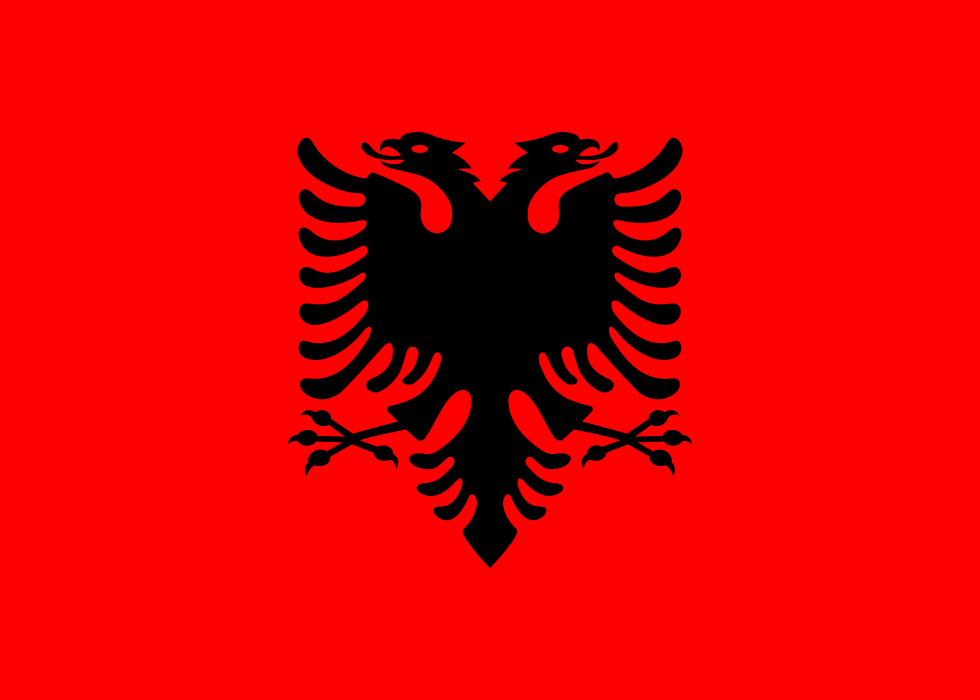
Albania, officially the Republic of Albania, is a country in Southeast Europe, situated in the Balkans on the Adriatic and Ionian Seas. It shares land borders with Montenegro, Kosovo, North Macedonia, and Greece. Encompassing 28,748 km2, Albania features diverse terrain, from the Albanian Alps to coastal plains. Tirana serves as its capital and largest city, followed by Durrës, Vlorë, and Shkodër.
6 hours ago : Albanian Protests Escalate Over Corruption and Proposed Kushner Trump Luxury Resort
Anti-government protests in Albania have intensified for over a week, marked by violent clashes between citizens and police. Demonstrators are expressing deep frustration over government corruption and plans for a luxury development involving Jared Kushner and Donald Trump.


November 1912: Independence from the Ottoman Empire
On 28 November 1912, Albania declared independence from the Ottoman Empire.
December 1912: Establishment of the Senate and Government
On 4 December 1912, the Assembly of Vlorë established the Senate and Government of Albania.
1912: Declaration of Independence in 1912
Albania's declaration of independence occurred in 1912, when Ismail Qemali raised the Albanian flag in Vlorë.
1912: Albania Declares Independence
In 1912, Albania declared its independence, marking a pivotal moment in its history after centuries of foreign rule.
1912: First movie theater built in Shkoder
In 1912, the first movie theater exclusively devoted to showing motion pictures was built in Shkodër, marking an early milestone for Albanian cinema.
1912: Adoption of National Anthem in 1912
The national anthem of Albania, "Himni i Flamurit", was composed by Asdreni and adopted as such following Albania's independence in 1912.
July 1913: Treaty of London
On 29 July 1913, the Treaty of London delineated the borders of Albania and its neighbors, leaving many Albanians outside of Albania.
October 1913: Establishment of the International Commission of Control
On 15 October 1913, the International Commission of Control was established in Vlorë to administer Albania until its own political institutions were in order.
November 1913: Pro-Ottoman forces Offer Throne
In November 1913, the Albanian pro-Ottoman forces offered the throne of Albania to Ahmed Izzet Pasha, the Ottoman war minister of Albanian origin.
February 1914: Proclamation of the Autonomous Republic of Northern Epirus
In February 1914, the Autonomous Republic of Northern Epirus was proclaimed in Gjirokastër by the local Greek population against incorporation to Albania.
June 1914: International Gendarmerie joined by Isa Boletini
In May and June 1914, the International Gendarmerie was joined by Isa Boletini and his men, mostly from Kosovo, and the rebels defeated northern Mirdita Catholics.
August 1914: Rebels captured Central Albania
By the end of August 1914, rebels had captured most of Central Albania, escalating the internal conflict.
September 1914: Collapse of Prince Wied's Regime
On 3 September 1914, Prince Wied's regime collapsed, leading him to leave the country amid internal revolt and instability.
1918: Congress of Durrës
In 1918, the Congress of Durrës sought protection from the Paris Peace Conference, but was denied, complicating Albania's international position.
1919: Serbian Attacks on Albanians
In 1919, Serbian forces launched attacks on Albanian inhabitants, resulting in massacres and displacement, particularly in Gusinje and Plav.
1921: Incorporation of Southern Provinces
In 1921, the southern provinces, formerly part of the Autonomous Republic of Northern Epirus, were incorporated into the Albanian Principality.
1924: Fan Noli Becomes Prime Minister
In 1924, Fan Noli became prime minister of Albania, aiming to institute a Western-style constitutional government and enhance critical sectors.
1928: Transition to Monarchy
In 1928, Albania transitioned from a republic to a monarchy with Zog assuming the title of King Zog I, supported by Fascist Italy.
1939: Italian Invasion
In 1939, Italy under Benito Mussolini launched a military invasion of Albania, leading to the exile of Zog and the establishment of an Italian protectorate.
1944: Liberation by Albanian Partisans
In 1944, Albanian partisan forces, under the leadership of Enver Hoxha, successfully liberated Albania from German occupation.
1946: Won the 1946 Balkan Cup
Albania national football team won the Balkan Cup in 1946.
1946: Nationalisation of Religious Estates
In 1946, religious estates underwent nationalisation in Albania, coinciding with the closure or transformation of religious institutions.
1953: Release of The Great Warrior Skanderbeg
In 1953, the Albanian-Soviet epic film, "The Great Warrior Skanderbeg", chronicling the life of the medieval Albanian hero Skanderbeg, was released.
1954: The Great Warrior Skanderbeg won international prize at Cannes Film Festival
In 1954, "The Great Warrior Skanderbeg" won the international prize at the Cannes Film Festival, marking a significant achievement for Albanian cinema.
1955: United Nations Member
Albania became a member of the United Nations (UN) in 1955.
1961: Diplomatic Separation from the Soviet Union
In 1961, Albania experienced strained ties with Moscow, leading to diplomatic separation from the Soviet Union due to disagreements over Soviet policies.
1962: Inauguration of Festivali i Këngës in 1962
Festivali i Këngës, an Albanian song contest organized by RTSH, was inaugurated in 1962.
1968: Withdrawal from the Warsaw Pact
In 1968, Albania withdrew from the Warsaw Pact in response to the invasion of Czechoslovakia, aligning with China during the Sino-Soviet conflict.
1970: Stagnation with China
In 1970, Albania's relations with China stagnated, prompting reassessment of their commitment and a reduction in Albania's dependence on China.
1972: Albania's first participation at the Olympic Games in 1972
Albania participated at the Olympic Games for the first time in 1972.
1972: Weightlifters won a gold medal at the World Weightlifting Championships in 1972
Albanian weightlifters won a gold medal at the World Weightlifting Championships in 1972.
July 1973: Highest Temperature Recorded
On 18 July 1973, the highest temperature ever recorded in Albania, 43.9 °C (111.0 °F), was observed in Kuçovë.
1976: Albania Declared an Atheist State
In 1976, Albania became the world's first constitutionally atheist state, forcing citizens to renounce religious beliefs.
1980: Missed Olympic Games in 1980
Albania missed the 1980 Olympic Games due to boycotts.
1984: Missed Olympic Games in 1984
Albania missed the 1984 Olympic Games due to boycotts.
1987: Participation at the Mediterranean Games since 1987
Albania has participated at the Mediterranean Games since the games of 1987 in Syria.
1989: Rise in Political Activism
After four decades of communism paired with the revolutions of 1989, Albania witnessed a notable rise in political activism, particularly among students.
1990: Albania Forest Cover
Albania's forest cover in 1990 was measured at 788,800 hectares.
1991: Albania has undergone a remarkable transformation in its urban landscape
After the collapse of communism in 1991, Albania has undergone a remarkable transformation in its urban landscape.
1991: Decrease in human resources in sciences and technology
After the fall of communism in 1991, human resources in sciences and technology in Albania have drastically decreased.
1991: First Multi-Party Elections
After the first multi-party elections of 1991, the communist party maintained a stronghold in the parliament.
1992: Returned for the 1992 Olympic Games
Albania returned for the 1992 Olympic Games in Barcelona.
1992: Democratic Party Election Victory
In the parliamentary elections of 1992, the Democratic Party defeated the communist party.
1994: Convention on Biological Diversity
Since 1994, Albania has been a party to the Convention on Biological Diversity (CBD) and its associated Cartagena and Nagoya Protocols.
1996: Military Spending
As of 1996 military spending in Albania was an estimated 1.5% of the country's GDP.
1996: Collapse of Pyramid Schemes
The pyramid schemes in Albania began to collapse in late 1996, leading to protests against the government by investors seeking their money back.
February 1997: Violent Protests
In February 1997, protests against the government in Albania turned violent as government forces responded by firing on demonstrators.
April 1997: Operation Alba
In April 1997, Operation Alba, a U.N. peacekeeping force led by Italy, entered Albania to assist with the evacuation of expatriates and secure the ground for international organizations.
1998: Transition to Parliamentary Republic
In 1998, Albania transitioned into a sovereign parliamentary constitutional republic, marking a fundamental milestone in its political evolution.
July 2000: Recreation of Counties
On 31 July 2000, counties were recreated in Albania to unify the 36 districts of that time.
2000: Rising interest in English, German and Turkish among young people
After 2000, English, German, and Turkish saw rising interest among young people in Albania, linked to cultural and economic factors.
2000: Won the Malta Rothmans International Tournament 2000
Albania national football team won the Malta Rothmans International Tournament 2000.
2000: Healthcare Performance in 2000
In 2000, Albania had the world's 55th-best healthcare performance, as defined by the World Health Organisation (WHO).
2001: Proportion of the urban demographic has consistently progressed from 47%
In 2001, the proportion of the urban demographic has consistently progressed from 47%, with a constant increase since then.
2002: Weightlifters won a silver medal at the World Weightlifting Championships in 2002
Albanian weightlifters won a silver medal at the World Weightlifting Championships in 2002.
2003: Tirana International Film Festival established
In 2003, the Tirana International Film Festival was established, becoming the largest film festival in the country.
2003: The score has been steadily declining since then
The press freedom index of Albania, had its score steadily declining since 2003, according to the 2020 report of Freedom in the World, the Freedom House classified the freedoms of press and speech in Albania as partly free from political interference and manipulation.
2005: 50% of professors and scientists left Albania
From 1991 to 2005, approximately 50% of the professors and scientists of universities and science institutions in Albania left the country.
2005: Albania had 500,000 visitors
In 2005, Albania had only 500,000 visitors, marking the beginning of a dramatic increase in tourism.
2006: Winter Olympic Games debut in 2006
Albania made their Winter Olympic Games debut in 2006.
2006: Stabilisation and Association Agreement with the EU
In 2006, Albania signed the Stabilisation and Association Agreement (SAA) with the European Union (EU).
February 2008: Participation in NATO's Operation Active Endeavor
Since February 2008, Albania has participated officially in NATO's Operation Active Endeavor in the Mediterranean Sea.
April 2008: Invitation to Join NATO
Albania was invited to join NATO on 3 April 2008.
2008: Recognition of Kosovo's Sovereignty
Albania recognized Kosovo's sovereignty in 2008.
2008: Religious Buildings in 2008
In 2008, Albania had 694 Catholic churches, 425 Orthodox churches, 568 mosques, and 70 bektashi takyas.
April 2009: Full NATO Membership
Albania became a full member of NATO on 2 April 2009.
2009: NATO Membership
Albania secured NATO membership in 2009, a major achievement in its foreign policy.
2009: Fruit and Vegetable Supply in 2009
In 2009, Albania had a fruit and vegetable supply of 886 grams per capita per day, the fifth-highest supply in Europe.
2009: Albania produced an estimated 17,500 tonnes of wine
In 2009, Albania produced an estimated 17,500 tonnes of wine, reflecting its long history of viticulture.
2009: Troop Numbers in 2009
In 2009, Albania reduced the number of active troops to 14,500.
2009: Free Trade Agreement with EFTA
In 2009, Albania signed a free trade agreement (FTA) with the European Free Trade Association (EFTA).
2010: Voluntary Military Service
Military service in Albania has been voluntary since 2010.
2011: Weightlifters won a bronze medal at the World Weightlifting Championships in 2011
Albanian weightlifters won a bronze medal at the World Weightlifting Championships in 2011.
2011: The census recorded 2,821,977 inhabitants
In 2011, the census recorded 2,821,977 inhabitants in Albania, marking a notable decline by 2023.
2012: Highest Placement in Environmental Performance Index
Albania's highest placement in the Environmental Performance Index was at position 15 in 2012.
2012: Albania had an estimated 4.2 million visitors
In 2012, Albania had an estimated 4.2 million visitors, which represented a 740% increase in tourism since 2005.
2013: Albanian athletes medals in 2013
From 1987 to 2013, Albanian athletes won a total of 43 medals at the Mediterranean Games.
2013: Edi Rama Wins Parliamentary Elections
In 2013, Edi Rama of the Socialist Party won the parliamentary elections and became prime minister of Albania.
June 2014: EU Candidate Status
On 24 June 2014, Albania was granted official candidate status for membership in the European Union.
2014: Inaugural Joint Meeting with Kosovo
In 2014, Albania and Kosovo held their inaugural joint meeting, enhancing bilateral cooperation.
2014: European Union Candidate Status
In 2014, Albania obtained candidate status and embarked on reforms to align with European Union (EU) accession standards.
2014: Albanian Helsinki Committee Report
In 2014, the Albanian Helsinki Committee (AHC) reported that the number of female murder victims is still high.
2015: 93% of the population had access to improved sanitation
According to data presented by the Joint Monitoring Programme for Water Supply and Sanitation (JMP) in 2015, about 93% of Albania's total population had access to improved sanitation.
2015: Forest Ownership
In 2015, 97% of Albania's forest area was reported to be under public ownership, with 3% under private ownership.
2015: Infant Mortality Rate in 2015
In 2015, Albania's infant mortality rate was estimated at 12 per 1,000 live births.
2015: Unified Municipalities
In 2015, municipalities in Albania unified and simplified the previous system of urban and rural municipalities or communes.
2015: ILGA-Europe ranking
In 2015, the association ILGA-Europe ranked Albania 19th in terms of LGBT rights out of 49 observed European countries.
2016: Obesity Data in 2016
According to 2016 WHO data, 21.7% of adults in Albania are clinically overweight, with a Body mass index (BMI) score of 25 or more.
2016: Textile production had an annual growth of 5.3%
As of 2016, textile production in Albania had an annual growth of 5.3% and an annual turnover of around 1.5 billion euros, marking a significant expansion in the industry.
2016: Tourism directly accounted for 8.4% of GDP
In 2016, tourism in Albania directly accounted for 8.4% of GDP, with indirect contributions pushing the proportion to 26%.
January 2017: Lowest Temperature Recorded
On 9 January 2017, the lowest temperature ever recorded in Albania, −29 °C (−20 °F), was recorded in Shtyllë, Librazhd.
2017: Grammy Nomination in 2017
Albanian opera singer Saimir Pirgu was nominated for the 2017 Grammy Award.
2017: Edi Rama Wins Again
Edi Rama of the Socialist Party won the 2017 parliamentary elections for a second term as prime minister.
2017: FIFA Ranking in 2017
In 2017, the Albania national football team ranked 51st in the world.
2018: 2.7 million mobile users with almost 1.8 million active broadband subscribers
As of the Electronic and Postal Communications Authority (AKEP) in 2018, Albania had approximately 2.7 million active mobile users with almost 1.8 million active broadband subscribers.
November 2019: Earthquake
On 26 November 2019, a 6.4 magnitude earthquake ravaged Albania, with the epicenter about 16 km (10 mi) southwest of the town of Mamurras.
2019: Tirana Airport carried more than 3.3 million passengers
In 2019, the Tirana International Airport carried more than 3.3 million passengers, connecting Albania to destinations in Europe, Africa, and Asia.
2019: UNESCO Site Shared with North Macedonia since 2019
Since 2019, the Natural and Cultural Heritage of the Ohrid region has been a UNESCO World Heritage Site shared with North Macedonia.
March 2020: COVID-19 Reaches Albania
In March 2020, COVID-19 was confirmed to have spread to Albania, leading the government to declare a state of emergency to limit the virus's spread.
June 2020: State of Emergency declared due to COVID-19
From March to June 2020, the government declared a state of emergency as a measure to limit the virus's spread.
2020: Albania ranked 84th on the Press Freedom Index
In 2020, Albania was ranked 84th on the Press Freedom Index by Reporters Without Borders, with its score steadily declining since 2003.
2020: Albania Forest Cover
In 2020, Albania's forest cover was around 29% of the total land area, equivalent to 788,900 hectares.
January 2021: COVID-19 Vaccination Campaign Started
On 11 January 2021, Albania's COVID-19 vaccination campaign started, marking a significant step in combating the pandemic.
August 2021: COVID-19 Vaccination Doses Administered
As of 11 August 2021, the total number of COVID-19 vaccines administered in Albania reached 1,280,239 doses.
2021: Socialist Party Victory
During the 2021 parliamentary elections, the ruling Socialist Party led by Rama secured its third consecutive victory.
2021: Birth rate
In 2021 the birth rate was 20% higher than 2022, largely due to emigration of people of childbearing age.
2021: Tirana County accounts for 44% of the national GDP
In 2021, Tirana County accounted for 44% of the national GDP, while Fier and Durrës contributed 11% and 10% respectively, highlighting economic disparities.
2022: EU Accession Negotiations
In 2022, Albania had been negotiating accession to the European Union as an official candidate for membership.
2022: Environmental Performance Index
In 2022, Albania's overall ranking was 62 out of 180 countries in the Environmental Performance Index.
2022: The birth rate was 20% lower than in 2021
In 2022, the birth rate in Albania was 20% lower than in 2021, largely due to emigration of people of childbearing age.
2022: ILGA-Europe ranking
On the latest report in 2022, Albania was ranked the 28th country in Europe, among 49 countries observed, in the ILGA-Europe ranking.
January 2023: Albania launched its first two satellites, Albania 1 and Albania 2
In January 2023, Albania launched its first two satellites, Albania 1 and Albania 2, into orbit, marking a milestone in monitoring the country's territory.
December 2023: Plans for collaboration between the Albanian government and ChatGPT announced
In December 2023, Prime Minister Edi Rama announced plans for collaboration between the Albanian government and ChatGPT, facilitated by discussions with Mira Murati, to streamline the alignment of Albanian laws with EU regulations.
2023: Albania ranked 21st globally in Energy Transition Index
According to the World Economic Forum's 2023 Energy Transition Index (ETI), Albania ranked 21st globally, highlighting its progress in energy transition.
2023: 2023 Census Results
As of the 2023 Census, Albania's religious composition includes Sunni Muslims (45.86%), Catholics (8.38%), Eastern Orthodox (7.22%), Bektashi Muslims (4.81%), Evangelicals (0.4%), other religions (0.15%), believers without religion or denomination (13.82%), Atheists (3.55%), and those who did not provide an answer (15.76%).
2023: 65% of Albania's population lived in urban areas
By 2023, Albania's urban population had risen to 65%, marking it as one of the fastest urbanising countries in Europe.
2023: Greenhouse Gas Emissions
In 2023 Albania emitted 7.67 million tonnes of greenhouse gases, equivalent to 2.73 tonnes per person.
2023: 91.07% reported Albanian as the language spoken at home
In the 2023 population census, 91.07% of people in Albania reported Albanian as the language spoken at home.
2023: Economic Freedom of the World Report
The 2023 Economic Freedom of the World report placed Albania in the 31st position.
2023: Albania's population was 2,402,113
The 2023 census conducted by the Instituti i Statistikave (INSTAT) indicated Albania's population was 2,402,113, a decline from 2011.
2023: 2023 census recorded ethnic composition
The 2023 census recorded the ethnic composition as Albanians 2,186,917 (91,04% of the total).
2024: Albania welcomed approximately 11.7 million tourists
In 2024, Albania welcomed approximately 11.7 million tourists, marking a significant increase from previous years, according to the United Nations World Tourism Organization (UN Tourism).
2024: Tourism in Albania
In 2024, tourism played a significant role in Albania's economy, attracting over 11 million visitors to the country.
2024: Transformation Index Ranking
The 2024 Bertelsmann Transformation Index ranked Albania 20th.
2025: Nominal GDP
As of 2025, Albania's nominal gross domestic product (GDP) is reported at $26.911 billion with a GDP per capita of $9,474.
2025: Albania was ranked 67th in the Global Innovation Index
In 2025 Albania was ranked 67th in the Global Innovation Index.
2029: Economic growth forecast
The projected annual percentage change in economic growth for 2029 is 3.5%.
2030: GHG emissions reduction pledged
Albania has pledged a 20.9% reduction in GHG emissions by 2030.
2050: Net zero pledge
Albania has pledged to achieve net zero emissions by 2050.
Mentioned in this timeline

The Winter Olympic Games a major international multi-sport event held...
The Union of Soviet Socialist Republics USSR existed from to...
Germany officially the Federal Republic of Germany is located in...
China officially the People's Republic of China PRC is located...
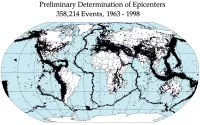
An earthquake is a sudden intense shaking of the Earth's...
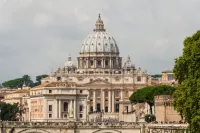
The Catholic Church the largest Christian church globally with over...
Trending

3 hours ago Mary Stoiana Faces Moyuka Uchijima at WTA Japan Open

3 hours ago Mahershala Ali Embraces Action Hero Role at 52 in Acclaimed New Film
4 hours ago Steve Kerr Discusses Future Retirement Timeline and the End of the Warriors Dynasty
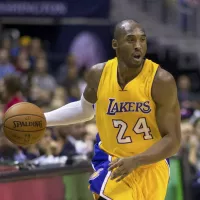
8 months ago Basketball legends share life lessons and memories of Kobe Bryant's impact and influence.
3 hours ago Cleveland Cavaliers Prepare for Highly Anticipated NBA Season Opener Against Philadelphia 76ers

4 hours ago Social Security Administration Launches Comprehensive Database Records Cleanup
Popular

Ken Paxton is an American politician and lawyer serving as...

Ilhan Omar is a prominent American politician currently serving as...

Michael Joseph Jackson the King of Pop was a highly...

Elon Musk is a visionary entrepreneur and engineer known for...
Cristiano Ronaldo widely considered one of the greatest footballers captains...
Linda Ronstadt is a versatile American singer renowned for her...