Billie Jean King's Success and Achievements in Timeline


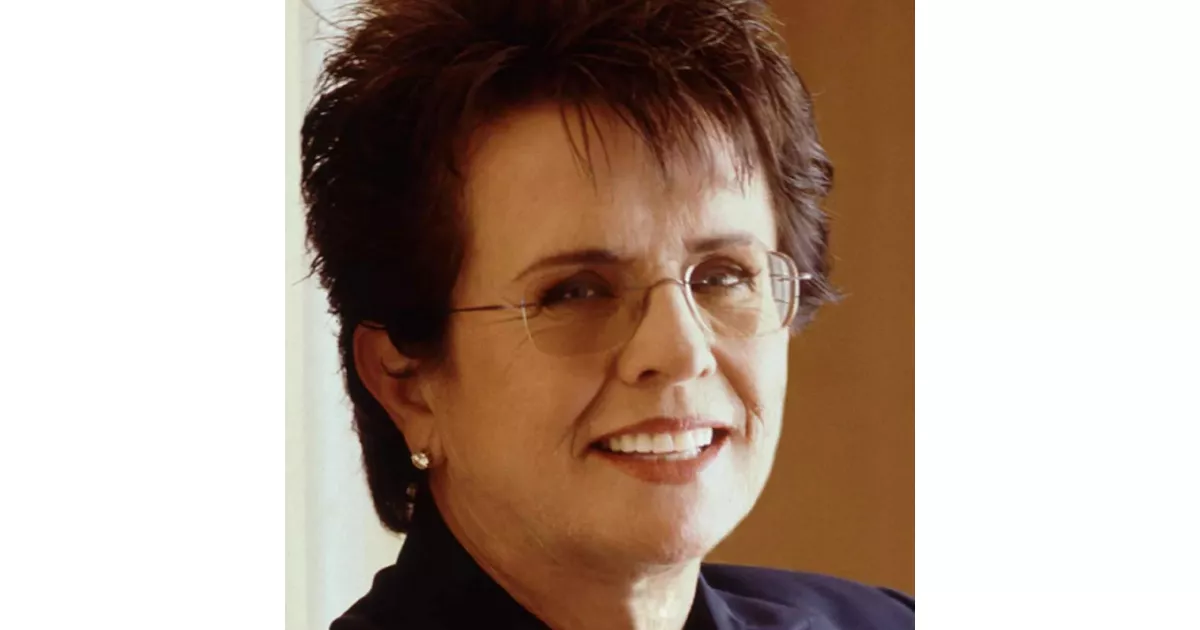
A success timeline featuring the most significant achievements of Billie Jean King.
Billie Jean King is a legendary American tennis player and a transformative figure in the fight for gender equality. Throughout her illustrious career, she secured 39 Grand Slam titles and dominated the tennis world in the 1960s and 70s. She is perhaps best known for her decisive victory in the 1973 'Battle of the Sexes' exhibition match against Bobby Riggs, which became a global cultural phenomenon. Beyond her athletic achievements, King was a tireless pioneer for social justice. She founded the Women's Tennis Association (WTA) and the Women's Sports Foundation, playing an instrumental role in advocating for equal prize money and opportunities for female athletes. As a trailblazer for LGBTQ+ rights, her courage in coming out further cemented her legacy as an influential icon who leveraged her platform to challenge systemic inequality and advocate for human rights far beyond the court.
1959: Commencement of Grand Slam Career
In 1959, Billie Jean King began a highly successful era in professional tennis, marking the first year of a streak where she would participate in 51 Grand Slam singles tournaments.


1959: Grand Slam Debut and Early Professional Coaching
In 1959, Billie Jean King began her competitive tennis career by working with coaches Frank Brennan and Alice Marble. During this year, she made her Grand Slam debut at the U.S. Championships at age 15, where she was eliminated in the first round, and received recognition from Sports Illustrated as a promising young athlete.
1960: Tournament Success and Ranking Improvement
Throughout 1960, Billie Jean King saw significant growth, winning her first tournament at the Philadelphia and District Grass Court Championships. She advanced to the third round of the U.S. Championships, reached the final of the National Girls' 18 and Under Championships, and climbed to the number 4 spot in the national tennis rankings, though her coaching partnership with Alice Marble ended due to interpersonal conflicts.
1961: Wimbledon Doubles Triumph and Education Struggles
In 1961, Billie Jean King gained international fame by winning the Wimbledon women's doubles title with Karen Hantze, becoming the youngest team to do so. That same year, she faced a defeat in the Wimbledon singles tournament against Yola Ramírez and encountered difficulties securing a sports scholarship while attending Los Angeles State.
1962: Historic Wimbledon Upset and Second Doubles Title
During the 1962 Wimbledon tournament, King achieved a historic milestone by upsetting the top-seeded Margaret Court in the second round, marking the first time the women's top seed lost her opening match at the event. Additionally, she and her partner Karen Hantze successfully defended their Wimbledon doubles title in 1962.
1963: First Federation Cup Victory
In 1963, Billie Jean King contributed to the United States team's success in the Federation Cup finals, marking the first of her seven victories in the tournament.
1964: Commitment to Professional Tennis
During 1964, Billie Jean King transitioned to a full-time tennis career after receiving financial sponsorship from Robert Mitchell to train in Australia with coach Mervyn Rose. Throughout this year, she competed in several international tournaments, including the U.S. Championships and various Australian championships, while balancing her history studies at Los Angeles State College.
1965: Billie Jean King's 1965 Competitive Tennis Season
Throughout 1965, Billie Jean King competed in several major tournaments, including the Fed Cup, the Australian Championships, Wimbledon, and the U.S. Championships. Despite suffering several losses to rivals like Margaret Court and Maria Bueno, King concluded the year with six tournament victories and achieved the milestone of being named co-U.S. No. 1 by the United States Lawn Tennis Association, a ranking decision that set a historical precedent.
1966: Second Federation Cup Victory
Billie Jean King was a member of the triumphant United States team during the 1966 Federation Cup finals.
1966: Breakthrough Wimbledon Victory
In 1966, at age 22, Billie Jean King won her first Wimbledon singles title and her first of twelve career Grand Slam singles titles by defeating Maria Bueno in the final, following a semi-final win against Margaret Court. This victory marked a pivotal career milestone after thirteen failed attempts between 1959 and 1965.
1966: Beginning of Rivalry Dominance
Starting in 1966 and continuing through 1975, Billie Jean King and Margaret Court established a period of dominance in professional tennis, competing in the vast majority of Grand Slam singles tournaments held during this decade.
1966: Beginning of World No. 1 Ranking Streak
Starting in 1966, Billie Jean King began a decade-long period of dominance in professional tennis, achieving the year-ending World No. 1 ranking for the first time in that year.
1967: Third Federation Cup Victory
During the 1967 Federation Cup, Billie Jean King helped lead the United States team to another championship win.
1971: Commencement of Grand Slam Dominance
Beginning in 1971, Billie Jean King entered a period of exceptional performance, winning seven out of the ten Grand Slam singles tournaments she participated in through 1975.
1972: Sports Illustrated Sportsman of the Year
In 1972, Billie Jean King was named a joint winner of the Sports Illustrated Sportsman of the Year award, sharing the title with John Wooden.
1972: Achieving the Career Grand Slam
In 1972, Billie Jean King won the French Open singles title, making her just the fifth woman in the history of the sport to secure singles titles at all four Grand Slam tournaments, an accomplishment known as a career Grand Slam. She also completed a career Grand Slam in mixed doubles during her career, though the Australian Open remained the only women's doubles title she did not secure.
1973: Battle of the Sexes
In 1973, at the age of 29, Billie Jean King competed in and won the highly publicized Battle of the Sexes tennis match against 55-year-old Bobby Riggs.
1975: Time Person of the Year
As a recognition of her influence and achievements, Billie Jean King was named one of the Time Persons of the Year in 1975.
1975: Conclusion of Decade of Rankings Dominance
By 1975, Billie Jean King concluded a remarkable ten-year span where she consistently held a top-three world ranking, having secured the year-ending World No. 1 position six times throughout the period ending in 1975.
1975: Conclusion of Dominant Grand Slam Streak
By 1975, Billie Jean King concluded a successful five-year stretch where she established a record of winning seven out of the ten Grand Slam singles tournaments she entered.
1975: Conclusion of Rivalry Era
By the conclusion of 1975, the competitive era between Billie Jean King and Margaret Court had seen the two athletes claim a combined 24 Grand Slam titles out of the 40 singles tournaments held during that ten-year span.
1976: Start of Consecutive Federation Cup Wins
Beginning in 1976, Billie Jean King began a streak of Federation Cup victories as part of the United States team that would continue through 1979.
1979: Conclusion of Federation Cup Streak
By 1979, Billie Jean King had successfully concluded her final run of Federation Cup titles, contributing to a total of seven wins throughout her career.
1983: Conclusion of Grand Slam Singles Career
The year 1983 marked the final period of Billie Jean King's participation in Grand Slam singles events, capping off a career where she reached the semifinals 27 times and the quarterfinals 40 times by the end of 1983.
1987: Induction into International Tennis Hall of Fame
In 1987, Billie Jean King received the prestigious honor of being inducted into the International Tennis Hall of Fame for her contributions to the sport.
1990: Induction into National Women's Hall of Fame
In 1990, Billie Jean King was officially inducted into the National Women's Hall of Fame for her pioneering work and leadership.
2006: Renaming of USTA National Tennis Center
The USTA National Tennis Center in New York City was officially renamed the USTA Billie Jean King National Tennis Center in 2006 to honor her legacy.
2010: Fed Cup Award of Excellence
Billie Jean King was bestowed the Fed Cup Award of Excellence in 2010 in recognition of her significant impact on tennis.
2018: BBC Sports Personality of the Year Lifetime Achievement Award
In 2018, Billie Jean King was honored with the BBC Sports Personality of the Year Lifetime Achievement Award.
2020: Renaming of the Federation Cup
In 2020, the international tennis tournament known as the Federation Cup was renamed the Billie Jean King Cup to celebrate her lifelong contributions to tennis.
2022: Awarded French Legion of Honour
Billie Jean King was awarded the French Legion of Honour in 2022, recognizing her international impact and service.
2024: Congressional Gold Medal Receipt
In 2024, Billie Jean King received the Congressional Gold Medal, one of the highest civilian honors in the United States.
May 2026: Completion of History Degree
At the age of 82, Billie Jean King successfully completed her degree in history from California State University, Los Angeles in May 2026.
Mentioned in this timeline

Barack Obama the th U S President - was the...

Sir Elton John is a highly successful British singer songwriter...
California is a U S state on the Pacific Coast...

Sports Illustrated SI is an American sports magazine launched in...

New Zealand is an island country in the southwestern Pacific...

Emma Stone is a highly acclaimed American actress and film...
Trending

4 hours ago Cornell University Bans Fraternity Parties Following Severe Sexual Assault Allegations

4 hours ago Harrison Ford Transforms Jackson Hole Ranch Into Dedicated Wildlife Sanctuary

5 hours ago Danny Trejo Addresses Backlash Over Daily Wire ICE Movie Casting

8 days ago Muchova and Osaka Clash in High-Stakes WTA Beijing Fourth Round Matchup
5 hours ago Fed Official John Williams Debates Potential Interest Rate Adjustments for 2027
5 hours ago Apple Prepares to Debut New iPad Mini and Touchscreen MacBook in Late October
Popular

Ken Paxton is an American politician and lawyer serving as...

Ilhan Omar is a prominent American politician currently serving as...

Jameis Winston is an American football quarterback currently playing for...

Cristiano Ronaldo widely considered one of the greatest footballers captains...

Michael Joseph Jackson the King of Pop was a highly...

Kimberly Guilfoyle is an American television personality and former prosecutor...