History of Ecuador in Timeline


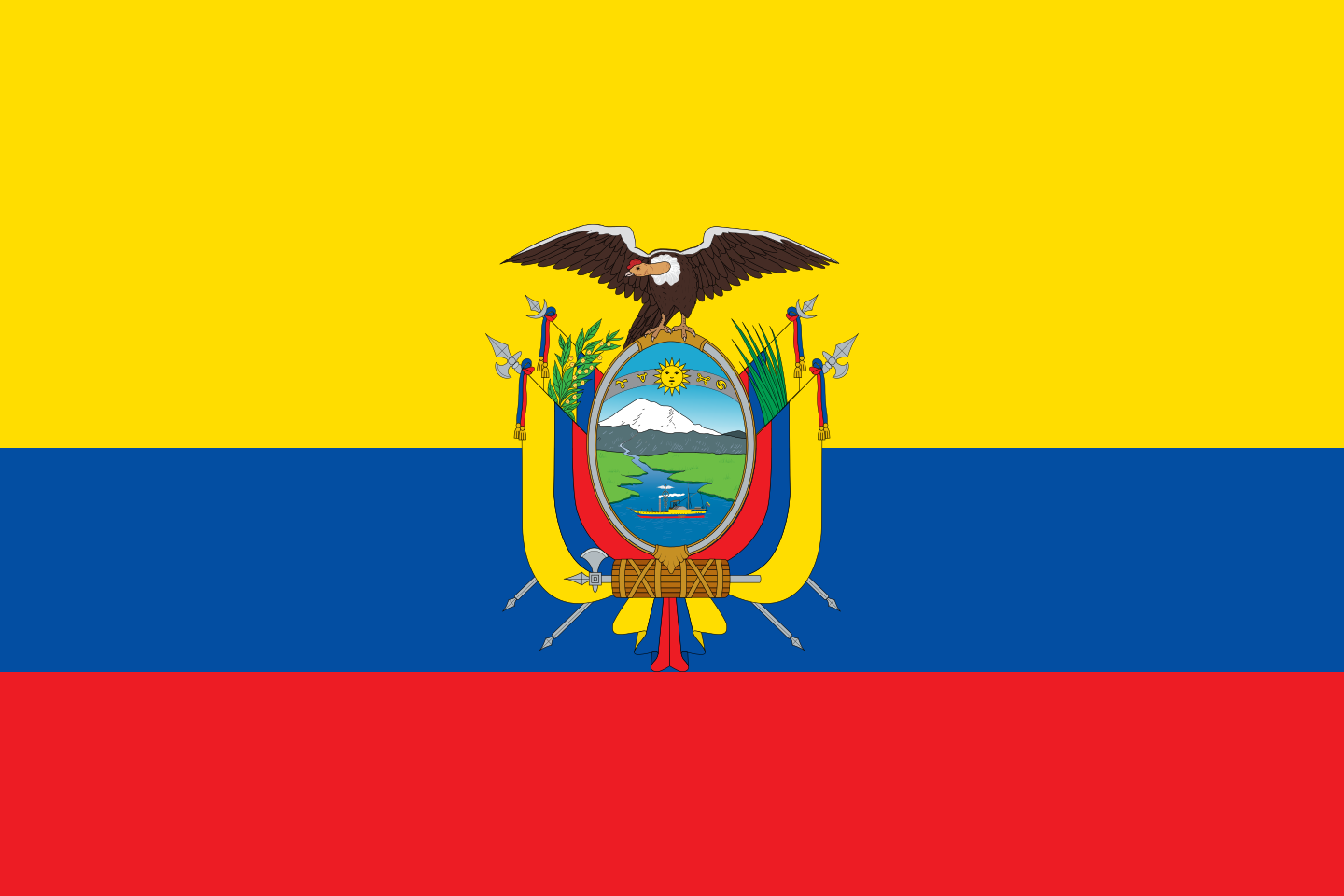
Ecuador is a country located in northwestern South America, bordered by Colombia, Peru, and the Pacific Ocean. It includes the Galápagos Islands. The capital city is Quito, and the largest city is Guayaquil.
4 hours ago : US & Ecuadorian Forces Combat Drug Trafficking; General Donovan Visits; Curfew Imposed.
US and Ecuadorian forces collaborated to combat drug trafficking. General Donovan visited Ecuador amid rising concerns. President Noboa imposed a curfew in four provinces to fight organized crime.


May 1904: Signing of the Tobar-Rio Branco Treaty
On May 6, 1904, Ecuador signed the Tobar-Rio Branco Treaty, recognizing Brazil's claims to the Amazon in recognition of Ecuador's claim to be an Amazonian country to counter Peru's earlier Treaty with Brazil.
1904: Loss of territories to Brazil
In 1904, Ecuador lost contested territories to Brazil through a series of peace treaties.
1910: Border dispute submitted to Spain for arbitration
From 1880 to 1910, the border dispute between Ecuador and Peru was submitted to Spain for arbitration, but to no avail.
1911: Concession to Anglo Ecuadorian Oilfields
Starting in 1911, the Government of Ecuador conceded 98 mines to the British oil company Anglo Ecuadorian Oilfields in Ancon.
July 1916: Signing of the Muñoz Vernaza-Suarez Treaty
On July 15, 1916, the Muñoz Vernaza-Suarez Treaty was signed between Ecuador and Colombia, recognizing Colombian rights to the Putumayo river and Ecuador's rights to the Napo river.
1916: Loss of territories to Colombia
In 1916, Ecuador lost some contested territories to Colombia.
1920: Air Academy Cosme Rennella Founded
The Air Academy Cosme Rennella, located in Salinas, was founded circa 1920, graduating air force officers.
1921: Emergency Quota Act
The Emergency Quota Act of 1921 restricted immigration to the United States, leading Italians to emigrate to Ecuador.
March 1922: Signing of the Salomon-Lozano Treaty
On March 24, 1922, the Salomon-Lozano Treaty was signed between Colombia and Peru, which Ecuador protested since Colombia gave away Ecuadorian claimed land to Peru that Ecuador had given to Colombia in 1916.
July 1924: Signing of the Ponce-Castro Oyanguren Protocol
On July 21, 1924, Ecuador and Peru signed the Ponce-Castro Oyanguren Protocol, agreeing to direct negotiations and to submit the dispute to the United States for arbitration.
1925: Julian Revolution
In 1925, the military "Julian Revolution" ended the Liberal wing's retention of power.
1930: Lebanese immigrants in Ecuador
By 1930, there were 577 Lebanese immigrants and 489 of their descendants residing in Ecuador.
1933: Arrival of Ashkenazi Jews
Ashkenazi Jews arrived in Ecuador mostly as refugees after the ascendance of National Socialism in Germany in 1933.
September 1935: Negotiations began in Washington
On September 30, 1935, negotiations between Ecuadorian and Peruvian representatives began in Washington.
1936: Compulsory Voting Established
Since 1936, voting has been compulsory for all literate persons aged 18–65 in Ecuador.
September 1937: Negotiations broke off
On September 29, 1937, the Peruvian representatives decided to break off the negotiations with Ecuador.
1939: Entry permits granted to Jewish refugees
In 1939, Ecuador granted entry permits to 165 Jewish refugees from Germany aboard the ship Koenigstein, after several South American countries refused them.
1940: Number of Jews in Ecuador
In 1940, there were 3,000 Jews in Ecuador.
July 1941: Outbreak of war with Peru
In July 1941, war broke out between Ecuador and Peru amid growing tensions in disputed territories, with Peru launching a major invasion on July 23, 1941.
January 1942: Signing of the Rio Protocol
On January 29, 1942, Ecuador and Peru signed the Rio Protocol, formalizing an accord that favored hemispheric unity against the Axis powers in World War II, granting Peru control over the territory it occupied at the end of the war.
1942: Loss of territories to Peru
In 1942, Ecuador lost territories to Peru after a short war, which concluded with the signing of the Protocol of Rio de Janeiro.
1944: Glorious May Revolution
In 1944, the Glorious May Revolution successfully removed Carlos Arroyo del Río as a dictator from Ecuador's government.
1950: Peak Jewish population
At its peak in 1950, the Jewish population of Ecuador was estimated at 4,000.
1950: Infant mortality rate
In 1950, the infant mortality rate in Ecuador was 140 per 1,000 live births.
1964: Texaco Operations Begin in Ecuadorian Amazon
In 1964, Texaco, an American oil company, began operating in the Ecuadorian Amazon region.
1967: Current structure of the public health care system
The current structure of the Ecuadorian public health care system dates back to 1967.
1972: Military junta overthrew the government
In 1972, a "revolutionary and nationalist" military junta overthrew the government of Velasco Ibarra and exiled José María Velasco to Argentina.
1972: Completion of the Andean pipeline
In 1972, construction of the Andean pipeline was completed, making Ecuador South America's second-largest oil exporter.
1976: Another military government took over
In 1976, the military government led by General Guillermo Rodríguez was removed by another military government led by Admiral Alfredo Poveda.
April 1979: Jaime Roldós Aguilera elected president
On April 29, 1979, Jaime Roldós Aguilera was elected president of Ecuador.
1980: Founding of the Partido Pueblo, Cambio y Democracia
In 1980, Jaime Roldós Aguilera founded the Partido Pueblo, Cambio y Democracia (People, Change, and Democracy Party).
February 1981: Paquisha Incident
In January-February 1981, a border skirmish known as the Paquisha Incident occurred between Ecuador and Peru.
May 1981: Death of Jaime Roldós Aguilera
On May 24, 1981, President Jaime Roldós Aguilera died in a plane crash.
1984: León Febres Cordero elected president
In 1984, León Febres Cordero from the Social Christian Party was elected president of Ecuador.
1986: Estimate of Lebanese descendants
A 1986 estimate from Lebanon's Ministry of Foreign Affairs stated there were 100,000 Lebanese descendants residing in Ecuador.
1988: Rodrigo Borja Cevallos wins the presidency
In 1988, Rodrigo Borja Cevallos of the Democratic Left party won the presidency.
1991: Use of Northern Kichwa (Quechua)
In 1991 Northern Kichwa (Quechua) and other pre-colonial American languages were spoken by 2,500,000.
1992: Ecuador Suspends OPEC Membership
In 1992, Ecuador suspended its membership in OPEC.
1992: Texaco Operations End in Ecuadorian Amazon
In 1992, Texaco concluded its operations in the Ecuadorian Amazon region, after drilling 339 wells and abandoning 627 toxic wastewater pits.
January 1995: Cenepa War
In January 1995, full-scale warfare erupted between Ecuador and Peru, known as the Cenepa War.
1995: Cenepa War between Ecuador and Peru
In 1995, the Cenepa War was fought between Ecuador and Peru.
1996: Ecuador wins first Olympic medal
In 1996, Jefferson Pérez won Ecuador's first Olympic medal at the Atlanta Summer Olympics, winning gold in the 20 km walk.
1996: Net Primary Enrollment Rate
In 1996, the net primary enrollment rate in Ecuador was 96.9%, with 71.8% of children remaining in school until the fifth grade, around age 10.
October 1998: Brasilia Presidential Act peace agreement
On October 26, 1998, Ecuador and Peru signed the Brasilia Presidential Act peace agreement, ending hostilities.
May 1999: Final border demarcation
On May 13, 1999, the final border demarcation between Ecuador and Peru came into effect.
June 1999: Withdrawal of MOMEP troop deployment
On June 17, 1999, the multi-national MOMEP (Military Observer Mission for Ecuador and Peru) troop deployment withdrew.
1999: GDP Growth
Between 1999 and 2007, GDP doubled, reaching $65,490 million.
1999: Opposition parties gained control of Congress
In 1999, opposition parties gained control of Congress in Ecuador.
1999: Extreme poverty rate decline
The extreme poverty rate in Ecuador started a significant decline in 1999.
April 2000: Adoption of the U.S. dollar
On April 13, 2000, Ecuador adopted the U.S. dollar as its national currency.
2000: Adoption of the U.S. dollar
Before 2000, the Ecuadorian sucre was prone to rampant inflation; Ecuador adopted the U.S. dollar as its official means of transaction.
2000: Average Economic Growth
Between 2000 and 2006, Ecuador's economy experienced an average growth of 4.6%.
2000: Health care ranking
Ecuador ranked 111 in most efficient health care countries in the year 2000.
2001: Poverty rate estimation
In 2001, the extreme poverty rate in Ecuador was estimated at 40% of the population.
2002: Growth in Colombian and Venezuelan refugees
Starting from 2002, there has been an exponential and significant growth in Colombian and Venezuelan refugees in Ecuador.
2003: Amnesty International Report on Human Rights
In 2003, an Amnesty International report criticized Ecuador for scarce prosecutions of human rights violations by security forces and alleged routine torture of prisoners.
April 2005: Removal of President Lucio Gutiérrez
In April 2005, President Lucio Gutiérrez was removed from office by Congress due to government failures and destabilizing efforts. Vice President Alfredo Palacio succeeded him.
2006: Average Economic Growth
Between 2000 and 2006, Ecuador's economy experienced an average growth of 4.6%.
2006: Rafael Correa Gained Presidency
In 2006, Rafael Correa was elected president of Ecuador.
2006: Trade balance surplus increase
In 2012, the trade balance surplus had risen by about $425 million compared to 2006.
January 2007: Rafael Correa's Swearing-In Ceremony
In January 2007, Rafael Correa's swearing-in ceremony was attended by several left-wing political leaders of Latin America, who would become his future allies.
April 2007: Ecuador paid off its debt to the IMF
In April 2007, Ecuador fully paid off its debt to the International Monetary Fund (IMF).
December 2007: Unemployment Rate
From December 2007, the monthly unemployment rate remained at about 6 and 8 percent until September 2008.
2007: Ecuadorian Constituent Assembly Elected
In 2007, the Ecuadorian Constituent Assembly was elected to write a new constitution.
2007: Trade balance surplus comparison
The trade balance surplus in 2012 was a huge figure compared with that of 2007, which reached only $5.7 million.
January 2008: Inflation Rate
Until January 2008, Ecuador's inflation rate was about 1.14%, the highest in the past year.
September 2008: Unemployment Rate
From December 2007 until September 2008, the monthly unemployment rate remained at about 6 and 8 percent.
November 2008: Unemployment Rate
In November 2008, the unemployment rate in Ecuador dropped to 8 percent.
December 2008: Ecuador Declares National Debt Illegitimate
In December 2008, President Correa declared Ecuador's national debt illegitimate, arguing it was odious debt contracted by corrupt regimes. Ecuador defaulted on over $3 billion in bonds and reduced the price of outstanding bonds.
2008: Sociobosque Program Begun
In 2008, Ecuador had 19% of its land area protected and began the Sociobosque program, preserving another 2.3% of total land area by incentivizing landowners to maintain native ecosystems.
2008: New constitution recognizes rights of nature
In 2008, Ecuador's new constitution became the first in the world to recognize legally enforceable rights of nature.
2008: LDU Quito runners-up in FIFA Club World Cup
In 2008, LDU Quito became the only Ecuadorian team that has won the Copa Libertadores and also were runners-up in the FIFA Club World Cup.
2008: Rise in returning nationals
In 2008, policies resulted in a rapid and significant rise in the flow of returning Ecuadorian nationals, most notably during the economic crisis that affected Europe and North America.
2008: New Constitution Approved by Referendum
In 2008, the constitution written by the Ecuadorian Constituent Assembly was approved by referendum.
2008: Universal and compulsory social security coverage
In 2008, the government introduced universal and compulsory social security coverage in Ecuador.
2008: Oil trade balance revenues
In 2008, the oil trade balance had positive revenues of $3.295 million, while non-oil was negative, amounting to $2.842 million.
2008: Free basic health care
Since 2008, basic health care, including doctor's visits, basic surgeries, and basic medications, has been provided free in Ecuador.
2008: Reduction of poverty through social spending
Starting in 2008, the reduction of poverty in Ecuador was realized through social spending, mainly in education and health, due to the bad economic performance of nations where most Ecuadorian emigrants work.
January 2009: Central Bank of Ecuador Growth Forecast
In January 2009, the Central Bank of Ecuador (BCE) forecasted a 6.88% growth for 2010.
June 2009: Ecuador Joins Bolivarian Alliance for the Americas
In June 2009, under President Correa, Ecuador joined the Bolivarian Alliance for the Americas (ALBA).
2009: Defense Ministry Restructuring
In 2009, the new administration at the Defense Ministry launched a deep restructuring within the Ecuadorian Armed Forces, increasing the spending budget to $1,691,776,803.
2010: Largest Ethnic Group
As of 2010, the largest ethnic group in Ecuador is the Mestizos, constituting about 71% of the population.
2010: Unemployment Rate
In 2010, the unemployment rate was 7.6% in Ecuador.
2010: Significant decline in the extreme poverty rate
The extreme poverty rate in Ecuador declined significantly between 1999 and 2010.
2011: Oil reserves estimation
As of 2011, Ecuador's proven oil reserves were estimated at 6.51 billion barrels.
2011: Poverty rate drops
By 2011, the extreme poverty rate in Ecuador had dropped to 17.4% of the total population.
2011: GDP Growth
In 2011, Ecuador's GDP grew at 8% and ranked third highest in Latin America.
August 2012: Trade balance surplus
The overall trade balance for August 2012 was a surplus of almost $390 million for the first six months of 2012.
2012: Membership of The Church of Jesus Christ of Latter-day Saints
According to estimates, in 2012, The Church of Jesus Christ of Latter-day Saints accounted for about 1.4% of the population, or 211,165 members.
2012: Restrictions on Media and Public Protests
In 2012, Ecuador enforced laws forbidding media messages favoring or disfavoring political messages. Twenty private TV or radio stations were closed down, and people engaged in public protests faced prosecution for "terrorism and sabotage".
2012: Unemployment Rate
In 2012, the unemployment rate was 4.8% in Ecuador.
February 2013: Inauguration of New Quito Airport
A new airport was built in Tababela and was inaugurated in February 2013, with Canadian assistance, to serve Quito.
2013: Ecuador's technology innovation ranking
In 2013, Ecuador was placed in 96th position for innovation in technology in a World Economic Forum study.
2013: Guillermo Lasso Second in Presidential Election
In 2013, Guillermo Lasso finished second in the presidential election.
2014: Mean number of school years completed
In 2014 the mean number of school years completed in rural areas is 7.39 as compared to 10.86 in urban areas.
2014: Completion of the main road to the new airport
In late 2014, the main road leading from Quito city center to the new airport will be finished.
2015: Education Report
According to a 2015 report from the Ministry of Education, the mean number of school years completed in rural areas of Ecuador was 7.39, compared to 10.86 in urban areas.
2015: Corruption remains a problem
In 2015, corruption remained a problem in the Ecuadorian health system, with overbilling recorded in public and private establishments.
2016: New public hospitals built
Between 2008 and 2016, new public hospitals have been built in Ecuador.
2016: Poverty Level and GDP Growth
By 2016, poverty in Ecuador had decreased to 22.5% and annual per capita GDP growth was at 1.5 percent.
2017: Decreased Restrictions on Media
According to Freedom House, restrictions on the media and civil society have decreased since 2017 in Ecuador.
2017: Guillermo Lasso Second in Presidential Election
In 2017, Guillermo Lasso finished second in the presidential election.
2017: Lenín Moreno Elected President
In 2017, Lenín Moreno was elected president of Ecuador, succeeding Rafael Correa.
2017: Law on Human Mobility Adopted
In 2017, the Ecuadorian parliament adopted a law on human mobility.
2017: Jehovah's Witnesses in Ecuador
In 2017, there were 92,752 Jehovah's Witnesses in Ecuador.
August 2018: Ecuador Leaves Bolivarian Alliance for the Americas
In August 2018, Ecuador, under President Moreno, withdrew from the left-wing Bolivarian Alliance for the Americas (ALBA).
October 2018: Ecuador Cuts Diplomatic Ties with Venezuela
In October 2018, President Moreno's government cut diplomatic relations with the Maduro administration of Venezuela.
2018: Forest Landscape Integrity Index Ranking
In 2018, Ecuador had a Forest Landscape Integrity Index mean score of 7.66/10, ranking it 35th globally out of 172 countries.
March 2019: Inauguration of Cuenca's tramway
Cuenca's tramway, the largest public transport system in the city and the first modern tramway in Ecuador, was inaugurated on 8 March 2019.
March 2019: Ecuador Withdraws from UNASUR
In March 2019, Ecuador withdrew from the Union of South American Nations (UNASUR).
June 2019: Ecuador Allows U.S. Military Planes to Operate from Galapagos
In June 2019, Ecuador agreed to allow U.S. military planes to operate from an airport on the Galapagos Islands.
October 2019: Fuel Subsidies Protests
In October 2019, a series of protests began against the end of fuel subsidies and austerity measures. Protesters overran Quito, and the government temporarily relocated to Guayaquil, before restoring fuel subsidies later that month.
February 2020: President Moreno Visits Washington
In February 2020, President Moreno's visit to Washington marked the first meeting between an Ecuadorian and U.S. president in 17 years.
2020: Jewish population decline
Around 2020, the Jewish population of Ecuador had diminished to some 290, forming one of the smallest Jewish communities in South America.
2020: Ecuador Leaves OPEC
In 2020, under President Moreno, Ecuador left OPEC to increase crude oil exportation.
April 2021: Guillermo Lasso Wins Presidential Election
In April 2021, conservative Guillermo Lasso won the presidential election with 52.4% of the vote, defeating left-wing economist Andrés Aráuz.
May 2021: Guillermo Lasso Sworn In as President
On May 24, 2021, Guillermo Lasso was sworn in as president of Ecuador.
October 2021: State of Emergency Declared to Combat Crime
In October 2021, President Lasso declared a 60-day state of emergency to combat crime and drug-related violence.
2021: Force majeure for oil exports
In late 2021, Ecuador declared a force majeure for oil exports due to erosion near key pipelines (privately owned OCP pipeline and state-owned SOTE pipeline) in the Amazon.
2021: Ecuador's Population Estimate
The 2021 estimates put Ecuador's population at 17,797,737.
October 2022: UN Concerns About Detention Centers
In October 2022, the United Nations expressed concerns about the situation in Ecuadorian detention centers and prisons, and the human rights of those deprived of liberty.
2022: Supreme Court Decision on Indigenous Rights and Industrial Projects
In 2022, the supreme court of Ecuador ruled that projects generating excessive sacrifices to collective rights of communities and nature are prohibited, and required the government to respect Indigenous peoples' opinions on industrial projects.
2022: Oil production returns to normal
In early 2022, Ecuador's oil production returned to its normal level of 435,000 barrels per day after the force majeure that lasted about three weeks.
February 2023: Voters Reject Lasso's Proposed Changes in Referendum
In February 2023, voters overwhelmingly rejected President Lasso's proposed constitutional changes in a referendum.
October 2023: Daniel Noboa Wins Presidential Election
On October 15, 2023, centrist candidate Daniel Noboa won the premature presidential election with 52.3% of the vote against leftist candidate Luisa González.
November 2023: Noboa Sworn In
On November 23, 2023, Daniel Noboa was sworn in as president.
January 2024: Internal Armed Conflict Declared Against Organized Crime
In January 2024, President Noboa declared an "internal armed conflict" against organized crime following the escape of José Adolfo Macías Villamar and an armed attack at a public television channel.
2024: Global Hunger Index
In 2024, Ecuador ranked 58th out of 127 countries in the Global Hunger Index (GHI), with a score of 11.6, indicating a moderate level of hunger.
April 2025: President Daniel Noboa wins Presidential Election
In April 2025, President Daniel Noboa won the run-off round of Ecuador's presidential election, meaning he will now serve a full four-year term.
June 2025: Fito was recaptured
In June 2025, Fito was recaptured and extradited to the United States to face charges of international cocaine distribution conspiracy, use of firearms in furtherance of drug trafficking and straw purchasing of firearms conspiracy. Fito pled not guilty to all charges and is currently awaiting conviction.
October 2025: Assassination Attempt on President Daniel Noboa
In October 2025, five people were arrested following an alleged assassination attempt on President Daniel Noboa.
2025: Global Innovation Index ranking
Ecuador was ranked 113rd in the Global Innovation Index in 2025.
Mentioned in this timeline
Venezuela officially the Bolivarian Republic of Venezuela is located on...
Colombia officially the Republic of Colombia is a country located...
Germany officially the Federal Republic of Germany is a nation...
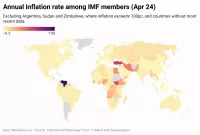
Inflation in economics signifies a rise in the average prices...

Football is a family of team sports primarily involving kicking...
FIFA the F d ration Internationale de Football Association is...
Trending
44 minutes ago Saddiq Bey Proves Pelicans Right After Trade: Flipping the Narrative Brilliantly
10 days ago Newsom supports age restrictions on social media citing parental experience and teen phone obsession.

11 months ago Mark Williams' Status Uncertain for Friday's Game; Will Rest on Sunday.
45 minutes ago Kirill Kaprizov aims for Wild's goal record after scoring against St. Louis.
45 minutes ago Michael Strahan's Lifestyle Brand Expands with Belk Partnership and Career Announcement.

46 minutes ago Maggie and Jake Gyllenhaal's Bond: Closer Than Ever, Reflecting on Careers and Relationships.
Popular
Hillary Diane Rodham Clinton is a prominent American politician lawyer...
Jesse Jackson is an American civil rights activist politician and...

Ken Paxton is an American politician and lawyer serving as...

Jim Carrey is a Canadian-American actor and comedian celebrated for...
Bill Clinton served as the nd U S President from...
XXXTentacion born Jahseh Dwayne Ricardo Onfroy was a controversial yet...