History of Jackie Robinson in Timeline


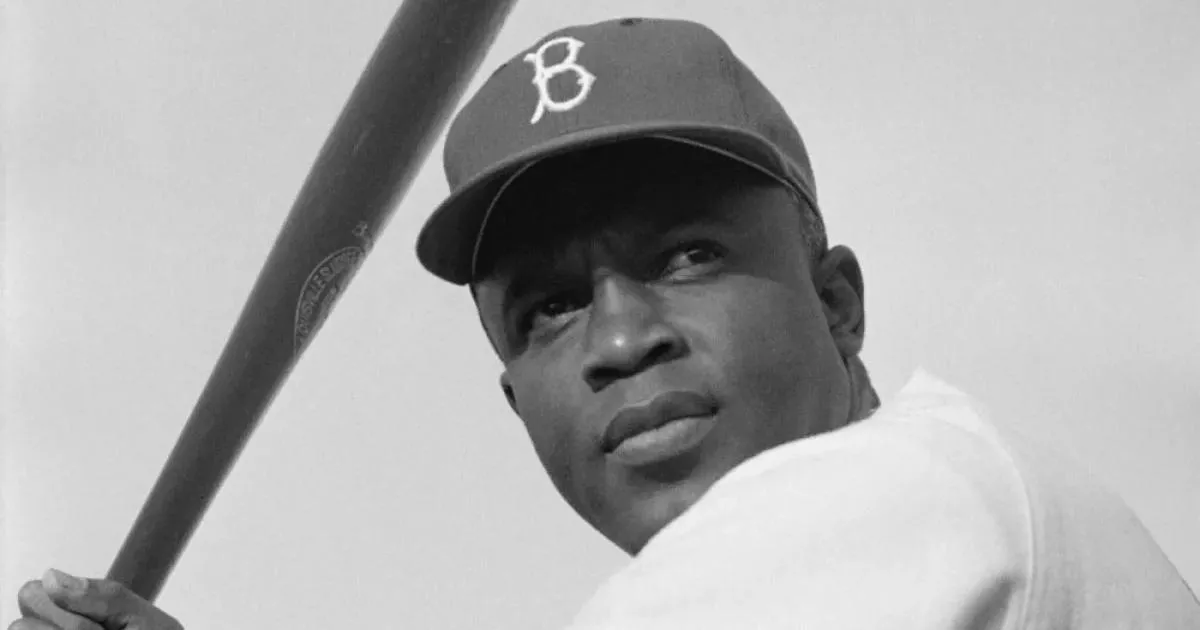
Jackie Robinson was a pivotal figure in American history as the first African American to play Major League Baseball in the modern era. On April 15, 1947, he broke the color barrier by starting at first base for the Brooklyn Dodgers, ending racial segregation in professional baseball that had persisted since the 1880s. His courageous act paved the way for other Black athletes and marked a significant moment in the Civil Rights Movement.
3 hours ago : UCLA Unveils Jackie Robinson Uniforms; Legacy, Mystery Surround Rookie Cards; Celebrate on Jackie Robinson Day
UCLA will officially unveil Jackie Robinson day-themed baseball uniforms. Jackie Robinson’s legacy is secure, yet mystery and controversy surround his iconic rookie cards. A game at Jackie Robinson's old stomping grounds will take place on Jackie Robinson Day.


January 31, 1919: Jack Roosevelt Robinson Born
On January 31, 1919, Jack Roosevelt Robinson was born in Cairo, Georgia. He would later become the first African American to play in Major League Baseball in the modern era.
1920: Family Moves to Pasadena
In 1920, after Jackie Robinson's father left the family, they moved to Pasadena, California, beginning a new chapter in their lives.
1922: Rachel Isum Born
In 1922, Rachel Isum, Jackie Robinson's future wife, was born. She met Robinson while she was a freshman at UCLA.
1935: Graduation from Junior High School
In 1935, Jackie Robinson graduated from Washington Junior High School and enrolled at John Muir Technical High School.
1936: Inspired by Brothers
In 1936, Jackie Robinson was inspired by his older brothers, Frank and Mack, to pursue his interest in sports, shaping his athletic journey.
1936: Tennis and Baseball Achievements
In 1936, Jackie Robinson won the junior boys singles championship in the annual Pacific Coast Negro Tennis Tournament and earned a place on the Pomona annual baseball tournament all-star team.
January 25, 1938: Arrested for Disputing Detention
On January 25, 1938, Jackie Robinson was arrested after vocally disputing the detention of a black friend by police, resulting in a two-year suspended sentence.
May 7, 1938: Broad Jump Record
On May 7, 1938, Jackie Robinson broke an American junior college broad-jump record at Pasadena Junior College (PJC) with a jump of 25 ft 6+1⁄2 in.
1939: Enrolls at UCLA
After graduating from PJC, in spring of 1939, Jackie Robinson enrolled at UCLA and became the school's first athlete to win varsity letters in four sports: baseball, basketball, football, and track.
1939: Undefeated Season
In 1939, Jackie Robinson was one of four black players on the Bruins' football team that went undefeated with four ties at 6–0–4. Robinson finished the season with 12.2 yards per attempt on 42 carries.
1940: Left College and Took a Job
In 1940, Jackie Robinson left college just shy of graduation and took a job as an assistant athletic director with the government's National Youth Administration (NYA) in Atascadero, California.
1940: NCAA Championship
In 1940, Jackie Robinson won the NCAA championship in the long jump at 24 ft 10+1⁄4 in (7.58 m).
1940: Led NCAA
Jackie Robinson led the NCAA in punt return average in the 1939 and 1940 seasons.
July 1941: Army OCS Guidelines
In July 1941, the Army's initial guidelines for Officer Candidate School (OCS) were drafted as race-neutral, but few black applicants were admitted until subsequent directives by Army leadership.
December 1941: Return to California
In December 1941, after playing football for the Honolulu Bears, Jackie Robinson returned to California to pursue a career with the Los Angeles Bulldogs, but his football career was cut short by the Japanese attack on Pearl Harbor.
1942: Drafted into the Army
In 1942, Jackie Robinson was drafted into the Army and assigned to a segregated Army cavalry unit at Fort Riley, Kansas.
January 1943: Commissioned as Second Lieutenant
In January 1943, after completing OCS, Jackie Robinson was commissioned as a second lieutenant. Shortly afterward, he and Rachel Isum were formally engaged.
July 6, 1944: Bus Incident
On July 6, 1944, Jackie Robinson was taken into custody by military police after refusing to move to the back of an Army bus, leading to a recommendation for court-martial.
August 1944: Acquittal by Court-Martial
In August 1944, Jackie Robinson was acquitted by an all-white panel of nine officers on charges of insubordination during questioning.
November 1944: Honorable Discharge
In November 1944, after serving as a coach for army athletics at Camp Breckinridge, Kentucky, Jackie Robinson received an honorable discharge. While there, Robinson was encouraged to contact the Kansas City Monarchs of the Negro American League for a tryout.
1944: Athletic Director at Samuel Huston College
In 1944, Jackie Robinson returned to his old football club, the Los Angeles Bulldogs, then accepted an offer from Rev. Karl Downs to be the athletic director at Samuel Huston College, coaching the school's basketball team for the 1944-45 season.
August 28, 1945: Rickey's Interview with Robinson
On August 28, 1945, Branch Rickey interviewed Jackie Robinson for a potential spot on the Brooklyn Dodgers' farm team, the Montreal Royals. Rickey questioned Robinson about his ability to withstand racial abuse without reacting angrily, concerned about Robinson's past altercations with law enforcement. After a three-hour discussion, Robinson committed to "turn the other cheek" to racial antagonism, leading Rickey to offer him a contract for $600 per month.
November 1, 1945: Rickey commits to signing Robinson
Before November 1, 1945, Branch Rickey committed to formally signing Jackie Robinson. This arrangement was kept secret for the time being.
1945: Plays for Kansas City Monarchs
In early 1945, Jackie Robinson accepted an offer to play professional baseball for the Kansas City Monarchs in the Negro leagues for $400 per month. He played 47 games at shortstop, hitting .387 with five home runs and 13 stolen bases.
February 10, 1946: Robinson marries Isum
On February 10, 1946, Jackie Robinson and Isum were married by their friend, the Rev. Karl Downs.
March 17, 1946: Robinson's Royals Debut
On March 17, 1946, Jackie Robinson made his debut with the Montreal Royals at Daytona Beach's City Island Ballpark in an exhibition game against the Brooklyn Dodgers. This marked him as the first black player to openly play for a minor league team against a major league team since the implementation of the baseball color line in the 1880s.
April 18, 1946: Robinson's professional debut
On April 18, 1946, Jackie Robinson made his professional debut for the Montreal Royals against the Jersey City Giants at Roosevelt Stadium. He had four hits in five at bats, including a three-run home run, scored four runs, drove in three, and stole two bases, marking the first time the color barrier was broken in a game between two minor league clubs.
1946: Spring Training with Montreal Royals
In 1946, Jackie Robinson arrived at Daytona Beach, Florida, for spring training with the Montreal Royals. The manager of the Royals, Clay Hopper, requested that Branch Rickey assign Robinson to another Dodgers affiliate, but Rickey declined.
1946: Robinson plays for the Montreal Royals
In 1946, Jackie Robinson played for the Montreal Royals. It was a positive experience in contrast to the racial bias in the South.
1946: Birth of Jackie Robinson Jr.
In 1946, Jackie Robinson's eldest son, Jackie Robinson Jr., was born.
April 11, 1947: Preseason Exhibition Game Debut
On April 11, 1947, Jackie Robinson made his debut as a Dodger in a preseason exhibition game against the New York Yankees at Ebbets Field.
April 15, 1947: Robinson Breaks the Color Barrier
On April 15, 1947, Jackie Robinson started at first base for the Brooklyn Dodgers, breaking the color barrier in Major League Baseball and ending racial segregation in professional baseball.
April 22, 1947: Racial abuse from Phillies
On April 22, 1947, during a game against the Philadelphia Phillies, Jackie Robinson was subjected to racial slurs and abuse from Phillies players and their manager, Ben Chapman. This incident, while hurtful, ultimately united the Dodgers in support of Robinson.
July 5, 1947: Doby breaks AL color barrier
On July 5, 1947, Larry Doby broke the color barrier in the American League, just 11 weeks after Jackie Robinson did in the National League.
1947: World Series Appearance
In 1947, Jackie Robinson became the first black player to play in the World Series as the Brooklyn Dodgers faced the New York Yankees. The Dodgers lost in Game 7.
1947: Facing potential strike from Cardinals
In 1947, Jackie Robinson faced the threat of a strike from the St. Louis Cardinals, who reportedly opposed his presence in the league. The National League President and Baseball Commissioner responded by stating that any striking players would be suspended, which led to increased support for Robinson from the sports media.
1947: Encouragement from other players
In 1947, Jackie Robinson received encouragement from several major league players, including Lee "Jeep" Handley, Pee Wee Reese, and Hank Greenberg, all of whom offered support and advice as he faced racial challenges.
1947: Major League Rookie of the Year Award
In 1947, Jackie Robinson wins the Major League Rookie of the Year Award, encompassing both leagues. This award was later renamed to the "Jackie Robinson Award" in 1987.
1947: Rookie of the Year Award
In 1947, Jackie Robinson won the inaugural Rookie of the Year Award, marking the beginning of his celebrated career in Major League Baseball.
1947: Start of Major League Career
Jackie Robinson began his major league career in 1947 at the age of 28, playing for the Brooklyn Dodgers.
1947: Beginning of post-long ball era
Jackie Robinson's career is considered to mark the beginning of the post–"long ball" era in baseball, in which reliance on power-hitting gave way to balanced offensive strategies. From 1947 to 1953, Robinson averaged more than 110 runs.
February 1948: Robinson signs contract with Dodgers
In February 1948, Jackie Robinson signed a $12,500 contract with the Dodgers. He also underwent surgery on his right ankle.
March 1948: Robinson takes over second base
Following Eddie Stanky's trade in March 1948, Jackie Robinson took over second base for the Dodgers.
August 1948: Dodgers briefly in first place
In late August 1948, the Dodgers moved briefly into first place in the National League.
August 29, 1948: Hitting for the cycle
On August 29, 1948, Jackie Robinson hit for the cycle in a 12–7 win against the St. Louis Cardinals, achieving a home run, a triple, a double, and a single in the same game.
1948: Truman desegregates the military
After World War II, President Harry Truman desegregated the military in 1948.
1948: Robinson's batting average
In 1948, Jackie Robinson had a .296 batting average before seeking the help of George Sisler.
1948: Reese's show of support
In either 1947 or 1948, during a game in either Boston or Cincinnati, Pee Wee Reese put his arm around Jackie Robinson in response to fans shouting racial slurs at Robinson.
1949: "Did You See Jackie Robinson Hit That Ball?" song
In 1949, "Did You See Jackie Robinson Hit That Ball?", a song about Jackie Robinson by Buddy Johnson, became popular, reaching number 13 on the charts. Count Basie also recorded a version of the song that year. The Dodgers won the National League pennant but were defeated by the New York Yankees in the 1949 World Series.
1949: Batting Help from George Sisler and MVP Award
In 1949, Jackie Robinson sought batting advice from Hall of Famer George Sisler, leading to significant improvements in his hitting. He raised his batting average to .342, stole 37 bases, and achieved high rankings in doubles and triples. His outstanding performance led to him winning the Most Valuable Player Award for the National League, and he was voted as the starting second baseman for the 1949 All-Star Game.
1949: National League Most Valuable Player Award
In 1949, Jackie Robinson was honored with the National League (NL) Most Valuable Player Award, becoming the first Black player to receive this recognition.
1949: Separate Rookie of the Year Awards
In 1949, Major League Baseball began awarding separate Rookie of the Year honors for the National and American Leagues.
1949: Testimony before HUAC
In July 1949, Jackie Robinson was called to testify before the United States House of Representatives' Committee on Un-American Activities (HUAC) regarding statements made by Paul Robeson. Despite his reluctance, Robinson agreed to testify to avoid potential negative impacts on his career.
1950: Leads National League in Double Plays
In 1950, Jackie Robinson led the National League in double plays made by a second baseman with 133. His salary that year was the highest any Dodger had been paid to that point: $35,000. He finished the year with 99 runs scored, a .328 batting average, and 12 stolen bases.
1950: Leads League in Fielding
In 1950, Jackie Robinson led the league in fielding among second basemen.
1950: Acting in "The Jackie Robinson Story"
In 1950, Jackie Robinson portrayed himself in the motion picture "The Jackie Robinson Story."
1950: Birth of Sharon Robinson
In 1950, Jackie Robinson's daughter, Sharon Robinson, was born.
1950: Rickey leaves the Dodgers
In late 1950, Branch Rickey's contract as the Dodgers' team President expired. Due to disagreements with Walter O'Malley, Rickey cashed out his financial interest in the team and became general manager of the Pittsburgh Pirates. Robinson was disappointed by this.
October 3, 1951: Dodgers lose pennant to Giants
On October 3, 1951, the Dodgers lost the pennant to the New York Giants on Bobby Thomson's famous home run. Jackie Robinson observed Thomson's feet to ensure he touched all the bases, demonstrating his competitive spirit. He finished the 1951 season with 106 runs scored, a .335 batting average, and 25 stolen bases.
1951: Leads National League in double plays
During the 1951 season, Jackie Robinson led the National League in double plays made by a second baseman for the second year in a row, with 137. He also kept the Dodgers in contention for the 1951 pennant, hitting a game-tying hit in the 13th inning of the last game of the regular season and then a game-winning home run in the 14th inning.
1951: Leads League in Fielding
In 1951, Jackie Robinson led the league in fielding among second basemen.
1951: Rumored managerial job offer
Reportedly, before the 1951 season, Walter O'Malley offered Jackie Robinson the job of manager of the Montreal Royals at the end of Robinson's playing career, although there are conflicting reports as to whether the position was ever formally offered.
1952: Challenging racial record
In 1952, Jackie Robinson had a solid year, finishing with 104 runs, a .308 batting average, and 24 stolen bases. During this year, on the television show Youth Wants to Know, Robinson challenged the Yankees' general manager, George Weiss, on the racial record of his team. The 1952 season was the last year Robinson was an everyday starter at second base.
1952: Birth of David Robinson
In 1952, Jackie Robinson's youngest son, David Robinson, was born.
1953: Success, threats, and racial advocacy
In 1953, Jackie Robinson had 109 runs, a .329 batting average, and 17 steals, which led the Dodgers to another National League pennant. Despite facing death threats, Robinson addressed racial issues publicly, including serving as editor for Our Sports magazine and criticizing segregated hotels and restaurants.
1953: Robinson's Runs
Jackie Robinson scored more than 100 runs from 1947 to 1953.
1954: All-Star Season
From 1949 through 1954, Jackie Robinson was an All-Star for six consecutive seasons, showcasing his consistent excellence in baseball.
1954: Home runs and doubles
In 1954, Jackie Robinson had 62 runs scored, a .311 batting average, and 7 steals. On June 17th, Jackie Robinson hit two home runs and two doubles.
1955: World Series Championship
In 1955, Jackie Robinson contributed to the Brooklyn Dodgers' World Series championship, marking a pinnacle in his baseball career.
1955: Dodgers win the World Series
In 1955, the Dodgers won the World Series against the New York Yankees, marking Robinson's only championship. However, 1955 was the worst year of Robinson's individual career. He hit .256 and stole only 12 bases.
December 1956: NAACP Spingarn Medal
In December 1956, Jackie Robinson was recognized by the NAACP with the Spingarn Medal, awarded annually for the highest achievement by an African-American.
1956: Final season and trade to Giants
In 1956, Jackie Robinson had 61 runs scored, a .275 batting average, and 12 steals. He began experiencing the effects of diabetes and lost interest in playing baseball. After the season, the Dodgers traded Robinson to the New York Giants, but the trade was never completed as Robinson had already agreed to become an executive with Chock full o'Nuts.
1956: End of Major League Career
Jackie Robinson's major league career ended in 1956. He played a total of ten seasons, all with the Brooklyn Dodgers.
January 5, 1957: Retirement from baseball
Jackie Robinson retired from baseball at age 37 on January 5, 1957. Later that year, he was diagnosed with diabetes.
1957: Vice President at Chock full o'Nuts and NAACP Freedom Fund Drive Chair
In 1957, Jackie Robinson became the vice president for personnel at Chock full o'Nuts and also chaired the NAACP's million-dollar Freedom Fund Drive.
July 1959: Red Sox Integrate Roster
More than 14 years after Jackie Robinson's humiliating tryout with the Boston Red Sox, in July 1959, the Red Sox became the final major league team to integrate its roster.
October 1959: Robinson Protests Segregation at Greenville Airport
In October 1959, Jackie Robinson protested segregation by entering the whites-only waiting room at Greenville Municipal Airport, refusing to leave when asked. He then gave a speech in Greenville, South Carolina, urging black citizens to vote and protest their second-class citizenship.
1960: Supported Richard Nixon for President
In 1960, Jackie Robinson supported Richard Nixon in his presidential race against John F. Kennedy.
1962: Induction into the Baseball Hall of Fame
In 1962, Jackie Robinson was inducted into the Baseball Hall of Fame in his first year of eligibility, solidifying his place among baseball's legends.
1962: Elected to Baseball Hall of Fame
In 1962, during his first year of eligibility, Jackie Robinson was elected to the Baseball Hall of Fame, becoming the first Black American player inducted into the Cooperstown museum. He encouraged voters to consider only his on-field qualifications.
1964: Co-founded Freedom National Bank
In 1964, Jackie Robinson co-founded Freedom National Bank, a Black-owned and operated commercial bank in Harlem, with Dunbar McLaurin, and served as the bank's first chairman of the board.
1964: Angered by Barry Goldwater's Candidacy
In 1964, Jackie Robinson was angered by the presidential election candidacy of conservative Republican Senator Barry Goldwater, who had opposed the Civil Rights Act of 1964.
1965: Analyst for ABC's Major League Baseball Game of the Week
In 1965, Jackie Robinson became the first Black American to serve as an analyst for ABC's Major League Baseball Game of the Week telecasts.
1966: Special Assistant for Community Affairs
In 1966, Jackie Robinson became a special assistant for community affairs when Nelson Rockefeller was re-elected governor of New York.
1966: General Manager for Brooklyn Dodgers
In 1966, Jackie Robinson was hired as general manager for the short-lived Brooklyn Dodgers of the Continental Football League.
1967: Service on the NAACP's Board Ends
In 1967, Jackie Robinson's service on the NAACP's board ended, after being on the board since 1957.
1968: Broke with Republican Party to Support Hubert Humphrey
In 1968, Jackie Robinson broke with the Republican party and supported Hubert Humphrey against Nixon in that year's presidential election.
1968: Jackie Robinson Suffers Heart Attack
In 1968, Jackie Robinson suffered a heart attack, which, combined with heart disease and diabetes, weakened him later in life.
1969: Declined Invitation to Old-Timers' Game
In 1969, Jackie Robinson protested against the major leagues' lack of minority managers and central office personnel, and he turned down an invitation to appear in an old-timers' game at Yankee Stadium.
1970: Established Jackie Robinson Construction Company
In 1970, Jackie Robinson established the Jackie Robinson Construction Company to build housing for low-income families.
June 17, 1971: Death of Jackie Robinson Jr.
Jackie Robinson Jr. died on June 17, 1971, in an automobile accident at age 24.
1971: Appointed to New York State Athletic Commission
In 1971, Jackie Robinson was appointed to the New York State Athletic Commission by Nelson Rockefeller.
June 4, 1972: Dodgers Retired Robinson's Jersey Number
On June 4, 1972, the Dodgers retired Jackie Robinson's uniform number, 42, alongside those of Roy Campanella (39) and Sandy Koufax (32).
October 15, 1972: Final Public Appearance at World Series
On October 15, 1972, nine days before his death, Jackie Robinson made his final public appearance at Riverfront Stadium in Cincinnati, throwing the ceremonial first pitch before Game 2 of the World Series. He accepted a plaque honoring the twenty-fifth anniversary of his MLB debut, advocating for black managers in baseball.
October 24, 1972: Death of Jackie Robinson
On October 24, 1972, Jackie Robinson died. His legacy continued through posthumous awards and the retirement of his jersey number across all MLB teams.
October 27, 1972: Jackie Robinson's Funeral
On October 27, 1972, Jackie Robinson's funeral service was held at Riverside Church in Upper Manhattan, attracting 2,500 mourners, with Jesse Jackson giving the eulogy. He was subsequently buried at Cypress Hills Cemetery in Brooklyn.
1972: Posthumous Awards
After his death in 1972, Jackie Robinson was posthumously awarded the Congressional Gold Medal and Presidential Medal of Freedom for his achievements on and off the baseball field.
1972: Commentator on Montreal Expos Telecasts
In 1972, Jackie Robinson served as a part-time commentator on Montreal Expos telecasts.
1974: Frank Robinson as First Black Manager
Following the 1974 season, after Jackie Robinson's death, the Cleveland Indians gave their managerial post to Frank Robinson, marking the fulfillment of Jackie's wish to see a Black face managing in baseball.
1976: Jackie Robinson House Declared a National Historic Landmark
In 1976, Jackie Robinson's home in Brooklyn, the Jackie Robinson House, was declared a National Historic Landmark.
1978: Colonial Park Renamed After Robinson
In 1978, Colonial Park in Harlem was renamed after Jackie Robinson.
1982: United States Postal Service Honors Jackie Robinson
In 1982, Jackie Robinson was honored by the United States Postal Service on a postage stamp.
March 26, 1984: Presidential Medal of Freedom
On March 26, 1984, President Ronald Reagan posthumously awarded Jackie Robinson the Presidential Medal of Freedom.
1984: Inducted into UCLA's Athletics Hall of Fame
In 1984, Jackie Robinson was among the 25 charter members of UCLA's Athletics Hall of Fame.
1987: Rookie of the Year Awards Renamed
In 1987, both the National and American League Rookie of the Year Awards were renamed the "Jackie Robinson Award" in honor of Jackie Robinson.
1990: Jackie Robinson Ballpark Renamed
In 1990, City Island Ballpark in Daytona Beach, Florida was renamed Jackie Robinson Ballpark, and a statue of Robinson with two children was erected in front of the park.
1990: Closure of Freedom National Bank
In 1990, Jackie Robinson's wife, Rachel Robinson, served on the board of the Freedom National Bank until it closed.
1993: Inducted into National High School Hall of Fame
In 1993, Jackie Robinson was inducted into the National High School Hall of Fame.
April 15, 1997: Jersey Number 42 Retired Throughout MLB
On April 15, 1997, Jackie Robinson's jersey number, 42, was retired throughout Major League Baseball, the first time any jersey number had been retired throughout one of the four major American sports leagues.
1997: Jersey Number Retired
In 1997, MLB retired Jackie Robinson's uniform number, 42, across all Major League teams, an unprecedented honor for a professional athlete in any sport.
1997: Interboro Parkway Renamed
In 1997, New York City renamed the Interboro Parkway in Jackie Robinson's honor.
1997: Pasadena Robinson Memorial Erected
In 1997, a $325,000 bronze sculpture called the Pasadena Robinson Memorial by artists Ralph Helmick, Stu Schecter, and John Outterbridge depicting oversized nine-foot busts of Robinson and his brother Mack was erected at Garfield Avenue in Pasadena.
1997: Jackie Robinson Commemorative Coin Issued
In 1997, the United States Mint issued a Jackie Robinson commemorative silver dollar and a five-dollar gold coin.
1999: United States Postal Service Honors Jackie Robinson Again
In 1999, Jackie Robinson was honored by the United States Postal Service on a postage stamp.
1999: Named One of Time's 100 Most Influential People
In 1999, Jackie Robinson was named by Time on its list of the 100 most influential people of the 20th century. That same year, he was elected to the Major League Baseball All-Century Team, and ranked No. 44 on The Sporting News list of "Baseball's 100 Greatest Players".
1999: Named to the MLB All-Century Team
In 1999, Jackie Robinson was named to the Major League Baseball All-Century Team.
2000: United States Postal Service Honors Jackie Robinson Once More
In 2000, Jackie Robinson was honored by the United States Postal Service on a postage stamp.
2000: Wayne Gretzky's Number Retired League-Wide
In 2000, after Jackie Robinson's number 42 was retired in 1997, Wayne Gretzky's number 99 was retired league-wide by the NHL.
2002: Included on List of 100 Greatest African Americans
In 2002, Molefi Kete Asante included Jackie Robinson on his list of 100 Greatest African Americans.
April 15, 2004: "Jackie Robinson Day" Inauguration
On April 15, 2004, MLB adopted a new annual tradition, "Jackie Robinson Day", where every player on every team wears the number 42.
2004: Inaugural Jackie Robinson Day
In 2004, MLB began honoring Jackie Robinson by allowing players to wear number 42 on April 15, Jackie Robinson Day, which is an annual observance that started.
2004: Aflac National High School Baseball Player of the Year Award
Since 2004, the "Jackie Robinson Award" has been presented to the Aflac National High School Baseball Player of the Year.
March 2, 2005: Congressional Gold Medal
On March 2, 2005, President George W. Bush gave Jackie Robinson's widow the Congressional Gold Medal; Robinson was only the second baseball player to receive the award, after Roberto Clemente.
November 1, 2005: Unveiling of Reese and Robinson Statue
On November 1, 2005, a statue depicting Pee Wee Reese with his arm around Jackie Robinson was unveiled at KeySpan Park.
November 2006: Announcement of Jackie Robinson Rotunda
In November 2006, at the groundbreaking for Citi Field, it was announced that the main entrance would be called the Jackie Robinson Rotunda.
August 20, 2007: Induction into the California Hall of Fame
On August 20, 2007, California Governor Arnold Schwarzenegger and his wife, Maria Shriver, announced that Jackie Robinson was inducted into the California Hall of Fame, located at The California Museum for History, Women and the Arts in Sacramento.
2007: Players Wear Number 42 on Jackie Robinson Day
In 2007, for the 60th anniversary of Jackie Robinson's major league debut, MLB invited players to wear the number 42 on Jackie Robinson Day. Over 200 players participated, including entire rosters of multiple teams.
April 15, 2008: Jackie Robinson Museum Announcement
On April 15, 2008, Rachel Robinson announced that the Jackie Robinson Foundation would open a museum devoted to Jackie in Lower Manhattan in 2010.
June 25, 2008: New Plaque for Robinson at Baseball Hall of Fame
On June 25, 2008, MLB installed a new plaque for Jackie Robinson at the Baseball Hall of Fame commemorating his off-the-field impact.
April 16, 2009: Dedication of Jackie Robinson Rotunda
On April 16, 2009, the Jackie Robinson Rotunda was dedicated at the opening of Citi Field, the new ballpark for the New York Mets.
2009: All Uniformed Personnel Wear Number 42 on Jackie Robinson Day
In 2009, all of MLB's uniformed personnel (including players) wore number 42 on April 15, a tradition that has continued every year since.
2010: Jackie Robinson Museum Slated to Open
In 2010, the Jackie Robinson Foundation was scheduled to open a museum devoted to Jackie in Lower Manhattan, as announced by Rachel Robinson.
2011: Plaque placed at Robinson's Montreal home
In 2011, the U.S. placed a plaque at Jackie Robinson's Montreal home to honor the ending of segregation in baseball.
April 14, 2013: New Mural Unveiled at Jackie Robinson Stadium
On April 14, 2013, a new mural of Jackie Robinson by Mike Sullivan was unveiled at Jackie Robinson Stadium.
2013: Mariano Rivera Last to Regularly Wear Number 42
In 2013, Mariano Rivera of the Yankees retired at the end of the season and was the last player in Major League Baseball to wear jersey number 42 on a regular basis.
November 22, 2014: UCLA Retires Number 42 Across All Sports
On November 22, 2014, UCLA announced that it would officially retire the number 42 across all university sports, effective immediately, because it had become indelibly identified with him.
2016: Jackie Robinson PBS Documentary
In 2016, a PBS documentary titled "Jackie Robinson" was released, directed by Ken Burns, with Jamie Foxx as the voice of Robinson.
November 19, 2017: Jersey Sold at Auction
On November 19, 2017, a jersey that Jackie Robinson brought home with him after his rookie season ended in 1947 was sold at auction for $2.05 million.
2017: Statue Unveiled at Dodger Stadium
In 2017, a statue of Jackie Robinson, created by sculptor Branly Cadet, was unveiled at Dodger Stadium. It was the first statue the Dodgers ever unveiled.
2020: Ranked on The Athletic's "Baseball 100" List
In 2020, The Athletic ranked Jackie Robinson at number 42 on its "Baseball 100" list, compiled by sportswriter Joe Posnanski.
2021: Statue Installed in Wichita, Kansas
In 2021, a bronze statue of Jackie Robinson, created by John Parsons, was installed in Wichita, Kansas by League 42, a youth baseball league, in McAdams Park.
2022: Robinson's Record
As of 2022, Jackie Robinson's record of 12.2 yards per attempt on 42 carries remains the school football record for the highest rushing yards per carry in a season
2022: Bill Russell's Number Retired League-Wide
In 2022, after Jackie Robinson's number 42 was retired in 1997, Bill Russell's number 6 was retired league-wide by the NBA.
2022: Opening of the Jackie Robinson Museum
The Jackie Robinson Museum opened in 2022, located at the headquarters of the Jackie Robinson Foundation in Lower Manhattan.
January 2024: Jackie Robinson statue stolen and vandalized
In January 2024, a bronze statue of Jackie Robinson in Wichita, Kansas, was stolen and vandalized.
August 5, 2024: Recast Statue Unveiled
On August 5, 2024, a recast statue of Jackie Robinson was unveiled in Wichita, Kansas.
2025: Rachel Robinson Remains an Officer of the Jackie Robinson Foundation
As of 2025, Jackie Robinson's widow, Rachel Robinson, at 103 years old, remains an officer of the Jackie Robinson Foundation.
2025: Value of Jackie Robinson's 1950 Salary in 2025
In 1950, Jackie Robinson's salary was $35,000. In 2025, that would be worth $468,361.
Mentioned in this timeline
Basketball is a team sport played on a rectangular court...
John F Kennedy JFK was the th U S President...
George W Bush the rd U S President - is...
Bill Russell was a dominant American professional basketball player primarily...

Wayne Gretzky nicknamed The Great One is widely considered the...
California is a U S state on the Pacific Coast...
Trending

42 minutes ago Craig Kimbrel Joins Mets: All-Star Reliever Called Up, Lovelady Designated For Assignment
42 minutes ago Brooke Shields Announces New Project 'You're Killing Me' on Instagram
42 minutes ago Jon Stewart Reacts to Trump Meme, Slams Trump, and Adds Bushnell Show.
43 minutes ago Francisco Lindor's struggles deepen as Mets face offensive woes and defensive errors.

43 minutes ago Qatar Warns Iran War Could Spiral; Iranian Strikes Slowed, Gulf Security Threatened.
43 minutes ago Jensen Ackles and Jared Padalecki Reunite for Supernatural Crossover on The Rookie.
Popular
Paula White-Cain is a prominent American televangelist and key figure...

Melania Trump is a Slovenian-American former model who served as...
William Franklin Graham III commonly known as Franklin Graham is...
Eric Swalwell is an American lawyer and politician currently serving...
J D Vance is an American politician and author He...
Viktor Orb n is a prominent Hungarian politician and lawyer...