Career Timeline of Janet Yellen: Major Achievements and Milestones


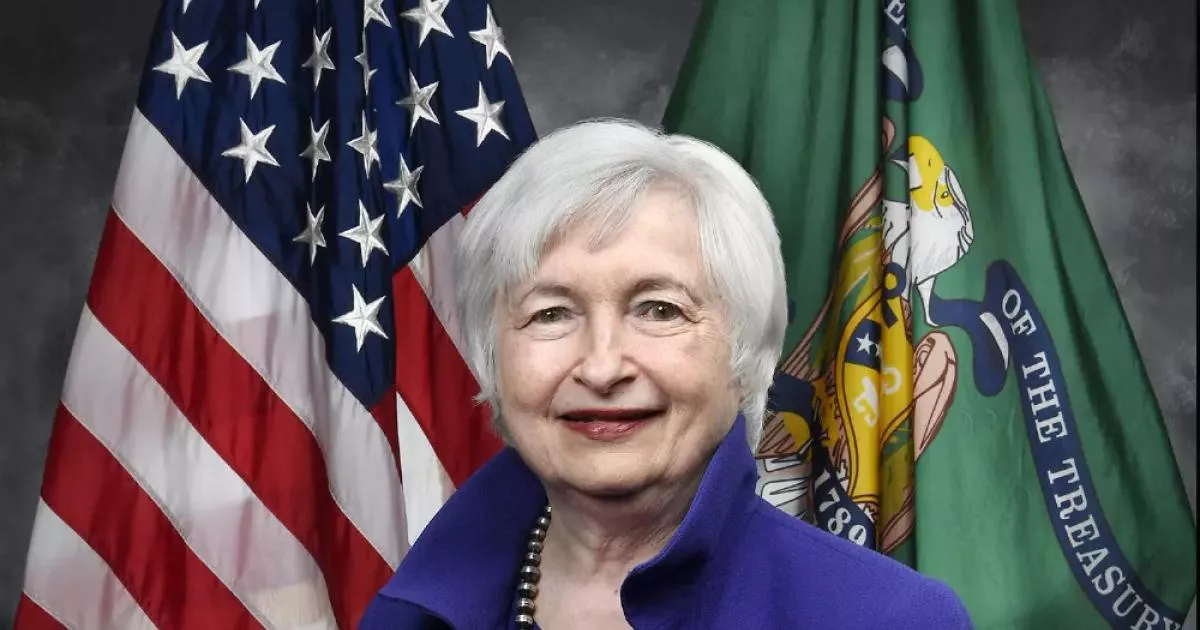
How Janet Yellen built a successful career. Explore key moments that defined the journey.
Janet Louise Yellen is an American economist notable for her groundbreaking roles as the first woman to chair the Federal Reserve (2014-2018) and serve as United States Secretary of the Treasury (2021-2025). Her career includes leading the White House Council of Economic Advisers. Currently, she is a professor at the University of California, Berkeley, contributing significantly to economic thought and policy.
1963: Equal Pay Act Mentioned
In June 1998, while at the Council of Economic Advisers, a report was released stating that while the Equal Pay Act of 1963 was a step forward, there was no explanation for a 25-percent difference between average pay for women and men.


1969: Gender Wage Gap Analyzed
In June 1998, the Council of Economic Advisers analyzed data from 1969 to 1996 to determine the reasons why women earn substantially less than men.
1971: Assistant Professor at Harvard University
In 1971, Janet Yellen became an assistant professor of economics at Harvard University.
1976: End of Harvard Assistant Professorship
In 1976, Janet Yellen's time as an assistant professor at Harvard University concluded.
1976: Leaves Harvard University
In 1976, Janet Yellen's time as an assistant professor at Harvard University ended.
1977: Staff Economist for the Federal Reserve Board
In 1977, Janet Yellen became a staff economist for the Federal Reserve Board.
1977: Joins Federal Reserve's Board of Governors
In 1977, Janet Yellen joined the Federal Reserve's Board of Governors as a staff economist.
1977: Yellen Served as Staff Economist
Janet Yellen became the first person in U.S. central bank history to have served as staff economist from 1977-1978.
1978: Faculty Member at the London School of Economics
In 1978, Janet Yellen became a faculty member at the London School of Economics.
1978: Yellen Served as Staff Economist
Janet Yellen became the first person in U.S. central bank history to have served as staff economist from 1977-1978.
1980: Faculty Member at UC Berkeley
In 1980, Janet Yellen became a faculty member at the Haas School of Business at the University of California, Berkeley.
1980: Joins Faculty at UC Berkeley
In 1980, Janet Yellen joined the faculty of the University of California, Berkeley.
1980: First Democratic Appointees to the Board since 1980
In 1980, Janet Yellen, alongside Alan Blinder, became the first Democratic appointees to the Board since 1980.
1982: Earns Tenure at Berkeley-Haas
In 1982, Janet Yellen became just the second woman at Berkeley-Haas to earn tenure.
1990: Publication of "The Fair-Wage Effort Hypothesis and Unemployment"
In 1990, Janet Yellen and George Akerlof's paper, "The Fair-Wage Effort Hypothesis and Unemployment", was published, coining "the fair wage effort hypothesis" and contributing significantly to efficiency wage theory.
April 22, 1994: Nomination to the Federal Reserve Board of Governors
On April 22, 1994, President Bill Clinton announced his intention to nominate Janet Yellen as a member of the Federal Reserve Board of Governors.
July 1994: Confirmation Hearing Before the Senate Banking Committee
In July 1994, Janet Yellen's confirmation hearing before the Senate Banking Committee took place, during which she discussed Fed policies.
August 12, 1994: Appointed to the Federal Reserve Board of Governors
On August 12, 1994, Janet Yellen was appointed to a full 14-year term on the Federal Reserve Board of Governors.
1994: Appointment to the Federal Reserve Board of Governors
In 1994, Janet Yellen became a member of the Federal Reserve Board of Governors.
1994: Leaves Berkeley for Public Service
In 1994, Janet Yellen took a leave of absence from Berkeley to go into public service.
1994: Yellen Served as Fed Governor
Janet Yellen became the first person in U.S. central bank history to have served as Fed governor from 1994-1997.
July 1996: Resisting Pressure to Raise Interest Rates
In July 1996, Janet Yellen used academic research to dissuade Chairman Alan Greenspan and the Federal Reserve from a zero inflation policy, arguing for moderate inflation to reduce unemployment and increase economic growth.
December 20, 1996: Yellen Joins Clinton Administration
On December 20, 1996, Janet Yellen joined the Clinton administration as chair of President Clinton's Council of Economic Advisers (CEA), succeeding Joseph Stiglitz.
1996: Publication of "An Analysis of Out-of-Wedlock Childbearing in the United States"
In 1996, Janet Yellen co-authored "An Analysis of Out-of-Wedlock Childbearing in the United States" with George Akerlof and Michael Katz, exploring the rise of out-of-wedlock births and introducing the "reproductive technology shock" theory.
1996: Council of Economic Advisers Releases Report on Gender Wage Gap
In June 1998, while at the Council of Economic Advisers, Janet Yellen oversaw the release of a report titled "Explaining Trends in the Gender Wage Gap", which analyzed data from 1969 to 1996 and identified a 25-percent unexplained difference in average pay between women and men, attributing it to discrimination within the workforce.
February 13, 1997: Yellen Unanimously Confirmed by the Senate
On February 13, 1997, Janet Yellen was unanimously confirmed by the Senate, becoming the second woman to serve as chief economic advisor to the president after Laura Tyson.
February 17, 1997: Resignation from the Federal Reserve Board of Governors
On February 17, 1997, Janet Yellen resigned as a member of the Board of Governors of the Federal Reserve System upon her confirmation as chair of the Council of Economic Advisers.
1997: Chair of the Council of Economic Advisers
In 1997, Janet Yellen was named chair of the Council of Economic Advisers.
1997: Yellen Served as Fed Governor
Janet Yellen became the first person in U.S. central bank history to have served as Fed governor from 1994-1997 and 2010-2018.
June 1998: Council of Economic Advisers Releases Report on Gender Wage Gap
In June 1998, while at the Council of Economic Advisers, Janet Yellen oversaw the release of a report titled "Explaining Trends in the Gender Wage Gap", which analyzed data from 1969 to 1996 and identified a 25-percent unexplained difference in average pay between women and men, attributing it to discrimination within the workforce.
April 1999: Discussion on Keynesian economics at Yale
In April 1999, Janet Yellen discussed her views on applying Keynesian economics to policymaking at Yale's economics department reunion, emphasizing the recognition of market failures and the need for policies to remedy them.
June 1999: Yellen Steps Down from CEA
In June 1999, Janet Yellen announced that she was stepping down from the Council of Economic Advisers (CEA) for personal reasons and would return to teaching at UC Berkeley.
1999: Yellen Chaired OECD Economic Policy Committee
From 1997 to 1999, Janet Yellen concurrently chaired the OECD Economic Policy Committee while serving within the Clinton Administration.
1999: Research Associate at National Bureau of Economic Research
From 1999, Janet Yellen served as a research associate at the National Bureau of Economic Research.
1999: Returns to Academia and Receives Professorship
In 1999, Janet Yellen resumed her teaching assignment at Haas and received a joint appointment with Berkeley's Department of Economics. She was also appointed the Eugene E. and Catherine M. Trefethen Professor of Business Administration and Professor of Economics.
1999: Return to Academia
In 1999, Janet Yellen returned to academia after serving as chair of the Council of Economic Advisers.
April 12, 2004: Yellen to Head San Francisco Federal Reserve Bank
On April 12, 2004, it was announced that Janet Yellen would replace Robert T. Parry as president and CEO of the Federal Reserve Bank of San Francisco, effective June 14, becoming the first woman to hold the position.
2004: President and CEO of the Federal Reserve Bank of San Francisco
In 2004, Janet Yellen became the president and chief executive officer of the Federal Reserve Bank of San Francisco.
2004: Yellen Served as FRB President
Janet Yellen became the first person in U.S. central bank history to have served as district president from 2004-2010.
2006: Yellen First Voting Member
In 2006, Janet Yellen served as a voting member of the policy-setting Federal Open Market Committee (FOMC), her first time as a voting member.
2006: Federal Reserve Increased Interest Rate
On December 16, 2015, the Federal Reserve, under Janet Yellen, increased its key interest rate for the first time since 2006.
2008: Views during the 2008 financial crisis
During the 2008 financial crisis, Janet Yellen warned against hastily removing stimulus, believing in the state's duty to tackle poverty and inequality.
2008: Yellen Addresses 2008 Financial Crisis
Following the 2016 presidential election, Yellen argued that it would be inappropriate to weaken or repeal the law designed to prevent a repeat of the 2008 financial crisis.
June 5, 2009: Yellen Advocates for Raising Interest Rates
On June 5, 2009, Janet Yellen stated that the Federal Reserve should consider raising interest rates earlier to prevent another housing bubble, arguing that higher short-term interest rates could restrain the demand for housing and high-risk mortgages.
July 2009: Yellen Considered as Potential Successor to Bernanke
In July 2009, Janet Yellen was mentioned as a potential successor to Chairman Ben Bernanke when his term was set to expire.
March 2010: Yellen Leading Contender for Vice Chair of Federal Reserve Board
In March 2010, Janet Yellen emerged as the leading contender for vice chair of the Federal Reserve Board.
April 28, 2010: Obama Nominates Yellen as Vice Chair of the Federal Reserve
On April 28, 2010, President Barack Obama nominated Janet Yellen to succeed Donald Kohn as vice chair of the Federal Reserve.
July 2010: Senate Banking Committee Votes to Confirm Yellen
In July 2010, the Senate Banking Committee voted 17–6 to confirm Janet Yellen as vice chair of the Federal Reserve.
September 29, 2010: Yellen Confirmed by Senate as Vice Chairman of Federal Reserve
On September 29, 2010, Janet Yellen was confirmed by the Senate as both a member of the board of governors and vice chairman of the Federal Reserve System.
2010: Vice Chair of the Federal Reserve
In 2010, Janet Yellen became the Vice Chair of the Federal Reserve.
2010: End of Tenure at National Bureau of Economic Research
In 2010, Janet Yellen's tenure as research associate at the National Bureau of Economic Research concluded.
2010: Yellen Served as Federal Reserve Vice Chair
Janet Yellen became the first person in U.S. central bank history to have served as Federal Reserve vice chair from 2010-2014.
July 2013: Yellen Pushed to Be Named First Chairwoman of the Central Bank
In July 2013, Janet Yellen was pushed to be named the first chairwoman of the central bank in a letter that was circulated among the Senate Democrats and had been signed by almost a third of the 54 caucus senators, who primarily represent the liberal wing of the party.
October 9, 2013: Yellen Nominated to Replace Bernanke as Chair of Federal Reserve
On October 9, 2013, Janet Yellen was officially nominated to replace Ben Bernanke as chair of the Federal Reserve, becoming the first vice chair ever to be elevated to that post.
December 20, 2013: Senate Votes for Cloture on Yellen's Nomination
On December 20, 2013, the U.S. Senate voted 59–34 for cloture on Janet Yellen's nomination as chair of the Federal Reserve.
January 6, 2014: Yellen Confirmed as Chair of the Federal Reserve
On January 6, 2014, Janet Yellen was confirmed as chair of the Federal Reserve by a vote of 56–26.
February 3, 2014: Yellen Sworn in as Chair of the Federal Reserve
On February 3, 2014, Janet Yellen was sworn into office as chair of the Federal Reserve.
July 2014: Yellen Testifies on Monetary Policy
In July 2014, at her first semi-annual congressional testimony on U.S. monetary policy, Janet Yellen stated that real estate, equities, and corporate bond prices were generally in line with historical norms, while acknowledging concerns about lower-rated corporate debt.
2014: Yellen Becomes Chair of the Federal Reserve
In 2014, Janet Yellen became the Chair of the Federal Reserve, marking the first time a woman held the position.
2014: Yellen Served as Federal Reserve Chair
Janet Yellen became the first person in U.S. central bank history to have served as a Federal Reserve chair from 2014-2018.
December 16, 2015: Federal Reserve Increases Key Interest Rate
On December 16, 2015, the Federal Reserve, under Janet Yellen, increased its key interest rate for the first time since 2006.
2016: Yellen Defends Dodd-Frank Act
Following the 2016 presidential election, Janet Yellen gave a strong defense of the Dodd–Frank Act in her Joint Economic Committee testimony, opposing President Donald Trump's plans to review the legislation.
August 25, 2017: Yellen Supports Financial Regulations at Jackson Hole Symposium
On August 25, 2017, Janet Yellen provided further support for financial regulations enacted in the wake of the Great Recession in a speech to the Jackson Hole Economic Symposium. Yellen warned that any adjustment to the regulatory framework should be modest and preserve the increase in resilience.
November 2017: Trump Chooses Powell Over Yellen for Fed Chair
In November 2017, President Trump, on the advice of Treasury Secretary Steven Mnuchin, picked Republican Fed governor Jerome Powell over Janet Yellen as the next chair of the Federal Reserve.
February 2, 2018: Yellen Enforces Sanctions on Wells Fargo
On February 2, 2018, Janet Yellen enforced sanctions on Wells Fargo, the third-largest U.S. bank, with a consent order restricting the firm's expansion due to "widespread consumer abuses and compliance breakdowns".
February 5, 2018: Yellen Joins Brookings Institution
On February 5, 2018, Janet Yellen became a distinguished fellow in residence with the Economic Studies program at the Brookings Institution, also affiliating with the Hutchins Center on Fiscal and Monetary Policy.
2018: Views on taxes and retirement spending
In 2018, Janet Yellen expressed concern about the United States fiscal path and national debt, stating that she would raise taxes and cut retirement spending if she had a magic wand.
2018: End of Federal Reserve Chair Term
In 2018, Janet Yellen's term as chair of the Federal Reserve concluded.
2018: Joins the Brookings Institution
In 2018, after her departure from the Federal Reserve, Janet Yellen joined the Brookings Institution as a distinguished fellow in residence.
2018: Yellen Served as Federal Reserve Chair
Janet Yellen became the first person in U.S. central bank history to have served as a Federal Reserve chair from 2014-2018.
January 2019: Signing of the Economists' Statement on Carbon Dividends
In January 2019, Janet Yellen was among the original signers of the Economists' Statement on Carbon Dividends, promoting a carbon dividends framework for U.S. climate change policy.
July 17, 2020: Yellen Testifies on Coronavirus Crisis Economic Policy Response
On July 17, 2020, Janet Yellen and Ben Bernanke testified before the House Select Oversight Subcommittee on the Coronavirus Crisis, urging lawmakers to act aggressively with fiscal stimulus by extending unemployment payments, providing financial assistance to states and local governments, and investing in the medical response to the pandemic.
October 2020: Report on climate change and finance
In October 2020, the Group of Thirty's Steering Committee Working Group on Climate Change and Finance, co-chaired by Janet Yellen and Mark Carney, prepared a report that developed a strategy to mainstream the transition to a net-zero emissions economy, calling for climate risk assessments and carbon pricing.
November 30, 2020: Nomination for Secretary of the Treasury
On November 30, 2020, President-elect Joe Biden nominated Janet Yellen to serve as Secretary of the Treasury.
2020: Return to Public Service
In 2020, Janet Yellen returned to public service after her time at the Brookings Institution.
January 22, 2021: Senate Finance Committee Unanimously Approves Yellen's Candidacy
On January 22, 2021, the Senate Finance Committee unanimously approved Janet Yellen's nomination for Treasury Secretary with a 26-0 vote.
January 25, 2021: Confirmation as Secretary of the Treasury
On January 25, 2021, Janet Yellen was confirmed by the U.S. Senate as Secretary of the Treasury.
April 2021: Yellen Proposes Global Minimum Corporate Tax Rate
In April 2021, Janet Yellen proposed a global minimum corporate tax rate to prevent profit shifting by multinational companies for tax avoidance, outlining the benefits for the US and global economies in a Wall Street Journal piece.
June 5, 2021: G7 Finance Ministers Agree to Global Minimum Corporate Tax Rate
On June 5, 2021, finance ministers from the Group of Seven (G7) agreed to reinstate a minimum worldwide corporate tax rate of at least 15% as part of a landmark deal to modernize the international tax system.
September 2021: Support for removal of the debt ceiling
In September 2021, at a House Financial Services Committee hearing, Janet Yellen supported efforts to completely remove the debt ceiling, arguing that the borrowing cap is very destructive and poses an unnecessary threat to the American economy.
October 2021: Over 130 Countries Enforce Global Minimum Tax Rate Agreement
In October 2021, more than 130 countries, accounting for over 90% of global GDP, enforced a landmark agreement through the OECD to establish a global minimum tax rate of 15% for businesses worldwide.
November 2021: Yellen Tasked with Crafting Sanctions Strategy Against Russia
In November 2021, Janet Yellen and senior Treasury personnel were tasked with crafting a sanctions strategy to maximize the costs to Russia's economy while limiting negative impacts on the United States and its allies, anticipating potential aggression.
2021: Yellen Becomes Secretary of the Treasury
In 2021, Janet Yellen became the 78th United States Secretary of the Treasury, marking the first time a woman held the position.
April 7, 2022: Yellen Addresses Impact of Digital Assets on American Economy
On April 7, 2022, Janet Yellen addressed the growing impact of digital assets on the American economy at American University's Kogod School of Business, outlining policy objectives and lessons for navigating emerging technologies.
April 13, 2022: Yellen Advises Against Supply Chain Risks from Authoritarian Regimes
On April 13, 2022, in a speech at the Atlantic Council, Janet Yellen cautioned against supply chain risks from reliance on commodities from countries aligned with authoritarian regimes and favored a friendshoring strategy, limiting supply chain networks to allies.
August 2022: Directing IRS to use Inflation Reduction Act funding
In August 2022, after the passage of the Inflation Reduction Act, Janet Yellen directed the Internal Revenue Service (IRS) to utilize $80 billion in additional funding over a decade to address backlogs, improve taxpayer services, update technology, and hire new employees.
December 2, 2022: G7 Nations Agree to Cap Price of Russian Oil
On December 2, 2022, following months of lobbying and negotiations by the United States, the G7 nations, the European Union, and Australia agreed to cap the price of Russian oil at $60 per barrel to deprive the Kremlin of funding for its war in Ukraine and reduce inflation.
December 2022: Essay on key risks for the U.S. economy
In December 2022, Janet Yellen wrote an essay for Project Syndicate that identified key risks to the U.S. economy, including over-concentration of critical goods, geopolitical and security risks from hostile states, and reliance on supply chains that violate human rights.
February 27, 2023: Surprise visit to Kyiv
On February 27, 2023, Janet Yellen made a surprise visit to Kyiv, reaffirming U.S. economic support for Ukraine, including the rollout of $1.25 billion in budget relief, which is the first part of a $10 billion package.
March 12, 2023: Appearance on CBS' Face the Nation amidst banking crisis
On March 12, 2023, amidst the banking crisis and the collapse of Silicon Valley Bank, Janet Yellen appeared on CBS' Face the Nation. She affirmed that financial regulators were closely monitoring the banking system and approved actions to protect all depositors of Silicon Valley Bank and Signature Bank by announcing a systemic risk exception, while initially stating a bailout was off the table.
April 20, 2023: Speech on economic approach toward China
On April 20, 2023, Janet Yellen delivered a speech at Johns Hopkins University outlining the Biden administration's economic approach toward China, which includes securing American national security interests, seeking fair economic competition, and engaging on global challenges. She also expressed her desire to visit China to revive dialogue on economic matters.
June 2023: Fiscal Responsibility Act and IRS funding
In June 2023, following the passage of the Fiscal Responsibility Act, which reallocated some funding from IRS modernization, Janet Yellen assured that the agency still had sufficient resources to enhance service and ramp up enforcement, while also stating that the Treasury Department would continue to advocate for additional funds.
October 2023: Comments on economic implications of Israel's war on Gaza
In an October 2023 interview with Sky News, Janet Yellen stated that it was too early to determine the significant economic consequences of Israel's war on Gaza, and that it depends on whether the hostilities extend beyond Israel and Gaza.
2024: Robert Akerlof becomes professor at UNSW
In 2024, Janet Yellen's son, Robert Akerlof, became a full professor of economics at the UNSW Business School in Sydney, after two years as a postdoc at MIT and 14 years at the University of Warwick.
2024: Yellen's Assignment as Fed Governor
In November 2017, Yellen made her resignation from the Federal Reserve Board at the conclusion of her chairmanship known after Trump's choice, despite still having her assignment as Fed governor until 2024.
2025: Joins Angeleno Group Board of Advisors
In 2025, Janet Yellen joined the board of advisors for Angeleno Group, a private equity and venture capital firm.
2025: End of Treasury Secretary Term
In 2025, Janet Yellen's term as the 78th United States Secretary of the Treasury concluded.
Mentioned in this timeline

Donald John Trump is an American politician media personality and...

Barack Obama the th U S President - was the...

Bill Clinton served as the nd U S President from...
Joe Biden served as the th President of the United...
Kamala Harris is an American politician and attorney She served...

Ukraine is a country in Eastern Europe the second-largest on...
Trending
3 hours ago Don Mattingly Set to Become Permanent Philadelphia Phillies Manager

3 hours ago Lisa Vanderpump Hosts Scottsdale Event and Shares Updates on Son Max

3 hours ago Zizou Bergs Stuns Carlos Alcaraz at Shanghai Masters

3 hours ago Victoria Ruffo Addresses Relationship and Parenting With Eugenio Derbez
4 hours ago Morgan Stanley Q3 Earnings Beat Expectations With Strong Equities Trading Revenue Growth
4 hours ago Chuck Schumer Faces Leadership Uncertainty Amid Midterm Elections and 2028 Political Challenges
Popular
Ken Paxton is an American politician and lawyer serving as...

Ilhan Omar is a prominent American politician currently serving as...

Jameis Winston is an American football quarterback currently playing for...

Cristiano Ronaldo widely considered one of the greatest footballers captains...

Michael Joseph Jackson the King of Pop was a highly...

Kimberly Guilfoyle is an American television personality and former prosecutor...