History of Karachi in Timeline


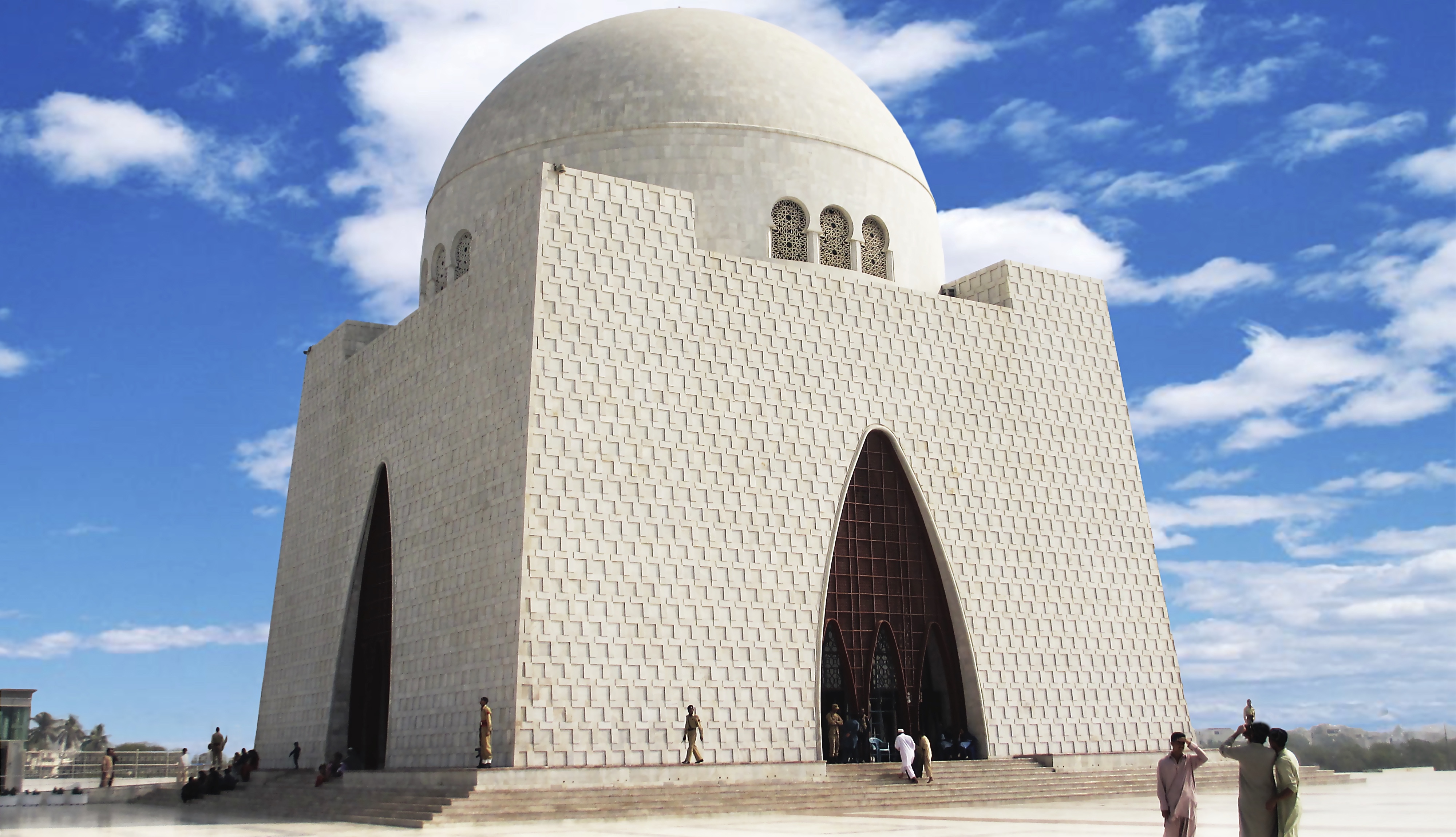
Karachi is the capital of Sindh province in Pakistan and the country's largest city, with a population exceeding 20 million. Located on the Arabian Sea coast, it was Pakistan's capital from 1947 to 1959. As a beta-global city, Karachi serves as Pakistan's primary industrial and financial hub, boasting a substantial GDP. Renowned as a major metropolitan area and Pakistan's most cosmopolitan city, Karachi is known for its linguistic, ethnic, and religious diversity, as well as its progressive and socially liberal environment.
3 hours ago : Protesters Storm US Consulates in Pakistan and Iraq Following Khamenei's Death.
Following the reported death of Iran's Supreme Leader Khamenei, hundreds of protesters stormed the US Consulate in Karachi, Pakistan, and attempted to enter the Baghdad zone housing the US embassy. Demonstrations occurred across multiple locations.


1901: Karachi's population
In 1901, Karachi's population was 117,000 with a further 109,000 included in the Municipal area.
1911: Seth Harchandrai Vishandas as mayor
In 1911, Seth Harchandrai Vishandas was elected as mayor and led the municipal government to improve sanitary conditions in the Old City.
1914: Karachi as wheat-exporting port
By 1914, Karachi had become the largest wheat-exporting port of the entire British Empire.
1921: Influence of non-Sindhis
By as early as 1921, Half the city was born outside of Karachi.
1921: Foundation of Nadirshaw Edulji Dinshaw University of Engineering and Technology (NED)
In 1921, the Nadirshaw Edulji Dinshaw University of Engineering and Technology (NED) was founded. It is Pakistan's oldest institution of higher learning.
1924: Establishment of Drigh Road Aerodrome
By 1924, the Drigh Road Aerodrome was established, now the Faisal Air Force Base.
1925: Construction of Hindu Gymkhana
The Hindu Gymkhana was constructed in 1925 and is an example of Mughal revival buildings.
1933: Transformation into Karachi Municipal Corporation
In 1933, the City of Karachi Municipal Act transformed the city administration into the Karachi Municipal Corporation, which included a mayor, a deputy mayor, and 57 councillors.
January 1934: Lowest Recorded Temperature
On 21 January 1934, the lowest recorded temperature of 0 °C (32 °F) was recorded in Karachi.
November 1935: First International Cricket Match in Karachi
On November 22, 1935, the first international cricket match in Karachi was held between Sindh and Australian cricket teams, attracting 5,000 spectators.
April 1936: Sindh separated from Bombay Presidency
On April 1, 1936, Sindh was established as a province separate from the Bombay Presidency, with Karachi as its capital.
1941: Karachi's population
Compared to 1941, the population of Karachi grew.
1941: Demographic shift in Karachi started
In 1941, demographic shift in Karachi started.
1945: Establishment of Dow University of Health Sciences
In 1945, the Dow University of Health Sciences was established and became one of Pakistan's top medical research institutions.
1946: Arrival of First Muhajirs in Karachi
The first Muhajirs of Karachi arrived in 1946 in the aftermath of the Direct Action Day and subsequent 1946 Bihar riots.
August 1947: Capital of Sindh Shifted
On 15 August 1947 Capital of Sindh shifted from Karachi to Hyderabad and Karachi was made the national capital of Pakistan.
1947: Population at Independence
By the dawn of Pakistan's independence in 1947, Karachi had an estimated population of 400,000.
1947: Cricket History Predates Creation of Pakistan
Cricket's history in Pakistan predates the creation of the country in 1947.
1947: Karachi as Country's Capital
In 1947, Karachi became the capital of Pakistan.
1947: Religious demographics of the city
Prior to Pakistan's independence in 1947, the religious demographics of the city was estimated to be 51.1% Hindu, 42.3% Muslim, with the remaining 7% primarily Christians (both British and native), Sikhs, Jains, with a small number of Jews.
January 1948: Riots and Exodus of Hindus
On January 6, 1948, riots erupted in Karachi, leading to the exodus of much of Sindh's Hindu population to India.
May 1948: Arrival of Refugees
By May 1948, there were 470,000 refugees in Karachi, leading to a drastic alteration of the city's demography.
1948: Karachi Administered as a Federal District
In 1948, Karachi was selected as the first capital of Pakistan and was administered as a federal district separate from Sindh.
1948: Creation of the Federal Capital Territory of Pakistan
In 1948, the Federal Capital Territory of Pakistan was created, encompassing approximately 2,103 square kilometers of Karachi and surrounding areas.
1951: Karachi Population
By 1951, Muslims made up 96% of the city's population.
1951: Foundation of the University of Karachi
In 1951, the University of Karachi, Pakistan's largest university, was founded.
1952: Arrival of Refugees
Until 1952, 100,000 Muhajir refugees arrived annually in Karachi.
August 1953: Highest rainfall in 24 hours
On 7 August 1953, The city's highest rainfall in 24 hours occurred, resulting in major flooding.
1955: Foundation of the Institute of Business Administration (IBA)
In 1955, the Institute of Business Administration (IBA), the oldest business school outside of North America and Europe, was founded with support from the Wharton School and the University of Southern California.
1957: Establishment of Karachi Development Authority
In 1957, the Karachi Development Authority (KDA) was established with the task of managing land around Karachi.
1958: Capital Shift to Rawalpindi
In 1958, the national capital of Pakistan was shifted to Rawalpindi.
1959: End of Karachi as Country's Capital
In 1959, Karachi's role as the capital of Pakistan ended.
1959: Merger into West Pakistan
In 1959, the Federal Capital Territory of Pakistan, which included Karachi, was merged into the province of West Pakistan.
1960: Merger of Karachi and Lasbela District
In 1960, Karachi and Lasbela District merged to create Karachi-Bela Division.
1961: Karachi population growth
By 1961 Karachi's population grew 369% compared to 1941.
1962: Opening of the Dawood University of Engineering and Technology
In 1962, the Dawood University of Engineering and Technology opened, offering degree programs in petroleum, gas, chemical, and industrial engineering.
July 1967: City's highest monthly rainfall
In July 1967, The city's highest monthly rainfall, 19 in (480 mm), occurred.
1969: Karachi Circular Railway Fully Operational
In 1969, the Karachi Circular Railway (KCR) became fully operational.
1970: Development of Areas after 1970
After 1970, several areas in Karachi were developed including Gulistan-e-Johar, Gulshan-e-Iqbal, Federal B. Area, Malir, Landhi and Korangi.
1970: Labour Unrest
Beginning in 1970, labour unrest occurred in Karachi's industrial estates.
1970: Cessation of Karachi as Capital
Between 1958 and 1970, Karachi's role as capital of Sindh was ceased due to the One Unit programme.
1971: Arrival of Urdu-Speaking Biharis
Following the Indo-Pakistani War of 1971 and independence of Bangladesh, thousands of Urdu-speaking Biharis arrived in Karachi.
1971: Influx of Bihari immigrants
In 1971, more than one million Bihari immigrants flowed into Karachi from the newly made country Bangladesh.
1972: Government Repression
From 1972 onwards, the government violently repressed labour unrest in Karachi.
1972: Division of Karachi Metropolitan Area
In 1972, Lasbela District transferred to Kalat Division, and the Karachi metropolitan area was divided into three districts: East, West, and South.
1972: Division of Karachi District
In 1972, the Karachi district was divided into three districts: East, West, and South.
1975: Closure of Tramway Service
In 1975, the tramway service that had been operating in Karachi since 1884 was closed.
1976: Karachi Metropolitan Corporation
In 1976, the Karachi Municipal Corporation became the Karachi Metropolitan Corporation.
November 1980: First One Day International at National Stadium
On November 21, 1980, the first One Day International at the National Stadium was held against the West Indies, with the match going to the last ball.
1980: Foundation of Orangi Pilot Project
In 1980, the Orangi Pilot Project, a community service organization, was founded, leading to the self-organization of households in Orangi to set up their own sewerage system.
1981: Karachi's Population Growth Rate Between 1981 and 1998 Census
Karachi's population had grown at a rate of 3.49% between the 1981 and 1998 census.
1983: Foundation of the Aga Khan University
In 1983, the Aga Khan University, Karachi's oldest private educational institution and one of Pakistan's most prestigious medical schools, was founded.
1989: Foundation of the Indus Valley School of Art and Architecture
In 1989, the Indus Valley School of Art and Architecture was founded, offering degree programs in arts and architectural fields.
1992: Operation Clean-up Begins
In 1992, Pakistani security forces initiated the controversial Operation Clean-up, targeting the MQM party and its supporters, to restore peace in Karachi.
1992: Construction of Current Terminal Structure
The current terminal structure of Karachi's Jinnah International Airport was built in 1992 and is divided into international and domestic sections.
1993: Formation of Lyari Development Authority
In 1993, the Lyari Development Authority (LDA) was formed.
1994: End of Operation Clean-up
In 1994, Operation Clean-up ended after starting in 1992, which was an effort to restore peace in the city.
1994: Formation of Malir Development Authority
In 1994, the Malir Development Authority (MDA) was formed.
1995: High Number of Killings Recorded
In 1995, 1,742 killings were recorded in Karachi, with a maximum of 15 killings in a single day.
1995: First Bone Marrow Transplant in Pakistan at Ziauddin Hospital
In 1995, Ziauddin Hospital in Karachi was the site of Pakistan's first bone marrow transplant.
1995: Foundation of the Shaheed Zulfiqar Ali Bhutto Institute of Science and Technology (SZABIST)
In 1995, the Shaheed Zulfiqar Ali Bhutto Institute of Science and Technology (SZABIST) was founded by former Prime Minister Benazir Bhutto and operates a campus in Karachi.
1996: Host to Cricket World Cup Matches
In 1996, The National Stadium hosted two group matches (Pakistan v. South Africa on 29 February and Pakistan v. England on 3 March), and a quarter-final match (South Africa v. West Indies on 11 March) during the 1996 Cricket World Cup.
1996: Further Division of Karachi Metropolitan Area
In 1996, the Karachi metropolitan area was further divided into two more districts: Central and Malir, each with its own municipal corporation.
1996: Creation of new districts
In 1996, two (02) more districts created in the Karachi Division named Central and Malir districts.
1998: Karachi's population growth since the 1998 census
Karachi's population grew by 59.8% since the 1998 census to 14.9 million.
1998: Karachi's population in 1998 census
The 1998 census listed Karachi's population at approximately 9.3 million.
1999: Karachi Circular Railway Ceases Operations
In 1999, the Karachi Circular Railway (KCR) ceased operations.
2000: Foundation of Bahria University (BU)
In 2000, Bahria University (BU) was founded and became one of the major general institutions of Pakistan, with campuses offering degree programs in Management Sciences, Electrical Engineering, Computer Science and Psychology.
2000: Arrival of Refugees
Until 2000, Muhajirs kept arriving from different parts of India to Karachi.
2001: Five-Year Stint Without Match Wins
Between 1996 and 2001, the Pakistani national cricket team failed to win any limited-overs matches at the National Stadium in Karachi.
2001: KDA Under Local Government Control
In 2001, the Karachi Development Authority (KDA) came under the control of Karachi's local government and mayor, while the Lyari Development Authority (LDA) and Malir Development Authority (MDA) were abolished.
2001: Formation of City District of Karachi
In 2001, under General Pervez Musharraf's rule, the five districts of Karachi were merged to form the city district of Karachi, with a three-tier structure.
2001: Seeking Restoration of Karachi Circular Railway
Since 2001, efforts have been made to restore and restart the Karachi Circular Railway (KCR) system.
2004: Inception of the All Pakistan Music Conference's Annual Music Festival
Since its inception in 2004, the All Pakistan Music Conference has been holding its annual music festival.
2005: Karachi Hosts SAFF Championship
In 2005, Karachi hosted the 2005 SAFF Championship at the Peoples Football Stadium.
2005: Election of Syed Mustafa Kamal as City Nazim
In the 2005 elections, Syed Mustafa Kamal was elected City Nazim of Karachi, succeeding Naimatullah Khan, and Nasreen Jalil was elected as the City Naib Nazim.
2006: Tax and customs units in Karachi responsible for direct taxes
According to the Federal Board of Revenue's 2006–2007 year book, tax and customs units in Karachi were responsible for 46.75% of direct taxes.
2007: Tax and customs units in Karachi responsible for Federal Excise Tax
According to the Federal Board of Revenue's 2006–2007 year book, tax and customs units in Karachi were responsible for 33.65% of federal excise tax.
2007: Geo Super Football League
In 2007, Karachi hosted the Geo Super Football League, attracting capacity crowds during the games.
2007: National Games of Pakistan
Karachi hosted the National Games of Pakistan in 2007.
2009: Karachi Fashion Week
Since 2009, Karachi has hosted the annual Karachi Fashion Week.
2010: Influx of Pashtun Refugees
The 2010s saw another influx of hundreds of thousands of Pashtun refugees fleeing conflict in North-West Pakistan and the 2010 Pakistan floods into Karachi.
July 2011: Reversion to District Municipal Corporations
In July 2011, the city district government of Karachi was reverted to its original constituent units, known as District Municipal Corporations (DMC). The five original DMCs were Karachi East, Karachi West, Karachi Central, Karachi South, and Malir.
2011: Intestinal Parasites in Middle-Class Children
As of 2011, half of all middle-class children in Karachi have intestinal parasites attributed to poor water quality.
2011: Estimated number of foreign migrants in Karachi
In 2011, an estimated 2.5 million foreign migrants lived in Karachi, mostly from Afghanistan, Bangladesh, Myanmar, and Sri Lanka.
2011: KDA Under Sindh Government Control
In 2011, the Karachi Development Authority (KDA) was placed under the direct control of the Government of Sindh. At the same time, the Lyari Development Authority (LDA) and Malir Development Authority (MDA) were revived.
2011: Revival of City-Planning Authorities
In 2011, the Pakistan Peoples Party government revived the Lyari Development Authority and Malir Development Authority, allegedly to patronize their electoral allies and voting banks.
2011: Dismantling of the Union Council System
The Union Council system in Karachi, which had thirteen members elected from specified electorates, was dismantled in 2011.
2012: 98% Drop in Terrorist Incidents
Between 2012 and 2017, terrorist incidents in Karachi dropped by 98%, according to Pakistan's Interior Ministry.
2012: Sindh Madressatul Islam Granted University Status
In 2012, the Sindh Madressatul Islam, originally founded in 1885, was granted university status.
November 2013: Creation of Korangi District
In November 2013, a sixth District Municipal Corporation (DMC), Korangi District, was carved out from District East.
2013: Extortion and Kidnapping Crimes Decreased
Between 2013 and 2015, extortion crimes in Karachi decreased by 80%, and kidnappings decreased by 90%.
2013: Claim of Karachi's Population in 2013
In 2013, Senator Taj Haider from the PPP claimed he had official documents revealing the city's population to be 25.6 million.
2013: Initiation of Crackdown Operation
In 2013, a controversial crackdown operation against criminals, the MQM political party, and Islamist militants was initiated by the Pakistan Rangers, leading to a decrease in violent crime.
2013: Crackdown Operation
In 2013, a crackdown operation was initiated against criminals, the MQM political party, and Islamist militants by the Pakistan Rangers.
2014: Karachi Ranked 6th Most Dangerous City by Numbeo Crime Index
According to the Numbeo Crime Index, in 2014, Karachi was ranked as the 6th most dangerous city in the world.
2014: Decrease in Killings
In 2014, 2,023 Karachiites were killed in either acts of terror or other crime.
2014: Karachi Crime Ranking
In 2014, Karachi was ranked the world's 6th most dangerous city for crime.
2014: D. J. Sindh Government Science College Granted University Status
In 2014, the D. J. Sindh Government Science College, established in 1887, was granted university status.
2015: Chinese Reached Karachi due to CPEC
Chinese also reached Karachi after 2015 in large number due to the CPEC project.
2015: Decrease in Killings
In 2015, 1,040 Karachiites were killed in either acts of terror or other crime, an almost 50% decrease from the 2,023 killed in 2014.
2015: Homicide Rate in Karachi at 12.5 per 100,000
In 2015, Karachi's homicide rate was 12.5 per 100,000 residents.
2015: 75% Decrease in Homicide Rate
With 650 homicides in 2015, Karachi's homicide rate decreased by 75% compared to 2013.
February 2016: Inauguration of Karachi Metrobus project
On February 25, 2016, then-Prime Minister Nawaz Sharif inaugurated the Karachi Metrobus project, a 6-line 150-kilometre bus rapid transit system. Sharif claimed that the project would be more beautiful than the Lahore Metro Bus. Orange and Green Lines are currently operational, while the Red Line is still under construction.
2016: Waseem Akhtar as Mayor of Karachi
Between 2016 and 2020, Waseem Akhtar served as the mayor of Karachi, with Arshad Hassan as Deputy Mayor, as part of the KMC.
2016: 21 Cases of Kidnap for Ransom Registered
By 2016, the city registered a total of 21 cases of kidnap for ransom.
2016: Karachi's Crime Ranking Drops to 31
By the middle of 2016, Karachi's rank in the Numbeo Crime Index had dropped to 31 following the launch of anti-crime operations.
2016: Estimate of Karachi's Population in 2016
In 2016, the Sindh Bureau of Statistics estimated Karachi's population to be 19.1 million.
2016: Number of Murders in Karachi Drops to 471
In 2016, the number of murders in Karachi had dropped to 471.
April 2017: Highest Recorded Temperature
On 22 and 23 April 2017, Karachi's highest recorded temperature of 48.0 °C (118.4 °F) was recorded.
2017: Karachi Ranked Amongst Top 10 Asia Pacific Cities for FDI
According to the Global FDI Intelligence Report 2017/2018 published by Financial Times, Karachi ranks amongst the top 10 Asia pacific cities of the future for FDI strategy.
2017: Launch of Early Warning System for Heatwaves
In 2017, Karachi municipal authorities launched a new early warning system to alert city residents to forecasted heatwaves.
2017: Homicides Dropped to 381
In 2017, the number of homicides in Karachi had dropped further to 381.
2017: Number of Murders in Karachi Drops Further to 381
In 2017, the number of murders in Karachi had dropped further to 381.
2017: Karachi's Population in 2017
The 2017 census numerated Karachi's population to be 14,910,352, having grown 2.49% per year since the 1998 census.
2017: Muhajir Urdu-speaking community
The Muhajir Urdu-speaking community in the 2017 census forms slightly less than 45% of the city's population.
2018: Karachi's Crime Ranking Drops to 50
By 2018, Karachi's ranking on the Numbeo Crime Index had dropped to 50.
2018: Karachi Ranked Third for Consumer Expenditure Growth
In 2018, Karachi was ranked third in the world for consumer expenditure growth, with its market anticipated to increase by 6.6% in real terms.
2018: Passenger Volume at Jinnah International Airport
In 2018, Karachi's Jinnah International Airport was the busiest airport in Pakistan, handling a total of 7.2 million passengers.
2018: Karachi's Economy Ranked Best Performing
In 2018, The Global Metro Monitor Report ranked Karachi's economy as the best performing metropolitan economy in Pakistan.
2019: Privatization of K-Electric
In 2019, K-Electric, the sole electricity provider in Karachi, was privatized, though the government still retains some shares.
August 2020: Formation of Keamari District
In August 2020, the Sindh cabinet approved the formation of the seventh district in Karachi: Keamari District, which was created by splitting District West.
November 2020: Partial Revival of Karachi Circular Railway
In November 2020, the Karachi Circular Railway (KCR) partially revived operations. The KCR is a regional public transit system that had been fully operational between 1969 and 1999, and restoration has been sought since 2001.
2020: End of Waseem Akhtar's Term as Mayor
Between 2016 and 2020, Waseem Akhtar served as the mayor of Karachi, with Arshad Hassan as Deputy Mayor, as part of the KMC.
2020: Vaccines Available During COVID-19 Pandemic
During the 2020 COVID-19 pandemic, vaccines were available in all major hospitals in Karachi.
2021: Karachi's Estimated GDP
As of 2021, Karachi had an estimated GDP of over $200 billion (PPP).
2021: Vaccines Available During COVID-19 Pandemic
During the 2021 COVID-19 pandemic, vaccines were available in all major hospitals in Karachi.
2021: Karachi's Crime Ranking Falls to 115
In 2021, Karachi's ranking on the Numbeo Crime Index fell to 115.
2022: Karachi Water Supply Statistics
As of 2022, 80% of Karachi households have access to piped water, with private water tankers supplying much of the water in informal settlements. 15% of residents rated their water supply as "bad" or "very bad", and 40% expressed concern about the stability of the water supply. An estimated 35,000 people were dying annually due to water-borne diseases by 2022.
2022: Syed Saif-ur-Rehman as Administrator of Karachi
As of 2022, Syed Saif-ur-Rehman is the Administrator of Karachi.
2022: Karachi Crime Ranking Improvement
By 2022, Karachi's crime ranking dropped to 128th in the world.
2022: Flood refugees in Karachi
In 2022 at least one million flood affectees from Sindh and Balochistan took refuge in Karachi.
2022: Karachi Drainage System Issues
In 2022, 75% of Karachi residents reported that the city's drainage system overflows or backs up, the highest percentage among major Pakistani cities. Parts of the drainage system overflow on average 2–7 times per month, causing street flooding.
2022: Karachi's Crime Ranking Falls to 128
In 2022, Karachi's ranking on the Numbeo Crime Index fell further to 128th place.
2022: Numerous Skyscrapers Under Construction
In 2022, at least 50 150m+ buildings were under construction in Karachi.
2022: Inclusion of KCR in CPEC and Construction Start
In 2022, the Karachi Circular Railway (KCR) was included in the China-Pakistan Economic Corridor (CPEC) by Shehbaz Sharif, and construction commenced to rebuild the existing 43 km track and stations into an automated rapid transit system with electric trains.
2022: Launch of Peoples Bus Service
In 2022, the provincial government launched the Peoples Bus Service with a fleet of over 100 buses operating on 12 routes. The buses are air-conditioned, equipped with Wi-Fi, and offer priority seating for disabled and elderly individuals, as well as wheelchair accessibility.
2022: Karachi Cleanliness Survey Results
In a 2022 survey, 42% of residents in Karachi reported that their streets are never cleaned, with only 17% reporting daily street cleaning. 69% of Karachi residents rely on private garbage collection services. 53% reported that the state of their neighbourhood's cleanliness was either "bad" or "very bad".
2022: Sri Lankans Migration to Karachi
Many Sri Lankans moved to Karachi due to the 2022 Economic Crisis in Sri Lanka.
2023: Literacy Rate in Karachi Districts
According to the 2023 Census of Pakistan, Central is the most literate district among all the districts of Karachi and Sindh.
2023: Karachi's Population
According to the 2023 Census of Pakistan, Karachi's total population was 20.3 million.
2023: Karachi Central as the Most Densely Populated District in Pakistan
According to the 2023 Census, with 55,396.01 residents per square kilometre Karachi Central is the most densely populated district of the seven districts of Karachi as well as the entirety of Pakistan.
2023: Parsi Population in Karachi
According to the 2023 census, approximately 1,435 Parsis were residing in Karachi in 2023.
2023: Linguistic Breakdown of Karachi Division
As per the 2023 census, linguistic information for Karachi Division was compiled.
2023: Murtaza Wahab Elected Mayor of Karachi
In 2023, Murtaza Wahab of the Pakistan Peoples Party (PPP) was elected the mayor of Karachi.
2023: Opening of 'Mall of Karachi'
In 2023, another mega mall/entertainment complex named 'Mall of Karachi' situated at the bottom of Pakistan's tallest skyscraper Bahria Icon Tower will be opened.
2025: Karachi Identified as Largest Urban Area with Most People Exposed to Unhealthy Air Pollution
A 2025 analysis by Climate TRACE identified Karachi as the largest urban area with the most people exposed to unhealthy levels of air pollution.
2025: Anticipated Increase of Households with High Annual Income
By 2025, Karachi is expected to be among the top cities in the world with an anticipated increase of 1.3 million households with annual income above $20,000 measured at PPP exchange rates.
January 2026: Major Fire at Gul Plaza
On 18 January 2026, a major fire broke out at Gul Plaza, a large shopping mall in Karachi, killing at least 21 people.
Mentioned in this timeline
California is a U S state on the Pacific Coast...

The stock market is where buyers and sellers trade stocks...
India officially the Republic of India is a South Asian...
Myanmar also known as Burma is a Southeast Asian country...
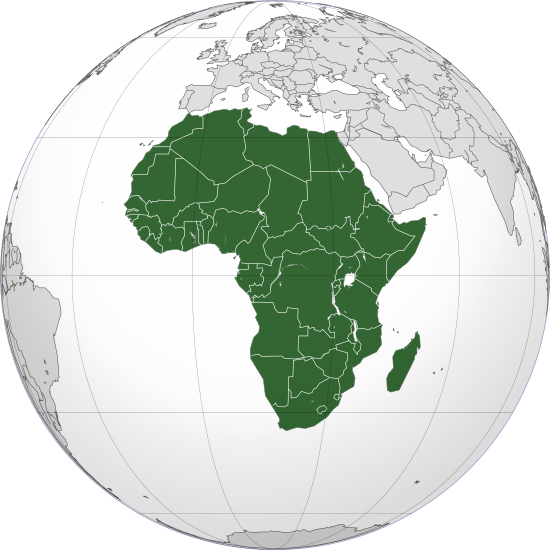
Africa is the second-largest and second-most populous continent comprising of...

Football is a family of team sports primarily involving kicking...
Trending

20 minutes ago Uchijima and Kalinina to meet for the Antalya 2026 Megasaray Hotels Open title.
20 minutes ago Southern Lottery Results for March 1st: Searching for the Winning Series
20 minutes ago Cyprus Airports Cancel Flights Amid Rising Tensions Between US, Israel, and Iran.
1 hour ago Kansas City Man Steals Greyhound Bus, Leading Police on I-29 Chase
1 hour ago Matildas Host Filipinas in Asian Cup Opener; Kerr Addresses Injury, Self-Doubt.

1 hour ago Armie Hammer's Post-Scandal Life: Therapy, Fatherhood, Acting Comeback, and SNL Satire.
Popular
Jesse Jackson is an American civil rights activist politician and...

XXXTentacion born Jahseh Dwayne Ricardo Onfroy was a controversial yet...

Hillary Diane Rodham Clinton is a prominent American politician lawyer...

Kashyap Pramod Patel is an American lawyer who became the...
Barack Obama the th U S President - was the...

Michael Joseph Jackson the King of Pop was a highly...