Rise to Success: Career Highlights of Kevin Warsh


How Kevin Warsh built a successful career. Explore key moments that defined the journey.
Kevin Warsh is an American financier and attorney. He is the designate chair of the Federal Reserve and designate member of the Federal Reserve Board of Governors. He previously served as a member of the Federal Reserve Board of Governors from 2006 to 2011. Warsh's background and experience are primarily in finance and economics, making him a significant figure in monetary policy.
August 1996: Hired as an Associate by Morgan Stanley
In August 1996, Kevin Warsh was hired by Morgan Stanley as an associate and worked on mergers and acquisitions.


1996: Joined Morgan Stanley
In 1996, Kevin Warsh joined Morgan Stanley as an associate specializing in mergers and acquisitions.
April 2002: Named Special Assistant to President Bush
In April 2002, President George W. Bush appointed Kevin Warsh as a special assistant to the president for economic policy and the executive secretary of the National Economic Council. Also in April 2002, Warsh married Jane Lauder.
July 2005: Considered for Federal Reserve Board vacancy
In July 2005, the Bush administration considered appointing Kevin Warsh to a vacancy on the Federal Reserve Board of Governors.
January 27, 2006: Nominated to Federal Reserve Board of Governors
On January 27, 2006, President George W. Bush nominated Kevin Warsh to serve on the Federal Reserve Board of Governors.
February 14, 2006: Appeared before Senate Committee
On February 14, 2006, Kevin Warsh appeared before the Senate Committee on Banking, Housing, and Urban Affairs and discussed potential complications for the Federal Reserve due to the slowing housing market.
February 24, 2006: Sworn in as Member of Federal Reserve Board of Governors
On February 24, 2006, Kevin Warsh was sworn in as a member of the Federal Reserve Board of Governors by Vice President Dick Cheney.
May 2006: Federal Reserve Hedge Fund Regulations
In May 2006, Kevin Warsh stated that the Federal Reserve should intensify efforts to regulate hedge funds.
February 2007: Expressed Optimism Amid Financial Fears
In February 2007, Kevin Warsh remained optimistic about market liquidity despite mounting fears of a worldwide financial crisis.
September 2009: Expressed Hawkish Beliefs on Interest Rates
In September 2009, Kevin Warsh expressed the belief that the Federal Reserve should be prepared to raise interest rates.
February 2010: Call for Regulatory Coordination
In February 2010, Kevin Warsh called for countries to coordinate on regulatory reform.
February 10, 2011: Announced Resignation
On February 10, 2011, Kevin Warsh announced that he would resign as a member of the Federal Reserve Board of Governors at the end of March.
May 2018: Federal Reserve Cryptocurrency Suggestion
In May 2018, Kevin Warsh suggested that the Federal Reserve should consider using blockchain technology to establish its own cryptocurrency.
January 2026: Nomination for chair of the Federal Reserve
In January 2026, Donald Trump considered retaining Hassett at the National Economic Council, but then The New York Times reported that Trump was planning to nominate Kevin Warsh as chair of the Federal Reserve. Trump announced his nomination of Warsh for the position. This nomination occurred amidst a federal investigation into Powell, leading to North Carolina Senator Thom Tillis blocking the nomination pending the investigation's conclusion. Bessent aimed to proceed with hearings despite the blockade.
April 2026: Senate Committee Hearing
In April 2026, as Kevin Warsh's committee hearing approached, several Republican senators, including Senate Majority Leader John Thune, expressed discontent with the investigation into Powell. On April 21, Warsh appeared before the Senate Committee on Banking, Housing, and Urban Affairs, asserting his independence and advocating for reforms to the Federal Reserve. After the hearing, the Department of Justice ended its inquiry into Powell, clearing the path for Warsh's confirmation. Tillis ended his objections, and the Senate Committee voted to advance Warsh to the Senate on April 29. Thune filed cloture on Warsh's nomination the following day.
May 11, 2026: Senate Vote to Advance Nomination
On May 11, 2026, the Senate voted to advance Kevin Warsh's nomination in a 49–44 vote. While mostly along party lines, Democratic senators John Fetterman and Chris Coons voted in favor.
May 22, 2026: Sworn in as chair of the Federal Reserve
On May 22, 2026, Kevin Warsh was sworn in as chair of the Federal Reserve by Justice Clarence Thomas at the White House, marking the first time since Alan Greenspan in 1987 that a chair took office in the White House.
Mentioned in this timeline
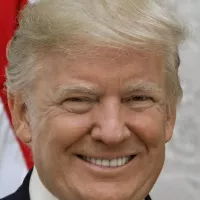
Donald John Trump is an American politician media personality and...
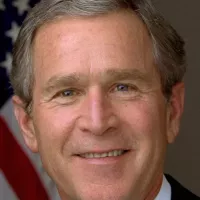
George W Bush the rd U S President - is...

JPMorgan Chase Co incorporated in Delaware and headquartered in New...
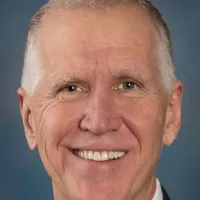
Thom Tillis is a Republican politician serving as a U...
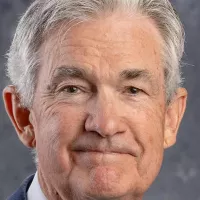
Jerome Powell is an American central banker and attorney who...

Cryptocurrency is a digital currency operating on a decentralized network...
Trending
3 hours ago Kyrian Jacquet enters ATP top 100 and reaches Tokyo tennis quarter-finals

3 hours ago Fatal Car Crash Into Whittier Restaurant Leaves One Dead and Two Injured
3 hours ago Ben Affleck Attends Star-Studded Animals Movie Premiere and Red Carpet Events

4 hours ago Maria Timofeeva Recovers Stolen Watch Following Naomi Osaka Match at China Open
4 hours ago Rare Triple Typhoon System Threatens Western Pacific Regions

5 hours ago Tennis Prediction Markets Feature Upcoming ATP and WTA Matches
Popular

Ken Paxton is an American politician and lawyer serving as...

Jameis Winston is an American football quarterback currently playing for...

Shakira Isabel Mebarak Ripoll the Queen of Latin Music is...

Elon Musk is a visionary entrepreneur and engineer known for...
Bernie Sanders is a prominent American politician and the senior...

Cristiano Ronaldo widely considered one of the greatest footballers captains...