


Kinshasa, the capital and largest city of the Democratic Republic of the Congo (DRC), was formerly known as Léopoldville. It's a rapidly growing megacity, projected to have 18.5 million residents by 2026, making it one of Africa's most populous urban centers and a significant global city. As the DRC's leading economic, political, and cultural hub, Kinshasa is home to various industries like manufacturing, telecommunications, and banking. It also houses important institutional buildings, including the People's Palace and the Palace of the Nation, solidifying its role as the nation's core.
1902: European Constructions in Kitambo
By 1902, the Kitambo area was entirely occupied by European constructions.


1908: Belgian Congo
After 1908, agents of the Belgian Congo settled in the area.
1911: Urban Plan Drafted
In 1911, George Moulaert drafted a comprehensive urban plan for Léopoldville and the greater Kinshasa area to guide spatial development.
1911: Railway Completion
In 1911, the Matadi–Léopoldville Railway was completed, serving as a link between Léopoldville and Matadi.
April 1914: Territorial Reform in the Belgian Congo
On 11 April 1914, a Royal Decree instituted a territorial reform in the Belgian Congo, reaffirming Kinshasa's dual role as the colonial capital and the central administrative seat.
1914: Pipeline Installation
In 1914, a pipeline was installed for crude oil transport from Matadi to upriver steamers in Leopoldville.
1918: Economic Activity Accelerated
By the end of World War I in 1918, Léopoldville rivaled other Congolese cities and attracted Belgian architects.
1922: Housing Decree Mandate
In 1922, a decree mandated that large companies provide housing for their African workers.
July 1923: City Elevated to Capital of Belgian Congo
In July 1923, Léopoldville was elevated to the capital of the Belgian Congo, replacing Boma.
1929: De Jure Racial Segregation
In 1929, de facto racial segregation in Kinshasa became de jure as the European and African neighborhoods grew closer together.
1929: Transition Finalized
In 1929, the transition of Léopoldville becoming the capital was finalized with the development of Kalina as the colonial administrative center.
1930: Population of Kinshasa
In 1930, Kinshasa's population reached 39,530, growing at an annual rise of roughly 4,700 people.
1933: Foundation of Saint Peter's Church
In 1933, Saint Peter's Church, the oldest Catholic mission, was founded in Kinshasa.
1933: Establishment of the "Neutral Zone"
In 1933, the Léopoldville Urban Committee established a buffer zone known as the "neutral zone" to address public health concerns and urban hygiene.
1935: Population Growth Rate
Between 1935 and 1945, the population growth rate rose from 1.1% to 1.5% annually due to wartime economic mobilization.
1936: Kintambo Vélodrome Stadium Built
In 1936, the Kintambo Vélodrome Stadium was built in Kintambo.
1939: Establishment of Saint Francis Parish
1940: Force Publique Victories
Many streets and squares in Kasa-Vubu bear names recalling the victories of the Force Publique during the 1940–45 military campaigns.
June 1941: Kinshasa Conferred City Status
In June 1941, Kinshasa was granted city status and established an Urban Committee, along with becoming the capital of the colony, Congo-Kasaï Province, and Moyen Congo district.
1941: Official City Status
In 1941, Legislative Ordinance No. 293/AIMO of 25 June granted Kinshasa official city status and established an Urban Committee.
1945: Population Growth Rate
Between 1935 and 1945, the population growth rate rose from 1.1% to 1.5% annually due to wartime economic mobilization.
1945: Urban Population Increase
In 1945, Léopoldville's urban population increased following the cessation of forced labor, which brought an influx of native Africans from rural areas.
1947: Nouvelle Cité Housed Over 8,000 Residents
In 1947, just two years after its inception, the Nouvelle Cité, a large-scale residential project in Dendale, housed over 8,000 residents, including future President Joseph Kasa-Vubu.
1949: OCA's Ten-Year Urban Development Plan
In 1949, the Office des Cités Africaines (OCA) initiated a ten-year plan encompassing urban design, infrastructure, community facilities, and housing construction to address additional housing needs for the African population.
1953: Maurice Heymans Took Over Urban Planning
In 1953, Maurice Heymans took over urban planning from Georges Ricquier, while the new city plan preserved European dominance over the historical center, limited expansion to adjacent zones, and promoted industrial development in Limete.
1954: OCA Developed Matete, Bandalungwa, and Lemba
Between 1954 and 1960, OCA developed Matete, Bandalungwa, and Lemba, alongside the satellite city of Ndjili, which included prearranged roads, drainage systems, sewer networks, and paved primary access routes.
1954: Foundation of Lovanium University
In 1954, Lovanium University (now the University of Kinshasa), the country's first university, was founded in Lemba.
1954: Lovanium University Founded
In 1954, Lovanium University, the colony's first university, was founded.
1957: Léopoldville Expansion
By 1957, Léopoldville expanded to include eleven communes and six adjunct regions.
1959: Over 40,000 Homes Built
By 1959, over 40,000 homes had been built following a controlled, segregationist approach, with planning initially led by urban planner Georges Ricquier.
May 1960: Fundamental Law Designating Kinshasa as a Neutral City
Following Congolese independence, the colonial charter was replaced by the Fundamental Law of 19 May 1960, which designated Kinshasa as a neutral city and the political seat of national institutions.
June 1960: Independence
In June 1960, the Republic of the Congo gained its independence.
1960: OCA Developed Matete, Bandalungwa, and Lemba
Between 1954 and 1960, OCA developed Matete, Bandalungwa, and Lemba, alongside the satellite city of Ndjili, which included prearranged roads, drainage systems, sewer networks, and paved primary access routes.
1960: Population at Independence
By the time Congo gained independence in 1960, Kinshasa covered 5,500 hectares and had 400,000 residents.
1960: Forest Cover in Kinshasa
In 1960, historical vegetation mapping reveals that Kinshasa's forest cover was 46% while coverage of forest–savanna mosaics and terrestrial grassland formations was 48%.
1960: Increased Internal Migration after Independence
Internal migration to Kinshasa intensified after independence in 1960, with Congolese from various provinces seeking economic opportunity, political stability, and access to education and services.
1964: Expulsion Decree
In 1964, Moïse Tshombe decreed the expulsion of various nationals and political refugees.
May 1966: Government Announces Renaming
On May 2, 1966, the government announced that the nation's major cities would be restored to their pre-colonial names, with Léopoldville being renamed Kinshasa, effective on June 30.
1966: Léopoldville renamed Kinshasa
In 1966, Léopoldville was renamed Kinshasa.
1966: Renaming of Mont Stanley
In 1966, President Mobutu renamed Mont Stanley to Mont Ngaliema and transformed it into a Presidential Park.
1967: Creation of African Union City
In 1967, the African Union City was created for the OAU summit in Mont Ngaliema.
January 1968: Ordinance Granting Kinshasa Provincial Status
On 20 January 1968, Ordinance No. 68/024 granted Kinshasa the same politico-administrative status comparable to that of the provinces, expanding its communal subdivisions from 11 to 24.
1970: Théâtre de la Verdure amphitheater completion
In 1970, the Théâtre de la Verdure amphitheater was completed in Mont Ngaliema.
1974: The Rumble in the Jungle
In 1974, Kinshasa hosted The Rumble in the Jungle boxing match between Muhammad Ali and George Foreman. Ali defeated Foreman, to regain the World Heavyweight title.
1974: Rumble in the Jungle Boxing Match
In 1974, Kinshasa hosted the historic Rumble in the Jungle boxing match between Muhammad Ali and George Foreman.
1974: Surveys on Kinshasa's working population
In 1974, surveys indicated that 33.7% of Kinshasa’s working population held positions as executives or skilled laborers, with executives at 6.5% and skilled laborers at 27.2%.
1976: Ali vs. Inoki Fight
In 1976, Antonio Inoki fought Muhammad Ali and received the nickname Bomaye from Ali, who first heard it in Kinshasa during the Rumble In The Jungle.
1977: Kinshasa's Industrial Concentration
In 1977, Kinshasa accounted for 49.9% of the country’s manufactured industries. Surveys conducted between 1974 and 1977 indicated that 33.7% of Kinshasa's working population held positions as executives or skilled laborers. Also, in 1977, wages could cover 62% of basic needs and 51% of family needs.
1980: Stable Employment in Kinshasa
By 1980, an estimated 412,000 people were in stable employment in Kinshasa, supporting an average household of six.
1982: Forest Cover in Kinshasa
In 1982, historical vegetation mapping reveals that Kinshasa's forest cover declined to 36% while coverage of forest–savanna mosaics and terrestrial grassland formations rose to 56%.
1987: Forest Cover in Kinshasa
In 1987, historical vegetation mapping reveals that Kinshasa's forest cover declined to 15% while coverage of forest–savanna mosaics and terrestrial grassland formations rose to 64%.
1988: Economic Hardship in Kinshasa
By 1988, studies revealed that only 20% of workers in Kinshasa could meet basic living costs on their wages.
1990: Cost of Living Increase
By 1990, Kinshasa had become more expensive to live in than other interior cities of the country.
1991: Looting in Kinshasa
In 1991, Kinshasa experienced waves of looting, which inflicted severe damage on the city’s economic infrastructure.
1991: Rioting Soldiers Protested
In 1991, the city had to fend off rioting soldiers who were protesting the government's failure to pay them.
1992: Economic Damage and Job Losses
In 1992, Kinshasa experienced waves of looting, which inflicted severe damage on the city’s economic infrastructure. As a result, an estimated 300,000 executives and skilled workers lost their jobs.
1994: Formation of Orchestre Symphonique Kimbanguiste
In 1994, the Orchestre Symphonique Kimbanguiste was formed in Kinshasa.
1994: Large-Scale Violence Against Hutu Civilians
In mid-1994, UNHCR consultant Robert Gersony estimated that between 5,000 and 10,000 people were killed monthly in large-scale violence against Hutu civilians.
1996: First Congo War Erupted
In 1996, the eruption of the First Congo War significantly intensified instability in Kinshasa and across the broader region.
1996: When We Were Kings
In 1996, the film 'When We Were Kings' was released, documenting the historic 1974 Rumble in the Jungle boxing match held in Kinshasa.
May 1997: Fall of Kinshasa and Human Rights Abuses
In May 1997, the fall of Kinshasa to the Rwandan- and Ugandan-backed AFDL marked the beginning of serious human rights abuses, including extrajudicial killings, torture, and rape. On May 17, Mobutu was overthrown in an AFDL-led coup, and between May 18 and 22, the Congolese Red Cross collected between 228 and 318 bodies.
June 1997: Rapes and Sexual Violence
Beginning in June 1997, soldiers from the newly formed FAC and RPA occupied military camps in Kinshasa, where they raped large numbers of women and girls, and at Kokolo Military Camp, similar atrocities happened, while ferocious crimes were reported at a location known as "Camp Américain". Violence against women extended outside military compounds, as numerous reports reveal that FAC and RPA soldiers carried out systematic sexual violence across Kinshasa.
June 1997: Deterioration of the Security Situation
Between May and June 1997, the security situation deteriorated further, with AFDL and RPA units carrying out public executions, often incinerating bodies. Detainees were routinely executed and their bodies discarded in the Congo River.
July 1997: Killing of PALU Members During Protest Crackdown
In July 1997, FAC and RPA soldiers killed between one and four PALU members during a protest crackdown and injured several others. The residence of PALU leader Antoine Gizenga was ransacked, resulting in the death of an activist and the severe beating of six more.
July 1997: Ill-treatment and Deaths in Military Prisons
In July 1997, detainees in military prisons at Kokolo and Tshatshi camps suffered ill-treatment that led to numerous deaths from torture, disease, and medical neglect. At least 24 wounded former members of the Rwandan Armed Forces disappeared after being transferred from hospitals to military camps, while the militarization of Kinshasa's public life continued under the new regime, including public floggings and whippings with the chicotte, a "leather-thonged whipping device".
September 1997: Cross-Border Shelling from Brazzaville
In September 1997, the security crisis in Kinshasa was compounded by cross-border shelling from Brazzaville, which killed at least 21 civilians between September 29 and October 1. In retaliation, FAC and RPA forces shelled Brazzaville for two consecutive days.
December 1997: Gang-Rape of FSDC President's Sisters
On December 10, 1997, two sisters of the FSDC president were gang-raped by FAC and RPA personnel.
1997: Rebel Uprising Brought Down the Regime of Mobutu
In 1997, a rebel uprising finally brought down the regime of Mobutu.
1997: First Congo War Erupted
In 1997, the eruption of the First Congo War significantly intensified instability in Kinshasa and across the broader region.
August 1998: Extrajudicial Executions, Torture, and Arbitrary Detentions
Between August 1998 and January 2001, political opponents and civilians were subject to extrajudicial executions, torture, rape, and arbitrary detentions, and members of opposition parties such as the UDPS and PALU were particularly targeted.
August 1998: Second Congo War and Rebel Formation
In August 1998, the Second Congo War started after relations broke down between President Laurent-Désiré Kabila and his former allies. Rwanda and Uganda backed the formation of a new rebel group, the Rassemblement Congolais pour la Démocratie (RCD), which launched its rebellion from Goma on August 2.
August 1998: Clashes and Bombardment of Civilian Areas
In late August 1998, forces of the ANC, RPA, and UPDF clashed with troops from FAC and the Zimbabwe Defence Forces (ZDF) for control of the capital. The ZDF employed heavy artillery to bombard densely populated areas, resulting in the deaths of approximately 50 civilians and 282 wounded during the night of August 27 to 28. Rebel forces also seized the Inga hydroelectric power station on August 13, cutting electricity and water to Kinshasa.
October 2000: Crackdown on Alleged Coup Plotters
On October 28, 2000, President Kabila's security forces arrested at least 93 people accused of plotting a coup d'état; some detainees were summarily executed or tortured to death.
2000: Improvement of Road Quality
Since 2000, the quality of roads in Kinshasa has improved somewhat, developed in part with loans from China.
January 2001: Assassination of President Laurent-Désiré Kabila
On 16 January 2001, President Laurent-Désiré Kabila was assassinated, leading to his son, Joseph Kabila, quickly succeeding him as president. Joseph Kabila prioritized de-escalating armed conflict and promoting national reconciliation.
March 2001: Deployment of MONUC Personnel
In March 2001, the United Nations Mission in the Democratic Republic of Congo (MONUC) deployed personnel to key conflict zones to monitor compliance with the Lusaka Ceasefire Agreement, but violence continued.
February 2002: Opening of the Inter-Congolese Dialogue
On 25 February 2002, the Inter-Congolese Dialogue (ICD) officially opened in Sun City, South Africa, aiming to facilitate a comprehensive peace process.
April 2002: Preliminary Power-Sharing Agreement Signed
On 19 April 2002, a preliminary power-sharing agreement was signed between Joseph Kabila and Jean-Pierre Bemba as part of the Inter-Congolese Dialogue, though it faced opposition.
July 2002: Rwanda and DRC Sign Peace Accord
On 30 July 2002, Rwanda and the DRC signed a peace accord in Pretoria, where Rwanda agreed to withdraw its troops in exchange for the disarmament and repatriation of Hutu militias such as the FDLR.
September 2002: Agreement with Uganda to Withdraw Forces
On 6 September 2002, a similar agreement was reached with Uganda in Luanda to withdraw Ugandan forces and stabilize Ituri Province.
December 2002: Global and All-Inclusive Agreement in Pretoria
On 17 December 2002, the Global and All-Inclusive Agreement was reached in Pretoria, establishing a transitional power-sharing government and integrating former belligerents into a unified national army.
June 2003: Inauguration of Transitional Institutions
On 30 June 2003, transitional institutions were formally inaugurated in Kinshasa.
2003: Creation of Transco
In 2003, the public bus company for Kinshasa, Transco (Transport au Congo) was created.
2004: Employment Investigation in Kinshasa
A 2004 investigation found that 70% of inhabitants in Kinshasa were employed informally, 17% in the public sector, 9% in the formal private sector, and 3% other, of a total 976,000 workers.
2004: Growth of Kinshasa's Media Scene
By 2004, Kinshasa had 23 radio stations and 26 TV stations, marking rapid growth in the city's media scene.
2005: Population in 2005
In 2005, Kinshasa's population was between 5.3 and 7.3 million.
2005: Household Spending in Kinshasa
In 2005, mean household spending in Kinshasa was the equivalent of US$2,150, amounting to $1 per day per person. The median household spending was $1,555, 66 cents per person per day.
2005: Household Ownership of Televisions and Mobile Phones
In 2005, statistics showed that 55% of households in Kinshasa had televisions and 43% had mobile phones.
2006: Parliamentary Elections and Media Ownership
In 2006, Numerica TV was owned by Kibambi Shintwa and Kabeya Pindi Pasi, both of whom were candidates in the parliamentary elections.
2006: Unrest after the 2006 Presidential Election
In 2006, President Kabila's controversial victory in the presidential election triggered widespread unrest in Kinshasa, prompting the deployment of European Union forces to support MONUSCO in maintaining order.
2006: Gated Communities and Shopping Malls Appear
In 2006, gated communities and shopping malls, built with foreign capital and technical expertise, began to appear in Kinshasa.
2006: Institutionalization as a Province
The 2006 Constitution officially institutionalized Kinshasa as a fully-fledged province.
2007: Increase in Television Broadcasters
By 2007, the number of television broadcasters in Kinshasa increased dramatically to 63.
2007: China and Congo sign agreement
In 2007–2008 China and Congo signed an agreement for an $8.5 billion loan for infrastructure development.
July 2008: Law Defining a Province
Pursuant to Article 2 of Law No. 08/012 of 31 July 2008, a province is defined as a political and administrative component of the national territory endowed with legal personality and managerial autonomy.
2008: China and Congo sign agreement
In 2007–2008 China and Congo signed an agreement for an $8.5 billion loan for infrastructure development.
2008: Establishment of Urban Régies
Since 2008, the provincial government has established several technical public services, collectively known as "urban régies", which fall under the governor's authority.
2009: Publication of Gentlemen of Bacongo
In 2009, Photographer Daniele Tamagni's book Gentlemen of Bacongo captures the distinctive style and personalities of Kinshasa's sapeurs.
2009: Connexion Kin arts festival organized
Since 2009, the Royal Flemish Theatre in Brussels has organized the Connexion Kin arts festival in Limete.
2010: U.S. State Department Travel Advisory
In 2010, the U.S. State Department informed travelers that Kinshasa and other major Congolese cities are generally safe for daytime travel, but to beware of robbers.
2010: Release of Viva Riva!
In 2010, the film Viva Riva! by Djo Tunda Wa Munga was released.
2011: Baloji Recorded Kinshasa Succursale
In 2011, Belgian-Congolese rapper and singer Baloji returned to Kinshasa to record his album Kinshasa Succursale.
2011: DRC Music Collective Recorded "Kinshasa One Two"
In 2011, the DRC Music collective, curated by Damon Albarn, recorded the collaborative album Kinshasa One Two in just five days, bringing together over fifty Congolese musicians and international producers. Among the featured artists was Jupiter Bokondji, whose band is Okwess International.
October 2012: 14th Francophonie Summit
In October 2012, Kinshasa hosted the 14th Francophonie Summit.
2013: UNESCO Estimates on Education
Various statistical estimates by UNESCO, (2013) regarding secondary and tertiary education in DRC reveal the difficulties facing the country.
2015: Neighborhoods in Kinshasa
As of 2015, the 24 communes of Kinshasa are divided into approximately 310 neighborhoods (quartiers), which function as subunits of the communes.
2015: Legislative Predominance of the MLC
As of 2015, the Mouvement de Libération du Congo (MLC) held legislative predominance in Kinshasa.
2015: Population in 2015
By 2015, Kinshasa's population was nearly 12 million.
2016: Literacy Rate Estimate
According to data from UIS (2016), the literacy rate of the population of 15 years and older in DRC is estimated to be 77.04%.
2016: Most Expensive City in Africa for Expatriates
According to the 2016 annual ranking, Kinshasa was recognized as Africa's most expensive city for expatriate employees.
2016: Renaming of Shinsuke Nakamura's Finisher
In 2016, Shinsuke Nakamura's running knee strike, previously named Bomaye, was renamed Kinshasa when he signed with the WWE for trademark reasons.
2016: Unrest due to Election Delay Announcement
In 2016, the Independent National Electoral Commission announced a two-year delay in holding new presidential elections, which ignited mass protests in September and December, leading to violent clashes and civilian deaths.
2016: United Nations Peacekeeping Presence Bolstered
In 2016, the United Nations bolstered its peacekeeping presence in Kinshasa in response to civil unrest related to President Joseph Kabila's controversial extension of power.
2016: Enabel's Sponsorship of PAIDECO
Since 2016, the Belgian development agency, Enabel, has sponsored the Programme d'Appui aux Initiatives de Développement Communautaire (PAIDECO), a €6 million initiative aimed at stimulating economic development in the region.
2018: USAID Report on Education
According to USAID (2018), 3.5 million children of primary school age in DRC are out of school, and 44% of those who do attend school started only after age six.
2019: The Widow Premiered on Amazon Prime and ITV
In 2019, the mini-series The Widow premiered on Amazon Prime and the UK's ITV network. The show follows a woman searching for her husband in Kinshasa after he was presumed dead in a plane crash.
2019: End of President Kabila's Term
President Kabila remained in power until 2019.
2022: Improved Foreign Exchange Reserves
By late 2022, the city's foreign exchange reserves had improved significantly, surpassing $4.5 billion.
October 2023: Establishment of the CSSPEVK
In October 2023, the provincial government established the Comité Stratégique pour la Supervision du Projet d'Extension de la Ville de Kinshasa (CSSPEVK) to oversee the "Kinshasa Kia Mona" urban expansion project.
December 2023: Provincial Elections
The provincial elections of 20 December 2023 resulted in a power shift in favor of the Union Sacrée de la Nation (USN), led by President Félix Tshisekedi's Union pour la Démocratie et le Progrès Social (UDPS), which secured 14 seats.
2023: Introduction of App-Based Taxi Hailing Service
In 2023, an app-based taxi hailing service was introduced in Kinshasa.
2023: MetroKin Railway System Announced
In 2023, plans to build an urban railway system in Kinshasa called MetroKin were announced.
2023: Press Freedom Index Rating
In 2023, the Press Freedom Index rated the Democratic Republic of the Congo at 48.55%.
June 2024: Daniel Bumba Assumes Governorship
On 21 June 2024, Daniel Bumba assumed the governorship of Kinshasa.
2024: Population of Makala Prison
In 2024, the population of Makala Prison in Kinshasa was reported at 15,000 inmates.
2025: Reopening of the Matadi-Kinshasa Railway
In 2025, the Matadi-Kinshasa Railway reopened for passenger service multiple times per week, after five years of renovation.
January 2026: Estimated Population
As of January 2026, Kinshasa's metropolitan area is estimated to have around 18,552,800 people.
2026: Estimated Population
By 2026, Kinshasa is estimated to have a population of 18.5 million.
2026: Expected Start of MetroKin Service
The start of service for the MetroKin urban railway system is not expected until 2026 at the earliest.
2050: Projected Metropolitan Population
Projections anticipate that Kinshasa's metropolitan population will reach 35 million by 2050.
2075: Projected Metropolitan Population
Projections anticipate that Kinshasa's metropolitan population will reach 58 million by 2075.
Mentioned in this timeline

Jupiter is the fifth and largest planet from the Sun...
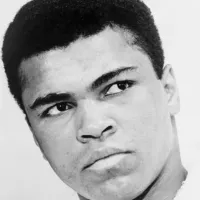
Muhammad Ali nicknamed The Greatest was an iconic American professional...

World Wrestling Entertainment WWE is the global leader in professional...

Amazon Prime is a subscription service offering a variety of...
China officially the People's Republic of China PRC is located...
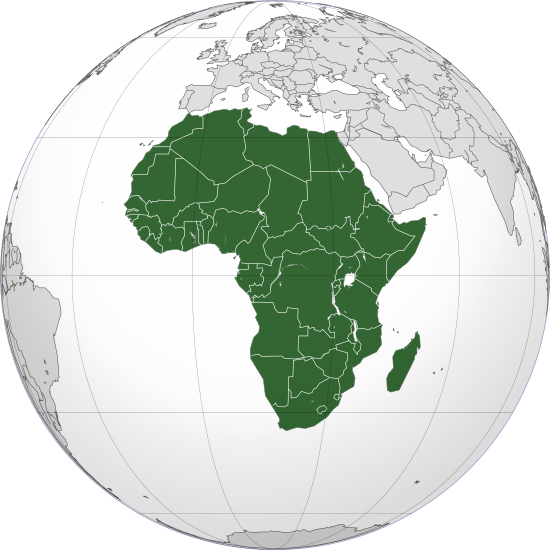
Africa is the second-largest and second-most populous continent home to...
Trending

4 hours ago Caitlin Clark and Indiana Fever Face Early Playoff Exit After Competitive Series
4 hours ago Major Safety Recalls Issued for Walmart Products and Amazon Charging Devices Due to Fire Risks

5 hours ago Estêvão Willian Faces Frustration at Chelsea Amid Ongoing Barcelona Transfer Interest
6 hours ago CJ Carr Emerges as Rising Notre Dame Quarterback and NFL Draft Prospect
6 hours ago Political Dynamics Shift as Voter Demographics and New Poll Results Challenge Traditional Party Strategies
6 hours ago Kirk Ferentz Leads Iowa Hawkeyes Into High-Stakes Showdown Against Ohio State
Popular

Jameis Winston is an American football quarterback currently playing for...

Ken Paxton is an American politician and lawyer serving as...

Shakira Isabel Mebarak Ripoll the Queen of Latin Music is...
Sylvester Stallone is an iconic American actor screenwriter and filmmaker...

Elon Musk is a visionary entrepreneur and engineer known for...
Bernie Sanders is a prominent American politician and the senior...