Rise to Success: Career Highlights of Mick Fleetwood


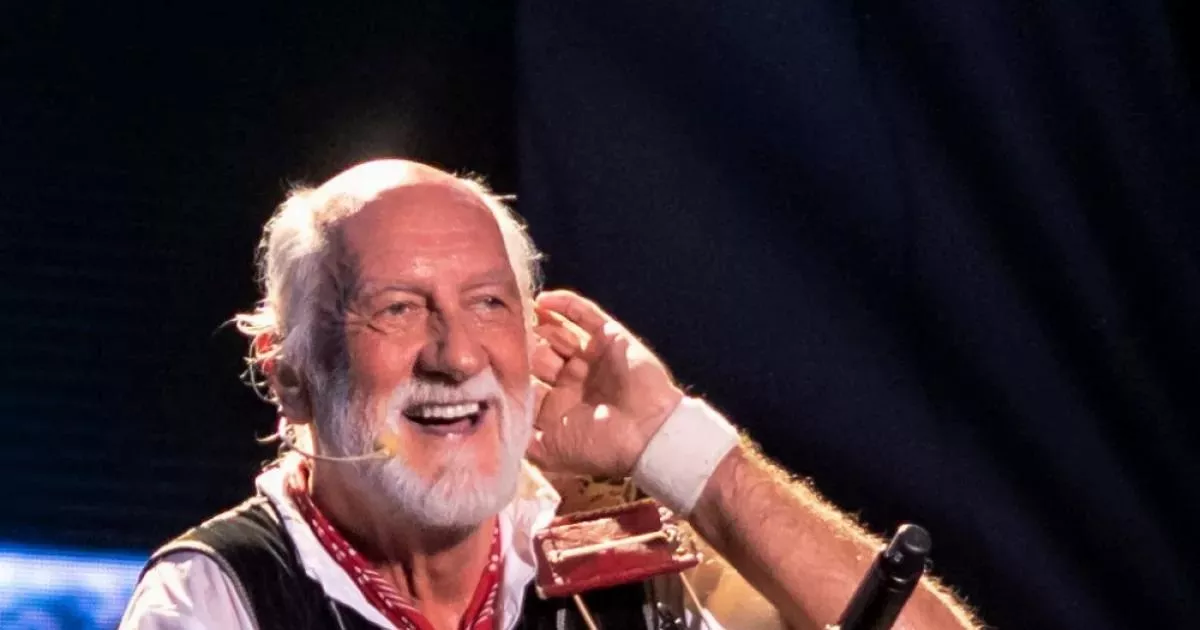
From career breakthroughs to professional milestones, explore how Mick Fleetwood made an impact.
Mick Fleetwood is an English musician, songwriter, and actor, best known as the drummer, co-founder, and leader of the iconic rock band Fleetwood Mac. His surname, combined with bassist John McVie's, formed the band's name. He played a crucial role in the band's formation and evolution through various lineup changes. Fleetwood was inducted into the Rock and Roll Hall of Fame in 1998 as a member of Fleetwood Mac, solidifying his legacy in music history.
July 1963: First Gig with The Cheynes
In July 1963, Peter Bardens gave Mick Fleetwood his first gig as a drummer in Bardens' band, The Cheynes.


1963: Move to London to Pursue Music Career
In 1963, at the age of 15, Mick Fleetwood dropped out of school and moved to London to pursue a career as a drummer, staying with his sister Sally in Notting Hill.
April 1965: Joins the Bo Street Runners
In April 1965, Mick Fleetwood joined the Bo Street Runners, replacing original drummer Nigel Hutchinson.
February 1966: Joins the Peter Bs
In February 1966, Peter Bardens called on Mick Fleetwood to join his new band, the Peter Bs, which later became Shotgun Express.
April 1967: Joins John Mayall & the Bluesbreakers
In April 1967, Mick Fleetwood followed Peter Green and joined John Mayall & the Bluesbreakers, which already featured John McVie.
June 1967: Peter Green Leaves the Bluesbreakers
In June 1967, Peter Green left the Bluesbreakers. Due to Fleetwood's insobriety, he was dismissed from the band around the same time.
1968: Release of First Album and Marriage of Christine Perfect and John McVie
In 1968, Fleetwood Mac's first album, Peter Green's Fleetwood Mac, was released, and Christine Perfect and John McVie got married.
May 1970: Departure of Green and Shift in Song-Writing
In May 1970, following the departure of Peter Green, Jeremy Spencer and Danny Kirwan assumed more central roles in Fleetwood Mac's song-writing.
1971: Spencer Joins Religious Group
In 1971, after a plane trip to San Francisco, Jeremy Spencer left the band to join Family International, then known as Children of God, a religious group. Bob Welch became the next member. The band also released the album 'Future Games' in 1971.
October 1973: Weston Fired and Legal Assault
In October 1973, Mick Fleetwood fired Bob Weston after discovering he was having an affair with Fleetwood's wife. At the same time, manager Clifford Davis began leading a separate group of musicians under the name 'Fleetwood Mac', leading to legal troubles.
1973: Penguin Album Release and Turmoil
In 1973, Fleetwood Mac released the album Penguin to poor reviews. Fleetwood fired Danny Kirwan due to his self-destructive personality and alcohol problems. There were early signs of strife in the marriage of John and Christine McVie. Fleetwood also stepped in to mediate between the two members, talking Christine out of leaving the group.
November 1974: Bob Welch Leaves the Band
In November 1974, Bob Welch left Fleetwood Mac. Soon after, Mick Fleetwood encountered Lindsey Buckingham and Stevie Nicks and invited them to join the band.
1974: Move to the United States
In 1974, after several album releases and line-up changes, Fleetwood Mac moved to the United States. Soon after the move, Fleetwood invited Lindsey Buckingham and Stevie Nicks to join the band.
February 1976: Rumours Recording
In February 1976, Fleetwood Mac convened at the Record Plant to record Rumours. Despite emotional turmoil, the band sensed they had recorded something "pretty powerful" after the final mastering stage.
November 1976: Fleetwood Mac album Reaches Number 1
In November 1976, the Fleetwood Mac album reached No. 1. Around this time Fleetwood Mac became self-managing, with Mick Fleetwood arguing that an external manager would be less apt at holding together such a group of dynamic personalities.
1978: Grammy Award for Album of the Year
In 1978, Fleetwood Mac and co-producers Ken Caillat and Richard Dashut won the Grammy Award for Album of the Year for Rumours.
1979: Release of Tusk
In 1979, Fleetwood Mac released their 12th studio album, Tusk, which featured a more experimental direction led by Buckingham. Fleetwood helped maintain band cohesion amidst creative differences. Fleetwood considers this his favorite Fleetwood Mac album due to the creative freedom afforded to each member. Despite selling four million copies, its performance was weaker than Rumours, possibly due to early radio play leading to home taping.
1981: Release of The Visitor
In 1981, Fleetwood released "The Visitor", a side project album produced by Richard Dashut, featuring African musical styles and a rerecording of "Rattlesnake Shake" with Peter Green.
1987: Mick Fleetwood's Zoo Lineup and Live Shows
By 1987, Mick Fleetwood's Zoo consisted of Mick Fleetwood, Billy Burnette, Steve Ross, Kenny Gradney, and Bobbye Hall. The band performed some live shows before Fleetwood Mac's Shake the Cage Tour.
1987: Role in The Running Man
In 1987, Fleetwood's secondary career included a minor part as a leader of the Resistance in The Running Man.
1989: Guest Appearance in Star Trek: The Next Generation
In 1989, Fleetwood appeared as a guest alien in the Star Trek: The Next Generation episode "Manhunt".
1989: Co-hosting the BRIT Awards
In 1989, Fleetwood co-hosted the BRIT Awards, which was marred by gaffes and flubbed lines, leading to the awards being pre-recorded for the next 18 years.
1990: Publication of Fleetwood—My Life and Adventures with Fleetwood Mac
In 1990, Fleetwood co-authored "Fleetwood—My Life and Adventures with Fleetwood Mac" with Stephen Davis, discussing his experiences with musicians, his affair with Stevie Nicks, his cocaine addiction, and his bankruptcy. Reception of the book was mixed.
1991: Release of Shaking the Cage
In 1991, a later version of Mick Fleetwood's Zoo, featuring Bekka Bramlett on vocals, recorded the album Shaking the Cage.
1994: Switch to Zildjian Cymbals
By 1994, Fleetwood stopped using Paiste cymbals and subsequently switched over to Zildjian cymbals.
1994: Opening of Restaurant/Blues Club in Alexandria
In 1994, Fleetwood opened a restaurant/blues club in Alexandria, Virginia.
1998: Induction into the Rock and Roll Hall of Fame
In 1998, Fleetwood was inducted into the Rock and Roll Hall of Fame as a member of Fleetwood Mac.
1998: Rock and Roll Hall of Fame Induction
In 1998, Mick Fleetwood was inducted into the Rock and Roll Hall of Fame as a member of Fleetwood Mac.
2004: Release of Something Big
In 2004, Fleetwood released Something Big with the Mick Fleetwood Band.
2007: Drumming on "God" with Jack's Mannequin
In 2007, Fleetwood played drums on the song "God" with Jack's Mannequin in the Pop album Instant Karma: The Amnesty International Campaign to Save Darfur, which was a collection of covers of John Lennon songs.
March 2021: 53 Years in Fleetwood Mac
As of March 2021, Fleetwood had been a member of Fleetwood Mac for 53 years, and was the only band member who had been in the band for its entire history.
Mentioned in this timeline
The United States of America is a federal republic primarily...

John Lennon was a highly influential English singer-songwriter musician and...
Stevie Nicks born Stephanie Lynn Nicks is an acclaimed American...
San Francisco is the fourth-most populous city in California and...
Los Angeles California's most populous city and Southern California's hub...

A star is a self-gravitating luminous plasma spheroid exemplified by...
Trending
3 hours ago Kirk Herbstreit Urges Michigan to Name Tommy Carr Starting Quarterback Against Indiana
3 hours ago Former NFL Star Antonio Brown Announces Stand-Up Comedy Debut
4 hours ago Chris Pratt Confirms Star-Lord Return to Marvel Cinematic Universe
4 hours ago Joel Embiid Returns to Action Amidst Mental Health Struggles and Defensive Goals
4 hours ago Amanda Bynes Spotted During Rare Los Angeles Outing Amid Ongoing Personal Journey
4 hours ago Robert Kraft Raises $32 Million at Blue Square Gala to Combat Hate
Popular

Ilhan Omar is a prominent American politician currently serving as...

Ken Paxton is an American politician and lawyer serving as...

Elon Musk is a visionary entrepreneur and engineer known for...

Michael Joseph Jackson the King of Pop was a highly...

Cristiano Ronaldo widely considered one of the greatest footballers captains...
Linda Ronstadt is a versatile American singer renowned for her...