


Sydney, the capital of New South Wales and Australia's most populous city, is situated on the east coast. It surrounds Sydney Harbour and stretches approximately 80 km east to west from the Pacific Ocean to the Blue Mountains, and 80 km north to south from Ku-ring-gai Chase National Park to the Royal National Park. Greater Sydney comprises 658 suburbs across 33 local government areas. As of June 2023, the estimated population was 5,638,830. Known as both the Emerald City and the Harbour City, its residents are called "Sydneysiders."
1900: Bubonic Plague Outbreak
In 1900, the spread of bubonic plague prompted the state government to modernise the wharves and demolish inner-city slums.


January 1901: Sydney became the capital of New South Wales
On January 1, 1901, Sydney became the capital of the State of New South Wales following the federation of the six colonies.
1901: Sydney develops into a metropolis after Federation
After Federation in 1901, Sydney developed into a metropolis, leading to taller buildings.
1901: Federation Homes Constructed
Around the time of Federation in 1901, Federation homes were constructed in many suburbs that developed due to the arrival of railways.
1901: Federation of Australian colonies
In 1901, with the federation of the Australian colonies, Sydney became the capital of the state of New South Wales. Its administration was divided between the Commonwealth, State, and constituent local governments.
1906: Central Station Established
In 1906, Central station was established as the largest and busiest railway station in the state and the main hub of Sydney's rail network.
1907: Dams Built on Rivers
Between 1907 and 1935, dams were built on the Nepean, Cataract, and Cordeaux rivers as part of the Upper Nepean Scheme.
1907: Popularity of Rugby
In 1907, one-tenth of the state's population attended a New South Wales versus New Zealand rugby match.
1908: Commercial Traveller's Club Built
In 1908, the Commercial Traveller's Club was built. It had 10 floors and a similar height to the Culwulla Chambers.
1908: Rugby League Separation
Rugby league separated from rugby union in 1908.
1913: Event Cinemas' First Theatre Opened
In 1913, Event Cinemas' first theatre opened on George St in Sydney, under its former Greater Union brand.
1914: Outbreak of First World War
The outbreak of the First World War in 1914 saw more Sydney males volunteer for the armed forces than the Commonwealth authorities could process, helping to reduce unemployment.
1918: Return from First World War
In 1918, those returning from the First World War were promised "homes fit for heroes" in new suburbs such as Daceyville and Matraville.
1925: 2UE Founded
In 1925, 2UE was founded, making it the oldest radio station still broadcasting.
1926: Sydney's population reached one million
In 1926, Sydney's population reached one million, after the city regained its position as the most populous city in Australia.
1926: Introduction of Electric Trains
In 1926, the first electric trains were introduced in Sydney, coinciding with the operation of electric trams.
1930: Buses across Sydney
From 1930 there were 612 buses across Sydney carrying 90 million passengers per annum.
March 1932: Sydney Harbour Bridge Opening Controversy
In March 1932, during the opening of the Sydney Harbour Bridge, populist Labor premier Jack Lang was upstaged by Francis de Groot of the far-right New Guard, who slashed the ribbon with a sabre.
June 1932: Low Temperature Recorded at Observatory Hill
On 22 June 1932, Sydney's primary weather station at Observatory Hill recorded a low temperature of 2.1 °C (35.8 °F).
1932: Sydney Harbour Bridge Opens
In 1932, when the Sydney Harbour Bridge opened, the city's ferry service was the largest in the world.
1932: Harbour Bridge Completed
The Harbour Bridge was completed in 1932, with its steel arch designed by John Bradfield.
1933: Unemployment Rate during the Great Depression
By 1933, the unemployment rate for male workers in Sydney was 28 per cent, but over 40 per cent in working class areas such as Alexandria and Redfern due to the Great Depression.
1934: Seven Poor Men of Sydney Published
Christina Stead's "Seven Poor Men of Sydney" was published in 1934, depicting life in Sydney's slums.
1935: Dams Built on Rivers
Between 1907 and 1935, dams were built on the Nepean, Cataract, and Cordeaux rivers as part of the Upper Nepean Scheme.
January 1938: Sesquicentenary of European settlement and Aborigines Day of Mourning
In January 1938, Sydney celebrated the Empire Games and the sesquicentenary of European settlement in Australia, while a congress of the "Aborigines of Australia" declared 26 January "A Day of Mourning" for "the whiteman's seizure of our country."
1939: Industrial development during Second World War
With the outbreak of the Second World War in 1939, Sydney experienced a surge in industrial development, leading to the disappearance of unemployment and women moving into jobs typically reserved for males.
June 1942: Attack by Japanese submarines
In June 1942, Sydney was attacked by Japanese submarines, resulting in 21 fatalities, and leading to the construction of air raid shelters and performance of drills.
1945: Manufacturing boom
From 1945 to the 1960s, manufacturing, protected by high tariffs, employed over a third of Sydney's workforce.
1945: Ferry Patronage
In 1945, ferry patronage in Sydney was 37 million passengers.
1945: Sydney to Hobart Yacht Race Inception
Since its inception in 1945, the Sydney to Hobart Yacht Race has been recognised as one of the most difficult yacht races in the world.
1947: Post-war immigration and baby boom
Between 1947 and 1971, Sydney experienced a rapid increase in population due to post-war immigration and a baby boom, with immigrants from Britain and continental Europe accounting for over three-quarters of the city's population growth.
1947: Increase in Car Trips
In 1947, the percentage of trips taken by car in Sydney was 13%.
1948: The Harp in the South Published
Ruth Park's "The Harp in the South", a novel set in the slums of Sydney, was published in 1948.
1954: Queen Elizabeth II's visit
In 1954, Queen Elizabeth II landed in Farm Cove, Sydney, marking the first time a reigning monarch stepped onto Australian soil. An estimated one million onlookers, most of the city's population, watched her arrival.
1957: Down in the City Published
Elizabeth Harrower's debut novel, "Down in the City", was mostly set in a King's Cross apartment and was published in 1957.
1960: Increase in Car Trips
By 1960, the percentage of trips taken by car in Sydney had increased to 50%.
1961: Manufacturing accounted for 39% of all employment
By 1961, manufacturing accounted for 39% of all employment in Sydney.
1961: Population Growth
Since 1961, the population of Sydney has increased by more than 250,000 for each decade.
1961: Final Tram Operation
The final tram in Sydney operated in 1961, marking the end of the city's extensive tram network.
1963: Ferry Patronage Decline
By 1963, ferry patronage in Sydney had declined to 11 million passengers.
1970: Over 30% of all Australian manufacturing jobs were in Sydney
By 1970, over 30% of all Australian manufacturing jobs were in Sydney.
1970: Increased median house prices
Since 1970, median house prices in Sydney have increased by an average of 8.6% per annum.
1971: Post-war immigration and baby boom
Between 1947 and 1971, Sydney experienced a rapid increase in population due to post-war immigration and a baby boom, with immigrants from Britain and continental Europe accounting for over three-quarters of the city's population growth.
1971: Net Loss of People
Between 1971 and 2018, Sydney experienced a net loss of 716,832 people to the rest of Australia.
1971: Increase in Car Trips
By 1971, the percentage of trips taken by car in Sydney had increased to 70%.
1971: City2Surf Race
The City2Surf, an annual 14 km running race, has been held since 1971.
1972: Commercial Traveller's Club Demolished
In 1972, the Commercial Traveller's Club was demolished, signaling a change in Sydney's cityscape.
1974: Reduction in tariff protection
From 1974, the progressive reduction in tariff protection began the transformation of Sydney from a manufacturing centre to a "world city".
1977: Shoalhaven Scheme
In 1977, the Shoalhaven Scheme brought several more dams into service.
1977: Green bans and heritage overlays in place
Since 1977, green bans and heritage overlays have been in place to protect Sydney's heritage.
1978: Westmead Hospital Opens
Westmead Hospital opened in 1978, marking the last major healthcare facility to open in Sydney.
1979: Sydney Mardi Gras Commenced
Sydney Mardi Gras has commenced each February since 1979.
1980: Chinatown Relocation
Sydney's Chinatown moved to its current location in Dixon Street in 1980.
1981: Sydney Tower completed
In 1981, the Sydney Tower, designed by Donald Crone, was completed.
1982: Sydney Observatory converted into a Museum
The Sydney Observatory building, used for astronomy and meteorology research, was converted into a museum in 1982.
1985: Loss of manufacturing jobs
Between 1970 and 1985, there was a loss of 180,000 manufacturing jobs in Sydney.
1985: Federal Government granted banking licences to foreign banks
In 1985, the Federal Government granted 16 banking licences to foreign banks.
1987: Australian Securities Exchange began operating
In 1987, the Australian Securities Exchange began operating.
1988: Sydney Football Stadium Completed
The Sydney Football Stadium was completed in 1988 and was used for rugby and soccer matches.
1991: Electrification of Rail Lines Completed
By 1991, all rail lines within Sydney were electrified.
1991: Museum of Contemporary Art Opening
In 1991, the Museum of Contemporary Art was opened in Sydney, occupying an Art Deco building in Circular Quay.
1992: Sydney Technical College becomes the Sydney Institute
In 1992, the Sydney Technical College became the Sydney Institute, operating alongside other TAFE facilities across the Sydney metropolitan area.
1992: Looking for Alibrandi Published
Melina Marchetta's "Looking for Alibrandi", a contemporary novel set in Sydney, was published in 1992.
1995: Museum of Sydney Opening
In 1995, the Museum of Sydney opened on the site of the first Government House, recounting the story of the city's development.
1996: Increase in the number of apartments
Between 1996 and 2006, there was a 30% increase in the number of apartments in Sydney.
1997: Inner West Light Rail Opened
In 1997, the Inner West Light Rail opened between Central station and Wentworth Park.
1998: Fox Studios Australia Commenced Production
Fox Studios Australia commenced production in Sydney in 1998.
1998: Sydney to Hobart Yacht Race Disaster
In the 1998 edition of the Sydney to Hobart Yacht Race, six sailors died and 71 vessels failed to finish.
1999: 30 Days in Sydney: A Wildly Distorted Account Published
Peter Carey's "30 Days in Sydney: A Wildly Distorted Account" was published in 1999.
2000: Sydney hosted the Summer Olympics
In 2000, Sydney hosted the Summer Olympics, a major international sporting event.
2000: Light Rail Extended to Lilyfield
In 2000, the Inner West Light Rail line was extended to Lilyfield.
2000: Digital Channels
Multiple digital channels have been provided by all five networks since 2000.
2000: Summer Olympics
Sydney benefitted from the construction of significant sporting infrastructure in preparation for its hosting of the 2000 Summer Olympics.
2001: Manufacturing status declined
In 2001, Sydney's manufacturing made up 12.6% of employment.
2003: Sydney hosted the Rugby World Cup Final
In 2003, Sydney hosted the Rugby World Cup Final.
2006: Increase in the number of apartments
Between 1996 and 2006, there was a 30% increase in the number of apartments in Sydney.
2006: Carbon Emissions Reduction
Since 2006, the city of Sydney has reduced carbon emissions from city buildings by up to 20%.
August 2007: Old Government House added to the Australian National Heritage List
On August 1, 2007, the Old Government House in Parramatta was included in the Australian National Heritage List.
2007: Diary of a Bad Year Published
J. M. Coetzee's "Diary of a Bad Year", a contemporary novel set in Sydney, was published in 2007.
2007: Carbon Emissions Reduced
The city of Sydney has reduced its 2007 carbon emissions by 6%.
July 2008: Graupel Fall on Upper North Shore
In July 2008, the Upper North Shore of Sydney experienced a fall of graupel that was mistaken by many for snow.
2008: Bondi Beach added to the Australian National Heritage List
In 2008, Bondi Beach was added to the Australian National Heritage List.
2009: Severe Dust Storm
In 2009, dry conditions brought a severe dust storm towards Sydney.
2010: City2Surf Participants
In 2010, 80,000 runners participated in the City2Surf race, making it the largest run of its kind in the world.
2010: Old Government House added to the World Heritage List
In 2010, the Old Government House was added to the World Heritage List as part of the Australian Convict Sites.
2010: Sydney Desalination Plant
In 2010, the Sydney Desalination Plant came into operation.
2010: The Secret River Published
Kate Grenville's "The Secret River", a contemporary novel set in Sydney, was published in 2010.
2010: Electric Car Fleet Introduced
Starting in 2010, Strategies have been implemented to reduce private vehicle pollution by encouraging public transport, initiating the development of high density housing and introducing a fleet of 10 new electric cars.
2011: TAFE Enrollment
According to the 2011 census, 2.4% of Sydney residents are enrolled in a TAFE course.
2011: Home ownership statistics
In 2011, 31.6% of dwellings in Sydney were rented, 30.4% were owned outright, and 34.8% were owned with a mortgage; the median weekly rent was $450.
2011: Sydney Airport Freight Volume
In 2011, Sydney Kingsford Smith Airport handled 530,000 tonnes of freight.
2011: Manufacturing status declined further
In 2011, Sydney's manufacturing made up 8.5% of employment.
2011: Education Statistics in Sydney
In 2011, statistics showed that 90% of working age residents in Sydney had completed some schooling, and 57% had completed the highest level of school. 1,390,703 people were enrolled in an educational institution, with 45.1% attending school and 16.5% studying at a university.
2011: Businesses Based in Sydney
In 2011, there were 451,000 businesses based in Sydney, including 48% of the top 500 companies in Australia.
2012: Daily Tourism
In 2012, Sydney had 480,000 visitors, with 27,500 people staying overnight each day.
2012: UBS measured workers wage levels
In 2012, measured by UBS, Sydney's workers receive the seventh highest wage levels of 77 cities in the world.
2012: Creative and Technology sectors economic output
In 2012, the creative and technology sectors represented 9% and 11% of Sydney's economic output.
January 2013: Extreme Temperature Recorded at Observatory Hill
On 18 January 2013, Sydney's primary weather station at Observatory Hill recorded an extreme temperature of 45.8 °C (114.4 °F).
2013: Sydney Airport Passenger Volume
In 2013, Sydney Kingsford Smith Airport handled 37.9 million passengers.
2013: Sydney hosts international visitors
In 2013, Sydney hosted over 2.8 million international visitors, accounting for nearly half of all international visits to Australia, who spent 59 million nights in the city and a total of $5.9 billion.
2013: Tourism Statistics
In 2013, Sydney received 8.3 million domestic overnight visitors who spent a total of $6 billion.
2013: Sydney's gross domestic product
In 2013, Sydney's gross domestic product (GDP) was AU$337 billion, the largest in Australia.
2013: Manufacturing output in Sydney
In 2013, Sydney's manufacturing output was $21.7 billion.
2013: Unemployment rate in the City of Sydney
In 2013, the unemployment rate in the City of Sydney averaged 4.6%.
2013: One Central Park Development
The One Central Park development was completed in 2013 as an example of energy-efficient building implementation in Sydney.
February 2014: Introduction of Lockout Laws
In February 2014, lockout laws were introduced in Sydney in an attempt to curb alcohol-fuelled violence, with patrons unable to enter clubs or bars in the inner-city after 1:30am.
March 2014: Median house price in Sydney
In March 2014, the median house price in Sydney was $630,000.
2014: Wolseley Road as one of the most expensive streets
As at 2014, Wolseley Road, Point Piper, had a top price of $20,900 per square metre, making it the ninth-most expensive street in the world.
2014: Public Transport Utilisation
In 2014, Sydney had the highest utilisation of public transport for travel to work of any Australian capital, with a rate of 26.3%.
2014: Light Rail Extended to Dulwich Hill
In 2014, the Inner West Light Rail line was extended to Dulwich Hill.
2015: Increase in Cycling Trips
From 2010 to 2015, cycling trips increased by 113% across Sydney's inner-city.
2015: Sydney Ranked as a Top Fashion Capital
In 2015, Sydney was ranked the 13th top fashion capital in the world.
2015: Sydney's nominal GDP
In 2015, Sydney's nominal gross domestic product (GDP) was AU$400.9 billion and AU$80,000 per capita.
2015: Dr Chau Chak Wing Building completed
In 2015, the Dr Chau Chak Wing Building, designed by Frank Gehry, was completed.
2016: Weekly income of working-age residents
In 2016, 57.6% of working-age residents had a weekly income of less than $1,000, and 14.4% had a weekly income of $1,750 or more.
2016: Greater Sydney Region Labour Force Statistics
In 2016, the labor force of Greater Sydney Region was 2,272,722 with a participation rate of 61.6%.
2016: Inner West Light Rail Journeys
The Inner West Light Rail facilitated 9.1 million journeys in the 2016–17 financial year.
2017: Greater western suburbs population estimated at 2,288,554
In 2017, the greater western suburbs of Sydney, encompassing areas like Parramatta, Bankstown, Liverpool, Penrith, and Fairfield, had an estimated population of 2,288,554, reflecting its status as a multicultural hub.
2017: Sydney ranked as the eighth most competitive financial centre
In the 2017 Global Financial Centres Index, Sydney was ranked as having the eighth most competitive financial centre in the world.
2018: Net Loss of People
Between 1971 and 2018, Sydney experienced a net loss of 716,832 people to the rest of Australia.
May 2019: The Sydney Metro Northwest opened
In May 2019, the Sydney Metro Northwest, running from Chatswood to Tallawong and largely through the Hills District, commenced operations, providing the Hills District with heavy rail access for the first time.
2019: Sydney Zoo opened
In 2019, Sydney Zoo, a prominent zoo, opened in Bungaribee.
2019: Safest City Ranking
In 2019, The Independent ranked Sydney as the fifth safest city in the world.
2019: Australian Bushfire Season Impact
The 2019–20 Australian bushfire season significantly impacted outer Sydney and dramatically reduced air quality, leading to a smoky haze that lingered for days.
2019: CBD and South East Light Rail Opened
The CBD and South East Light Rail line, serving the CBD and Eastern Suburbs, opened in 2019–2020.
January 2020: Removal of Lockout Laws
In January 2020, the lockout laws in Sydney were removed.
January 2020: Hottest Day in Metropolitan Area
On 4 January 2020, the hottest day in the metropolitan area occurred in Penrith, where a high of 48.9 °C (120.0 °F) was recorded.
April 2020: Completion of CBD and South East Light Rail
In April 2020, construction of the CBD and South East Light Rail was completed to provide reliable, high-capacity tram services.
2020: CBD and South East Light Rail Opened
The CBD and South East Light Rail line, serving the CBD and Eastern Suburbs, opened in 2019–2020.
2021: Expensive Postcodes in the Inner West
As of 2021, an Inner West suburb (Strathfield) remained one of the 20 most expensive postcodes in Australia by median house price.
2021: Indigenous Population
At the 2021 census, 1.7% of Sydney's population identified as being Indigenous — Aboriginal Australians and Torres Strait Islanders.
2021: There were 1.83 million dwellings in Sydney
In 2021, there were 1.83 million dwellings in Sydney, including detached houses, semi-detached terrace houses, units and apartments.
2021: Northern Beaches Demographics
The 2021 Australian census found the Northern Beaches to have, in comparison with the rest of Sydney, a large British diaspora and high concentration of people with European ancestry.
2021: Ancestry
The 2021 census collected data about the most common ancestries in Sydney.
2023: Sydney hosted the FIFA Women's World Cup Final
In 2023, Sydney hosted the FIFA Women's World Cup Final.
2023: Sydney Trains Ridership 2023-24
In 2023–24, Sydney Trains had an annual ridership of 302 million passenger journeys.
2024: Light Rail Line Serving Parramatta Opens
A light rail line serving the western hub of Parramatta opened in 2024.
2024: Sydney Housing Shortage
As of early 2024, Sydney is often described as having a housing shortage, or suffering a housing crisis.
June 2025: Estimated population of Sydney
In June 2025, the estimated population of Sydney was 5,638,830, which is about 66% of the state's population.
October 2025: Median house price at $1,751,728
As of October 2025, the median house price in Sydney was $1,751,728.
2025: Sydney Metro Extension to Bankstown
In 2025, the M1 line of the Sydney Metro will be extended to Bankstown.
2026: Line to serve the greater west
A Sydney metro line to serve the greater west is planned for 2026 and will include a station for the second international airport.
2026: Western Sydney International Airport to Open
Western Sydney International Airport is under construction at Badgerys Creek and will open in late 2026.
2030: New Metro Line Planned
By 2030, a new metro line through the inner west to Parramatta is planned to be built.
2030: Sustainable Sydney 2030 Program
The Sustainable Sydney 2030 program presented a guide to reducing energy in homes and offices by 30%.
2033: Projected Population
The Australian Treasury expects Sydney's population will grow to 6.5 million in 2033-34.
2035: Projected Office Workforce in Bondi Junction
By 2035, Bondi Junction is estimated to have an office workforce of 6,400.
Mentioned in this timeline
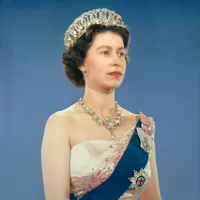
Elizabeth II reigned as Queen of the United Kingdom and...
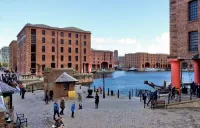
Liverpool is a major city and metropolitan borough in Merseyside...
India officially the Republic of India is a South Asian...
New Zealand is an island country in the southwestern Pacific...
Hong Kong is a densely populated special administrative region of...
China officially the People's Republic of China PRC is located...
Trending

3 hours ago Titans Face Pressure Over Cam Ward Disrespecting Warren Moon Legacy

3 hours ago Nate Bargatze Live Comedy Show Performance Details
3 hours ago Daniel Dubois and Fabio Wardley Square Off in High-Stakes Heavyweight World Title Rematch
4 hours ago North Korea Conducts Submarine Missile Tests and AI Torpedo Trials

4 hours ago Mads Mikkelsen Announced as Villain Lead for Call of Duty: Modern Warfare 4

4 hours ago Victor Wembanyama Pursues Defensive Excellence and Championship Glory for San Antonio Spurs
Popular

Ilhan Omar is a prominent American politician currently serving as...

Ken Paxton is an American politician and lawyer serving as...

Elon Musk is a visionary entrepreneur and engineer known for...

Michael Joseph Jackson the King of Pop was a highly...

Jameis Winston is an American football quarterback currently playing for...

Cristiano Ronaldo widely considered one of the greatest footballers captains...