Challenges in the Life of Narendra Modi in a Detailed Timeline


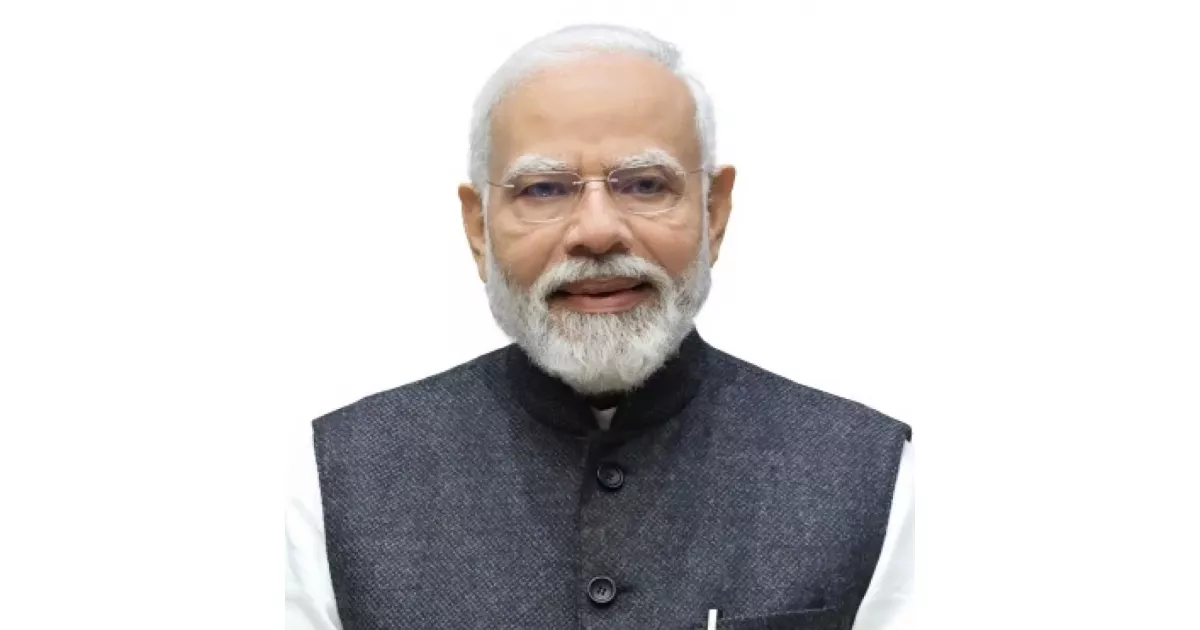
Resilience and perseverance in the journey of Narendra Modi. A timeline of obstacles and growth.
Narendra Damodardas Modi is an Indian politician serving as the Prime Minister of India since 2014. Previously, he was the Chief Minister of Gujarat from 2001 to 2014 and is currently a Member of Parliament for Varanasi. He belongs to the Bharatiya Janata Party (BJP) and has ties to the Rashtriya Swayamsevak Sangh (RSS), a right-wing Hindu nationalist organization. Modi is the longest-serving prime minister outside of the Indian National Congress party.
June 1975: State of Emergency Declared
In June 1975, Prime Minister Indira Gandhi declared a state of emergency in India. Modi was appointed general secretary of the "Gujarat Lok Sangharsh Samiti".


1977: End of the Emergency
In 1977, the state of emergency declared by Indira Gandhi ended.
February 2002: Godhra Train Burning and Riots
On February 27, 2002, a train carrying Hindu pilgrims burned near Godhra, killing approximately 60 people. Subsequently, anti-Muslim violence spread through Gujarat, resulting in numerous deaths and displacement. Narendra Modi, then Chief Minister, stated local Muslims were responsible for the incident.
April 2002: Resignation Submitted but Not Accepted
In April 2002, following the violence in Gujarat, Modi faced calls to resign as chief minister. He submitted his resignation at the BJP national executive meeting in Goa, but it was not accepted.
2002: Modi's Response to 2002 Riots and Media Handling
In 2002, during the riots, Modi stated, "What is happening is a chain of action and reaction". Later in 2002, Modi expressed that his only regret regarding the episode was the way he had handled the media.
2002: Gujarat Violence
In 2002, the Gujarat violence occurred during Narendra Modi's administration, resulting in over 1,000 deaths according to official records.
2002: Controversy surrounding Gujarat riots
Modi's role in the 2002 Gujarat riots continues to attract criticism and controversy.
2002: Modi's Media Image Centered Around 2002 Gujarat Riots
Prior to the 2014 election, Modi's media image had centred around his role in the 2002 Gujarat riots. During the campaign, the BJP focused on Modi's neoliberal ideology and the Gujarat model of development.
2004: Vajpayee Distances Himself from Modi
Before the 2004 Indian general election, Prime Minister Atal Bihari Vajpayee distanced himself from Modi, reaching out to North Indian Muslims. Vajpayee later attributed the BJP's electoral defeat to the violence in Gujarat and deemed it a mistake to keep Modi in office after the riots.
2005: Enactment of Disaster Management Act
The Disaster Management Act was enacted in 2005.
March 2008: Supreme Court Reopens 2002 Riots Cases
In March 2008, the Supreme Court of India reopened several cases related to the 2002 riots, including the Gulbarg Society massacre, and established a Special Investigation Team (SIT) to investigate the issue.
April 2009: Court Asks SIT to Investigate Modi's Complicity
In April 2009, responding to a petition from Zakia Jafri, the widow of Ehsan Jafri, the court asked the SIT to investigate Modi's complicity in the killings related to the 2002 riots.
March 2010: SIT Questioned Modi
In March 2010, the SIT questioned Modi regarding his role in the 2002 Gujarat riots.
July 2011: Amicus Curiae Submits Report
In July 2011, the court-appointed amicus curiae, Raju Ramachandran, submitted his final report to the court, stating that Modi could be prosecuted based on the available evidence related to the 2002 riots, which was contrary to the SIT's position.
March 2012: SIT Submits Final Report
In March 2012, the SIT submitted its final report, requesting the case to be closed, after examining Ramachandran's report regarding the 2002 riots.
2012: Supreme Court Investigation
In 2012, a Special Investigation Team appointed by the Supreme Court of India found no evidence to initiate prosecution proceedings against Narendra Modi regarding the 2002 Gujarat violence.
December 2013: Magistrate's Court Rejects Petition
In December 2013, the magistrate's court rejected Zakia Jafri's protest petition, accepting the SIT's finding that there was no evidence against Modi regarding the 2002 riots.
January 2015: Launch of New Health Policy
In January 2015, the Modi government launched its New Health Policy (NHP), which emphasized the role of private healthcare organizations but did not increase government spending on healthcare. This marked a shift from the previous Congress government's policies that supported public health goals.
September 2015: Union strikes against labor reforms in September 2015
On 2 September 2015, eleven of India's largest unions, including one affiliated with the BJP, went on strike in response to proposed labor reforms. The Bharatiya Mazdoor Sangh stated the reforms favored corporations over laborers.
September 2016: Surgical strike on terror launch pads in Azad Kashmir
On 29 September 2016, the Modi administration said the Indian Army had conducted a surgical strike on terror launch pads in Azad Kashmir, with Indian media reporting up to 50 terrorists and Pakistani soldiers had been killed. However, independent analysts suggested the scope of the strike and the number of casualties had been exaggerated.
November 2016: Demonetisation of ₹500 and ₹1000 banknotes in November 2016
On 9 November 2016, the government demonetised ₹500 and ₹1000 banknotes to curb corruption, black money, terrorism, and counterfeit currency. This action led to cash shortages, stock market declines, widespread protests, job losses, and a reduction in GDP.
2016: Job losses attributed to the 2016 banknote demonetisation, and the effects of the Goods and Services Tax
An internal government report said in 2017, unemployment increased to its highest level in 45 years. The loss of jobs was attributed to the 2016 banknote demonetisation, and the effects of the Goods and Services Tax.
2016: Demonetization of Banknotes
In 2016, Narendra Modi's administration demonetized banknotes, sparking controversy.
2017: Introduction of Goods and Services Tax
In 2017, Narendra Modi's administration introduced the Goods and Services Tax, sparking controversy.
2017: Increased unemployment in 2017
In 2017, an internal government report indicated that unemployment had increased to its highest level in 45 years, attributed to the 2016 banknote demonetisation and the Goods and Services Tax.
May 2018: Increase in Sanitation Coverage
In May 2018, sanitation coverage in India had increased from 38.7% in October 2014 to 84.1%, however, use of the new sanitary facilities was lower than the government's targets.
2018: GDP growth in the 2018–19 financial year
GDP growth was 6.12 per cent in the 2018–19 financial year, with an inflation rate of 3.4 per cent.
August 2019: Triple Talaq made illegal and Article 370 repealed in August 2019
In August 2019, the practice of Triple Talaq was made illegal and became a punishable act. The administration also repealed Article 370, revoking autonomy for Jammu and Kashmir, reorganizing it into union territories, and suspending internet services until February 2021.
2019: Balakot Airstrike
In 2019, Narendra Modi's administration launched the Balakot airstrike against an alleged terrorist training camp in Pakistan.
2019: Passage of citizenship law in 2019
In 2019, the Modi administration passed a citizenship law that provides a route to Indian citizenship for persecuted religious minorities from Afghanistan, Bangladesh and Pakistan who are Hindus, Sikhs, Buddhists, Jains, Parsis or Christians, but does not grant eligibility to Muslims. This law attracted global criticism and prompted widespread protests.
2019: GDP growth rate slowed to 4.18 per cent in the year 2019–20
In the year 2019–20, the GDP growth rate slowed to 4.18 per cent, while inflation increased to 4.7 per cent.
March 2020: Invocation of Epidemic Diseases Act and Disaster Management Act
In March 2020, in response to the COVID-19 pandemic, the Modi administration invoked the Epidemic Diseases Act, 1897 and Disaster Management Act, 2005, and suspended all commercial domestic and international flights.
May 2020: Skirmishes along the Sino-Indian border
In May 2020, Chinese and Indian troops engaged in aggressive skirmishes along the Sino-Indian border, including near the disputed Pangong Lake and the Tibet Autonomous Region.
June 2020: Additional clashes along the Line of Actual Control
In June 2020, additional clashes took place in eastern Ladakh along the Line of Actual Control (LAC).
2020: Delhi Riots
In 2020, the Delhi riots occurred, targeting Muslims, after the introduction of the Citizenship Amendment Act by Narendra Modi's administration.
2020: Economic shrink during the COVID-19 pandemic in 2020–21
The Indian economy shrunk by 6.6 per cent during the COVID-19 pandemic in 2020–21, and was estimated to grow at 8.2 per cent the following financial year.
March 2021: Second wave of the COVID-19 pandemic
In March 2021, India faced a devastating second wave of the COVID-19 pandemic, leading to shortages of vaccines, hospital beds, and oxygen cylinders.
2021: Minor border clash in Sikkim
In 2021, the first border clash reported in January was referred to as a minor border clash in Sikkim.
May 2022: WHO estimate of COVID-19 deaths
In May 2022, the WHO estimated 4.7 million people had died of COVID-19 in India, mostly during the second wave in mid 2021, but the Modi administration rejected the WHO's estimate.
2022: Criticism for silence over ceding land to China
From late 2022, Modi was criticised for maintaining silence over the ceding of about 2,000 km land to China since June 2020.
2022: Supreme Court Dismisses Zakia Jafri's Petition
In 2022, the Supreme Court dismissed Zakia Jafri's petition challenging Modi's exoneration by the SIT regarding the 2002 riots, upholding previous rulings that no evidence was found against him.
2022: Elimination of LPG subsidies for all citizens except those covered by the Ujjwala programme in 2022
In 2022, the government eliminated LPG subsidies for all citizens except those covered by the Ujjwala programme.
2022: Halved Percentage of the budget spent on children's programs between 2014 and 2022
The percentage of the budget spent on children's nutrition, education, health, and associated programs was almost halved between 2014 and 2022.
May 2023: Violent clashes in Manipur begin in May 2023
Since May 2023, ethnic tensions between groups have resulted in violent clashes in Manipur, leading to nearly 100 deaths and displacing over 36,000 people. Modi has faced criticism for his perceived lack of response to the violence.
2024: Communal targeting of Muslims during campaign for 2024 Indian general election
During his campaign for 2024 Indian general election, Modi communally targeted the Muslims. Factcheckers refuted Modi's claim that he made no mention of Muslim or Hindu in his campaign speech and found numerous instances across his election campaign where he communally targeted the Muslims.
2024: Electoral fraud accusations in 2024 election
In 2024, Rahul Gandhi, leader of the opposition in Lok Sabha, claimed widespread electoral fraud and accused the Election Commission of India (ECI) of collusion with the ruling BJP during the 2024 general election.
2024: General Election
In the 2024 general election, Narendra Modi's party lost its majority in the lower house of Parliament but formed a government leading the National Democratic Alliance coalition.
April 2025: Accusations following Pahalgam attack
Following the April 2025 Pahalgam attack, the Modi government accused Pakistan of supporting cross-border terrorism and suspended the Indus Waters Treaty and all bilateral trade.
2025: Electoral fraud claims in 2025
In 2025, Rahul Gandhi, leader of the opposition in Lok Sabha, alleged widespread electoral fraud during the 2024 general election, accusing the Election Commission of India (ECI) of collusion with the ruling BJP.
Mentioned in this timeline
Donald John Trump is an American politician media personality and...
Vladimir Putin is a prominent Russian politician who has significantly...
Elizabeth II reigned as Queen of the United Kingdom and...

Founded in by Mark Zuckerberg and his Harvard roommates Facebook...
Ukraine is a country in Eastern Europe the second-largest on...
Google LLC is a multinational technology corporation specializing in a...
Trending
4 hours ago Ina Garten Shares Fall Recipes and Insights Into Her Marriage With Jeffrey
8 days ago Michael J. Fox Delivers Emotional Emmys Moment and Inspiring Message on Gratitude
2 months ago Bo Jackson Remains a Timeless Icon in Sports Conversations
27 days ago Fenerbahçe Faces Eyüpspor in Crucial Süper Lig Matchup
4 hours ago Seattle experiences record-breaking heat as unusual Zombie Summer weather pattern concludes
5 hours ago Philadelphia 76ers Sign Tacko Fall to Final Two-Way Contract Spot
Popular
Ilhan Omar is a prominent American politician currently serving as...

Ken Paxton is an American politician and lawyer serving as...
Elon Musk is a visionary entrepreneur and engineer known for...

Michael Joseph Jackson the King of Pop was a highly...
Jameis Winston is an American football quarterback currently playing for...
Cristiano Ronaldo widely considered one of the greatest footballers captains...