Rise to Success: Career Highlights of Narendra Modi


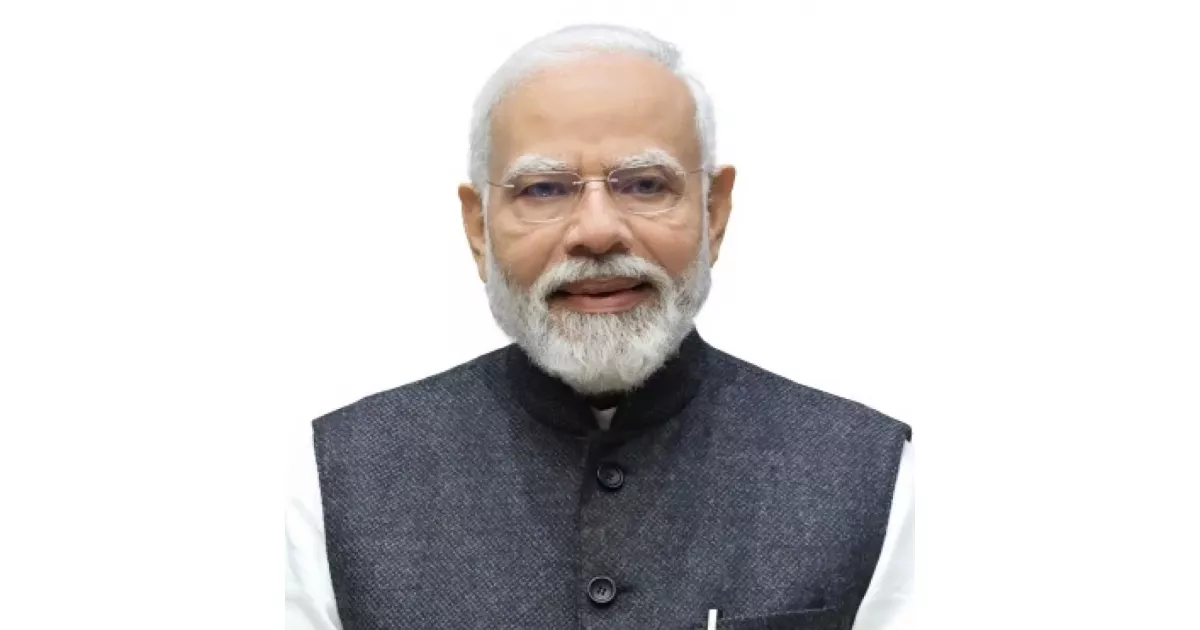
From career breakthroughs to professional milestones, explore how Narendra Modi made an impact.
Narendra Damodardas Modi is an Indian politician serving as the Prime Minister of India since 2014. Previously, he was the Chief Minister of Gujarat from 2001 to 2014 and is currently a Member of Parliament for Varanasi. He belongs to the Bharatiya Janata Party (BJP) and has ties to the Rashtriya Swayamsevak Sangh (RSS), a right-wing Hindu nationalist organization. Modi is the longest-serving prime minister outside of the Indian National Congress party.
1947: First PM Born After Independence
In 2014, Modi became the first Indian PM to be born after the country's independence from the British Empire in 1947.


1971: Full-time RSS Worker
In 1971, Narendra Modi became a full-time worker for the Rashtriya Swayamsevak Sangh (RSS) in Gujarat.
1971: Joined Jana Sangh Satyagraha
In 1971, Narendra Modi joined a Jana Sangh satyagraha in Delhi led by Atal Bihari Vajpayee to enlist to fight in the Bangladesh Liberation War. He was also briefly held in Tihar Jail.
June 1975: State of Emergency Declared
In June 1975, Prime Minister Indira Gandhi declared a state of emergency in India. Modi was appointed general secretary of the "Gujarat Lok Sangharsh Samiti".
1978: RSS Sambhag Pracharak
In 1978, Narendra Modi became an RSS sambhag pracharak (regional organiser), overseeing activities in Surat and Vadodara.
1979: Worked for RSS in Delhi
In 1979, Narendra Modi went to work for the RSS in Delhi, where he researched and wrote the RSS's history of the Emergency.
1984: BJP Wins Majority of Seats on its Own Since 1984
In the 2014 election, the BJP became the first party to win a majority of seats on its own since 1984.
1985: Assigned to BJP
In 1985, the RSS assigned Narendra Modi to the BJP.
1987: Organised BJP Campaign
In 1987, Narendra Modi helped organise the BJP's campaign in the Ahmedabad municipal election, which the party won.
1990: Member of National Election Committee
In 1990, Narendra Modi was named a member of the BJP's National Election Committee, helping organise Advani's Ram Rath Yatra.
1991: Act East Policy
In 1991, India instituted the "Look East Policy", which was renamed the "Act East Policy", involved directing Indian foreign policy towards East Asia and Southeast Asia.
1991: Helped Organise Ekta Yatra
In 1991, Narendra Modi helped organise Murli Manohar Joshi's Ekta Yatra (Journey for Unity).
1992: Brief Break from Politics
In 1992, Narendra Modi took a brief break from politics to establish a school in Ahmedabad, due to friction with Shankersinh Vaghela.
1994: Return to Electoral Politics
In 1994, Narendra Modi returned to electoral politics, partly at the insistence of Advani.
1995: Appointed BJP National Secretary
In 1995, Narendra Modi was appointed BJP national secretary and transferred to New Delhi.
1998: General Secretary of BJP
In 1998, Narendra Modi rose through the party hierarchy and became the general secretary of the BJP.
1998: Promoted to BJP General Secretary
In 1998, Narendra Modi was promoted to BJP general secretary (organisation).
October 2001: Replaced Patel as Chief Minister
On October 3, 2001, Narendra Modi replaced Keshubhai Patel as Chief Minister of Gujarat.
2001: Growth in Agricultural Sector
From 2001, Gujarat's agricultural sector experienced growth at an average rate of 9.6 per cent until 2007.
2001: Chief Minister of Gujarat
In 2001, Narendra Modi became the chief minister of Gujarat, a position he held until 2014.
February 2002: Entered Gujarat State Legislature
On February 24, 2002, Narendra Modi entered the Gujarat state legislature after winning a by-election in the Rajkot II constituency.
April 2002: Resignation Submitted but Not Accepted
In April 2002, following the violence in Gujarat, Modi faced calls to resign as chief minister. He submitted his resignation at the BJP national executive meeting in Goa, but it was not accepted.
December 2002: Preparing BJP for Election
In December 2002, Narendra Modi had the responsibility of preparing the BJP for the upcoming election as Chief Minister of Gujarat.
December 2002: Sworn in for Second Term
On 22 December 2002, Modi was sworn in for a second term as Chief Minister after the BJP won the election with 127 seats in the 182-member assembly, profiting from religious polarization among voters.
2002: Prevention of Terrorism Act
During the run-up to the 2009 Indian general election, Modi criticised Prime Minister Manmohan Singh "for his reluctance to revive anti-terror legislation" such as the 2002 Prevention of Terrorism Act.
July 2007: Longest-Serving Chief Minister of Gujarat
In July 2007, Modi completed 2,063 consecutive days as chief minister of Gujarat, making him the longest-serving holder of that post. The BJP won 122 of 182 state-assembly seats in that year's election.
2007: Vibrant Gujarat Summit Investment Deals
During the 2007 Vibrant Gujarat summit, real-estate investment deals worth ₹6.6 trillion (equivalent to ₹20 trillion or US$240 billion in 2023) were signed.
2007: Elements of Hindu Nationalism
In 2007, Modi's campaigns in Gujarat Legislative Assembly elections contained elements of Hindu nationalism. He attended only Hindu religious ceremonies and had prominent associations with Hindu religious leaders.
2007: Growth in Agricultural Sector
Until 2007, Gujarat's agricultural sector experienced growth at an average rate of 9.6 per cent from 2001.
November 2008: Coastal Surveillance Enhancement After Mumbai Attacks
After the November 2008 Mumbai attacks, the Gujarat government authorized the deployment of 30 high-speed boats for coastal surveillance.
2008: Tata Motors Relocates to Gujarat
In 2008, Modi offered land in Gujarat to Tata Motors to set up a plant manufacturing the Nano car after popular agitation had forced the company to move out of West Bengal. Following Tata, several other companies relocated to Gujarat.
2008: Publication of Jyotipunj
In 2008, Narendra Modi published a Gujarati book titled Jyotipunj, which contains profiles of RSS leaders. The longest profile was of M. S. Golwalkar.
2009: BJP Intensifies Rhetoric on Terrorism
During the run-up to the 2009 Indian general election, the BJP intensified its rhetoric on terrorism. Modi criticised Prime Minister Manmohan Singh "for his reluctance to revive anti-terror legislation".
2009: Modi's Role in the BJP's 2009 General Election Campaign
Modi played a dominant role in the BJP's 2009 general election campaign.
August 2012: Google Hangouts Interaction
On 31 August 2012, Modi posted on Google Hangouts, becoming the first Indian politician to interact with citizens on a live chat.
2012: Campaigning for Gujarat Legislative Assembly election
During his 2012 campaign, Modi twice refused to wear skullcaps gifted by Muslim leaders. Modi's 2012 campaign included references to issues known to cause religious polarisation, including Afzal Guru and the death of Sohrabuddin Sheikh. He made extensive use of holograms and other technologies, allowing him to reach a large number of people. The BJP won 115 of the 182 seats, continuing its majority during his tenure.
September 2013: Named BJP's Candidate for Prime Minister
On 12 September 2013, Modi was named the BJP's candidate for prime minister ahead of the 2014 Lok Sabha election.
2013: 7 RCR Series on Controversial Years
In 2014, the 7 RCR television series covered the period of Narendra Modi's career from 2001 to 2013 in the "Story of Narendra Modi in Controversial Years from 2001 to 2013" episode.
September 2014: Introduction of the Make in India initiative in September 2014
In September 2014, the Make in India initiative was introduced to encourage foreign companies to manufacture products in India, aiming to transform the country into a global manufacturing hub.
October 2014: Deregulating diesel prices in October 2014
In October 2014, the Modi government deregulated diesel prices.
October 2014: Launch of Swachh Bharat Mission
On 2 October 2014, Modi launched the Swachh Bharat Mission ("Clean India") campaign with the goals of eliminating open defecation and manual scavenging within five years.
December 2014: Abolishment of the Planning Commission in December 2014
In December 2014, the Planning Commission was abolished and replaced with the National Institution for Transforming India (NITI Aayog), centralizing power with the Prime Minister. This move followed criticisms of the Planning Commission's inefficiency and failure to improve social welfare.
2014: Resignation as Gujarat Chief Minister
After his election as Prime Minister of India, Modi resigned as the Gujarat chief minister and as MLA for Maninagar in 2014.
2014: US Lifts Ban and Invites Modi to Washington, D.C.
After his election as prime minister in 2014, the US lifted its ban on Modi, which had been imposed due to his perceived role in the Gujarat riots, and invited him to Washington, D.C.
2014: Increase in LPG access by 2019
By 2019, the Ujjwala scheme led to an additional 24% of Indian households having access to LPG in 2019 as compared to 2014.
2014: Image as a strong leader
During the 2014 election campaign, the BJP projected an image of Modi as a strong, masculine leader who would be able to take difficult decisions.
2014: Appointment as Prime Minister
Following Modi's 2014 appointment as India's PM, President Obama congratulated him over the telephone and invited Modi to visit the US.
2014: Prime Minister of India
In 2014, Narendra Modi became the prime minister of India. He has served in this role since.
2014: BJP Parliamentary Majority
In 2014, Narendra Modi led the BJP to a parliamentary majority in the Indian general election.
2014: Lok Sabha Election
In September 2013, Modi was named the BJP's candidate for prime minister ahead of the 2014 Lok Sabha election.
2014: Remarks on Climate Change
Speaking with Assamese students in 2014, Modi downplayed climate change, saying, "Climate has not changed. We have changed. Our habits have changed. Our habits have got spoiled. Due to that, we have destroyed our entire environment."
January 2015: Launch of New Health Policy
In January 2015, the Modi government launched its New Health Policy (NHP), which emphasized the role of private healthcare organizations but did not increase government spending on healthcare. This marked a shift from the previous Congress government's policies that supported public health goals.
2015: Proposal of the International Solar Alliance initiative
In 2015, Modi proposed the International Solar Alliance initiative to encourage investment in solar energy.
2015: Ratification of land-exchange deal with Bangladesh
In 2015, the Indian parliament ratified a land-exchange deal with Bangladesh in the India–Bangladesh enclaves, which the government of Manmohan Singh had initiated.
September 2016: Surgical strike on terror launch pads in Azad Kashmir
On 29 September 2016, the Modi administration said the Indian Army had conducted a surgical strike on terror launch pads in Azad Kashmir, with Indian media reporting up to 50 terrorists and Pakistani soldiers had been killed. However, independent analysts suggested the scope of the strike and the number of casualties had been exaggerated.
2016: Aid to Afghanistan
In 2016, Modi pledged aid of $900 million to Afghanistan, which he visited twice and was honoured with Afghanistan's highest civilian honour.
2016: Launch of Ujjwala scheme in 2016
In 2016, the Ujjwala scheme was launched to provide free liquefied petroleum gas (LPG) connections to rural households, leading to a 24% increase in LPG access by 2019 compared to 2014.
May 2017: Modi's Approval Rating
In May 2017, a poll conducted by The Times of India indicated that 77% of respondents rated Narendra Modi as "very good" and "good".
May 2018: Increase in Sanitation Coverage
In May 2018, sanitation coverage in India had increased from 38.7% in October 2014 to 84.1%, however, use of the new sanitary facilities was lower than the government's targets.
October 2018: Champions of the Earth Award
In October 2018, Narendra Modi received the United Nations' highest environmental award, the Champions of the Earth, for policy leadership in championing the International Solar Alliance and promoting environmental cooperation.
October 2018: Named BJP Candidate for Prime Minister in 2019
On 13 October 2018, Modi was named the BJP candidate for prime minister in the 2019 general election.
2018: Healthcare budget rise
In 2018, the healthcare budget rose by 11.5%, including an allocation for a government-funded health insurance program and a decrease in the budget of the National Health Mission.
April 2019: BJP's Election Campaign Launched
On 8 April 2019, Amit Shah launched the BJP's election campaign. Modi's campaign focused on defence and national security, especially after the Pulwama attack and the retaliatory Balakot airstrike.
July 2019: Modi on 'Man vs. Wild'
In July 2019, Narendra Modi appeared on an episode of Discovery Channel's show Man vs. Wild with Bear Grylls, where they trekked through jungles and discussed nature and wildlife conservation. The episode was filmed in Jim Corbett National Park, Uttarakhand, and broadcast in India and 180 other countries.
August 2019: Triple Talaq made illegal and Article 370 repealed in August 2019
In August 2019, the practice of Triple Talaq was made illegal and became a punishable act. The administration also repealed Article 370, revoking autonomy for Jammu and Kashmir, reorganizing it into union territories, and suspending internet services until February 2021.
September 2019: Howdy Modi Event in Houston
On September 22, 2019, the Texas India Forum hosted a community event, Howdy Modi, in honour of Narendra Modi at NRG Stadium in Houston, Texas. The event was attended by over 50,000 people and several American politicians, including President Donald Trump. Modi was presented with the Key to the City of Houston by Mayor Sylvester Turner.
2019: Plan to construct toilets
As part of the Swachh Bharat Mission, the government planned to construct 60 million toilets by 2019.
2019: Passage of law to reserve educational admission and government jobs
In 2019, a law was passed to reserve 10% of educational admissions and government jobs for economically disadvantaged individuals.
2019: BJP Campaign for the 2019 Election
On 13 October 2018, Modi was named the BJP candidate for prime minister in the 2019 general election. Modi launched the party's Main Bhi Chowkidar campaign ahead of the general election.
March 2020: Invocation of Epidemic Diseases Act and Disaster Management Act
In March 2020, in response to the COVID-19 pandemic, the Modi administration invoked the Epidemic Diseases Act, 1897 and Disaster Management Act, 2005, and suspended all commercial domestic and international flights.
May 2020: Skirmishes along the Sino-Indian border
In May 2020, Chinese and Indian troops engaged in aggressive skirmishes along the Sino-Indian border, including near the disputed Pangong Lake and the Tibet Autonomous Region.
June 2020: Additional clashes along the Line of Actual Control
In June 2020, additional clashes took place in eastern Ladakh along the Line of Actual Control (LAC).
August 2020: Modi visits Ayodhya in August 2020
On 5 August 2020, Modi visited Ayodhya after the Supreme Court in 2019 ordered contested land in Ayodhya to be handed to a trust to build a Hindu temple and ordered the government to give alternative 5 acres (2.0 ha) of land to the Sunni Waqf Board for the purpose of building a mosque. Modi became the first PM to visit temples at Ram Janmabhoomi and Hanuman Garhi.
November 2020: Revocation of COVID-19 Restrictions
In November 2020, the restrictions that were implemented in March due to the COVID-19 pandemic were completely revoked.
December 2020: Highest Net Approval Rating
As of December 22, 2020, Narendra Modi had the highest net approval rating of all government leaders in 13 countries, according to a weekly analysis by Morning Consult called the Global Leader Approval Rating Tracker.
January 2021: Start of COVID-19 vaccination programme
In January 2021, India began its COVID-19 vaccination programme.
March 2021: Second wave of the COVID-19 pandemic
In March 2021, India faced a devastating second wave of the COVID-19 pandemic, leading to shortages of vaccines, hospital beds, and oxygen cylinders.
December 2021: Agreement with Vladimir Putin to extend military cooperation
In December 2021, Modi signed an agreement with Russian president Vladimir Putin to extend military technical cooperation.
2021: Minor border clash in Sikkim
In 2021, the first border clash reported in January was referred to as a minor border clash in Sikkim.
January 2022: Vaccination milestone
In January 2022, India announced it had administered about 1.7 billion doses of vaccines and that more than 720 million people were fully vaccinated.
September 2022: Strong relationship with Vladimir Putin
In September 2022, Modi appeared to have developed a strong personal relationship with Russia's president Vladimir Putin.
2022: Criticism for silence over ceding land to China
From late 2022, Modi was criticised for maintaining silence over the ceding of about 2,000 km land to China since June 2020.
August 2023: Prime Minister Modi expresses optimism about the G20 countries
In an interview on 26 August 2023, Prime Minister Modi expressed optimism about the G20 countries' evolving agenda under India's presidency, shifting toward a human-centric development approach that aligns with the concerns of the Global South, including addressing climate change, debt restructuring through the G20's Common Framework for Debt, and a strategy for regulation of global cryptocurrencies.
November 2023: BJP names Modi as PM candidate for 2024 election
In November 2023, Narendra Modi was announced as the BJP's candidate for Prime Minister in the upcoming 2024 general election. The BJP launched the "Modi Ki Guarantee" campaign, led by Amit Shah and J. P. Nadda, ahead of the election.
2023: Increased Capital expenditure on transport infrastructure in 2023
Capital expenditure on transport infrastructure significantly rose, increasing from less than 0.4 per cent of GDP in 2014 to 1.7 per cent in 2023.
2023: Release of Garba Songs
In 2023, Narendra Modi penned the lyrics of two Gujarati garba songs: Garbo, sung by Dhvani Bhanushali and composed by Tanishk Bagchi, and Maadi, sung by Divya Kumar and composed by Meet Bros. The songs were released on the occasion of autumn Navratri.
2023: Constitution of high-level committee on One Nation, One Election in 2023
In 2023, the Modi administration issued a notification constituting a high-level committee on One Nation, One Election, a proposal aimed to synchronize all elections in the country either on a single day or within a specific time frame.
September 2024: Approval of bill for One Nation, One Election in September 2024
In September 2024, the bill for One Nation, One Election was approved by the Modi Cabinet.
2024: Grammy Nomination for 'Abundance in Millets'
In 2024, Abundance in Millets, a song by Falu and Gaurav Shah that featured a speech given by Narendra Modi for the promotion of millet, received a nomination in the Best Global Music Performance category for the 2024 Grammy Awards.
2024: BJP plans for 2024 general election
In 2024, the BJP strategized for the general election. The BJP's chief campaigners were Amit Shah and President J. P. Nadda. Modi launched the party's "Modi Ki Guarantee" campaign ahead of the general election.
April 2025: Accusations following Pahalgam attack
Following the April 2025 Pahalgam attack, the Modi government accused Pakistan of supporting cross-border terrorism and suspended the Indus Waters Treaty and all bilateral trade.
2025: Reforms to the country's goods and services tax and labour laws in 2025
In 2025, Modi's government announced reforms to the country's goods and services tax and labour laws.
2070: Carbon neutrality target
At the COP26 conference, Modi announced India would target carbon neutrality by 2070 and expand its renewable energy capacity.
Mentioned in this timeline
Donald John Trump is an American politician media personality and...
Vladimir Putin is a prominent Russian politician who has significantly...
Elizabeth II reigned as Queen of the United Kingdom and...

Founded in by Mark Zuckerberg and his Harvard roommates Facebook...
Ukraine is a country in Eastern Europe the second-largest on...
Google LLC is a multinational technology corporation specializing in a...
Trending
1 day ago Alexander Bublik Faces Backlash After Racket Smashing Incident and Injury

4 hours ago Kendall Jenner Addresses Longstanding Dating Rumors Involving Cara Delevingne
4 hours ago Market Analysts Warn of Potential Bursting AI Industry Investment Bubble
4 hours ago Noah Centineo Stars in Street Fighter Movie Opening at $31 Million Box Office
4 hours ago Controversy Surrounding Tucker Carlson and Recent NPR Coverage Sparks Public Debate
4 hours ago Anthropic CEO Dario Amodei Prioritizes Corporate Culture Amid Potential $2 Trillion IPO
Popular
Ilhan Omar is a prominent American politician currently serving as...

Ken Paxton is an American politician and lawyer serving as...

Elon Musk is a visionary entrepreneur and engineer known for...

Michael Joseph Jackson the King of Pop was a highly...
Jameis Winston is an American football quarterback currently playing for...

Cristiano Ronaldo widely considered one of the greatest footballers captains...