


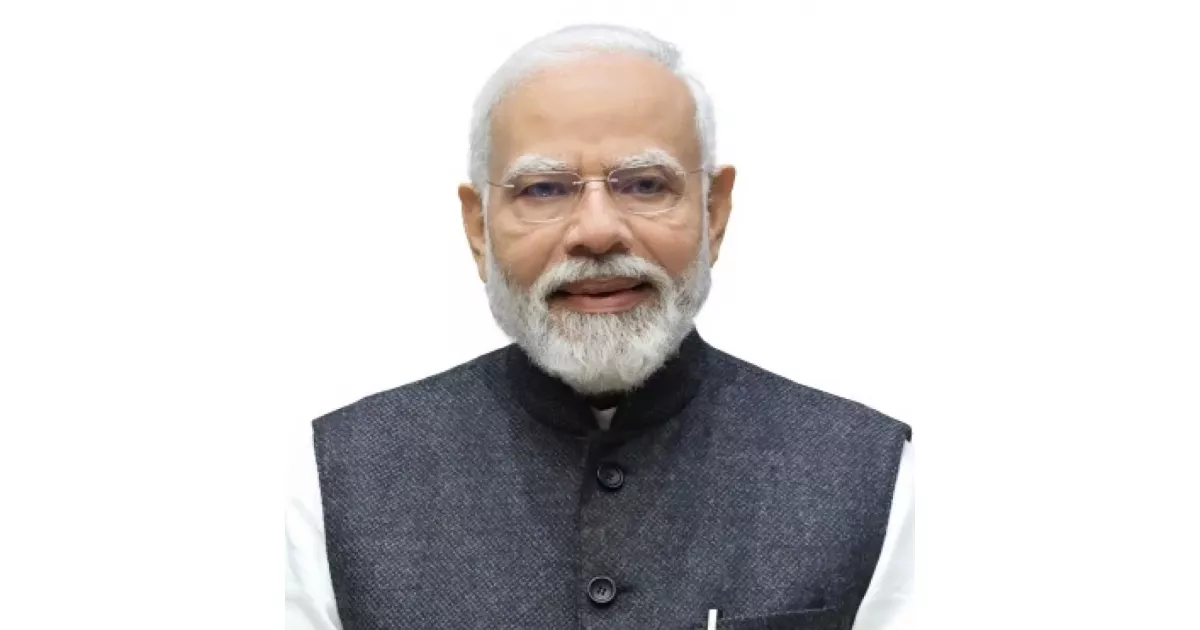
Narendra Damodardas Modi is an Indian politician serving as the Prime Minister of India since 2014. Previously, he was the Chief Minister of Gujarat from 2001 to 2014 and is currently a Member of Parliament for Varanasi. He belongs to the Bharatiya Janata Party (BJP) and has ties to the Rashtriya Swayamsevak Sangh (RSS), a right-wing Hindu nationalist organization. Modi is the longest-serving prime minister outside of the Indian National Congress party.
1915: Birth of Damodardas Mulchand Modi
In approximately 1915, Damodardas Mulchand Modi, Narendra Modi's father, was born.


1923: Birth of Hiraben Modi
In 1923, Hiraben Modi, Narendra Modi's mother, was born.
1947: First PM Born After Independence
In 2014, Modi became the first Indian PM to be born after the country's independence from the British Empire in 1947.
September 1950: Narendra Modi's Birth
On September 17, 1950, Narendra Damodardas Modi was born in India. He later became the prime minister of India in 2014.
September 1950: Birth of Narendra Modi
On September 17, 1950, Narendra Damodardas Modi was born into a Gujarati family in Vadnagar, Mehsana district, Bombay State.
1950: Historical Context in 7 RCR Series
In 2014, the television series 7 RCR included an episode covering the "Story of Narendra Modi from 1950 to 2001" which explored Narendra Modi's early life.
1967: Completed Higher Secondary Education
In 1967, Narendra Modi completed his higher secondary education in Vadnagar. He was described as an average student with an interest in theatre.
1968: Travels Across India
In mid-1968, Narendra Modi reached Belur Math but was turned away, then visited Calcutta, West Bengal, and Assam, stopping in Siliguri and Guwahati. He then went to the Ramakrishna Ashram in Almora, where he was again rejected.
1969: Return to Vadnagar
In late 1969, Narendra Modi returned to Vadnagar for a brief visit before leaving again for Ahmedabad.
1969: Historical Context: Queen Elizabeth II Received the Grand Commander of the Order of the Niger
Queen Elizabeth II received the Grand Commander of the Order of the Niger in 1969. It was later given to Narendra Modi in November 2024, making him the second foreign dignitary to receive the award.
1970: Moved to Ahmedabad
In early 1970, Narendra Modi returned to Vadnagar for a brief visit before moving to Ahmedabad, where he lived with his uncle and worked in his uncle's canteen at Gujarat State Road Transport Corporation.
1971: Full-time RSS Worker
In 1971, Narendra Modi became a full-time worker for the Rashtriya Swayamsevak Sangh (RSS) in Gujarat.
1971: Joined Jana Sangh Satyagraha
In 1971, Narendra Modi joined a Jana Sangh satyagraha in Delhi led by Atal Bihari Vajpayee to enlist to fight in the Bangladesh Liberation War. He was also briefly held in Tihar Jail.
June 1975: State of Emergency Declared
In June 1975, Prime Minister Indira Gandhi declared a state of emergency in India. Modi was appointed general secretary of the "Gujarat Lok Sangharsh Samiti".
1977: End of the Emergency
In 1977, the state of emergency declared by Indira Gandhi ended.
1978: RSS Sambhag Pracharak
In 1978, Narendra Modi became an RSS sambhag pracharak (regional organiser), overseeing activities in Surat and Vadodara.
1978: Bachelor of Arts Degree
In 1978, Narendra Modi received a Bachelor of Arts (BA) degree in political science from the School of Open Learning at the Delhi University.
1979: Worked for RSS in Delhi
In 1979, Narendra Modi went to work for the RSS in Delhi, where he researched and wrote the RSS's history of the Emergency.
1980: Bharatiya Jana Sangh Leaders
In 1980, Vasant Gajendragadkar and Nathalal Jaghda, Bharatiya Jana Sangh leaders, helped found the BJP's Gujarat unit while Modi was training with the RSS.
1983: Master of Arts Degree
In 1983, Narendra Modi received a Master of Arts (MA) degree in political science from Gujarat University, graduating with a first class as an external distance learning student.
1984: First Party Majority Since 1984
In 2014, Narendra Modi led the BJP to a parliamentary majority, the first for a party since 1984.
1984: BJP Wins Majority of Seats on its Own Since 1984
In the 2014 election, the BJP became the first party to win a majority of seats on its own since 1984.
1985: Assigned to BJP
In 1985, the RSS assigned Narendra Modi to the BJP.
1986: Advani Becomes BJP President
In 1986, L. K. Advani became president of the BJP, leading to the RSS placing its members in important positions within the party.
1987: Organised BJP Campaign
In 1987, Narendra Modi helped organise the BJP's campaign in the Ahmedabad municipal election, which the party won.
1989: Death of Damodardas Mulchand Modi
In 1989, Damodardas Mulchand Modi, Narendra Modi's father, passed away.
1990: Member of National Election Committee
In 1990, Narendra Modi was named a member of the BJP's National Election Committee, helping organise Advani's Ram Rath Yatra.
1991: Act East Policy
In 1991, India instituted the "Look East Policy", which was renamed the "Act East Policy", involved directing Indian foreign policy towards East Asia and Southeast Asia.
1991: Helped Organise Ekta Yatra
In 1991, Narendra Modi helped organise Murli Manohar Joshi's Ekta Yatra (Journey for Unity).
1992: Brief Break from Politics
In 1992, Narendra Modi took a brief break from politics to establish a school in Ahmedabad, due to friction with Shankersinh Vaghela.
1994: Return to Electoral Politics
In 1994, Narendra Modi returned to electoral politics, partly at the insistence of Advani.
1995: Appointed BJP National Secretary
In 1995, Narendra Modi was appointed BJP national secretary and transferred to New Delhi.
1998: General Secretary of BJP
In 1998, Narendra Modi rose through the party hierarchy and became the general secretary of the BJP.
1998: Promoted to BJP General Secretary
In 1998, Narendra Modi was promoted to BJP general secretary (organisation).
October 2001: Replaced Patel as Chief Minister
On October 3, 2001, Narendra Modi replaced Keshubhai Patel as Chief Minister of Gujarat.
2001: Growth in Agricultural Sector
From 2001, Gujarat's agricultural sector experienced growth at an average rate of 9.6 per cent until 2007.
2001: Chief Minister of Gujarat
In 2001, Narendra Modi became the chief minister of Gujarat, a position he held until 2014.
2001: Historical Context in 7 RCR Series
In 2014, the television series 7 RCR included an episode covering the "Story of Narendra Modi from 1950 to 2001" which explored Narendra Modi's early life until 2001.
February 2002: February 2002 By-Poll
A by-poll was held in February 2002.
February 2002: Entered Gujarat State Legislature
On February 24, 2002, Narendra Modi entered the Gujarat state legislature after winning a by-election in the Rajkot II constituency.
February 2002: Godhra Train Burning and Riots
On February 27, 2002, a train carrying Hindu pilgrims burned near Godhra, killing approximately 60 people. Subsequently, anti-Muslim violence spread through Gujarat, resulting in numerous deaths and displacement. Narendra Modi, then Chief Minister, stated local Muslims were responsible for the incident.
April 2002: Resignation Submitted but Not Accepted
In April 2002, following the violence in Gujarat, Modi faced calls to resign as chief minister. He submitted his resignation at the BJP national executive meeting in Goa, but it was not accepted.
December 2002: Preparing BJP for Election
In December 2002, Narendra Modi had the responsibility of preparing the BJP for the upcoming election as Chief Minister of Gujarat.
December 2002: Sworn in for Second Term
On 22 December 2002, Modi was sworn in for a second term as Chief Minister after the BJP won the election with 127 seats in the 182-member assembly, profiting from religious polarization among voters.
2002: Prevention of Terrorism Act
During the run-up to the 2009 Indian general election, Modi criticised Prime Minister Manmohan Singh "for his reluctance to revive anti-terror legislation" such as the 2002 Prevention of Terrorism Act.
2002: Modi's Response to 2002 Riots and Media Handling
In 2002, during the riots, Modi stated, "What is happening is a chain of action and reaction". Later in 2002, Modi expressed that his only regret regarding the episode was the way he had handled the media.
2002: Gujarat Violence
In 2002, the Gujarat violence occurred during Narendra Modi's administration, resulting in over 1,000 deaths according to official records.
2002: Controversy surrounding Gujarat riots
Modi's role in the 2002 Gujarat riots continues to attract criticism and controversy.
2002: Modi's Media Image Centered Around 2002 Gujarat Riots
Prior to the 2014 election, Modi's media image had centred around his role in the 2002 Gujarat riots. During the campaign, the BJP focused on Modi's neoliberal ideology and the Gujarat model of development.
2004: Vajpayee Distances Himself from Modi
Before the 2004 Indian general election, Prime Minister Atal Bihari Vajpayee distanced himself from Modi, reaching out to North Indian Muslims. Vajpayee later attributed the BJP's electoral defeat to the violence in Gujarat and deemed it a mistake to keep Modi in office after the riots.
2005: Chand Bujh Gaya film release
In 2005, Pratap Singh played a character based on Narendra Modi in Chand Bujh Gaya, a film set against the backdrop of the Gujarat riots.
2005: Enactment of Disaster Management Act
The Disaster Management Act was enacted in 2005.
July 2007: Longest-Serving Chief Minister of Gujarat
In July 2007, Modi completed 2,063 consecutive days as chief minister of Gujarat, making him the longest-serving holder of that post. The BJP won 122 of 182 state-assembly seats in that year's election.
2007: Vibrant Gujarat Summit Investment Deals
During the 2007 Vibrant Gujarat summit, real-estate investment deals worth ₹6.6 trillion (equivalent to ₹20 trillion or US$240 billion in 2023) were signed.
2007: Elements of Hindu Nationalism
In 2007, Modi's campaigns in Gujarat Legislative Assembly elections contained elements of Hindu nationalism. He attended only Hindu religious ceremonies and had prominent associations with Hindu religious leaders.
2007: Growth in Agricultural Sector
Until 2007, Gujarat's agricultural sector experienced growth at an average rate of 9.6 per cent from 2001.
March 2008: Supreme Court Reopens 2002 Riots Cases
In March 2008, the Supreme Court of India reopened several cases related to the 2002 riots, including the Gulbarg Society massacre, and established a Special Investigation Team (SIT) to investigate the issue.
November 2008: Coastal Surveillance Enhancement After Mumbai Attacks
After the November 2008 Mumbai attacks, the Gujarat government authorized the deployment of 30 high-speed boats for coastal surveillance.
2008: Tata Motors Relocates to Gujarat
In 2008, Modi offered land in Gujarat to Tata Motors to set up a plant manufacturing the Nano car after popular agitation had forced the company to move out of West Bengal. Following Tata, several other companies relocated to Gujarat.
2008: Publication of Jyotipunj
In 2008, Narendra Modi published a Gujarati book titled Jyotipunj, which contains profiles of RSS leaders. The longest profile was of M. S. Golwalkar.
April 2009: Court Asks SIT to Investigate Modi's Complicity
In April 2009, responding to a petition from Zakia Jafri, the widow of Ehsan Jafri, the court asked the SIT to investigate Modi's complicity in the killings related to the 2002 riots.
2009: BJP Intensifies Rhetoric on Terrorism
During the run-up to the 2009 Indian general election, the BJP intensified its rhetoric on terrorism. Modi criticised Prime Minister Manmohan Singh "for his reluctance to revive anti-terror legislation".
2009: Modi's Role in the BJP's 2009 General Election Campaign
Modi played a dominant role in the BJP's 2009 general election campaign.
March 2010: SIT Questioned Modi
In March 2010, the SIT questioned Modi regarding his role in the 2002 Gujarat riots.
July 2011: Amicus Curiae Submits Report
In July 2011, the court-appointed amicus curiae, Raju Ramachandran, submitted his final report to the court, stating that Modi could be prosecuted based on the available evidence related to the 2002 riots, which was contrary to the SIT's position.
March 2012: Appearance on Time Magazine Cover
In March 2012, Narendra Modi appeared on the cover of the Asian edition of Time Magazine.
March 2012: SIT Submits Final Report
In March 2012, the SIT submitted its final report, requesting the case to be closed, after examining Ramachandran's report regarding the 2002 riots.
August 2012: Google Hangouts Interaction
On 31 August 2012, Modi posted on Google Hangouts, becoming the first Indian politician to interact with citizens on a live chat.
October 2012: UK Lifts Ban on Modi
In October 2012, as Modi rose to prominence in India, the UK lifted its ban, which had been imposed due to his perceived role in the Gujarat riots.
2012: Campaigning for Gujarat Legislative Assembly election
During his 2012 campaign, Modi twice refused to wear skullcaps gifted by Muslim leaders. Modi's 2012 campaign included references to issues known to cause religious polarisation, including Afzal Guru and the death of Sohrabuddin Sheikh. He made extensive use of holograms and other technologies, allowing him to reach a large number of people. The BJP won 115 of the 182 seats, continuing its majority during his tenure.
2012: Supreme Court Investigation
In 2012, a Special Investigation Team appointed by the Supreme Court of India found no evidence to initiate prosecution proceedings against Narendra Modi regarding the 2002 Gujarat violence.
March 2013: EU Lifts Ban on Modi
In March 2013, the European Union (EU) lifted its ban on Modi, which had been imposed due to his perceived role in the Gujarat riots.
September 2013: Named BJP's Candidate for Prime Minister
On 12 September 2013, Modi was named the BJP's candidate for prime minister ahead of the 2014 Lok Sabha election.
December 2013: Magistrate's Court Rejects Petition
In December 2013, the magistrate's court rejected Zakia Jafri's protest petition, accepting the SIT's finding that there was no evidence against Modi regarding the 2002 riots.
2013: 7 RCR Series on Controversial Years
In 2014, the 7 RCR television series covered the period of Narendra Modi's career from 2001 to 2013 in the "Story of Narendra Modi in Controversial Years from 2001 to 2013" episode.
April 2014: Publicly Affirmed Marriage
In April 2014, shortly before the national election, Narendra Modi publicly affirmed that he was married and that his spouse was Jashodaben.
June 2014: Time Magazine Cover and Indian of the Year Award
In June 2014, Narendra Modi appeared on the cover of Time Magazine. In 2014, he was also awarded Indian of the Year by CNN-News18 (formerly CNN-IBN).
September 2014: Introduction of the Make in India initiative in September 2014
In September 2014, the Make in India initiative was introduced to encourage foreign companies to manufacture products in India, aiming to transform the country into a global manufacturing hub.
October 2014: Deregulating diesel prices in October 2014
In October 2014, the Modi government deregulated diesel prices.
October 2014: Launch of Swachh Bharat Mission
On 2 October 2014, Modi launched the Swachh Bharat Mission ("Clean India") campaign with the goals of eliminating open defecation and manual scavenging within five years.
December 2014: Abolishment of the Planning Commission in December 2014
In December 2014, the Planning Commission was abolished and replaced with the National Institution for Transforming India (NITI Aayog), centralizing power with the Prime Minister. This move followed criticisms of the Planning Commission's inefficiency and failure to improve social welfare.
2014: Resignation as Gujarat Chief Minister
After his election as Prime Minister of India, Modi resigned as the Gujarat chief minister and as MLA for Maninagar in 2014.
2014: US Lifts Ban and Invites Modi to Washington, D.C.
After his election as prime minister in 2014, the US lifted its ban on Modi, which had been imposed due to his perceived role in the Gujarat riots, and invited him to Washington, D.C.
2014: Increase in LPG access by 2019
By 2019, the Ujjwala scheme led to an additional 24% of Indian households having access to LPG in 2019 as compared to 2014.
2014: Image as a strong leader
During the 2014 election campaign, the BJP projected an image of Modi as a strong, masculine leader who would be able to take difficult decisions.
2014: Appointment as Prime Minister
Following Modi's 2014 appointment as India's PM, President Obama congratulated him over the telephone and invited Modi to visit the US.
2014: Foreword to Textbook Claiming Ancient Indian Technologies
In 2014, Modi wrote a foreword to a textbook by Dinanath Batra, which made the unscientific claim that ancient India possessed technologies including test-tube babies.
2014: Prime Minister of India
In 2014, Narendra Modi became the prime minister of India. He has served in this role since.
2014: BJP Parliamentary Majority
In 2014, Narendra Modi led the BJP to a parliamentary majority in the Indian general election.
2014: Appointment of Yellapragada Sudershan Rao as chairperson of ICHR in 2014
In 2014, Yellapragada Sudershan Rao, previously associated with the RSS, became the chairperson of the Indian Council of Historical Research (ICHR). Historians questioned Rao's credentials, viewing it as part of a cultural nationalism agenda.
2014: 7 RCR Television Series
In 2014, the Indian docudrama political television series 7 RCR (7, Race Course Road) covered Narendra Modi's rise to the PM's office.
2014: Lok Sabha Election
In September 2013, Modi was named the BJP's candidate for prime minister ahead of the 2014 Lok Sabha election.
2014: Remarks on Climate Change
Speaking with Assamese students in 2014, Modi downplayed climate change, saying, "Climate has not changed. We have changed. Our habits have changed. Our habits have got spoiled. Due to that, we have destroyed our entire environment."
January 2015: Launch of New Health Policy
In January 2015, the Modi government launched its New Health Policy (NHP), which emphasized the role of private healthcare organizations but did not increase government spending on healthcare. This marked a shift from the previous Congress government's policies that supported public health goals.
June 2015: Featured on Time Magazine Cover
In June 2015, Narendra Modi was featured on the cover of Time Magazine.
September 2015: Union strikes against labor reforms in September 2015
On 2 September 2015, eleven of India's largest unions, including one affiliated with the BJP, went on strike in response to proposed labor reforms. The Bharatiya Mazdoor Sangh stated the reforms favored corporations over laborers.
2015: Proposal of the International Solar Alliance initiative
In 2015, Modi proposed the International Solar Alliance initiative to encourage investment in solar energy.
2015: Ratification of land-exchange deal with Bangladesh
In 2015, the Indian parliament ratified a land-exchange deal with Bangladesh in the India–Bangladesh enclaves, which the government of Manmohan Singh had initiated.
September 2016: Surgical strike on terror launch pads in Azad Kashmir
On 29 September 2016, the Modi administration said the Indian Army had conducted a surgical strike on terror launch pads in Azad Kashmir, with Indian media reporting up to 50 terrorists and Pakistani soldiers had been killed. However, independent analysts suggested the scope of the strike and the number of casualties had been exaggerated.
November 2016: Demonetisation of ₹500 and ₹1000 banknotes in November 2016
On 9 November 2016, the government demonetised ₹500 and ₹1000 banknotes to curb corruption, black money, terrorism, and counterfeit currency. This action led to cash shortages, stock market declines, widespread protests, job losses, and a reduction in GDP.
2016: Job losses attributed to the 2016 banknote demonetisation, and the effects of the Goods and Services Tax
An internal government report said in 2017, unemployment increased to its highest level in 45 years. The loss of jobs was attributed to the 2016 banknote demonetisation, and the effects of the Goods and Services Tax.
2016: Context for 'Uri: The Surgical Strike' and 'Avrodh: The Siege Within'
Both the 2019 film Uri: The Surgical Strike and the 2020 web-television series Avrodh: The Siege Within are based on the 2016 Uri attack and the subsequent Indian surgical strikes and banknote demonetisation respectively.
2016: Aid to Afghanistan
In 2016, Modi pledged aid of $900 million to Afghanistan, which he visited twice and was honoured with Afghanistan's highest civilian honour.
2016: Demonetization of Banknotes
In 2016, Narendra Modi's administration demonetized banknotes, sparking controversy.
2016: Wax Statue at Madame Tussauds
In 2016, a wax statue of Narendra Modi was unveiled at Madame Tussauds wax museum in London.
2016: Launch of Ujjwala scheme in 2016
In 2016, the Ujjwala scheme was launched to provide free liquefied petroleum gas (LPG) connections to rural households, leading to a 24% increase in LPG access by 2019 compared to 2014.
May 2017: Modi's Approval Rating
In May 2017, a poll conducted by The Times of India indicated that 77% of respondents rated Narendra Modi as "very good" and "good".
2017: Modi Kaka Ka Gaon Film Release
In 2017, Modi Kaka Ka Gaon (Modi uncle's town), an Indian Hindi-language drama film by Tushar Amrish Goel, was released as the first biopic about Narendra Modi.
2017: Named One of Time's 100 Most Influential People
In 2017, Narendra Modi was named one of Time magazine's 100 Most Influential People in the World.
2017: Introduction of Goods and Services Tax
In 2017, Narendra Modi's administration introduced the Goods and Services Tax, sparking controversy.
2017: Increased unemployment in 2017
In 2017, an internal government report indicated that unemployment had increased to its highest level in 45 years, attributed to the 2016 banknote demonetisation and the Goods and Services Tax.
May 2018: Increase in Sanitation Coverage
In May 2018, sanitation coverage in India had increased from 38.7% in October 2014 to 84.1%, however, use of the new sanitary facilities was lower than the government's targets.
October 2018: Champions of the Earth Award
In October 2018, Narendra Modi received the United Nations' highest environmental award, the Champions of the Earth, for policy leadership in championing the International Solar Alliance and promoting environmental cooperation.
October 2018: Named BJP Candidate for Prime Minister in 2019
On 13 October 2018, Modi was named the BJP candidate for prime minister in the 2019 general election.
2018: GDP growth in the 2018–19 financial year
GDP growth was 6.12 per cent in the 2018–19 financial year, with an inflation rate of 3.4 per cent.
2018: Forbes Ranking
In 2018, Forbes Magazine ranked Narendra Modi 9th in its list of the world's most powerful people.
2018: Healthcare budget rise
In 2018, the healthcare budget rose by 11.5%, including an allocation for a government-funded health insurance program and a decrease in the budget of the National Health Mission.
April 2019: BJP's Election Campaign Launched
On 8 April 2019, Amit Shah launched the BJP's election campaign. Modi's campaign focused on defence and national security, especially after the Pulwama attack and the retaliatory Balakot airstrike.
May 2019: Release of 'Modi: Journey of a Common Man' web series
In May 2019, an Indian web series called Modi: Journey of a Common Man, was released on the video streaming platform Eros Now, portraying Narendra Modi's life.
July 2019: Modi on 'Man vs. Wild'
In July 2019, Narendra Modi appeared on an episode of Discovery Channel's show Man vs. Wild with Bear Grylls, where they trekked through jungles and discussed nature and wildlife conservation. The episode was filmed in Jim Corbett National Park, Uttarakhand, and broadcast in India and 180 other countries.
August 2019: Triple Talaq made illegal and Article 370 repealed in August 2019
In August 2019, the practice of Triple Talaq was made illegal and became a punishable act. The administration also repealed Article 370, revoking autonomy for Jammu and Kashmir, reorganizing it into union territories, and suspending internet services until February 2021.
September 2019: Howdy Modi Event in Houston
On September 22, 2019, the Texas India Forum hosted a community event, Howdy Modi, in honour of Narendra Modi at NRG Stadium in Houston, Texas. The event was attended by over 50,000 people and several American politicians, including President Donald Trump. Modi was presented with the Key to the City of Houston by Mayor Sylvester Turner.
2019: Plan to construct toilets
As part of the Swachh Bharat Mission, the government planned to construct 60 million toilets by 2019.
2019: Balakot Airstrike
In 2019, Narendra Modi's administration launched the Balakot airstrike against an alleged terrorist training camp in Pakistan.
2019: Rajit Kapur portrays Modi in 'Uri: The Surgical Strike'
In 2019, Rajit Kapur portrayed Narendra Modi in the film Uri: The Surgical Strike, which is based on the 2016 Uri attack and the subsequent Indian surgical strikes.
2019: Passage of law to reserve educational admission and government jobs
In 2019, a law was passed to reserve 10% of educational admissions and government jobs for economically disadvantaged individuals.
2019: Passage of citizenship law in 2019
In 2019, the Modi administration passed a citizenship law that provides a route to Indian citizenship for persecuted religious minorities from Afghanistan, Bangladesh and Pakistan who are Hindus, Sikhs, Buddhists, Jains, Parsis or Christians, but does not grant eligibility to Muslims. This law attracted global criticism and prompted widespread protests.
2019: GDP growth rate slowed to 4.18 per cent in the year 2019–20
In the year 2019–20, the GDP growth rate slowed to 4.18 per cent, while inflation increased to 4.7 per cent.
2019: BJP Campaign for the 2019 Election
On 13 October 2018, Modi was named the BJP candidate for prime minister in the 2019 general election. Modi launched the party's Main Bhi Chowkidar campaign ahead of the general election.
March 2020: Invocation of Epidemic Diseases Act and Disaster Management Act
In March 2020, in response to the COVID-19 pandemic, the Modi administration invoked the Epidemic Diseases Act, 1897 and Disaster Management Act, 2005, and suspended all commercial domestic and international flights.
May 2020: Skirmishes along the Sino-Indian border
In May 2020, Chinese and Indian troops engaged in aggressive skirmishes along the Sino-Indian border, including near the disputed Pangong Lake and the Tibet Autonomous Region.
June 2020: Additional clashes along the Line of Actual Control
In June 2020, additional clashes took place in eastern Ladakh along the Line of Actual Control (LAC).
August 2020: Modi visits Ayodhya in August 2020
On 5 August 2020, Modi visited Ayodhya after the Supreme Court in 2019 ordered contested land in Ayodhya to be handed to a trust to build a Hindu temple and ordered the government to give alternative 5 acres (2.0 ha) of land to the Sunni Waqf Board for the purpose of building a mosque. Modi became the first PM to visit temples at Ram Janmabhoomi and Hanuman Garhi.
November 2020: Revocation of COVID-19 Restrictions
In November 2020, the restrictions that were implemented in March due to the COVID-19 pandemic were completely revoked.
December 2020: Highest Net Approval Rating
As of December 22, 2020, Narendra Modi had the highest net approval rating of all government leaders in 13 countries, according to a weekly analysis by Morning Consult called the Global Leader Approval Rating Tracker.
December 2020: Legion of Merit Award
On December 21, 2020, US president Donald Trump awarded Narendra Modi the Legion of Merit for improving India–United States relations.
2020: Named One of Time's 100 Most Influential People
In 2020, Narendra Modi was named one of Time magazine's 100 Most Influential People in the World.
2020: Vikram Gokhale portrays Modi in 'Avrodh: The Siege Within'
In 2020, Vikram Gokhale portrayed Narendra Modi in the web-television series Avrodh: The Siege Within, which is based on the 2016 Indian banknote demonetisation.
2020: Delhi Riots
In 2020, the Delhi riots occurred, targeting Muslims, after the introduction of the Citizenship Amendment Act by Narendra Modi's administration.
2020: Economic shrink during the COVID-19 pandemic in 2020–21
The Indian economy shrunk by 6.6 per cent during the COVID-19 pandemic in 2020–21, and was estimated to grow at 8.2 per cent the following financial year.
January 2021: Start of COVID-19 vaccination programme
In January 2021, India began its COVID-19 vaccination programme.
February 2021: Renaming of Motera Stadium
On February 24, 2021, the Gujarat Cricket Association renamed Motera Stadium in Ahmedabad—the largest cricket stadium in the world—Narendra Modi Stadium, sparking controversy.
March 2021: Second wave of the COVID-19 pandemic
In March 2021, India faced a devastating second wave of the COVID-19 pandemic, leading to shortages of vaccines, hospital beds, and oxygen cylinders.
December 2021: Agreement with Vladimir Putin to extend military cooperation
In December 2021, Modi signed an agreement with Russian president Vladimir Putin to extend military technical cooperation.
2021: Named One of Time's 100 Most Influential People
In 2021, Narendra Modi was named one of Time magazine's 100 Most Influential People in the World and Time called Modi the third "pivotal leader" of independent India after Jawaharlal Nehru and Indira Gandhi.
2021: Minor border clash in Sikkim
In 2021, the first border clash reported in January was referred to as a minor border clash in Sikkim.
January 2022: Vaccination milestone
In January 2022, India announced it had administered about 1.7 billion doses of vaccines and that more than 720 million people were fully vaccinated.
May 2022: WHO estimate of COVID-19 deaths
In May 2022, the WHO estimated 4.7 million people had died of COVID-19 in India, mostly during the second wave in mid 2021, but the Modi administration rejected the WHO's estimate.
September 2022: Strong relationship with Vladimir Putin
In September 2022, Modi appeared to have developed a strong personal relationship with Russia's president Vladimir Putin.
2022: Criticism for silence over ceding land to China
From late 2022, Modi was criticised for maintaining silence over the ceding of about 2,000 km land to China since June 2020.
2022: Death of Hiraben Modi
In 2022, Hiraben Modi, Narendra Modi's mother, passed away.
2022: Vikram Gokhale reprises role in 'Avrodh: The Siege Within 2'
In 2022, Vikram Gokhale reprised the role of Narendra Modi in the sequel Avrodh: The Siege Within 2, which is based on the 2016 Indian banknote demonetisation.
2022: Supreme Court Dismisses Zakia Jafri's Petition
In 2022, the Supreme Court dismissed Zakia Jafri's petition challenging Modi's exoneration by the SIT regarding the 2002 riots, upholding previous rulings that no evidence was found against him.
2022: Elimination of LPG subsidies for all citizens except those covered by the Ujjwala programme in 2022
In 2022, the government eliminated LPG subsidies for all citizens except those covered by the Ujjwala programme.
2022: Halved Percentage of the budget spent on children's programs between 2014 and 2022
The percentage of the budget spent on children's nutrition, education, health, and associated programs was almost halved between 2014 and 2022.
May 2023: Violent clashes in Manipur begin in May 2023
Since May 2023, ethnic tensions between groups have resulted in violent clashes in Manipur, leading to nearly 100 deaths and displacing over 36,000 people. Modi has faced criticism for his perceived lack of response to the violence.
August 2023: Prime Minister Modi expresses optimism about the G20 countries
In an interview on 26 August 2023, Prime Minister Modi expressed optimism about the G20 countries' evolving agenda under India's presidency, shifting toward a human-centric development approach that aligns with the concerns of the Global South, including addressing climate change, debt restructuring through the G20's Common Framework for Debt, and a strategy for regulation of global cryptocurrencies.
November 2023: BJP names Modi as PM candidate for 2024 election
In November 2023, Narendra Modi was announced as the BJP's candidate for Prime Minister in the upcoming 2024 general election. The BJP launched the "Modi Ki Guarantee" campaign, led by Amit Shah and J. P. Nadda, ahead of the election.
2023: Increased Capital expenditure on transport infrastructure in 2023
Capital expenditure on transport infrastructure significantly rose, increasing from less than 0.4 per cent of GDP in 2014 to 1.7 per cent in 2023.
2023: Release of Garba Songs
In 2023, Narendra Modi penned the lyrics of two Gujarati garba songs: Garbo, sung by Dhvani Bhanushali and composed by Tanishk Bagchi, and Maadi, sung by Divya Kumar and composed by Meet Bros. The songs were released on the occasion of autumn Navratri.
2023: Constitution of high-level committee on One Nation, One Election in 2023
In 2023, the Modi administration issued a notification constituting a high-level committee on One Nation, One Election, a proposal aimed to synchronize all elections in the country either on a single day or within a specific time frame.
2023: Value of 2007 Investment Deals
The real-estate investment deals signed during the 2007 Vibrant Gujarat summit, worth ₹6.6 trillion, were equivalent to ₹20 trillion or US$240 billion in 2023.
September 2024: Approval of bill for One Nation, One Election in September 2024
In September 2024, the bill for One Nation, One Election was approved by the Modi Cabinet.
November 2024: Conferred with the Grand Commander of the Order of the Niger
In November 2024, during a diplomatic visit to Nigeria, Narendra Modi was conferred the Grand Commander of the Order of the Niger by the Nigerian president, one of the country's highest honors, in recognition of the growing partnership between the two countries.
December 2024: Conferred the Order of Mubarak the Great
In December 2024, Narendra Modi was conferred the Order of Mubarak the Great, the highest national honour of Kuwait.
2024: Communal targeting of Muslims during campaign for 2024 Indian general election
During his campaign for 2024 Indian general election, Modi communally targeted the Muslims. Factcheckers refuted Modi's claim that he made no mention of Muslim or Hindu in his campaign speech and found numerous instances across his election campaign where he communally targeted the Muslims.
2024: Grammy Nomination for 'Abundance in Millets'
In 2024, Abundance in Millets, a song by Falu and Gaurav Shah that featured a speech given by Narendra Modi for the promotion of millet, received a nomination in the Best Global Music Performance category for the 2024 Grammy Awards.
2024: Electoral fraud accusations in 2024 election
In 2024, Rahul Gandhi, leader of the opposition in Lok Sabha, claimed widespread electoral fraud and accused the Election Commission of India (ECI) of collusion with the ruling BJP during the 2024 general election.
2024: BJP plans for 2024 general election
In 2024, the BJP strategized for the general election. The BJP's chief campaigners were Amit Shah and President J. P. Nadda. Modi launched the party's "Modi Ki Guarantee" campaign ahead of the general election.
2024: General Election
In the 2024 general election, Narendra Modi's party lost its majority in the lower house of Parliament but formed a government leading the National Democratic Alliance coalition.
April 2025: Accusations following Pahalgam attack
Following the April 2025 Pahalgam attack, the Modi government accused Pakistan of supporting cross-border terrorism and suspended the Indus Waters Treaty and all bilateral trade.
April 2025: Awarded the Sri Lanka Mitra Vibhushana
In April 2025, Narendra Modi was awarded the Sri Lanka Mitra Vibhushana, the highest Sri Lankan award to a foreign leader, in Colombo by the Sri Lankan President Anura Kumara Dissanayake.
2025: Reforms to the country's goods and services tax and labour laws in 2025
In 2025, Modi's government announced reforms to the country's goods and services tax and labour laws.
2025: Electoral fraud claims in 2025
In 2025, Rahul Gandhi, leader of the opposition in Lok Sabha, alleged widespread electoral fraud during the 2024 general election, accusing the Election Commission of India (ECI) of collusion with the ruling BJP.
2070: Carbon neutrality target
At the COP26 conference, Modi announced India would target carbon neutrality by 2070 and expand its renewable energy capacity.
Mentioned in this timeline
Donald John Trump is an American politician media personality and...
Vladimir Putin is a prominent Russian politician who has significantly...
Elizabeth II reigned as Queen of the United Kingdom and...

Founded in by Mark Zuckerberg and his Harvard roommates Facebook...
Ukraine is a country in Eastern Europe the second-largest on...
Google LLC is a multinational technology corporation specializing in a...
Trending
4 hours ago Philadelphia 76ers Sign Tacko Fall to Final Two-Way Contract Spot
4 hours ago Luis Enrique Defends Ligue 1 Amid PSG Progress and Coaching Challenges
6 hours ago No. 8 BYU Faces No. 2 Notre Dame in Highly Anticipated Top Ten College Football Showdown
6 hours ago Protests and Tensions Erupt Across Major French Cities Including Paris
6 hours ago West Indies Champions Defeat Australia to Secure Spot in World Championship of Legends Final
7 hours ago Arnold Schwarzenegger Childhood Home Transformed Into Dedicated Museum in Austria
Popular
Ilhan Omar is a prominent American politician currently serving as...

Ken Paxton is an American politician and lawyer serving as...
Elon Musk is a visionary entrepreneur and engineer known for...

Michael Joseph Jackson the King of Pop was a highly...
Jameis Winston is an American football quarterback currently playing for...
Cristiano Ronaldo widely considered one of the greatest footballers captains...